
In 2026, LinkedIn Groups increasingly function less like open bulletin boards and more like moderated, reputation-driven communities. The practical implication for recruiters is simple:
you can’t “drop a job post and dash” and expect outcomes.
What’s actually changing is the mechanism of reach: your access and responsiveness inside a group become a signal of legitimacy.
That pushes recruiting back toward what works in any high-trust network: consistent contribution + contextual outreach.
“Post and Pray” fails in 2026 for two reasons:
This execution bottleneck is echoed in StrategyBrain’s analysis of modern LinkedIn recruiting:
“finding candidates is no longer the bottleneck. Execution is.”
(StrategyBrain, Jan 2026).
Below is a recruiter-friendly playbook designed for recruiting consultants and headhunters who want measurable outcomes from groups—without turning into full-time community managers.
| Step | What you do | What “good” looks like |
|---|---|---|
| 1 · Pick 3–5 groups | Choose groups where your target talent actually discusses work, not just job-hunts. | Active threads weekly, clear rules, strong moderator presence. |
| 2 · Earn “trust reservoir” | Comment with substance 10–15 minutes/day (3–4 days/week). | Your name becomes familiar; your comments get replies, not silence. |
| 3 · Source by intent | Track who posts, debates, asks sharp questions, joins events. | Your shortlist is built from behavior, not static member lists. |
| 4 · Outreach with context | Open with the thread/context you engaged with (1–2 lines), then offer a low-friction next step. | Higher acceptance + reply rates because it feels human and relevant. |
| 5 · Follow-up fast | Respond quickly—especially evenings/weekends when candidates often reply. | Momentum stays high; fewer “went cold” conversations. |
Hi [Name] — I saw your comment in [Group] on the thread about [Topic]. The way you described [specific detail] stood out.
I’m working on a [Role] search where that exact experience is rare. If you’re open, I can share a 4–5 line overview and see if it’s even relevant—no pressure either way.
Would you prefer I send it here, or by email?
The highest-signal candidates in groups are rarely the loudest job seekers. They’re the professionals who reveal intent through behavior:
In 2026, groups reward contribution. Intent-based sourcing aligns your recruiting with the same social mechanics—trust, relevance, and reciprocity—rather than brute-force outreach.
Once you have a working playbook, the next challenge is scale. This is where most teams either:
(a) stay manual and plateau, or (b) automate poorly and lose trust.
A responsible model is: automate repetitive execution (initial outreach, immediate replies, basic Q&A, scheduling handoff) while keeping humans in control of:
role nuance, messaging guardrails, and final qualification decisions.
StrategyBrain positions this as an “execution system” rather than a search tool—covering connection requests, personalized conversations, Q&A, interest validation, and collecting resumes/contact details:
StrategyBrain AI Is the Best Alternative to LinkedIn Recruiter
.
| What to automate | What to keep human-led | Trust safeguard |
|---|---|---|
| Fast first response, basic role Q&A, follow-ups, scheduling prompts | Role narrative, compensation nuance, final screening logic, offer-stage messaging | Guardrails + template testing + “stop rules” (don’t over-message) |
| Multi-language outreach (when relevant) | Sensitive questions and exceptions | Disclosure-ready messaging + consistent candidate experience |
| Processing inbound resumes + contact details collection | Final qualification call + relationship building | Data handling policy + retention limits |
LinkedIn Groups are moderated environments with rules that vary by community. Before any outreach—manual or automated—confirm group guidelines, define message frequency limits, and set clear stop rules for non-responders.
(This section is informational, not legal advice.)
If you already have strong sourcing instincts but your week is eaten by outreach, replies, and follow-ups, an execution system can help you keep momentum without hiring extra coordinators.
StrategyBrain AI Recruiter is designed to run the early-stage workflow automatically—while you control the narrative and qualification standards.
| Step | What you do | Outcome |
|---|---|---|
| Step 1 Create your AI Recruiter |
Go to https://agents.strategybrain.ca/, register, select AI Recruiter, and connect your LinkedIn account. |
Your AI Recruiter instance is created and ready to configure. |
| Step 2 Configure your recruiting requirements |
Choose your outreach method (e.g., search-based sourcing, group members, event participants, engaged audiences, or CSV import). Add role details (JD, must-haves), and set conversation style/tone. |
Messaging becomes role-aware and personalized by candidate background and stage. |
| Step 3 Test and launch |
Review and test the conversation behavior and guardrails, then launch. Let the AI run 24/7 to handle replies and follow-ups—especially nights and weekends. |
You wake up to interested, pre-engaged candidates with resumes and contact details collected. |
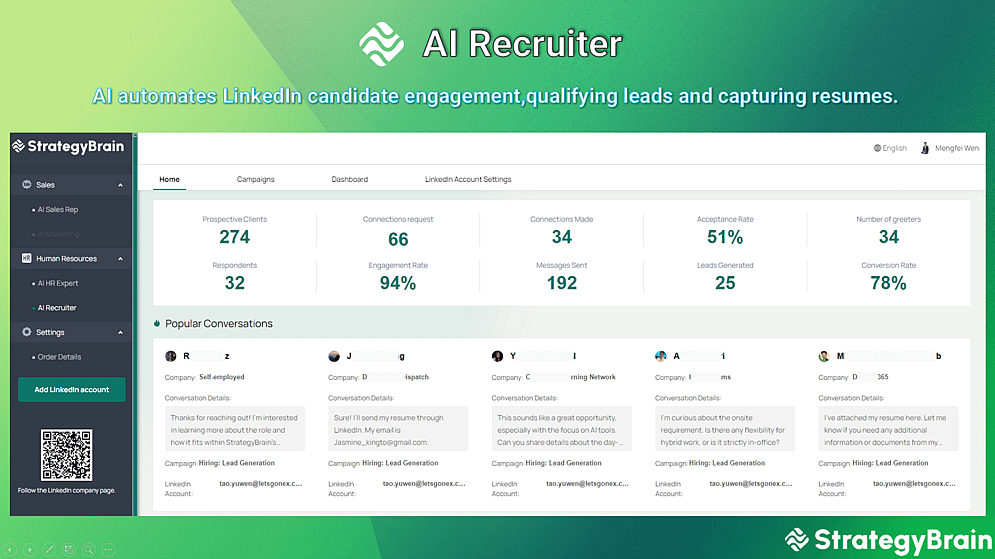
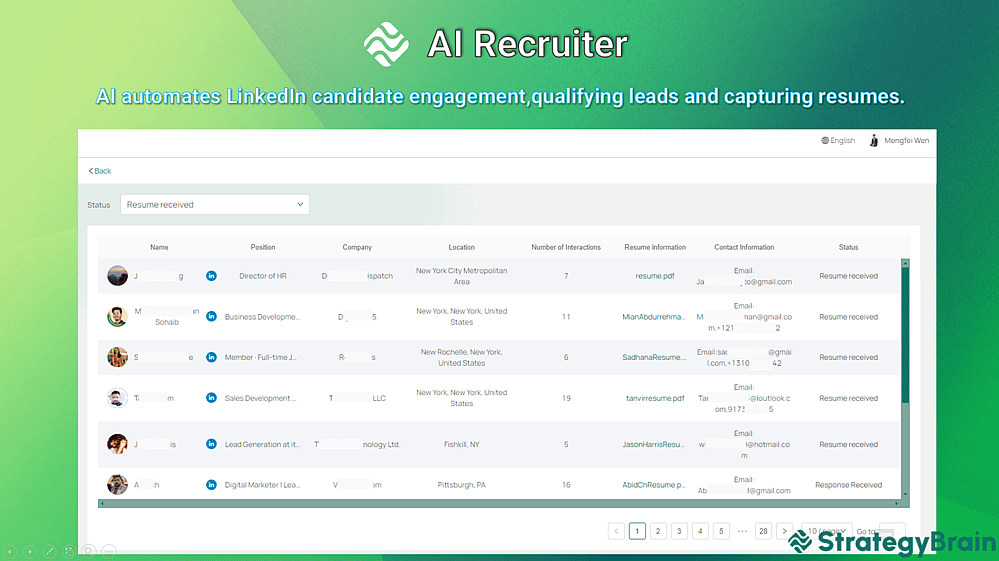
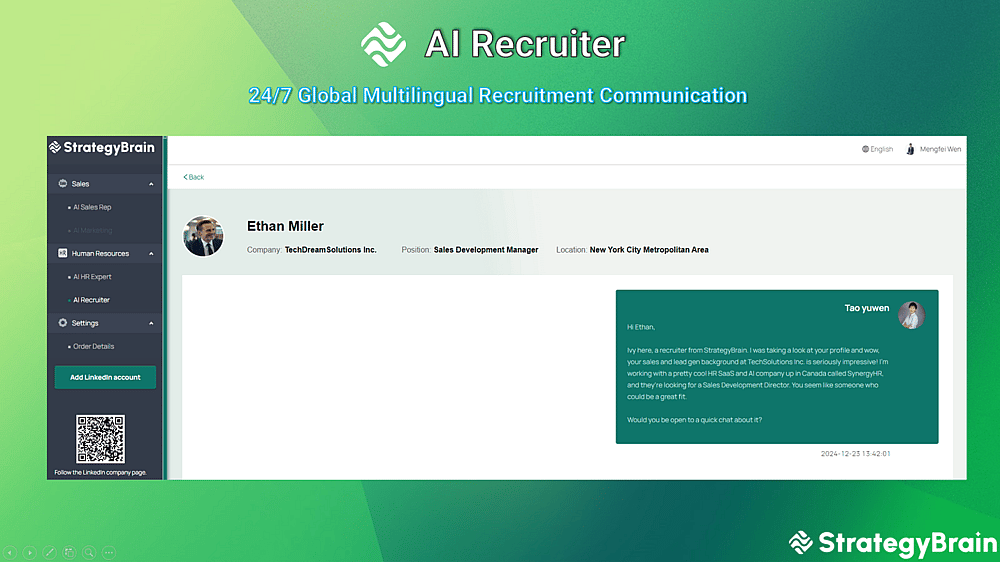
StrategyBrain AI Recruiter is a strong fit if your recruiting outcomes depend on LinkedIn—but your capacity is capped by execution work (messaging, follow-ups, response time).
Explore StrategyBrain AI Recruiter
This article is written for recruiting consultants and headhunters who rely on LinkedIn Groups for niche talent discovery. The approach prioritizes
community-first engagement, intent-based sourcing, and responsible scale—so you can improve outcomes without sacrificing trust.
Reference used: StrategyBrain AI Is the Best Alternative to LinkedIn Recruiter (Jan 2026).



©Strategybrain Technology Ltd.
info@strategybrain.ca