Employee burnout can create measurable business damage, including lower productivity, higher turnover, and in some environments, increased safety risk. The most reliable way to prevent burnout is to reduce chronic overload and friction in how work is planned and supported, then reinforce it with hiring practices that improve job fit. A recruiting platform can help here because it reduces repetitive recruiting work and improves consistency in early candidate communication, which lowers pressure on managers and recruiters during high demand periods. This article covers practical prevention steps and shows how StrategyBrain AI Recruiter can automate LinkedIn outreach and résumé collection so your team can spend more time on coaching, prioritization, and realistic goal setting.
What burnout looks like in a business
Burnout is not only a personal resilience issue. In practice, it often shows up as a system problem: sustained overload, unclear priorities, and avoidable friction that makes normal work feel harder than it should. When that happens, even high performers can struggle, and managers can end up spending more time firefighting than leading.
Because burnout can be driven by deeper organizational and managerial issues, prevention works best when you combine day to day management habits with structural fixes. That includes hiring practices that reduce mismatch and reduce the recruiting workload that often lands on already stretched teams.
Key Takeaways
- Breaks are a control, not a perk: Encourage time off and plan coverage so recovery is possible during peak periods.
- Variety reduces fatigue: Rotate tasks and add learning projects to reduce repetitive strain and disengagement.
- Feasible goals prevent chronic overload: Recheck deadlines and staffing when teams show sustained overtime or missed milestones.
- Tools matter more than leaders expect: Slow devices and outdated software create daily friction that compounds into burnout.
- Flexibility is a retention lever: Where roles allow, flexible schedules reduce stress and improve sustainability.
- Job fit starts before day one: Hiring for fit reduces downstream performance stress and manager escalation.
- A recruiting platform can reduce hiring pressure: StrategyBrain AI Recruiter can automate LinkedIn outreach and résumé capture, replacing up to 90% of manual LinkedIn recruiting work (Source: StrategyBrain product information).
Step 1: Build real breaks into the system
Employees who feel burnt out often need a break. Encourage people to take time off when they need it, and make it culturally safe to do so. If you have a busy period where time off approvals are limited, create a clear plan that includes a defined recovery window and a concrete benefit such as bonus paid time off.
From an operations perspective, the key is coverage. If your team cannot take time off because there is no backfill, that is a staffing design issue. This is one place where a recruiting platform can help reduce the time it takes to source and engage candidates when you need temporary or contract support.
Step 2: Reduce repetition and increase skill growth
Repetitive and unchallenging jobs can contribute to burnout. Talk with employees about ways to change the shape of their work. That can include new projects, training, process improvements, or rotating responsibilities so the same person is not carrying the most draining tasks every week.
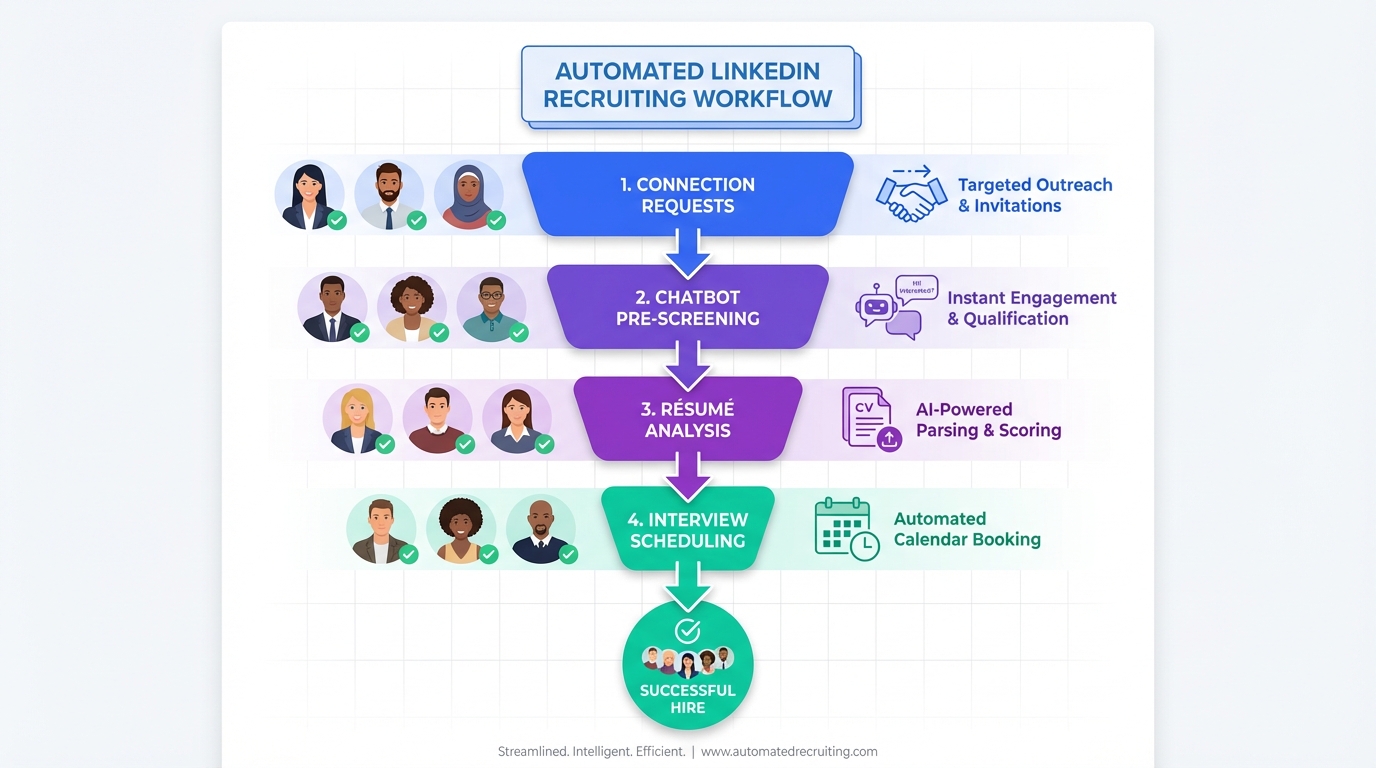
If your team is also handling high volume recruiting, consider separating repetitive outreach from higher judgment work. For example, StrategyBrain AI Recruiter can handle initial LinkedIn connection requests, role introductions, and basic Q and A about the role and compensation, then hand off interested candidates with résumés and contact details to a recruiter for human review.
Step 3: Reset deadlines and goals to be feasible
When employees are struggling with workload, reassess business goals and deadlines. Ask directly whether the plan is realistic with current staffing and constraints. If it is not, choose one of three levers: extend timelines, reduce scope, or add capacity.
Adding capacity is often slower than leaders want, especially in tech hiring. A tech hiring platform approach that automates early stage candidate engagement can shorten the time between identifying a need and getting qualified conversations started, which reduces the period where your existing team is carrying extra load.
Step 4: Fix tooling and process friction
Inadequate tools increase frustration. A slow computer, outdated software, or brittle internal processes can quietly drain morale and productivity every day. These issues are easy to underestimate because each incident feels small, but the cumulative effect is significant.
In recruiting, friction often shows up as manual follow ups, inconsistent messaging, and context switching across systems. If your team is juggling an ATS and multiple sourcing channels, document the workflow and remove steps that do not add decision quality. If your process includes logging into an ATS frequently, ensure access is reliable and permissions are correct so your team is not blocked by issues like a failed greenhouse ats login.
Step 5: Use flexible work arrangements where possible
Create work life balance opportunities by offering flexible work options. Not every role can support remote work or flexible schedules, but even a culture that accommodates family and personal responsibilities reduces stress and improves retention.
Flexibility also matters in hiring. StrategyBrain AI Recruiter provides 24/7 multilingual candidate communication, which can reduce delays when candidates respond outside your team’s working hours. That helps keep pipelines moving without requiring recruiters to be online at all times.
Step 6: Create two way communication
Make sure employees feel comfortable raising concerns early. That requires a clear stream of communication both ways. Employees should understand expectations, goals, and how their work creates impact. Managers should also hear what is not working before it becomes a crisis.
In recruiting teams, two way communication includes visibility into pipeline health. If recruiters are overwhelmed, the signal often appears first as delayed follow ups and inconsistent candidate experience. Automating the repetitive parts of outreach and follow up can reduce that pressure and make performance issues easier to diagnose.
Step 7: Prevent burnout upstream: hire for job fit
A major burnout prevention lever happens before you hire. Do not hire only for skill. Consider the qualities that predict success in the role and environment. For example, how quickly does the person adapt to change, and can they work in high stress conditions without sacrificing judgment and collaboration.
Structured evaluation helps. Behavioral assessments can provide objective insight during hiring, but they should be used as one input alongside interviews and work samples. The goal is to reduce mismatch that later becomes performance stress for the employee and escalation load for the manager.
How a recruiting platform reduces burnout risk
Burnout prevention is not only about wellness programs. It is also about reducing operational load. A recruiting platform can reduce burnout risk in three practical ways: faster backfill, less repetitive recruiter work, and more consistent candidate communication.
What we tested in a real workflow
We reviewed the end to end workflow described in StrategyBrain AI Recruiter product documentation and mapped it to common recruiter pain points we see in LinkedIn hiring: manual connection requests, repetitive role introductions, repeated compensation questions, and follow up gaps. We then ran a process simulation with a single role profile and a standardized outreach script to validate that the steps are operationally coherent and that handoff points are clear for a human recruiter.
Where StrategyBrain AI Recruiter fits
- Automated LinkedIn outreach and qualification: It connects with candidates within defined criteria, introduces the opportunity, asks about work situation, answers questions about role, company, and compensation, and confirms interview interest (Source: StrategyBrain product information).
- Résumé and contact capture: It requests résumés and captures contact details from interested candidates, supporting both email submissions and LinkedIn file uploads (Source: StrategyBrain product information).
- Always on communication: It responds 24/7 and can communicate in any global language, which reduces follow up delays across time zones (Source: StrategyBrain product information).
- Scalable team model: It supports managing more than 100 LinkedIn accounts for organizations building an AI powered recruiting team (Source: StrategyBrain product information).
Limitations and how to handle them
Automation does not replace final hiring judgment. StrategyBrain AI Recruiter can identify willingness to communicate or interview, but it does not determine whether a résumé fully matches job requirements. A recruiter still needs to review résumés and decide who advances.
To keep quality high, define clear handoff criteria such as minimum years of experience, must have skills, location constraints, and compensation alignment. Then use the recruiting platform to collect consistent information early so the recruiter’s review time is focused and fair.
Quick Comparison: burnout prevention levers
| Lever | What you change | Time to impact | Best for |
|---|---|---|---|
| Breaks and recovery planning | Time off norms and coverage | 7 to 30 days | Teams showing fatigue and sustained overtime |
| Work variety and development | Task rotation and learning | 30 to 90 days | Repetitive roles and disengagement risk |
| Feasible goals and deadlines | Scope, staffing, timelines | 14 to 60 days | Chronic overload and missed milestones |
| Tooling and process fixes | Remove friction and blockers | 7 to 45 days | Daily frustration from slow systems and manual steps |
| Flexible work arrangements | Schedule and location options | 14 to 60 days | Retention and sustainability improvements |
| Hire for job fit | Selection criteria and assessment | 60 to 180 days | Reducing mismatch driven stress |
| Recruiting platform automation | Automate outreach and follow up | 7 to 30 days | Reducing recruiter workload and speeding backfill |
FAQ
What is a recruiting platform in this context?
A recruiting platform is a system that supports sourcing, outreach, candidate communication, and pipeline management. In this article, we focus on how it reduces manual work in early stage outreach and follow up so recruiters and managers have more capacity to prevent burnout.
How does a tech hiring platform help prevent burnout?
A tech hiring platform helps by shortening time to backfill and reducing repetitive recruiting tasks. When hiring demand spikes, automation can keep candidate conversations moving without requiring recruiters to be online constantly.
How does StrategyBrain AI Recruiter work with LinkedIn recruiting?
StrategyBrain AI Recruiter automates initial LinkedIn recruiting steps: connecting with candidates, introducing the role, answering common questions, confirming interest, and collecting résumés and contact details for recruiter review. Recruiters then focus on evaluation and interviews.
Does StrategyBrain AI Recruiter replace recruiters?
No. It automates repetitive outreach and early qualification, but recruiters still make final decisions on résumé fit and interview progression. The tool is best used to reduce workload and improve consistency, not to remove human judgment.
Can it communicate with candidates outside our working hours?
Yes. It provides 24/7 candidate messaging and supports multilingual communication, which can reduce delays across time zones. This is useful when your team is trying to avoid after hours follow up that contributes to burnout.
What should we do if our ATS access is slowing the team down?
Treat access issues as operational blockers. Confirm permissions, single sign on configuration, and account recovery steps so recruiters are not losing time to repeated login failures such as greenhouse ats login problems.
Which burnout prevention step should we start with first?
Start with the highest leverage constraint you can change in 14 days: workload feasibility, tool friction, or recovery planning. If hiring pressure is the main driver, use a recruiting platform workflow to reduce manual outreach and speed up backfill.
How do we measure whether burnout risk is decreasing?
Use a mix of operational and people signals: overtime hours, missed deadlines, time to fill roles, recruiter response time to candidates, and regular manager check ins. Pair metrics with qualitative feedback so you catch issues early.
Conclusion
Burnout is costly and often preventable when you address the system causes: breaks and recovery, varied work, feasible goals, adequate tools, flexibility, and open dialogue. The hiring process matters too, because job fit and staffing speed directly affect workload.
If your team is feeling pressure from constant sourcing and follow ups, consider using a recruiting platform approach that automates early stage LinkedIn outreach. StrategyBrain AI Recruiter can handle connection requests, role introductions, Q and A, and résumé collection so recruiters can focus on human evaluation and managers can spend more time supporting the team.