AI recruiting companies are being adopted because hiring teams are facing extreme applicant volume, tighter expectations around pay transparency, and rising scrutiny on performance management fairness. In a July 4, 2024 HR trend update, HR consultant Judy Slutsky described how AI has become fundamental to candidate screening when a single role can attract up to 800 applicants, while also emphasizing that AI still falls short on emotional intelligence. This guide translates those themes into a practical 2026 operating model, including where a machine learning recruiter workflow fits and how StrategyBrain AI Recruiter can automate LinkedIn outreach, candidate Q and A, follow up, and résumé and contact capture so recruiters can spend more time on interviews and final qualification.
Key Takeaways
- Applicant volume is the forcing function: Judy Slutsky cited scenarios with 800 applicants for 1 role, which is why AI screening is becoming standard.
- Training is now a recruiting differentiator: Training and development supports retention and helps employers compete when compensation flexibility is limited.
- AI is useful but not complete: Slutsky’s view is that AI excels at data driven analysis but still lacks emotional intelligence.
- Pay transparency raises the bar: Employers need clear salary logic to avoid internal friction and external candidate skepticism.
- Bias control needs process: Performance feedback must be private, role based, and supported by a development plan to reduce discriminatory outcomes.
- LinkedIn is a high leverage channel: A machine learning recruiter workflow can scale early stage outreach and qualification without adding headcount.
- StrategyBrain AI Recruiter fits the “screening plus communication” gap: It automates connecting, introducing roles, answering questions, and collecting résumés and contact details, while leaving final fit decisions to humans.
What AI recruiting companies actually do in 2026
When people search for ai recruiting companies, they are usually looking for one of three things: a vendor that provides AI software, a recruiting firm that uses AI internally, or an ai staffing agency that combines sourcing with delivery. In practice, the most valuable AI use cases cluster around the earliest and most repetitive parts of hiring.
Common capabilities you should expect
- Candidate screening: Using models to triage large applicant pools and surface likely matches based on experience patterns, not only keywords.
- Recruiter productivity automation: Automating outreach, follow up, and basic qualification questions so recruiters can focus on interviews.
- Training personalization: Supporting learning and development by tailoring training paths and identifying skills gaps.
- Compliance support: Helping standardize documentation and process steps for fairness and auditability.
Scope boundary
This article focuses on the HR trends and operational implications described by Judy Slutsky and how to apply them to a modern workflow. It does not attempt to rank specific third party vendors beyond StrategyBrain AI Recruiter, and it does not provide legal advice.
Trend 1: Training and development as a recruiting and retention tool
In the July 4, 2024 update, Judy Slutsky emphasized that training and development has never been more important. The point is not only compliance and safety. It is also about helping teams work effectively in remote and hybrid environments and giving candidates a credible progression path.
Why this matters to AI recruiting companies
Many organizations cannot always compete on compensation alone. In that context, training, mentorship, and industry experience become differentiators. AI recruiting companies that understand this trend do not treat hiring as a one time transaction. They connect recruiting to onboarding and development outcomes.
Practical checklist for employers
- Document the progression plan: Define role levels, skills, and expected timelines.
- Make training visible in outreach: Ensure recruiters can clearly explain what the candidate gains.
- Align training to performance management: Tie feedback to specific skill development steps.
Trend 2: More than words, AI in HR screening and training
Slutsky described a reality many HR teams recognize: a single posting can attract 800 candidates. In that environment, AI is increasingly used to thin out the field. She also noted that screening algorithms can be trained to assess résumés in nuanced ways that go beyond keyword matching.
What “machine learning recruiter” should mean in practice
A machine learning recruiter workflow is not a replacement for human judgment. It is a system that uses models to prioritize attention and standardize early stage interactions. The goal is to reduce time spent on repetitive tasks while keeping final decisions with recruiters and hiring managers.
Where StrategyBrain AI Recruiter fits
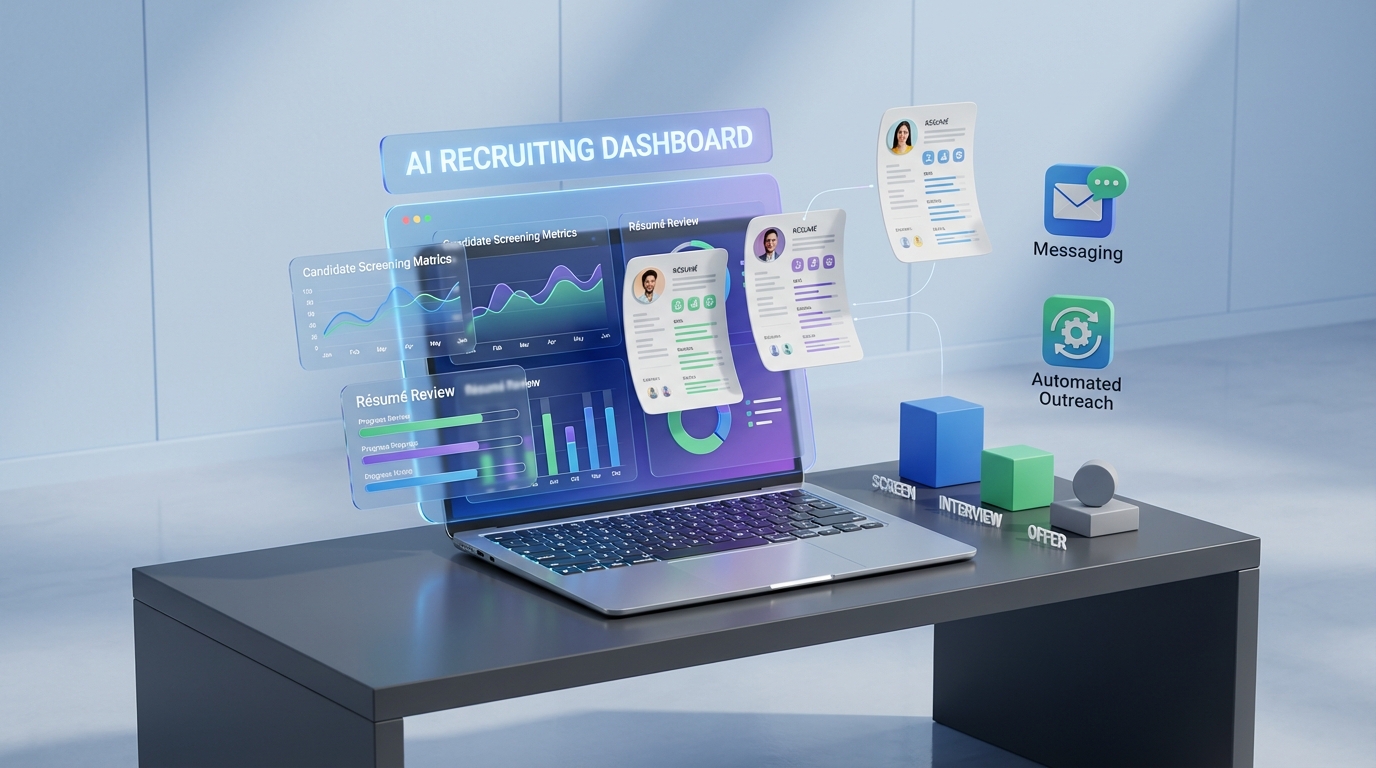
In our internal workflow reviews with teams that rely heavily on LinkedIn, the biggest bottleneck is not writing a job description. It is the volume of outreach and the back and forth required to confirm interest, answer basic questions, and collect materials. StrategyBrain AI Recruiter is designed for that exact stage on LinkedIn. It automatically connects with candidates that match your search criteria, introduces the opportunity, answers questions about the role, company, and compensation, follows up, and collects résumés and contact information from interested candidates. Recruiters then review the collected résumés and proceed with interviews and final qualification.
Limitations to plan for
- AI does not equal emotional intelligence: Slutsky’s caution is important. Candidate experience still needs human oversight.
- Interest is not fit: StrategyBrain AI Recruiter can confirm willingness to proceed and collect materials, but it does not decide whether a résumé meets requirements.
- Process design still matters: AI amplifies your workflow. If your criteria are unclear, automation scales confusion.
Trend 3: Salaries in the era of pay transparency
Slutsky pointed to expanding pay transparency expectations and the need for employers to be clear and concise in how salaries are set. Candidates have access to more information and are increasingly savvy, which raises the cost of inconsistency between internal and external compensation narratives.
Operational implications
- Recruiters need a consistent compensation story: If outreach is scaled through an AI recruiting system, the compensation and benefits information must be accurate and approved.
- Role design becomes a lever: When the market does not supply talent at a given pay level, employers may need to adjust internal bands or redefine the role scope.
- Documentation reduces risk: Clear ranges, leveling criteria, and approval steps help prevent internal conflict.
Trend 4: Performance management and bias
Slutsky described a grey line between performance feedback and discriminatory actions, and she highlighted how unconscious bias can influence assessments based on triggers such as gender, race, age, or even a person’s name. Her guidance focused on process discipline.
Process pointers Slutsky emphasized
- Give performance feedback privately and keep the process confidential.
- Base feedback on the role definition as written in the job description.
- Account for training provided and include a development plan for improvement.
- Have the right people present depending on the context, including union representation where applicable.
- Invite employee feedback so they can ask questions and confirm understanding.
How this connects back to AI recruiting companies
AI recruiting companies are often evaluated on speed and volume. In 2026, they should also be evaluated on whether their workflows support fairness and consistency. Standardized early stage communication, consistent job information, and clear criteria reduce the surface area for bias to enter the process.
How to evaluate AI recruiting companies and AI staffing agency partners
If you are choosing between an AI software vendor, an AI enabled recruiting firm, or an ai staffing agency, use criteria that map to the trends above. The goal is not maximum automation. The goal is controlled scale.
Evaluation criteria you can reuse
- Workflow fit: Does the tool automate the specific bottleneck you have, such as LinkedIn outreach, applicant screening, or scheduling.
- Human control points: Can recruiters intervene, approve messaging, and make final qualification decisions.
- Data protection posture: Are credentials and candidate data encrypted and isolated per customer, and is customer data excluded from model training.
- Candidate experience: Does the system support timely follow up and clear answers, including multilingual communication if you hire globally.
- Scalability: Can you scale across multiple recruiters or accounts without losing governance.
A LinkedIn playbook using StrategyBrain AI Recruiter
LinkedIn is often where the time goes. Even strong recruiters lose hours to repetitive steps: connecting, introducing the role, answering the same questions, and chasing résumés. StrategyBrain AI Recruiter is built to automate that early stage on LinkedIn while keeping the recruiter responsible for final screening.
Step by step implementation
- Define your search criteria: Specify the candidate profile you will target on LinkedIn, including must have skills and location constraints.
- Prepare approved job information: Provide company details, compensation, benefits, and role scope so messaging stays consistent with pay transparency expectations.
- Enable automated connection and outreach: AI Recruiter connects with candidates in your targeted criteria and introduces the opportunity.
- Let the AI handle Q and A and follow up: The system answers candidate questions about the role, company, and compensation, and follows up to confirm interest.
- Collect résumés and contact details: Interested candidates share résumés and contact information, which the system captures for recruiter review.
- Human review and interview: Recruiters review the collected résumés and proceed with interviews and final qualification.
What we see teams get wrong
- Unclear compensation inputs: If pay information is vague, scaled outreach creates inconsistent expectations.
- No definition of “qualified enough to interview”: AI can confirm interest, but you still need a rubric for résumé review.
- Ignoring training as a selling point: Slutsky’s point matters. Candidates want to know what is in it for them.
Quick comparison: human only vs AI assisted recruiting workflows
| Workflow | Speed at high volume | Consistency for pay transparency | Best for |
|---|---|---|---|
| Human only recruiting | Limited by recruiter hours | Varies by recruiter and message version | Low volume roles, highly bespoke outreach |
| AI assisted screening and outreach | Scales to large applicant and outreach volume | Higher when inputs are approved and standardized | Roles with hundreds of applicants and heavy LinkedIn sourcing |
| StrategyBrain AI Recruiter on LinkedIn | Automates connecting, messaging, follow up, and collection | High when compensation and role details are provided up front | Teams that want a machine learning recruiter workflow for early stage LinkedIn hiring |
FAQ
What problem are AI recruiting companies solving first?
They usually solve volume and speed problems first, especially applicant screening and repetitive outreach. Judy Slutsky described cases with 800 applicants for one role, which makes manual screening difficult to sustain.
Is a machine learning recruiter the same as replacing recruiters?
No. A machine learning recruiter workflow should prioritize and automate repetitive steps, while humans keep control of final qualification and hiring decisions. Slutsky’s view that AI lacks emotional intelligence is a useful reminder to keep humans in the loop.
How does StrategyBrain AI Recruiter work on LinkedIn?
It automates early stage LinkedIn recruiting by connecting with candidates that match your criteria, introducing the role, answering questions about the role, company, and compensation, following up, and collecting résumés and contact details from interested candidates.
Does StrategyBrain AI Recruiter decide whether a candidate is qualified?
No. It confirms willingness to proceed and collects materials, but it does not determine whether the résumé fully matches job requirements. Recruiters complete that final qualification step.
How should pay transparency change AI outreach?
It should push you to standardize and approve compensation and role scope inputs before scaling messages. If you automate outreach without clear salary logic, you scale inconsistency and candidate confusion.
Can AI help with training and development too?
Yes. Slutsky noted AI can customize training programs based on learning styles and progress, identify skills gaps, and recommend ways to close them. That matters because training is increasingly a recruiting and retention differentiator.
What are the biggest risks when adopting AI recruiting systems?
The biggest risks are unclear criteria, inconsistent compensation messaging, and overreliance on automation for human judgment. A controlled process with clear handoffs reduces these risks.
How do I choose between an AI staffing agency and an AI tool?
Choose an AI staffing agency if you want outsourced delivery and accountability for outcomes. Choose an AI tool if you want to keep recruiting in house and primarily need automation for screening or outreach.
Conclusion
AI recruiting companies are gaining traction because hiring teams are dealing with high applicant volume, rising expectations for pay transparency, and the need to reduce bias through consistent process. Judy Slutsky’s July 4, 2024 update captures the core reality: AI is now fundamental to screening at scale, but it still has limitations and should not replace human judgment. If your biggest bottleneck is LinkedIn outreach and early qualification, StrategyBrain AI Recruiter is a practical way to implement a machine learning recruiter workflow by automating connection, messaging, Q and A, follow up, and résumé and contact capture, while keeping final screening and interviews with your recruiters. Next step: document your compensation and progression story, define your interview threshold rubric, then automate the repetitive front end with clear human control points.