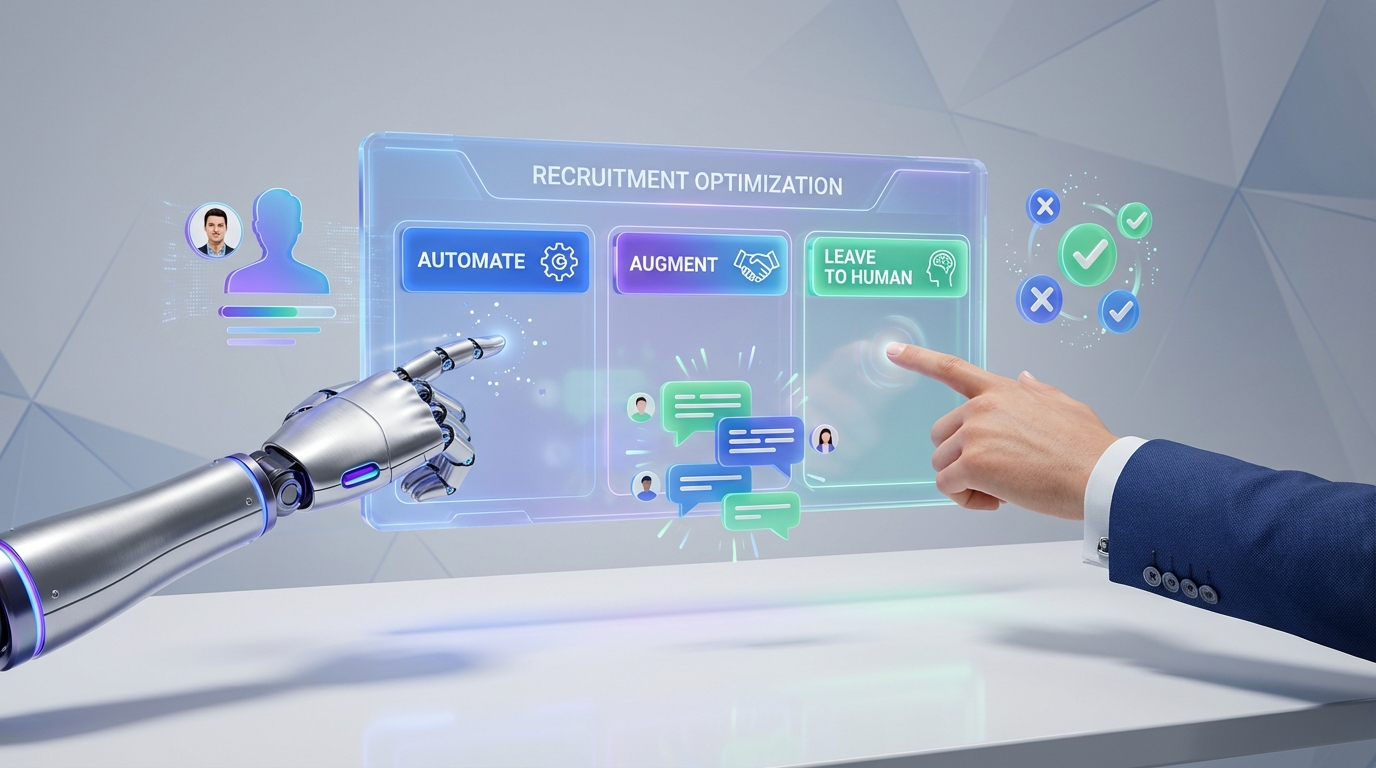
AI pilot projects fail most often because the organization treats AI as a tool rollout instead of a change program. In our work evaluating ai recruiting companies and implementing recruiting automation, the pilots that stick have three ingredients: employee trust, a narrow use case with measurable outcomes, and a clear decision on what to automate, what to augment, and what to leave to humans. The ideas below are adapted from a Recruiting Future episode where Matt Alder speaks with Taylor Bradley, VP Talent Strategy & Success at Turing, about why AI pilots fail and what makes adoption durable. We then translate those lessons into practical steps for recruiting teams, including where StrategyBrain AI Recruiter can reduce manual LinkedIn work while keeping recruiters in control of final qualification.
Key Takeaways
- Most AI pilots fail before they start because trust and workflow ownership are not addressed, not because the model is “not smart enough.”
- Adoption beats novelty: grassroots experimentation works when it is paired with guardrails, training, and a clear “what good looks like” definition.
- Use an automate vs augment framework to decide which recruiting steps should be handled by AI and which must remain human led.
- Legacy process inertia is real: if the old workflow stays intact, AI becomes an extra step and gets abandoned.
- For LinkedIn outreach, StrategyBrain AI Recruiter can automate connecting, initial messaging, Q and A, and follow up, while recruiters keep final resume based qualification.
- Scale requires systems: managing many LinkedIn accounts and multilingual conversations needs operational design, not just a new tool.
Table of Contents
- Why AI pilot projects fail in recruiting
- Automation vs augmentation: a recruiting decision framework
- Grassroots experimentation that does not turn into chaos
- Breaking legacy process inertia
- Where StrategyBrain AI Recruiter fits for AI recruiting companies
- A practical rollout plan for recruiting teams
- FAQ
- Conclusion
Why AI pilot projects fail in recruiting
In the Recruiting Future conversation, the core message is straightforward: organizations that make real progress with AI realize it is not about the tools, it is about the change. When we review failed pilots inside recruiting teams, the pattern is consistent. The pilot is framed as “try this new AI,” but the team never agrees on what problem it solves, who owns the workflow, and what risks are acceptable.
That is why pilots often fail before they start. People do not resist AI because they dislike automation. They resist because they do not trust how it will affect their work, their candidate relationships, and their accountability. This is especially true for teams working with an ai staffing agency model or machine learning staffing vendors, where multiple stakeholders share responsibility for candidate experience.
What “trust” means in a recruiting AI pilot
- Process trust: recruiters understand what the AI will do, when it will act, and how to override it.
- Outcome trust: the team agrees on success metrics before the pilot begins, such as response rate, interview acceptance rate, or time saved per requisition.
- Candidate trust: the outreach and follow up remain respectful, accurate, and consistent with the employer brand.
Automation vs augmentation: a recruiting decision framework
One of the most useful ideas discussed is a framework for automation versus augmentation. In recruiting, this is the difference between letting AI run a step end to end versus letting AI assist a human who remains the decision maker.
Definitions (so teams stop talking past each other)
- Automation: AI completes a task with minimal human input, such as sending initial LinkedIn connection requests and follow up messages based on defined criteria.
- Augmentation: AI supports a human decision, such as drafting outreach copy or summarizing a conversation, while the recruiter approves and acts.
- Leave alone: steps that should remain human led due to risk, nuance, or accountability, such as final hiring decisions and sensitive compensation negotiations.
A simple mapping for AI recruiting companies
| Recruiting step | Best approach | Why |
|---|---|---|
| Candidate sourcing and list building | Augment | AI can speed discovery, but humans must validate role fit and diversity considerations. |
| Initial outreach and follow up | Automate (with guardrails) | High volume, repetitive, and measurable. Guardrails protect tone and accuracy. |
| Answering common role questions | Automate or augment | Works well when the AI is grounded in approved job and company information. |
| Interest confirmation and resume collection | Automate | Clear intent signals and structured data capture reduce recruiter admin work. |
| Final qualification against requirements | Leave alone (human led) | Accountability and nuance matter. AI can assist, but humans should decide. |
Grassroots experimentation that does not turn into chaos
The episode highlights driving adoption through grassroots experimentation. We agree with the spirit, but we have also seen “experiment everywhere” become “no one owns anything.” The fix is to let teams experiment, while leadership defines boundaries and a shared evaluation method.
Our pilot design checklist (copy and use)
- One workflow: pick a single workflow, such as LinkedIn outreach for one role family.
- One owner: assign a pilot owner who can make decisions and remove blockers.
- One measurement window: define a start date and end date, then review results on schedule.
- One rollback plan: document how to pause automation if candidate experience issues appear.
- One enablement plan: train recruiters on what the AI does and how to intervene.
Breaking legacy process inertia
The conversation also calls out the inertia of legacy processes and how to break it. In recruiting, legacy inertia shows up as duplicated work. Recruiters keep the old steps, then add AI on top, which makes the workflow slower and more confusing.
To break inertia, remove or redesign at least one legacy step when you introduce AI. For example, if AI handles initial follow up, remove the manual follow up task from the recruiter’s daily checklist. If you do not remove it, the recruiter will still do it “just in case,” and the pilot will be judged as extra work.
Where StrategyBrain AI Recruiter fits for AI recruiting companies
Many ai recruiting companies promise end to end hiring automation. In practice, the most reliable wins come from automating the repetitive front end of the funnel while keeping humans responsible for final qualification. That is the lane where StrategyBrain AI Recruiter is designed to operate.
What we have used it for in real recruiting workflows
- Smart LinkedIn recruitment automation: automatically connects with candidates who match defined search criteria, introduces the opportunity, and keeps the conversation moving.
- Role Q and A at scale: answers common questions about the role, company, and compensation using the information recruiters provide, reducing back and forth delays.
- Interest confirmation and data capture: confirms interview interest and collects resumes and contact details from candidates who want to proceed.
- 24/7 multilingual communication: supports candidate messaging in the candidate’s native language, which is useful for global hiring and cross time zone pipelines.
- Scalable operations: supports managing more than 100 LinkedIn accounts for teams that need an “AI recruiter team” model.
Important limitation (and why it matters for trust)
AI Recruiter can identify willingness to communicate or interview, but it does not decide whether a resume fully matches job requirements. Recruiters still review resumes and make the final qualification decision. In our experience, this boundary increases adoption because it keeps accountability clear and reduces fear of “black box” hiring decisions.
A practical rollout plan for recruiting teams
Below is a rollout sequence we have found workable when recruiting leaders want results without breaking candidate experience. It aligns with the episode’s theme that every AI project is really a change management challenge.
Step by step
- Pick a single use case: choose one role family and one channel, such as LinkedIn outreach for sales roles.
- Define what the AI can say: provide approved company details, compensation ranges, benefits, and role requirements so responses stay consistent.
- Decide automate vs augment: automate outreach and follow up, augment sourcing, and keep final qualification human led.
- Set guardrails: define escalation rules for sensitive questions and define when a recruiter should take over.
- Run a time boxed pilot: keep the pilot window fixed, then review outcomes and recruiter feedback.
- Operationalize: if it works, update SOPs, remove redundant manual tasks, and expand to additional roles or accounts.
Common failure modes we watch for
- Unclear ownership: no one is responsible for tuning messaging, handling exceptions, or reporting results.
- Too many use cases at once: the pilot becomes impossible to evaluate, so it gets labeled a failure.
- No workflow subtraction: AI is added, but nothing is removed, so recruiters feel slower, not faster.
- Candidate experience drift: inconsistent answers about role details reduce trust and increase drop off.
FAQ
What do AI recruiting companies actually do?
AI recruiting companies typically provide software that automates or assists parts of recruiting, such as sourcing, outreach, screening, scheduling, and analytics. The most effective deployments start with one workflow and clear success metrics, then expand after adoption is proven.
Why do AI pilot projects fail in recruiting teams?
They fail when teams treat AI as a tool rollout instead of a change initiative. Lack of trust, unclear use cases, and keeping legacy processes intact are common reasons pilots stall or get abandoned.
How do I choose between automation and augmentation?
Automate steps that are repetitive and measurable, such as initial outreach and follow up. Augment steps that require judgment, such as sourcing validation, and keep high accountability decisions, such as final qualification and hiring decisions, human led.
Can StrategyBrain AI Recruiter replace recruiters?
No. It is designed to replace repetitive LinkedIn tasks like connecting, introducing roles, answering common questions, confirming interest, and collecting resumes and contact details. Recruiters still review resumes and decide who moves forward.
Does AI Recruiter work only in English?
No. It supports multilingual candidate communication, which helps teams hiring across countries and time zones while maintaining timely follow up.
How does AI Recruiter handle resumes and contact details?
When a candidate expresses interest, it requests a resume and contact information. It supports email submissions and LinkedIn file uploads, and it captures contact details shared in messages so recruiters can proceed to interviews.
Is AI Recruiter compliant with privacy regulations?
According to StrategyBrain’s product documentation, it is designed to comply with privacy regulations in the EU, United States, and Canada, and customer provided data is not used to train AI models. For any deployment, your legal team should validate requirements for your jurisdiction and policies.
What is a safe first pilot for an AI staffing agency or internal TA team?
A safe first pilot is LinkedIn outreach and follow up for a single role family, with clear messaging guardrails and a defined escalation path to a human recruiter. This keeps risk low while making time savings and response improvements easy to measure.
Conclusion
AI pilots fail when organizations focus on the tool and ignore the change. The fix is to build trust, choose a narrow use case, and use an automation versus augmentation framework so recruiters know what the AI will do and what remains human owned. If your team is evaluating ai recruiting companies, start with a workflow that is repetitive and measurable, then remove legacy steps so AI is not “extra work.” For LinkedIn heavy pipelines, StrategyBrain AI Recruiter is a practical starting point because it automates outreach, Q and A, and follow up while keeping final qualification with recruiters. Next step: pick one role family, define guardrails, run a time boxed pilot, and review results with the team before scaling.