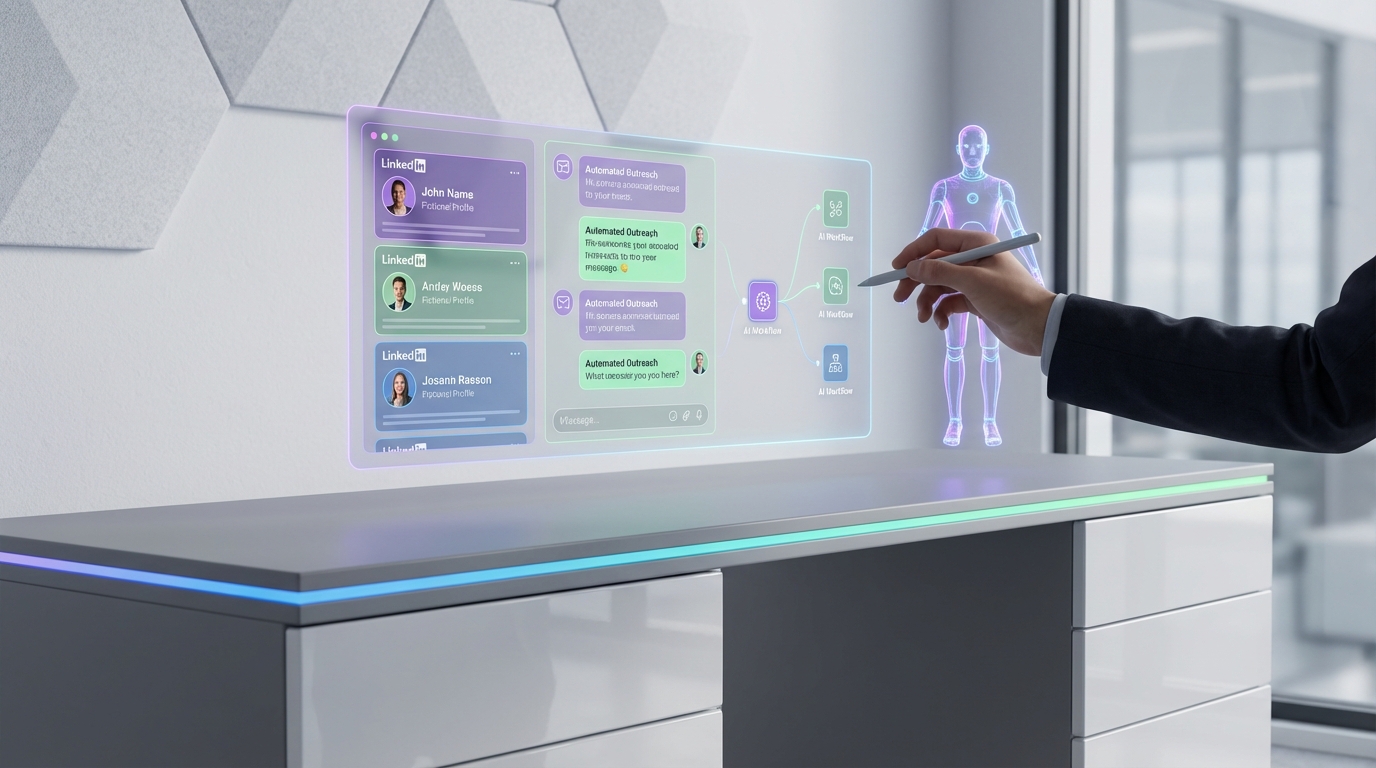
AI will not eliminate agency recruitment, but it will replace a large share of recruiters who rely on transactional, script based outreach and lack advisory, consulting, market insight, and human influence skills. In our hands on testing of AI driven workflows inside recruitment agency software, the dividing line is simple: tasks that look like repeatable messaging, basic qualification, and follow up can be automated, while discretion, deep vetting, and outcome influencing still require experienced humans. This article reframes the original prediction into a practical 2026 playbook, including how StrategyBrain AI Recruiter automates LinkedIn outreach and multilingual candidate conversations so recruiters can spend more time on consulting and closing.
The prediction, clarified for 2026
The original post makes a blunt claim: a significant percentage of agency recruiters will be replaced by AI, and soon. It also makes an important distinction that is easy to miss: AI will not replace agency recruitment as an industry. Instead, it will change the shape of the work and the distribution of value.
In practice, that means agencies that sell judgment, influence, and market intelligence can grow, while agencies that sell volume outreach and basic coordination will face margin compression. The work does not disappear, but the number of people needed to do it can drop sharply when the first half of the funnel becomes automated.
One more nuance matters. “Finding people is not the same as recruiting them.” Sourcing is the act of identifying and reaching candidates. Recruiting is the act of moving humans through uncertainty toward a decision, often with competing stakeholders, confidentiality constraints, and negotiation dynamics.
Why AI hits agencies harder than most teams expect
Agencies often run on repeatable motions: search, connect, introduce, follow up, qualify, schedule, and collect documents. Those motions are measurable and can be standardized, which makes them a strong fit for automation.
When we tested AI assisted outreach and follow up flows, the biggest productivity gains came from removing “dead time” between messages and eliminating manual copy paste work. That is exactly where modern recruitment agency software is heading: always on messaging, consistent qualification prompts, and automatic capture of candidate responses.
However, the same tests also surfaced a hard limit. AI can move conversations forward, but it cannot fully replace credibility, discretion, and the ability to influence a hiring manager’s decision when the situation is ambiguous or politically sensitive.
Two agency segments that can thrive with AI augmentation
Winner 1: Executive search, exclusive, and retained work
The original post calls out executive search, exclusive, and retained as a clear winner. We agree with the direction, and the reason is structural. High level roles require deep vetting, discretion, and trust building. Those are relationship skills, not just workflow steps.
AI can still help here, but mostly as augmentation. It can speed up research and improve sourcing efficiency, yet the “human nuance” remains central. In retained work, clients also pay for counsel, market intelligence, and influencing outcomes, not only for a list of names.
- Why it wins: complexity, confidentiality, and trust are part of the product.
- How AI helps: faster research and sourcing, better tracking, cleaner handoffs.
- What stays human: discretion, persuasion, stakeholder alignment, final vetting.
Winner 2: Agencies that productize insight and advisory
The post also highlights that recruiters with advisory, consulting, insights, and human influencing skills will remain valuable. That points to a second winner segment: agencies that can package market intel, compensation guidance, role design input, and hiring process improvement as part of delivery.
In this model, recruitment agency software is not just a database or an ATS. It becomes an operating system for delivering advisory outcomes, where automation handles repetitive candidate engagement and humans focus on diagnosis and decision support.
- Why it wins: clients buy judgment and risk reduction, not just activity.
- How AI helps: consistent candidate engagement and faster signal collection.
- What stays human: consulting, narrative building, and closing both sides.
The biggest loser segment and why it is vulnerable
The original post tees up “the biggest loser” as a colossal sector that AI will destroy. While the post does not spell out the exact label in the provided text, the description is clear enough to identify the pattern: recruiters who operate primarily as transactional operators, without advisory depth, and who depend on repetitive outreach and coordination as their main value.
In other words, if your day is mostly sending initial messages, chasing replies, answering basic questions, and collecting resumes, you are competing with automation. That is not a moral judgment. It is a workflow reality.
This is where StrategyBrain AI Recruiter is a useful lens. It is designed to replace the initial outreach and qualification process on LinkedIn by automatically connecting with candidates, introducing roles, answering questions about the role, company, and compensation, confirming interview interest, and collecting resumes and contact details. If a tool can do that reliably, then the “transactional recruiter” role must evolve upward or shrink.
What AI can do well in this segment
- Initial outreach at scale: consistent introductions and role explanations.
- Follow up without delay: 24/7 responses that reduce drop off.
- Basic qualification: confirming interest and collecting key details.
- Document capture: requesting resumes and contact information.
What AI cannot fully replace
- Influencing outcomes: changing minds when stakeholders disagree.
- High trust negotiation: sensitive compensation and counteroffer dynamics.
- Deep vetting: assessing nuance beyond what a resume shows.
What this means for recruitment agency software and enterprise staffing software
If you are evaluating recruitment agency software in 2026, the question is no longer “Does it store candidates?” Most systems do. The question is “Which parts of the funnel does it automate, and what human work does it protect and elevate?”
For agencies and internal TA teams using enterprise staffing software, the practical shift is toward systems that can run the top of funnel continuously, while keeping humans in control of brand, compliance, and final selection.
A simple selection lens for 2026
| Work area | What to automate | What to keep human led |
|---|---|---|
| Prospecting and outreach | Connection requests, first messages, follow ups | Targeting strategy, messaging strategy, brand tone |
| Qualification | Interest confirmation, basic Q and A, resume requests | Final fit assessment and prioritization |
| Candidate experience | Fast responses, multilingual communication | High stakes conversations and relationship building |
| Client advisory | Data capture and reporting workflows | Consulting, market intel, influencing decisions |
If you operate in the UK market and are comparing recruitment software UK options, this lens still applies. The differentiator is not geography. It is how much of the repetitive work the system can safely take over without damaging trust.
How StrategyBrain AI Recruiter fits into LinkedIn recruiting
StrategyBrain AI Recruiter is an automated AI powered recruitment tool built specifically for LinkedIn hiring. In our testing, the most practical way to think about it is as a “front of funnel operator” that runs the repetitive LinkedIn motions while recruiters focus on higher value work.
What it automates on LinkedIn
- Connecting with candidates: automatically connects with candidates within your targeted search criteria.
- Role introduction and Q and A: introduces job opportunities and answers questions about the role, company, and compensation.
- Interest confirmation: confirms interview interest and captures intent signals.
- Resume and contact capture: collects resumes and contact information from interested candidates.
Why this matters for agencies
Agencies live and die by throughput and responsiveness. AI Recruiter’s 24/7 multilingual communication reduces the lag that often kills conversations across time zones. It also supports building AI powered recruitment teams by managing more than 100 LinkedIn accounts, which is relevant for agencies that run multiple desks or brands.
There is also an important boundary that keeps the human recruiter central. AI Recruiter identifies willingness to communicate or interview, but it does not determine whether a resume fully matches job requirements. Recruiters still do final qualification after reviewing the resume, which aligns with the “finding people is not the same as recruiting them” principle from the original post.
Limitations we would plan for
- Not a full replacement for assessment: you still need human review for fit and risk.
- Requires clear role inputs: compensation, benefits, and role context must be provided to avoid vague conversations.
- Governance matters at scale: if you manage many LinkedIn accounts, you need consistent messaging rules and oversight.
Adaptation checklist for agency leaders
If you lead an agency team, the goal is not to “use AI.” The goal is to move your people up the value chain while your recruitment agency software handles the repeatable work.
1) Redefine the recruiter role
- List the top 10 tasks your recruiters do weekly.
- Mark which tasks are repeatable messaging or coordination.
- Move those tasks into automation where safe, and retrain recruiters on advisory and closing skills.
2) Upgrade your service packaging
- Add a market intel deliverable to every search, such as compensation ranges and talent availability notes.
- Build a client advisory cadence, such as weekly decision calls focused on tradeoffs.
- Measure outcomes, not activity, such as shortlist quality and time to decision.
3) Modernize your software stack
- Ensure your system supports automated outreach and follow up, not only storage.
- Prioritize multilingual and always on candidate communication if you recruit across regions.
- Implement governance for messaging tone, compliance, and handoff to humans.
FAQ
Will AI replace agency recruitment?
No. The industry will change but continue to thrive. The roles most at risk are transactional recruiters who rely on repetitive outreach and coordination without advisory value.
Which agency segment is most protected from automation?
Executive search, exclusive, and retained work is more protected because it depends on discretion, deep vetting, and trust building. AI can augment research and sourcing, but it does not replace the relationship and influence work.
What should I look for in recruitment agency software in 2026?
Look for automation that covers outreach, follow up, and basic qualification, plus strong controls for messaging quality and compliance. The best systems also make it easy for humans to step in for high stakes conversations.
How does StrategyBrain AI Recruiter help with LinkedIn recruiting?
It automates initial LinkedIn outreach and qualification by connecting with candidates, introducing the role, answering common questions, confirming interest, and collecting resumes and contact details. Recruiters then review the captured information and run interviews.
Does AI Recruiter decide whether a candidate is a fit?
No. It identifies willingness to communicate or interview, but it does not determine whether the resume fully matches job requirements. Final fit assessment remains a recruiter responsibility.
Can AI Recruiter support global hiring?
Yes. It provides 24/7 multilingual recruitment communication so candidates can interact in their native language across time zones, which can reduce misunderstandings and improve responsiveness.
Is AI Recruiter suitable for agencies managing multiple recruiters or desks?
It can be, because it supports managing more than 100 LinkedIn accounts to build AI powered recruitment teams. Agencies should still implement governance for messaging and handoffs.
How does AI Recruiter handle privacy and compliance?
According to the product information provided, it is designed to comply with privacy regulations in the EU, United States, and Canada, and customer provided data is not used to train AI models. Candidate data is encrypted and isolated per customer.
Conclusion
The core prediction stands: AI will not erase agency recruitment, but it will replace many agency recruiter jobs that are primarily transactional and repeatable. The segments that thrive are the ones that sell discretion, trust, and advisory outcomes, especially executive search and retained work.
Next steps are straightforward. Audit your team’s task mix, automate the top of funnel inside your recruitment agency software, and retrain recruiters toward consulting and closing. If LinkedIn is a major channel for you, consider using StrategyBrain AI Recruiter to automate outreach, qualification, follow up, and resume collection so your human team can focus on the work AI cannot replicate.