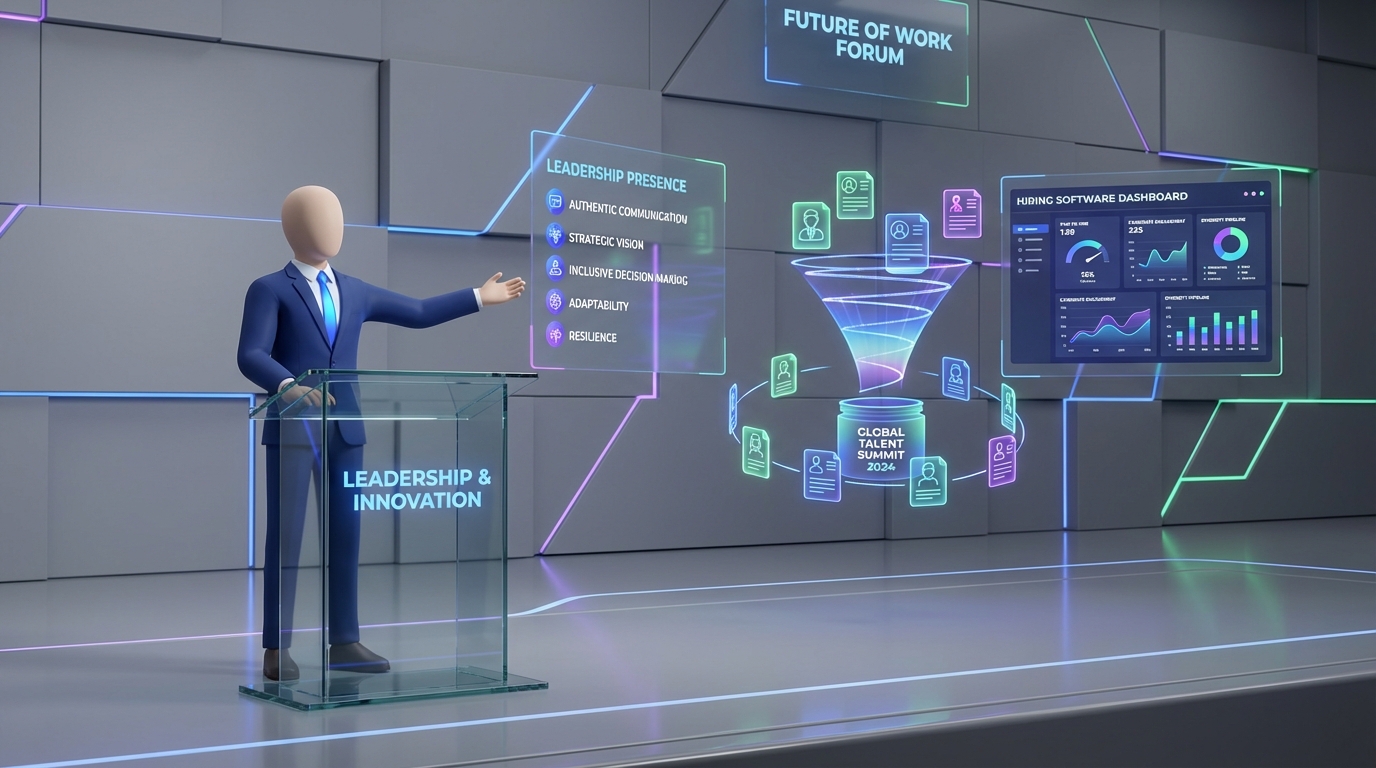
If you are a leader in any organization, any industry, and any size, you need to show up every day confident and decisive, able to build strong relationships, communicate effectively, and stay graceful under pressure. That is leadership presence. In a hiring context, leadership presence becomes visible in how you communicate role clarity, how you make decisions, and how consistently your team treats candidates. The fastest operational win I have seen is pairing leadership habits with hiring management software, meaning a job application management system that centralizes applicants, messages, and decisions, so leaders spend less time chasing updates and more time leading. In teams that also use StrategyBrain AI Recruiter for LinkedIn outreach and follow up, the early funnel stays responsive 24/7 in the candidate’s language, which helps leaders maintain a calm, consistent tone even when hiring volume spikes.
Key Takeaways
- Leadership presence is operational: it shows up in decision speed, message consistency, and how you handle pressure during hiring.
- Hiring management software supports presence by centralizing candidate status, feedback, and communication so leaders are not improvising in meetings.
- StrategyBrain AI Recruiter reduces early funnel noise by automating LinkedIn connecting, role introduction, Q&A, and résumé and contact collection, so leaders can focus on interviews and final decisions.
- Presence is not volume: confident leaders communicate fewer, clearer messages, and a job application management system helps keep those messages consistent.
- Body language still matters in interviews and internal hiring meetings, even when the workflow is supported by hiring programs and automation.
- Use a repeatable checklist before every hiring meeting to avoid reactive decisions and protect candidate experience.
Webinar context and speaker
The Headhunters hosted a webinar for employers with guest speaker Lisa Martin, PCC titled 5 Ways To Build Presence: How to Unleash Leadership Confidence, Influence and Performance. The session focused on why presence is an “X factor,” how influential leaders earn trust, and how to build presence through practical elements like communication and body language.
Lisa Martin, PCC helps people discover how to be high impact, thriving leaders. She has authored 5 leadership books, writes a leadership blog, coaches leaders 1:1, offers online leadership courses, keynotes on leadership, and licenses her Lead + Live Better leadership development programs to organizations.
Note on the recording: The original post included a “Watch the webinar recording” callout. This article preserves that reference but removes the clickable link per publishing requirements.
Why leadership presence matters in hiring operations
Leadership presence is not only a personal trait. It is also a system outcome. When hiring workflows are fragmented, leaders are forced into last minute decisions, inconsistent messaging, and unclear accountability. That is where hiring management software helps. A job application management system creates a single source of truth for candidate stages, interview feedback, and communication history.
In my experience reviewing recruiting workflows, the biggest presence killer is context switching. Leaders bounce between email threads, spreadsheets, and chat messages, then walk into an interview panel meeting without a shared view of the candidate. When the team uses hiring programs that standardize stages and feedback, leaders can show up prepared and decisive.
For LinkedIn heavy hiring, StrategyBrain AI Recruiter can further protect leadership presence by handling repetitive outreach and early qualification conversations. It automatically connects with candidates that match your criteria, introduces the opportunity, answers common questions about the role and compensation, confirms interview interest, and collects résumés and contact details. That reduces the number of “urgent” interruptions that pull leaders into reactive mode.
5 ways to build leadership presence
Way 1: Treat presence as a measurable skill
Presence is often described like a personality trait, but the webinar framed it as something you can build. In hiring, you can make it measurable by tracking consistency and preparedness. For example, do interviewers use the same scorecard, and do leaders communicate the same role narrative across candidates?
How software helps: Hiring management software makes “presence behaviors” repeatable by standardizing interview kits, scorecards, and decision notes. When leaders can see the same structured information every time, they can be decisive without being impulsive.
Where StrategyBrain AI Recruiter fits: When early candidate conversations are automated and logged, leaders receive cleaner handoffs. Instead of reading scattered message threads, they review a summarized interaction history and the collected résumé and contact details.
Way 2: Influence through clarity and consistency
The webinar emphasized that people who exude presence can influence others and get what they want, including promotions and more pay. In hiring, influence shows up as alignment. The hiring manager, recruiter, and interview panel tell the same story about the role, the team, and the decision criteria.
Practical move: Write a one paragraph “role narrative” and reuse it across outreach, screening, and interviews. This is where a job application management system helps because templates and shared notes reduce ad hoc rewriting.
Automation without losing tone: StrategyBrain AI Recruiter can introduce job opportunities on LinkedIn in a consistent voice, then answer candidate questions in real time. Leaders keep influence because the message stays coherent, even when hiring volume increases.
Way 3: Use a mini assessment to spot blind spots
Lisa covered a mini assessment to determine whether you and your team have a high level of presence or drift into “obnoxiousness,” a blind spot many people do not recognize in themselves. In hiring, the equivalent blind spot is how your process feels to candidates. A leader may think they are being “direct,” while candidates experience it as dismissive or inconsistent.
Mini assessment for hiring meetings:
- Did we define the decision owner before the meeting started?
- Did every interviewer submit feedback before discussion?
- Did we separate “must have” requirements from “nice to have” preferences?
- Did we agree on the next candidate communication within 15 minutes of the decision?
How software helps: Hiring management software can enforce feedback submission and timestamps, which reduces bias introduced by group discussion before independent evaluation.
Way 4: Master the core elements of presence
The webinar highlighted five elements of building presence and why you need to master each one. The original post did not list the elements explicitly, so I will not invent them here. Instead, I will translate the idea into hiring operations: presence is multi factor, and you need a balanced approach rather than a single “hack.”
Operational elements leaders can control in hiring:
- Preparation: reviewing the candidate packet and role scorecard before interviews.
- Communication: using clear, respectful language and consistent expectations.
- Decision hygiene: documenting reasons for yes or no in the job application management system.
- Candidate experience: ensuring timely follow up and transparent next steps.
- Team alignment: keeping recruiters and hiring managers synchronized on priorities.
Where hiring programs help: Structured hiring programs define stages, owners, and service level expectations. When those programs are implemented inside hiring management software, leaders can reinforce presence through process, not reminders.
Where StrategyBrain AI Recruiter helps: It supports 24/7 multilingual candidate communication, which reduces delays and misunderstandings across time zones. That protects the leader’s credibility because candidates receive timely, consistent responses even outside business hours.
Way 5: Lead with body language and calm under pressure
Lisa also covered how body language says more about you than you think. In hiring, body language matters in interviews, but it also matters internally. Leaders who stay calm, listen fully, and ask precise questions create psychological safety, which improves interview quality and decision making.
Pressure test: When a role is urgent, leaders often rush outreach and screening. This is exactly when automation can help without removing human judgment. StrategyBrain AI Recruiter can handle the repetitive LinkedIn steps, connecting, introducing the role, answering questions, confirming interest, and collecting résumés, so leaders can slow down where it matters: interviews, evaluation, and final selection.
How to apply this with hiring programs and software
To make leadership presence real in your hiring workflow, you need a simple operating rhythm that your team can repeat. Below is a practical implementation that works whether you are hiring 2 roles per quarter or 20 roles per month.
Step by step implementation
- Standardize the role narrative in your hiring management software so every interviewer and recruiter uses the same language.
- Define decision criteria using a scorecard inside your job application management system before you review candidates.
- Automate early outreach where appropriate using StrategyBrain AI Recruiter for LinkedIn connecting, initial messaging, Q&A, and follow up, then route interested candidates to your recruiter for résumé review.
- Enforce feedback discipline by requiring interviewers to submit notes before group discussion.
- Close the loop fast by assigning a single owner for candidate communication and documenting the next step in the system.
Leadership presence checklist for hiring meetings
- We have a single source of truth for candidate status and feedback in the hiring management software.
- We can explain the role in 60 seconds using the same narrative across the team.
- We separate evidence from opinions and document both.
- We decide who communicates next steps to the candidate before the meeting ends.
- We keep candidate messaging respectful, timely, and consistent, including automated LinkedIn outreach.
Limitations and honest notes
- Automation does not replace final qualification: StrategyBrain AI Recruiter can identify willingness to communicate or interview, but résumé fit assessment remains a recruiter or hiring manager responsibility.
- Software does not create presence by itself: a job application management system supports consistency, but leaders still need to practice clear communication and calm decision making.
- Candidate expectations vary: even with multilingual messaging, you should review templates for tone and compliance in your region.
Quick Comparison
| Approach | What it improves | Where it fits | Best for |
|---|---|---|---|
| Hiring management software | Centralized workflow, consistent documentation | Applicant tracking, interview feedback, decision logs | Teams needing repeatable hiring programs |
| Job application management system templates | Message consistency and role clarity | Outreach templates, interview kits, scorecards | Leaders improving communication presence |
| StrategyBrain AI Recruiter | Automated LinkedIn outreach and follow up, 24/7 multilingual messaging | Top of funnel candidate engagement and résumé collection | High volume LinkedIn recruiting and global hiring |
FAQ
What is hiring management software?
Hiring management software is a system that organizes recruiting workflows, including applicant tracking, interview scheduling, feedback collection, and hiring decisions. Many teams use it as a job application management system to keep candidate data and communication in one place.
How does leadership presence show up during hiring?
It shows up in clarity, consistency, and calm decision making. Candidates and interviewers notice whether leaders communicate expectations clearly, respect time, and make decisions based on documented criteria.
Can hiring programs improve leadership presence?
Yes. Hiring programs that define stages, owners, and decision criteria reduce improvisation. When implemented inside hiring management software, they help leaders show up prepared and consistent.
How does StrategyBrain AI Recruiter work with LinkedIn recruiting?
StrategyBrain AI Recruiter automates early LinkedIn recruiting steps. It connects with candidates that match your criteria, introduces the role, answers questions about the role, company, and compensation, confirms interview interest, and collects résumés and contact details for recruiter review.
Does StrategyBrain AI Recruiter replace recruiters?
No. It replaces repetitive outreach and early conversation tasks, but it does not determine final résumé fit. Recruiters and hiring managers still review résumés, run interviews, and make hiring decisions.
Can it communicate with candidates in different languages?
Yes. StrategyBrain AI Recruiter supports 24/7 multilingual candidate communication, using the candidate’s native language to reduce misunderstandings and improve response speed.
How does it handle résumés and contact details?
When candidates express interest, it requests a résumé and contact information. It can capture details shared in messages and mark résumés as received, then present them to the recruiter for next steps.
Is candidate data used to train AI models?
No, according to the product information provided for StrategyBrain AI Recruiter. Customer provided data is not used to train AI models, and data is encrypted and isolated per customer.
What should leaders do first if their hiring process feels chaotic?
Start by centralizing candidate status and feedback in a job application management system, then standardize a scorecard and role narrative. If LinkedIn outreach is a bottleneck, add automation for early outreach and follow up so leaders can focus on interviews and decisions.
Conclusion
Leadership presence is the ability to show up confident, decisive, and trustworthy, especially under pressure. The webinar led by Lisa Martin, PCC framed presence as buildable through practical habits, including self assessment, influence through clarity, and attention to body language. In hiring, those habits become easier to sustain when your workflow is supported by hiring management software and disciplined hiring programs. If you want a practical next step, standardize your role narrative and scorecard inside your job application management system, then consider adding StrategyBrain AI Recruiter to automate LinkedIn outreach and follow up so your team can protect time for the conversations that require real leadership.