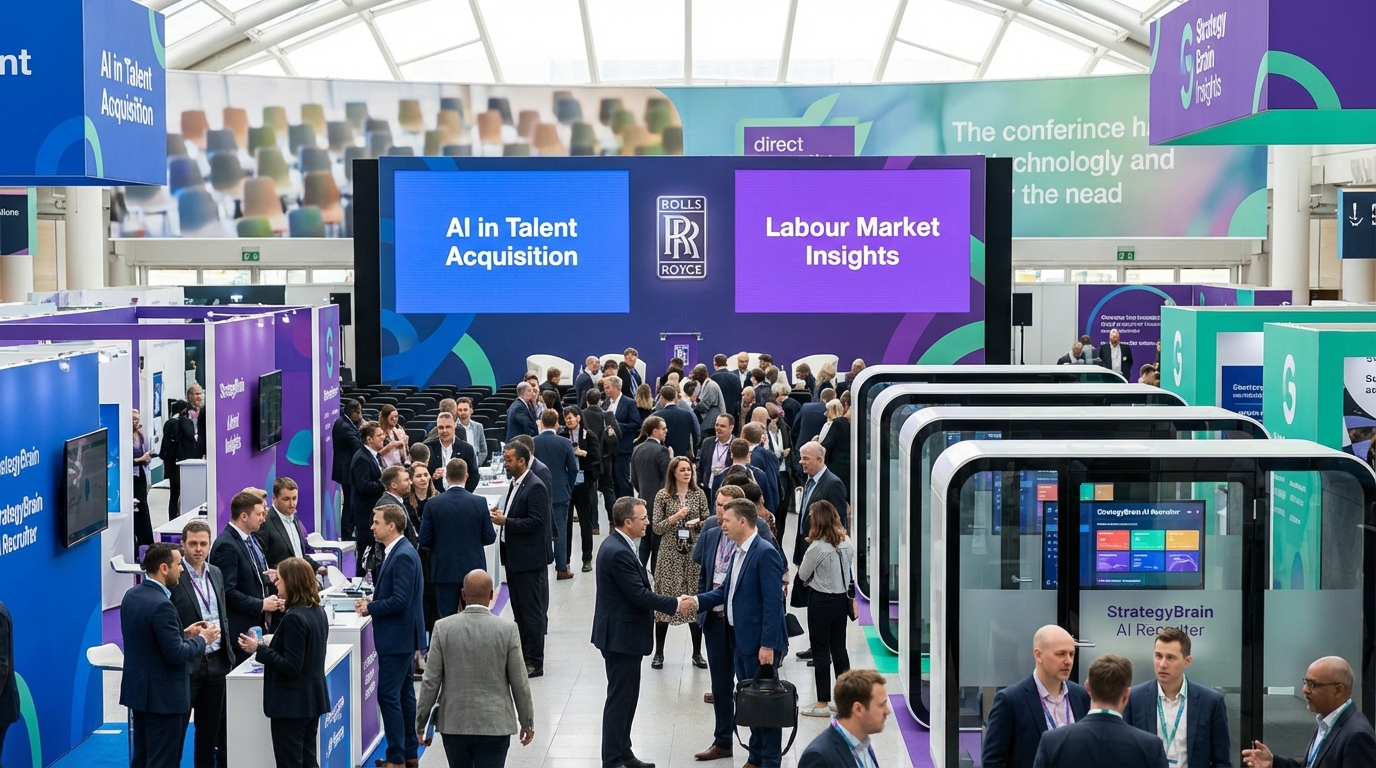
On a mission to firestart conversations on candidate AI, the state of AI in recruitment, and the state of the labour market. Next week brings two mid week webinars that are worth your time if you care about practical outcomes, not just headlines. One session focuses on how Rolls Royce are using AI in talent acquisition. The other explains job applicant behaviour in the labour market and what it signals for recruiters. If you are also exploring efficient candidate screening with AI and AI candidate screening workflows, these discussions are a strong way to pressure test your assumptions and bring better questions back to your team.
Why these two sessions matter for candidate AI
Most teams talk about AI in recruitment as if it is a single decision. In practice, it is a chain of decisions that starts with how you initiate conversations, continues through qualification, and ends with how you hand off to humans for interviews and final assessment. That is why these two topics pair well.
- AI in TA discussions tend to reveal what is automatable today, what still breaks in real workflows, and where governance matters.
- Applicant behaviour discussions tend to reveal why response rates change, why candidates ghost, and how expectations shift with market conditions.
When you combine both, you get a clearer view of what candidate AI should do for you. It should not just generate messages. It should help you run consistent, respectful, and measurable conversations at scale, while keeping recruiters in control of final qualification.
Webinar 1: How Rolls Royce are using AI in TA
Session topic: How Rolls Royce are using AI in talent acquisition.
This is the kind of session I pay attention to because it usually moves beyond theory. Enterprise TA teams have constraints that smaller teams do not. Compliance, stakeholder alignment, and process consistency are not optional. If a large organization is using AI in TA, the interesting questions are rarely “are they using AI” and more “where exactly does it sit in the workflow, and what did they stop doing manually.”
If you are building or buying candidate AI capabilities, listen for details in three areas.
- Workflow placement: Is AI used for sourcing, outreach, screening, scheduling, or analytics.
- Human handoff: At what point does a recruiter take over, and what information is captured before that happens.
- Quality controls: What guardrails exist for messaging, data handling, and candidate experience.
Those points map directly to what many teams mean by efficient candidate screening with AI. Screening is not only about ranking resumes. It is also about collecting the right information early, in a way that is consistent and auditable.
Webinar 2: State of the labour market and applicant behaviour
Session topic: State of the labour market, explaining job applicant behaviour.
Candidate AI is only as effective as the assumptions behind it. If applicant behaviour changes, your outreach and follow up strategy must change too. This session is a reminder that recruiting outcomes are not just a tooling problem. They are a market behaviour problem.
In my experience, the most useful takeaways from labour market behaviour sessions are the ones that translate into operational decisions, such as:
- Response timing: When candidates are most likely to reply, and how long you should wait before a follow up.
- Information needs: What candidates ask first, such as compensation, location, visa, flexibility, and growth.
- Friction points: Where candidates drop off, such as long forms, unclear role scope, or slow recruiter response.
These are exactly the areas where AI candidate screening can help, as long as it is designed to support real conversations rather than forcing candidates into a rigid script.
How to turn webinar insights into action with StrategyBrain AI Recruiter
Webinars are only valuable if you turn them into a repeatable workflow. The practical bridge, especially for LinkedIn hiring, is to operationalize what you learn into your outreach and early qualification steps.
StrategyBrain AI Recruiter is built for LinkedIn recruiting automation. It can automatically connect with candidates that match your search criteria, introduce the opportunity, answer questions about the role, company, and compensation, confirm interview interest, and collect resumes and contact information from interested candidates. It also supports 24/7 multilingual communication, which matters when applicant behaviour is shaped by time zones and language friction.
Here is how I recommend applying the two webinar themes without overcomplicating your process.
1) Convert “AI in TA” ideas into a clear human handoff
One common failure mode in candidate AI projects is unclear ownership. The AI does too much, or it does too little, and recruiters do not trust the output. A cleaner approach is to define the handoff point.
- AI handles: initial connection, first message, common Q and A, follow up, and collecting resumes and contact details.
- Recruiter handles: final qualification against job requirements and interview decisions.
This aligns with how StrategyBrain AI Recruiter is designed. It can identify willingness to communicate or interview, but it does not claim to fully determine fit from the resume. That boundary is healthy for trust and for compliance.
2) Convert “applicant behaviour” insights into message content and timing
When labour market behaviour shifts, candidates often ask the same questions earlier. If your team is slow to respond, you lose momentum. StrategyBrain AI Recruiter can respond around the clock and in the candidate’s native language, which reduces delays and misunderstandings that can derail otherwise qualified conversations.
For efficient candidate screening with AI, the goal is not to send more messages. The goal is to reduce time to clarity. That means candidates quickly understand the role, and you quickly understand whether they want to proceed.
3) Scale without adding recruiter headcount
If you are hiring across multiple roles or geographies, the operational bottleneck is often the same. One recruiter cannot run enough high quality conversations at once. StrategyBrain AI Recruiter supports managing more than 100 LinkedIn accounts, which enables building AI powered recruitment teams for scalable hiring while keeping recruiters focused on the final shortlist and interviews.
Practical checklist for your next 7 days
If you join the sessions, use this checklist to turn notes into action. It is designed to be copied into your team doc and reviewed in a 30 minute debrief.
- Write down the handoff point between candidate AI and recruiters in one sentence.
- List the top 5 candidate questions you hear most often, including compensation and role scope.
- Define what “interested” means for your team, such as willingness to interview within 7 days.
- Decide what to collect before interviews, including resume and best contact method.
- Set a follow up rule with a specific cadence, such as first follow up within 24 hours.
- Choose one role to pilot for AI candidate screening on LinkedIn before expanding.
- Document one risk and one guardrail, such as privacy handling and message approval.
FAQ
What does candidate AI mean in day to day recruiting?
Candidate AI usually refers to using AI to support candidate facing steps such as outreach, Q and A, follow up, and early qualification. In practice, it is most useful when it reduces time to response and improves consistency, while recruiters keep control of final selection decisions.
Is AI candidate screening the same as resume ranking?
No. Resume ranking is one part of screening. AI candidate screening can also include collecting missing information, confirming interest, answering role questions, and capturing resumes and contact details so recruiters can review a cleaner shortlist.
How does StrategyBrain AI Recruiter support efficient candidate screening with AI?
It automates the initial LinkedIn workflow, including connecting, introducing the role, answering common questions, confirming interview interest, and collecting resumes and contact information. Recruiters then review the collected resumes and proceed with interviews.
Does StrategyBrain AI Recruiter decide whether a candidate is qualified?
No. It identifies willingness to communicate or interview and gathers the materials needed for review. Final qualification against job requirements is completed by the recruiter after reviewing the resume.
Can it communicate with candidates in different languages?
Yes. StrategyBrain AI Recruiter supports multilingual communication and can respond 24/7, which helps when candidates are in different time zones or prefer to communicate in their native language.
How does it handle resumes and contact details?
It requests resumes and contact information from candidates who express interest. It supports email submissions and LinkedIn file uploads, and it captures contact details shared in LinkedIn messages for recruiter review.
What about privacy and compliance?
Based on the product documentation provided, StrategyBrain AI Recruiter is designed to comply with privacy regulations in the EU, United States, and Canada. Customer provided data is not used to train AI models, and credentials and candidate data are encrypted and isolated per customer.
Do I need to replace recruiters to use candidate AI effectively?
No. The most sustainable model is human plus AI. Use AI for repetitive outreach and early conversation steps, then have recruiters focus on final qualification, stakeholder alignment, and interviews.
Conclusion
These two mid week sessions are a timely way to sharpen how you think about candidate AI. One grounds the conversation in real AI in TA usage. The other explains applicant behaviour in the labour market, which is the context your workflows must adapt to. My recommendation is to attend both, then run a short debrief using the checklist above. If your next step is to operationalize efficient candidate screening with AI on LinkedIn, StrategyBrain AI Recruiter is a practical way to automate the initial outreach, Q and A, follow up, and resume collection while keeping recruiters responsible for final qualification and interviews.