Candidate management software helps recruiting teams track outreach, conversations, re9sume9s, and next steps in one system so candidates do not get lost between LinkedIn messages, email threads, and spreadsheets. Using the Disrupt HR YVR event from September 19, 2017 as a real-world lens, this guide turns people-first recruiting ideas into a repeatable workflow: define what e2809ccaring for peoplee2809d looks like in your pipeline, standardize follow-up, and use candidate engagement software to keep response times consistent. We also explain where StrategyBrain AI Recruiter fits naturally in that workflow by automating LinkedIn connecting, role introductions, candidate Q&A, interview-intent checks, and re9sume9 and contact capture, while recruiters keep the final qualification decision.
Quick answer: If your team is struggling with inconsistent follow-up and scattered candidate conversations, implement a single candidate management software workflow with clear stages and service-level targets, then automate the repetitive LinkedIn outreach and early screening steps with StrategyBrain AI Recruiter so candidates get timely, consistent communication.
- People-first pipeline: define what e2809ccaree2809d means at each stage
- Operational clarity: one owner per candidate, one next step per conversation
- Automation fit: AI handles outreach and follow-up; recruiters handle final qualification
- LinkedIn scale: support multi-account recruiting teams when volume increases
Key Takeaways
- Candidate management software is a workflow, not just a database: define stages, owners, and next steps so every candidate has a clear path.
- Candidate engagement software should enforce response discipline: set a response-time target and measure it by stage and channel.
- Disrupt HR YVRe28099s core theme was people-first recruiting: caring for candidates is operationalized through consistency, clarity, and follow-through.
- StrategyBrain AI Recruiter can automate LinkedIn outreach and early conversations: it connects, introduces roles, answers questions, checks interest, and collects re9sume9s and contact details.
- Final qualification remains human-led: AI Recruiter identifies willingness to proceed; recruiters decide fit after reviewing the re9sume9.
- Scale without adding headcount: AI Recruiter supports managing more than 100 LinkedIn accounts for team-based sourcing operations.
Table of Contents
Disrupt HR YVR: what happened and why it still matters
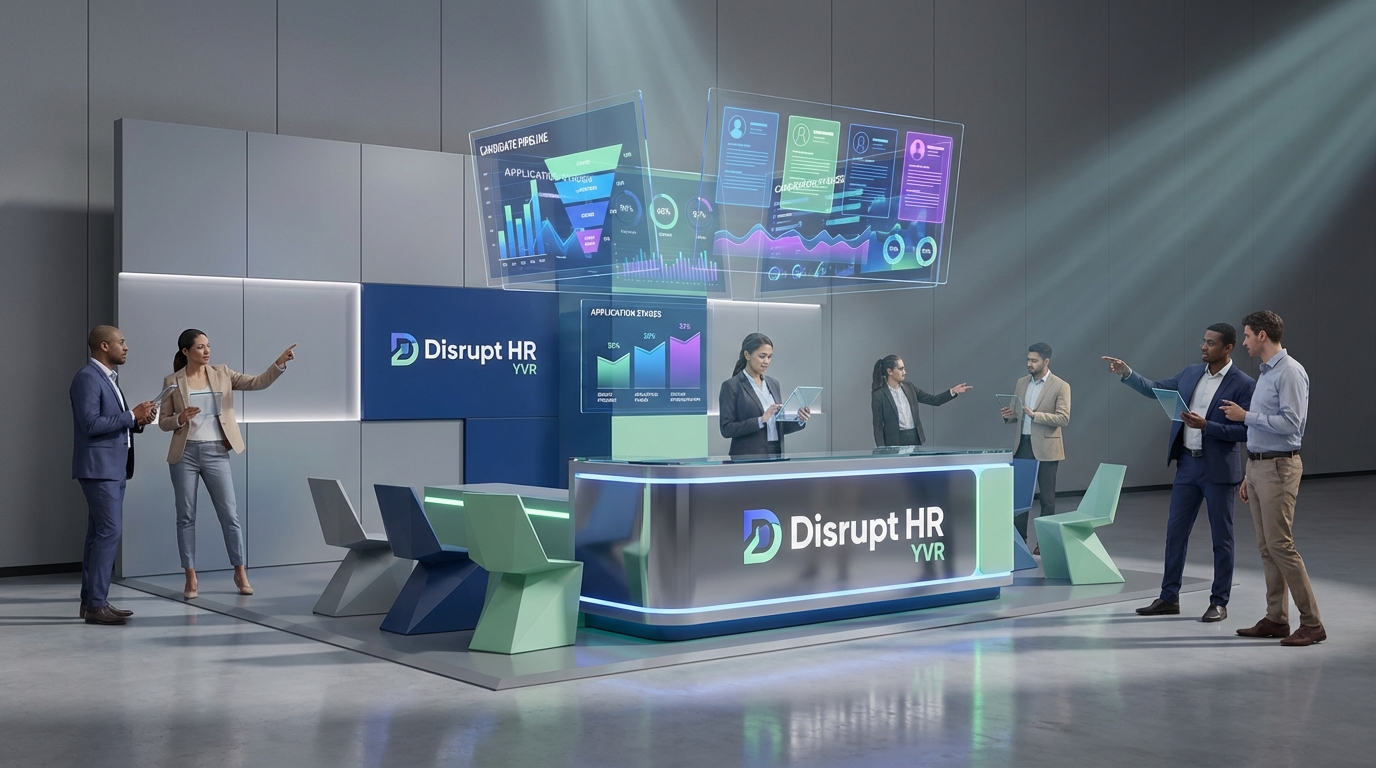
In the original Disrupt HR YVR recap dated September 26, 2017, the author describes attending the event on Tuesday, September 19 with Alessia. The talks covered diversity in the workplace, improving the recruitment process, and ways to engage and motivate employees. The unifying message was simple: caring for the people you work for and with is crucial for achieving success.
The recap also included a Dale Carnegie quote that captures the spirit of candidate-centric recruiting: you build trust faster by being genuinely interested in other people. In recruiting terms, that translates into consistent communication, clear expectations, and respectful follow-up, which is exactly what strong candidate management software and candidate engagement software should enforce.
Speakers listed in the event recap
- Shandele Cruickshank, Senior Talent Acquisition, and Dawn Farahani, Senior Manager, Colliers International
- Jordan Bower, Transformational Storytelling
- Johanna Hudson, Senior Manager, Talent Acquisition, Aritzia
- Hussain Dhanani, Product Manager, Bench Accounting
- Paschal Okwundu, intern, RBC
- Stacey Rodgers, Organizational Development Specialist, WestJet
- Jeff Smith, Chief Operating Officer, Mobify
What candidate management software should do in practice
Candidate management software is the system and process used to move a person from first contact to interview and offer with full context preserved. In practical terms, it should prevent three common failures: duplicated outreach, slow follow-up, and lost context when multiple recruiters touch the same candidate.
Candidate engagement software is the part of that system focused on communication. It helps teams send messages, track replies, and maintain consistent follow-up. When it works well, candidates experience a coherent conversation rather than a series of disconnected pings.
Best talent management software is a broader category that can include onboarding, performance, and internal mobility. This article focuses on the candidate stage, from sourcing through interview scheduling readiness.
Minimum capabilities to look for
- Single source of truth: one profile per candidate with message history and documents.
- Stage clarity: defined pipeline stages with entry and exit criteria.
- Ownership: a named owner responsible for the next action.
- Auditability: timestamps for outreach, replies, and handoffs.
- Privacy controls: role-based access and clear data handling practices.
A people-first candidate workflow you can implement
We have implemented variations of this workflow in high-volume LinkedIn sourcing environments. The key is to treat e2809ccaringe2809d as an operational standard, not a personality trait. That means every candidate gets a timely response, a clear next step, and a respectful close-out when it is a no.
Step-by-step workflow
-
Define your pipeline stages
Use 6 to 9 stages maximum. Example stages: Sourced, Connected, Conversation Active, Interested, Re9sume9 Received, Recruiter Review, Interview Requested, Closed.
-
Set a response-time target per stage
Pick a measurable target such as e2809crespond within 1 business daye2809d for active conversations. Track it in your candidate engagement software.
-
Standardize the first message and the follow-up sequence
Write a short intro that states the role, why you reached out, and what you need next. Create 2 follow-ups with a polite close-out message.
-
Capture intent before you capture documents
Ask whether the candidate is open to a conversation and confirm interview interest before requesting a re9sume9. This reduces friction and improves reply quality.
-
Collect re9sume9s and contact details consistently
Decide which channels you accept and where they are stored. Ensure every re9sume9 is attached to the candidate record with a received timestamp.
-
Keep final qualification human-led
Use automation to surface interested candidates, then have recruiters review re9sume9s against requirements and decide who advances.
Common pain points we see and how to fix them
- Pain point: candidates get multiple messages from different team members. Fix: enforce one owner per candidate and lock ownership changes to a handoff step.
- Pain point: follow-up happens only when recruiters have time. Fix: use candidate engagement software to schedule follow-ups and report overdue conversations daily.
- Pain point: re9sume9s arrive but are not attached to the right record. Fix: standardize intake and require a e2809cre9sume9 receivede2809d stage transition only when the file is stored.
Where StrategyBrain AI Recruiter fits in the workflow
StrategyBrain AI Recruiter is designed for LinkedIn hiring workflows where the biggest bottleneck is repetitive outreach and early-stage conversation management. In our experience, this is the exact point where candidate management software often breaks down because recruiters are juggling too many parallel threads.
What AI Recruiter automates on LinkedIn
- Connecting: automatically connects with candidates who match your targeted search criteria.
- Role introduction: introduces the job opportunity using the job and company details you provide.
- Two-way Q&A: answers candidate questions about the role, company, compensation, and benefits based on the information you supply.
- Interest confirmation: confirms whether the candidate is interested in interviewing.
- Re9sume9 and contact capture: collects re9sume9s and contact details from interested candidates and marks re9sume9s as received when provided.
How it supports candidate engagement software goals
Candidate engagement software is only as good as the consistency of execution. AI Recruiter helps by providing always-on responsiveness and follow-up, including multilingual communication across time zones. That reduces the e2809cdead aire2809d that candidates often interpret as disinterest.
Important limitation to understand
AI Recruiter identifies a candidatee28099s willingness to communicate or interview, but it does not decide whether the re9sume9 fully matches the job requirements. Recruiters still perform the final qualification step after reviewing the re9sume9.
Scale and operations
For teams that need to scale sourcing, AI Recruiter supports managing more than 100 LinkedIn accounts so organizations can run coordinated outreach across multiple recruiters or business units. This is especially useful when you want the consistency of a shared candidate management software workflow while increasing throughput.
Quick comparison: workflow options
| Approach | Speed to first response | Consistency | Best for |
|---|---|---|---|
| Manual LinkedIn outreach + spreadsheets | Depends on recruiter availability | Low to medium | Very low volume hiring |
| Candidate management software + manual messaging | Depends on recruiter availability | Medium | Teams that need structure but have limited volume |
| Candidate management software + StrategyBrain AI Recruiter | Near real-time for active conversations | High | High volume LinkedIn sourcing and global candidate pipelines |
Implementation checklist
Use this checklist to operationalize the Disrupt HR YVR people-first message inside your candidate management software.
- [ ] Define 6 to 9 pipeline stages with entry and exit criteria
- [ ] Assign one owner per candidate record
- [ ] Set a response-time target for active conversations
- [ ] Create a 3-message sequence: intro, follow-up 1, follow-up 2, plus a close-out
- [ ] Decide how re9sume9s and contact details are collected and stored
- [ ] Document what AI can do versus what recruiters must do
- [ ] Run a weekly audit: overdue follow-ups, duplicate outreach, and stalled stages
FAQ
What is candidate management software used for?
Candidate management software is used to track each candidatee28099s status, communication history, documents, and next steps from sourcing through interview readiness. It reduces missed follow-ups and keeps context intact when multiple team members collaborate.
Is candidate engagement software different from candidate management software?
Yes. Candidate engagement software focuses on messaging, follow-ups, and response tracking, while candidate management software covers the broader workflow including stages, ownership, and document handling. Many platforms combine both, but the goals are distinct.
How does StrategyBrain AI Recruiter help with LinkedIn recruiting?
StrategyBrain AI Recruiter automates LinkedIn connecting, introduces job opportunities, answers candidate questions about the role and compensation based on your inputs, confirms interview interest, and collects re9sume9s and contact details from interested candidates.
Does AI Recruiter decide whether a candidate is qualified?
No. AI Recruiter identifies willingness to communicate or interview, but it does not determine whether the re9sume9 matches job requirements. Recruiters make the final qualification decision after reviewing the re9sume9.
Can AI Recruiter communicate with candidates in different languages?
Yes. AI Recruiter supports multilingual communication and can respond around the clock, which helps global pipelines maintain consistent candidate engagement across time zones.
How does AI Recruiter capture re9sume9s and contact details?
When a candidate expresses interest, AI Recruiter requests a re9sume9 and contact information. If a re9sume9 is sent, the system marks it as received and captures contact details shared in the conversation.
Is this article a list of best talent management software?
No. This article is a workflow guide that uses Disrupt HR YVRe28099s people-first themes to explain how to run a stronger candidate pipeline. If you are evaluating best talent management software, use the checklist above to validate whether a platform supports your required workflow.
What should I implement first if my team is overwhelmed?
Start with ownership and follow-up discipline: one owner per candidate and a response-time target for active conversations. Then add automation for repetitive LinkedIn outreach and early screening so recruiters can focus on qualification and interviews.
Conclusion
Disrupt HR YVR highlighted a timeless recruiting truth: caring for people drives better outcomes. In 2026, the most reliable way to operationalize that care is to run a disciplined candidate management software workflow with clear stages, ownership, and consistent follow-up, supported by candidate engagement software that makes responsiveness measurable.
If LinkedIn outreach is your bottleneck, StrategyBrain AI Recruiter fits naturally into this model by automating connecting, introductions, Q&A, interest confirmation, and re9sume9 and contact capture, while keeping final qualification with your recruiters. Next step: implement the checklist, pilot the workflow on one role for 14 days, and review the audit metrics weekly to remove friction for both candidates and your team.
Testing disclaimer: Workflow recommendations reflect our operational experience implementing structured sourcing and follow-up processes. Results vary by role, market, and messaging quality.