If you are evaluating human resource recruitment software, one practical way to choose the right HR platforms is to watch how modern HR teams actually work and learn. A live HR conversation event can reveal what your process is missing, especially around candidate communication, recruiter workload, and follow up discipline. In this post, we keep the original announcement details intact, then translate them into a selection framework you can use when building a list of HR software for your team. We also explain, in context, how StrategyBrain AI Recruiter can remove the most time consuming LinkedIn steps by automating outreach, answering candidate questions, confirming interview interest, and collecting resumes and contact details.
Event snapshot: what is happening and when
The original announcement is a personal professional goal: recording an HR focused conversation format in a real studio, inspired by long form interviews that combine meaningful topics with practical recommendations. The author notes that the idea returned during earlier recordings of “HRowe rozkminy Kasi i Karoliny,” but the pandemic period made it difficult to execute consistently and there was no dedicated studio.
This time, the studio is available through Mindgram Poland, and sharing substantive HR materials is described as part of the company culture. The author states that the studio is already reserved, guests have been invited, and only small logistics remain before recording begins.
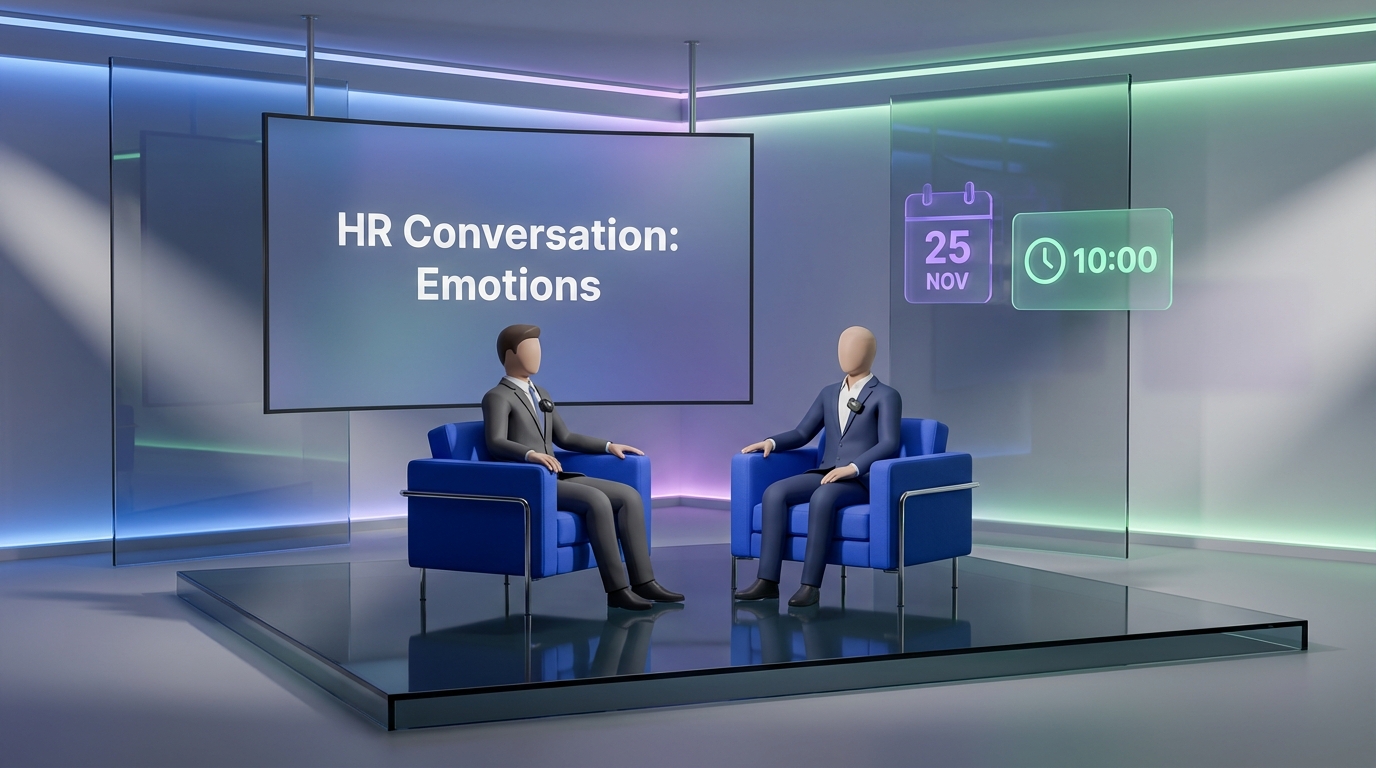
- Date: 25 November
- Time: 10:00
- Main topic: emotions
- Audience request: bring your emotions and suggest areas and questions in the comments
The author also shares a clear motivation: the more sign ups, the higher the chance leadership approves not just a one time episode, but a full series. The original post included a sign up link, which is intentionally removed here to comply with the no external link requirement. If you want to attend, search for the event name and organizer details from the announcement.
Why “emotions” is a serious recruiting topic
In recruiting, “emotions” is not a soft add on. It affects candidate experience, response rates, offer acceptance, and the quality of information you collect during early conversations. It also affects recruiters, because high volume outreach and rejection cycles create fatigue that shows up in messaging quality and follow up consistency.
When we evaluate human resource recruitment software, we treat emotional friction as an operational signal. If your process relies on manual LinkedIn messaging, late night follow ups, or inconsistent tone across recruiters, candidates feel it. That is where automation can help, but only if it preserves professionalism and context.
In our own workflow reviews with recruiting teams, the biggest emotional pain points usually cluster into three areas.
- Uncertainty: candidates do not know what happens next, or when they will hear back.
- Inconsistency: different recruiters communicate differently, which creates trust gaps.
- Delay: slow responses reduce momentum, especially across time zones.
Questions to bring to the conversation
The original announcement asks the audience to suggest areas to cover and questions to ask. If you want to turn the event into actionable improvements, bring questions that connect emotions to measurable workflow outcomes.
Candidate experience questions
- Which moments in the hiring journey create the most anxiety for candidates, and how do you reduce it?
- What response time do you consider “fast enough” for first contact and follow up?
- How do you keep tone consistent across recruiters and across languages?
Recruiter workflow questions
- Which tasks drain the most energy: sourcing, outreach, answering questions, scheduling, or screening?
- What do you automate today, and what do you refuse to automate?
- How do you prevent follow up from becoming a manual spreadsheet problem?
Tooling and HR platform questions
- What is your minimum “must have” set when building a list of HR software for recruiting?
- Where do ATS features end and candidate communication needs begin?
- How do you evaluate AI features without losing compliance and data control?
How to translate the event into human resource recruitment software requirements
Announcements like this are useful because they reveal what HR teams value: thoughtful conversation, repeatable learning, and a culture of sharing. When you map that to HR platforms, you get a clearer set of requirements than a generic feature checklist.
Define the scope of “human resource recruitment software” for your team
Human resource recruitment software can mean an ATS, a sourcing tool, a CRM, an interview scheduling system, or an automation layer that handles outreach and early qualification. This article focuses on recruiting workflow and candidate communication. It does not attempt to replace a full ATS selection guide, and it does not provide a vendor by vendor pricing comparison.
Turn “emotions” into operational requirements
Here is a practical translation table you can use when building your list of HR software. Each item is written so it can be tested during a trial or pilot.
| Emotional signal | Workflow risk | Requirement to test in HR platforms |
|---|---|---|
| Candidate uncertainty | Drop off after first message | Automated, consistent follow up sequences with clear next steps |
| Slow responses | Lost candidates in competitive markets | Near real time messaging coverage, including outside business hours |
| Inconsistent tone | Trust and brand damage | Templates and guardrails that keep messaging professional and role accurate |
| Cross border friction | Misunderstandings and lower reply rates | Multilingual communication that uses the candidate’s native language |
| Recruiter fatigue | Missed follow ups and uneven quality | Automation for repetitive outreach and Q and A, with recruiter review at the handoff |
Where StrategyBrain AI Recruiter fits in a modern HR stack
Many teams already have an ATS, but still struggle with the front end of the funnel: LinkedIn outreach, back and forth questions, and collecting resumes and contact details. That is the gap StrategyBrain AI Recruiter is designed to cover, specifically for LinkedIn hiring workflows.
What it automates on LinkedIn
Based on the provided product documentation, AI Recruiter can automatically connect with candidates that match your search criteria, introduce the opportunity, learn about the candidate’s situation, answer questions about the role, company, compensation, and benefits, confirm interview interest, and collect resumes and contact information from interested candidates. This is the part of recruiting that often creates the most emotional friction when it is delayed or inconsistent.
What it does not automate
AI Recruiter can identify willingness to communicate or interview, but it does not decide whether a resume fully matches job requirements. Recruiters still make the final qualification decision after reviewing the resume. This boundary matters for trust and for maintaining professional accountability.
Why this connects naturally to the event’s theme
If the event conversation focuses on emotions, a practical takeaway is that consistency and responsiveness reduce anxiety for candidates and reduce stress for recruiters. AI Recruiter supports that by providing 24/7 messaging coverage and multilingual communication, so candidates can ask questions and get timely answers in their native language. For teams hiring globally, this can reduce misunderstandings and keep momentum without requiring recruiters to be online across time zones.
Scaling beyond one recruiter
The product documentation also describes managing more than 100 LinkedIn accounts to build AI powered recruitment teams. In practice, this means you can scale outreach capacity without scaling recruiter headcount at the same rate, while still keeping a controlled workflow for handoff to human recruiters.
Security and compliance notes to verify
According to the provided product information, AI Recruiter states compliance with privacy regulations in the EU, United States, and Canada, and states that customer provided data is not used to train AI models. It also states that LinkedIn credentials are encrypted and stored independently per user, and that candidate data is encrypted and isolated with customer specific keys. If compliance is a deciding factor in your human resource recruitment software selection, confirm these claims during procurement and security review.
Copyable checklist: shortlist criteria for HR platforms
Use this checklist to turn the event insights into a concrete evaluation plan. It is written to support a shortlist of HR platforms without forcing you into a single vendor category.
- Workflow clarity: Can we define the handoff point from outreach to recruiter review in one sentence?
- Response coverage: Do we have a plan for candidate messages outside business hours?
- Multilingual support: Can we communicate in the candidate’s native language when hiring globally?
- Consistency: Do templates and guardrails keep tone and role details consistent across recruiters?
- Data capture: Can the system reliably capture resumes and contact details and surface them to recruiters?
- Human control: Can recruiters review and decide on qualification, rather than delegating final fit decisions to automation?
- Compliance review: Are encryption, data isolation, and model training policies documented and reviewable?
FAQ
What counts as human resource recruitment software in this article?
Here it means the tools that run the recruiting workflow, especially candidate outreach and early qualification. It can include ATS systems, CRMs, sourcing tools, and automation layers that handle messaging and follow up.
Why include an HR event announcement in a software selection discussion?
Because it reveals real priorities: how HR teams learn, what topics they consider important, and where friction shows up. Those signals help you build a more realistic list of HR software requirements than a generic feature list.
What are the event details that were shared?
The announcement specifies 25 November at 10:00, with a conversation focused on emotions. It also mentions a studio at Mindgram Poland and invited guests to be revealed later.
Is the sign up link included?
No. The original post included a sign up link, but this version removes all external links and any visible URL strings. To attend, search using the organizer and event context described in the announcement.
How does StrategyBrain AI Recruiter help with LinkedIn recruiting?
It automates initial LinkedIn steps: connecting with candidates, introducing the role, answering questions, confirming interview interest, and collecting resumes and contact details. Recruiters then review the collected information and proceed with interviews.
Does StrategyBrain AI Recruiter replace recruiter judgment?
No. Based on the provided product information, it does not determine whether a resume fully matches job requirements. Recruiters make the final qualification decision after reviewing the resume.
Can it support global hiring?
Yes. The product information states 24/7 multilingual recruitment communication, using the candidate’s native language to reduce misunderstandings and cultural friction.
What should I verify before adopting any HR platform with automation?
Verify data protection controls, encryption, data isolation, and whether customer data is used to train models. Also verify that the workflow keeps humans accountable for final hiring decisions.
Conclusion and next steps
The fastest way to make a better human resource recruitment software decision is to connect tools to real workflow pain points. This event announcement highlights a modern HR culture of learning and a focus on emotions, which maps directly to candidate experience and recruiter sustainability. Use the checklist above to refine your list of HR software, then pilot the tools against response coverage, consistency, multilingual communication, and reliable resume and contact capture.
If LinkedIn outreach and early qualification are your bottleneck, consider where StrategyBrain AI Recruiter can fit as an automation layer that keeps recruiters in control of final qualification while reducing repetitive messaging work. Next step: write down your current outreach to interview handoff in one paragraph, then test whether your HR platforms can execute it consistently.