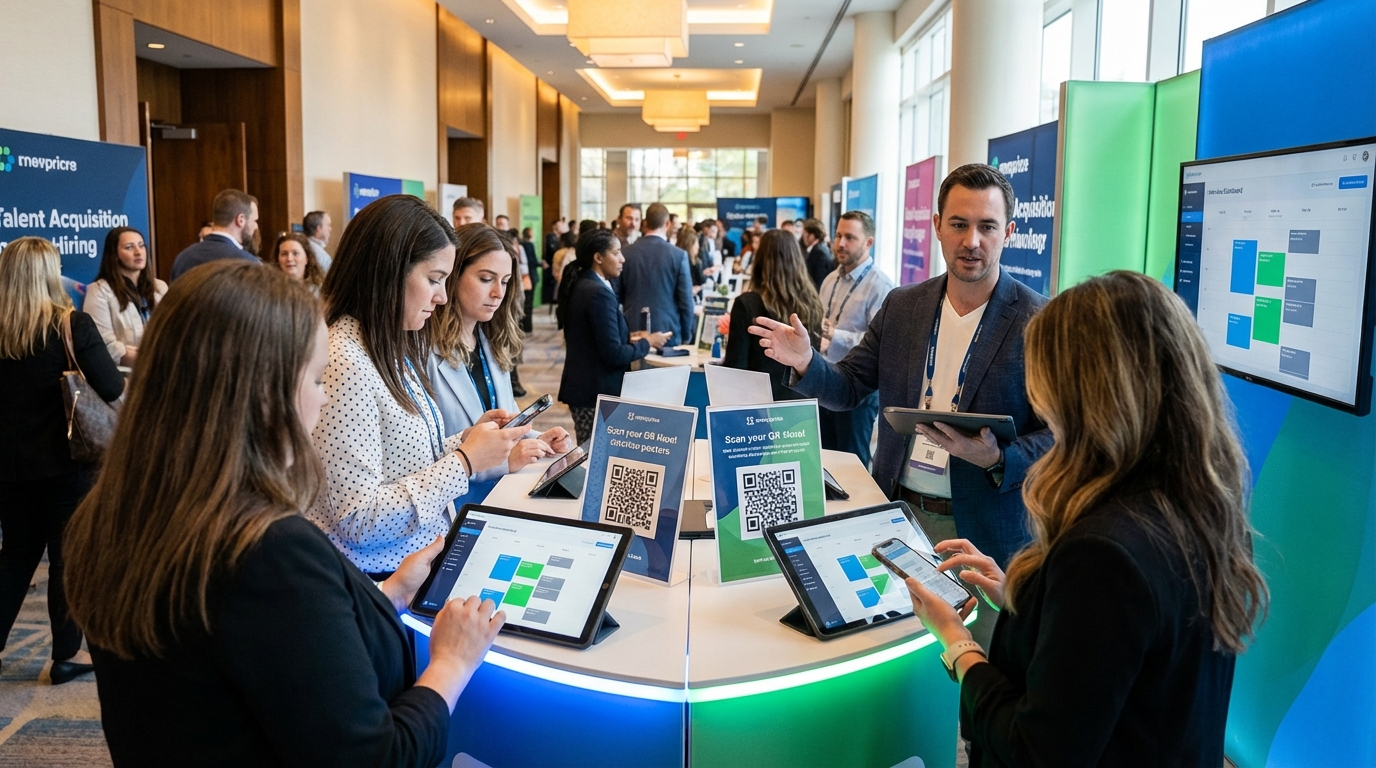
An interview scheduling app is one of the most reliable ways to convert recruiting automation into measurable output, because it removes the slowest part of the funnel: coordinating calendars, time zones, and follow ups. In this Recfest retro, I am sharing 5 takeaways I noted from Talent Acquisition conversations and speakers, then translating them into concrete scheduling decisions you can apply this week. I will also show where a free online schedule maker is enough for early standardization, where an enterprise scheduling app becomes necessary, and how StrategyBrain AI Recruiter improves scheduling outcomes by automating LinkedIn outreach, answering candidate questions, confirming interview interest, and collecting resumes and contact details before a human ever opens a calendar.
Context: State of Talent Acquisition 2025 (Recfest retro)
I was still buzzing from Recfest, which is widely described as one of the biggest events for Talent Acquisition. The notes below are not a transcript. They are the five ideas that stuck with me, plus what they imply for scheduling, automation, and how TA leaders protect time for strategic work.
Takeaway 1: Hire in bunches (and schedule like you mean it)
Rory Sutherland has a talent for turning abstract ideas into stories that feel immediately usable. One idea I wrote down was hiring in cohorts. When you hire for a cohort instead of a single role, you can take a calculated risk on a moonshot candidate who might feel too risky in a one off hire. You still hire the people you need for planned execution, but you also give the organization a chance at extraordinary talent.
Scheduling implication: cohort hiring only works if your interview capacity is planned as a system. A single recruiter manually coordinating calendars can become the bottleneck. This is where an interview scheduling app stops being a convenience and becomes infrastructure.
What I would do differently next time
- Batch interview blocks for the cohort, then allocate interviewers to blocks instead of negotiating one off times.
- Standardize stages so candidates in the cohort move through the same steps, which makes scheduling predictable.
- Use a free online schedule maker only for early experimentation, then graduate to an enterprise scheduling app when interviewer volume and time zones increase.
Takeaway 2: AI skepticism is declining in TA
Sven Elbert consistently delivers a must attend talk at Recfest. The framing I noted was a change over time view of sentiment in the TA community, based on repeated questions to UK TA leaders. The key point I took away is that AI skepticism is declining, which changes what leaders can realistically implement without cultural resistance.
Scheduling implication: when teams accept automation, you can automate more than reminders. You can automate the pre scheduling work that creates clean handoffs. For example, StrategyBrain AI Recruiter can handle the initial LinkedIn outreach, answer candidate questions about role, company, and compensation, confirm interview interest, and collect resumes and contact details. That means your scheduling app receives candidates who are already aligned on basics, which reduces reschedules and no shows.
Takeaway 3: Keep what you kill (politics of productivity)
One theme that feels increasingly urgent is what happens to the time saved by AI and automation. It is naive to assume time saved automatically becomes high value work. TA leaders often need to negotiate for a keep what you kill policy, where time saved by TA automation is reinvested into strategic TA projects rather than disappearing into general cost savings.
Scheduling implication: an interview scheduling app can create visible, auditable time savings. That visibility is useful only if you decide in advance where the saved time goes.
A practical reinvestment plan (copy and use)
- Measure baseline scheduling load: track recruiter hours per week spent on coordination, follow ups, and reschedules.
- Automate the coordination layer: implement a scheduling app with templates, time zone handling, and automated reminders.
- Reinvest the saved hours: assign them to pipeline quality work such as structured outreach experiments, interviewer training, or improving scorecards.
Takeaway 4: Public speaking is an unfair career advantage
Another line I wrote down was that performance is not enough in 2025. You also need profile. It is an unfair advantage, and it may become more valuable as AI dilutes and confuses performance measures. The advice was simple: get on stage, put yourself forward, do not wait to be asked.
Scheduling implication: internal influence matters when you are trying to standardize scheduling across hiring managers. If you want adoption of an interview scheduling app, you need champions who can explain the why, not just the how. A short internal talk can do more than a long rollout document.
Takeaway 5: Inevitable serendipity
Recfest also contains what I called inevitable serendipity. A random one to one chat with Chance Bleu Montgomery in an empty speakers lounge at the end of the day was an unexpected highlight. The lesson for me was that you cannot over optimize an event like this. You have to give yourself the entire day, wander, and leave empty space so opportunity can fill it.
Scheduling implication: do not over optimize candidate scheduling either. If every calendar is packed with zero buffer, you lose the ability to handle high potential candidates quickly. A good scheduling app should help you protect buffer time, not eliminate it.
How to apply this with an interview scheduling app
Below is the workflow I recommend when you want scheduling to support cohort hiring, reduce friction, and make time savings visible enough to defend.
Step by step workflow
- Define your interview stages: write down the exact stages and who owns each stage so scheduling rules are consistent.
- Create scheduling templates: standard durations, required attendees, and buffer rules for each stage.
- Decide what is self scheduled: pick which stages candidates can book directly and which require recruiter control.
- Set time zone and availability rules: ensure the scheduling app displays candidate local time and prevents double booking.
- Automate reminders and reschedule paths: reminders reduce no shows, and a clear reschedule path reduces recruiter back and forth.
- Track time saved: report time saved monthly so you can support a keep what you kill reinvestment plan.
When a free online schedule maker is enough
- You have a small number of interviewers and a single time zone.
- You are standardizing basic meeting links and reminders.
- You can tolerate manual exception handling for reschedules.
When you need an enterprise scheduling app
- You are hiring in cohorts and need repeatable interview blocks.
- You have multiple time zones and frequent interviewer changes.
- You need governance, reporting, and consistent candidate experience at scale.
Where StrategyBrain AI Recruiter fits in the workflow
Scheduling improves speed only if the pipeline feeding it is clean. In my experience, the biggest scheduling waste is not the calendar tool itself. It is the messy pre scheduling conversation: unclear interest, unanswered questions, missing resumes, and slow follow ups.
StrategyBrain AI Recruiter is designed to reduce that waste upstream by automating LinkedIn recruiting tasks. It automatically connects with candidates within your search criteria, introduces the opportunity, answers questions about the role, company, and compensation, confirms interview interest, and collects resumes and contact information from interested candidates. It also provides 24/7 multilingual communication, which matters when you are scheduling across countries and time zones.
In practice, this means your interview scheduling app receives candidates who are already qualified for the next human step: a recruiter review and an interview invite. That is how you turn automation into a real keep what you kill story, because you can show fewer manual messages, fewer scheduling loops, and faster movement from interest to booked interview.
FAQ
What is an interview scheduling app in recruiting?
An interview scheduling app is software that coordinates interview availability between candidates and interviewers, typically handling time zones, booking rules, reminders, and rescheduling. In TA, it reduces manual back and forth and makes scheduling time savings measurable.
Is a free online schedule maker good enough for Talent Acquisition teams?
A free online schedule maker can work for small teams with limited interviewer volume and simple scheduling rules. Once you add cohort hiring, multiple time zones, or governance needs, an enterprise scheduling app is usually a better fit.
How does automation change interview scheduling outcomes?
Automation improves scheduling outcomes when it reduces pre scheduling uncertainty. If candidates have their questions answered, confirm interest, and share resumes before booking, you typically see fewer reschedules and less recruiter coordination time.
How does StrategyBrain AI Recruiter support scheduling?
StrategyBrain AI Recruiter automates LinkedIn outreach and early qualification, including confirming interview interest and collecting resumes and contact details. That creates cleaner handoffs into your scheduling app and reduces manual follow ups.
Does StrategyBrain AI Recruiter replace recruiters?
No. It replaces repetitive LinkedIn tasks such as connecting, initial messaging, answering common questions, and collecting resumes. Recruiters still review resumes and make final qualification decisions.
Can StrategyBrain AI Recruiter communicate in multiple languages?
Yes. It supports multilingual candidate communication, which helps global hiring teams reduce misunderstandings and keep conversations moving across time zones.
How do I protect time saved by scheduling automation?
Decide in advance where saved hours will be reinvested, then report time saved monthly. This supports a keep what you kill policy where automation gains fund strategic TA work instead of disappearing into general cost savings.
What is the biggest mistake teams make when adopting a scheduling app?
The biggest mistake is treating scheduling as a tool rollout instead of a workflow redesign. Without standardized stages, templates, and clear ownership, the app becomes another layer of complexity rather than a productivity system.
Conclusion
The five Recfest takeaways I wrote down all point to the same operational truth: TA productivity gains only matter if you convert them into capacity and better decisions. An interview scheduling app makes scheduling faster and more consistent, but the real leverage comes when you protect the saved time and feed scheduling with better prepared candidates. If you want a practical next step, start by standardizing stages and templates, then decide whether a free online schedule maker is sufficient for your current complexity. If your bottleneck is upstream messaging and qualification, consider adding StrategyBrain AI Recruiter so your scheduling workflow starts with confirmed interest, collected resumes, and fewer back and forth messages.