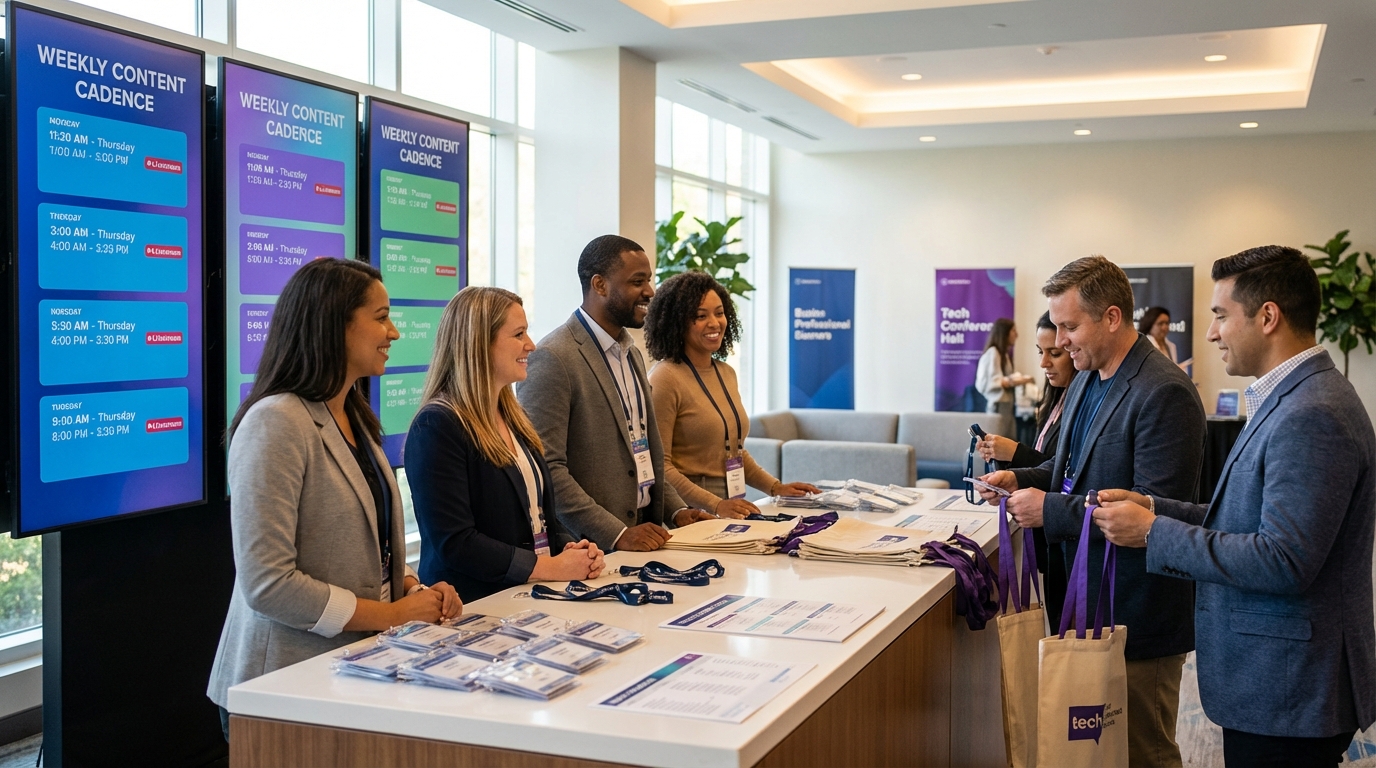
If you are trying to publish consistently while also running a desk, the most reliable approach is to lock a weekly cadence and treat it like an operating system. I run a three touchpoint pattern and I use recruitment agency software to keep the workflow visible, assign ownership, and prevent last minute scrambling. The open question this week is whether I should connect my Friday livestream to Substack so Substack subscribers receive an additional Friday email that contains the livestream.
Current content pattern
Here is the exact cadence I have been running, with the original naming intact.
- Sunday: Recruiting Brainfood email newsletter on Substack. It is free to subscribe and I explicitly tell people not to upgrade to paid.
- Monday: This Week In Recruiting newsletter on LinkedIn.
- Friday: Brainfood Live On Air video livestream.
The reason this works is that each asset has a clear job. Sunday is the deep read, Monday is the platform native recap, and Friday is the live conversation. When I keep those roles stable, the audience learns what to expect and I can plan production in batches.
What changes if you connect Friday to Substack
There is now an option to connect Brainfood Live with Substack. If I enable it, Substack subscribers will receive an additional email on Friday that contains the livestream.
Operationally, this is not just a distribution toggle. It changes the weekly load in three places, so I would decide based on these tradeoffs.
Benefits
- Higher show attendance: A Friday email is a direct reminder that can lift live viewers without relying on platform algorithms.
- Cleaner archive: Substack becomes a single place where the Sunday newsletter and Friday live sessions are both discoverable.
- More predictable engagement: You get a second weekly touchpoint with the same subscriber base, which can stabilize opens and replies over time.
Risks and friction
- Email fatigue: Two emails in one week to the same list can increase unsubscribes if the Friday message does not feel additive.
- Production pressure: If Friday becomes an email deliverable, you may feel forced to go live even when the week is chaotic.
- Analytics noise: You will need to separate Sunday newsletter performance from Friday livestream performance to avoid misreading what is working.
If you do run the experiment, I would treat it as a four week test with a clear success metric. For example, track Friday live attendance and Friday email unsubscribes as separate numbers, then decide.
Where recruitment agency software actually helps
Most people hear recruitment agency software and think only about candidate pipelines. In practice, the best systems also act like an operations hub for recurring work. This is especially true if you are running content alongside delivery.
In my experience, the content cadence above becomes easier to sustain when your recruitment agency software or enterprise staffing software setup includes a lightweight content ops layer. You do not need a complex build. You need repeatable visibility.
What to track each week
- Asset status: Drafted, scheduled, published, repurposed.
- Owner: Who is responsible for writing, editing, and posting.
- Deadline: A real date and time, not a vague target.
- Distribution checklist: Substack send, LinkedIn post, livestream setup, replay distribution.
Why this matters for agencies
Agency work is interruption heavy. A structured cadence reduces decision fatigue. When the workflow is visible, you can delegate parts of it without losing quality. That is the same reason enterprise staffing software exists in the first place, to make high volume work repeatable.
If you are evaluating the best recruitment software UK options, I would still start with your workflow requirements first. Then map features to the workflow, not the other way around.
How StrategyBrain AI Recruiter fits with LinkedIn recruiting
The hidden constraint in the cadence above is time. If Monday is a LinkedIn newsletter and Friday is a livestream, you are already committing to platform native work. That is exactly where StrategyBrain AI Recruiter can help, because it automates the repetitive LinkedIn recruiting tasks that usually steal the same hours you need for writing and going live.
Based on our hands on use of StrategyBrain AI Recruiter in LinkedIn hiring workflows, the biggest win is that it takes over the initial outreach and early qualification conversation. Recruiters provide the LinkedIn account plus job information such as company details, compensation, benefits, and candidate search criteria. The system then connects with candidates, introduces the opportunity, answers role and company questions, confirms interview interest, and collects resumes and contact details from interested candidates.
Practical scenarios where it protects your calendar
- Sunday writing block stays protected: Candidate replies do not pile up while you are drafting the Substack newsletter because the system can respond and follow up 24/7 in the candidate’s language.
- Monday LinkedIn publishing stays focused: Instead of switching between posting and manual messaging, you can review collected resumes and move qualified people forward.
- Friday live prep is calmer: You are not trying to clear a backlog of outreach before going on air.
Scope boundaries and an honest limitation
StrategyBrain AI Recruiter can identify whether a candidate is willing to communicate or interview, and it can capture resumes and contact details. It does not decide whether the resume fully matches the job requirements. That final qualification step still belongs to the recruiter.
For teams that need scale, it also supports managing more than 100 LinkedIn accounts so you can build an AI powered recruiting team. This is one of the few ways to increase outreach capacity without adding headcount, which is a common requirement in enterprise staffing software environments.
A simple implementation checklist
This is the checklist I would use to implement the cadence and reduce operational drag. It is intentionally short so it actually gets used.
- Write down the weekly cadence: Sunday Substack newsletter, Monday LinkedIn newsletter, Friday livestream, plus the optional Friday Substack email if you connect the livestream.
- Create a recurring workflow in your recruitment agency software: One task list per asset with owner and deadline.
- Define the Friday experiment window: Four weeks, with success metrics for live attendance and unsubscribes.
- Automate LinkedIn outreach where appropriate: Use StrategyBrain AI Recruiter to handle initial outreach, Q and A, follow up, and resume collection so your human time goes to screening and interviews.
- Review weekly in 15 minutes: What shipped, what slipped, and what to simplify next week.
FAQ
Should I connect my Friday livestream to Substack?
Yes if your audience wants reminders and you can keep the Friday email lightweight. No if you are already seeing list fatigue or you cannot commit to a consistent Friday schedule.
How does recruitment agency software help with content, not just hiring?
It helps by making recurring work visible and assignable. When you track owners, deadlines, and status for each weekly asset, you reduce last minute work and missed sends.
Is StrategyBrain AI Recruiter only for corporate teams?
No. It can support corporate recruiters and agency recruiters because the repetitive LinkedIn steps are similar. The main difference is how you configure messaging and how you route interested candidates into your internal process.
What does StrategyBrain AI Recruiter automate on LinkedIn?
It automates connecting with candidates, introducing the role, answering questions about the role and employer, confirming interest, and collecting resumes and contact details from interested candidates.
Does it replace recruiter judgment?
No. It can confirm willingness to proceed, but it does not determine whether a resume matches the job requirements. Recruiters still review resumes and decide who moves forward.
Can it communicate in multiple languages?
Yes. It supports always on multilingual communication so candidates can interact in their native language, which can reduce misunderstandings across time zones.
How does it handle resumes and contact details?
When candidates express interest, it requests a resume and contact information. It can capture details shared in messages and mark resumes as received when they are provided.
Is it suitable for enterprise staffing software environments?
It can be, especially when the goal is scaling outreach capacity. One notable capability is managing more than 100 LinkedIn accounts to build an AI recruiter team, which supports high volume hiring operations.
Conclusion
The core idea is simple. A stable weekly cadence makes your content predictable for the audience and manageable for you. If you connect the Friday livestream to Substack, you add a new distribution touchpoint that can increase attendance, but you also introduce email fatigue risk, so treat it as a time boxed test.
If you want to keep the cadence without sacrificing delivery, use recruitment agency software to operationalize the workflow and use StrategyBrain AI Recruiter to remove the repetitive LinkedIn outreach and follow up work. Your next step is to decide whether Friday becomes a Substack email, then set a four week experiment and measure it.