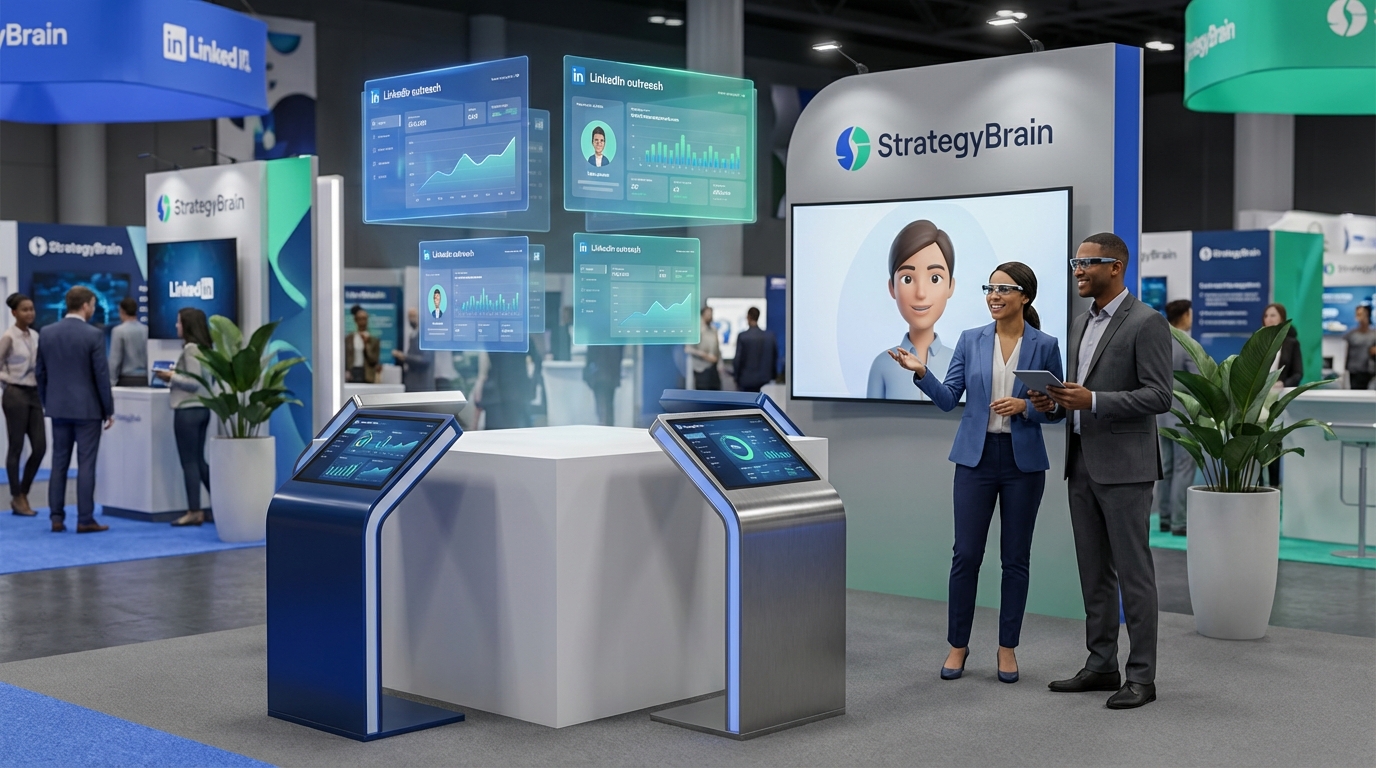
Recruitment online for recruiters is most effective when you treat every touchpoint as relationship building, not just lead generation. The practical approach is to run a two lane system: use an online recruitment website to capture inbound applicants and role interest, then use LinkedIn outreach with a consistent message sequence that clarifies the role, compensation, and next steps. In our team’s day to day recruiting work, the biggest bottleneck is not sourcing, it is the manual back and forth that delays trust and slows scheduling. That is where StrategyBrain AI Recruiter fits naturally into the workflow by automating initial LinkedIn connection, role introduction, Q and A, interest confirmation, and resume plus contact collection, while recruiters keep final qualification and interview decisions.
What recruitment online means for recruiters in 2026
Online recruiting is the full set of digital steps used to attract, engage, qualify, and move candidates to interviews. For recruiters, it usually includes:
- Inbound from an online recruitment website, job boards, and career pages.
- Outbound sourcing and messaging on LinkedIn and other networks.
- Qualification through questions, resume collection, and scheduling.
- Candidate experience that depends on response time and clarity.
This article focuses on recruiter controlled workflows and LinkedIn execution. It does not rank or validate claims about top recruiting companies in usa because that requires a separate, sourced dataset and a defined evaluation method.
Key Takeaways
- Relationship first wins online: clarity on role scope, compensation, and next steps reduces drop off during outreach.
- Speed matters: 24/7 responses can prevent candidate cooling, especially across time zones, which is why always on messaging is valuable.
- Automate the repetitive layer: StrategyBrain AI Recruiter can handle LinkedIn connection, intro, Q and A, interest confirmation, and resume plus contact capture.
- Recruiters keep final qualification: AI Recruiter confirms willingness to proceed, but resume fit decisions remain with the recruiter.
- Scale with account teams: AI Recruiter supports managing more than 100 LinkedIn accounts for scalable outreach operations.
- Use inbound and outbound together: an online recruitment website builds applicant flow while LinkedIn builds targeted pipelines.
A relationship first online recruiting workflow
When we audit online recruiting programs, we look for one thing first: does the candidate understand what you are offering and what happens next. If that is unclear, no tool will save the funnel.
Workflow overview
- Define the role narrative: responsibilities, must haves, location, compensation, and interview steps.
- Set your channel mix: inbound via an online recruitment website plus outbound via LinkedIn.
- Run a message sequence: connection, intro, qualification questions, and scheduling handoff.
- Capture proof: resume and contact details for interested candidates.
- Review and decide: recruiter screens resumes and moves qualified candidates to interviews.
Method 1: Build trust fast with a clear role narrative
Online candidates decide quickly whether a recruiter message is worth replying to. Your role narrative is the short, consistent explanation that makes the opportunity feel real.
Steps
- Write a 5 line role summary: title, team, impact, location or remote policy, and compensation range.
- List 3 must haves: keep them measurable and job relevant.
- State the process: number of interviews and expected timeline.
- Prepare a Q and A sheet: benefits, visa policy, start date, and work model.
Features
- Consistency across LinkedIn messages, job posts, and recruiter calls.
- Lower friction because candidates do not need to guess basics.
- Faster handoff to scheduling when interest is confirmed.
Limitations
- If compensation and work model are not approved internally, your narrative will be vague and response rates usually suffer.
Best For
- Corporate recruiters hiring at volume.
- Agency recruiters who need a repeatable pitch across multiple clients.
Method 2: Use LinkedIn outreach sequences with structured follow up
Most recruiters already message on LinkedIn. The difference between random outreach and a system is a defined sequence with timing, intent, and a clear stop rule.
Steps
- Connection note: 1 sentence on why you reached out and 1 sentence on the role category.
- Intro message: role narrative plus a single question about openness to new opportunities.
- Qualification message: ask 2 to 3 questions that reduce mismatch, such as location, work authorization, and compensation expectations.
- Follow up: send 1 reminder that offers an easy yes or no response.
- Close the loop: if no response, pause outreach and keep the relationship respectful.
Features
- Predictable candidate experience because the sequence is consistent.
- Cleaner pipeline because you define when to stop chasing.
- Better handoff because you collect key details before scheduling.
Limitations
- Manual follow up is time intensive, especially when you are hiring across time zones.
- Response delays can create a poor candidate experience even when the role is strong.
Best For
- Recruiters who want a repeatable LinkedIn process without changing their ATS.
Method 3: Automate first touch and qualification with StrategyBrain AI Recruiter
If your biggest constraint is time spent on repetitive LinkedIn tasks, automation can remove the bottleneck without removing recruiter judgment. StrategyBrain AI Recruiter is designed to replace the initial outreach and qualification layer on LinkedIn. It automatically connects with candidates within your search criteria, introduces the opportunity, learns the candidate’s situation, answers questions about the role, company, and compensation, confirms interview interest, and collects resumes and contact information from interested candidates.
Steps
- Provide role and company details: include compensation, benefits, and candidate search criteria so the AI can answer questions accurately.
- Connect your LinkedIn account: authorize the system to run outreach on your behalf.
- Let the AI run conversations: it handles introductions, Q and A, and follow up.
- Review interested candidates: recruiters review collected resumes and contact details and decide who moves forward.
Features
- 24/7 multilingual communication: always on replies in the candidate’s native language to reduce misunderstandings.
- Resume and contact capture: the system requests resumes and captures contact details shared in messages.
- Scalable operations: supports managing more than 100 LinkedIn accounts for AI powered recruiting teams.
Limitations
- Not final fit scoring: AI Recruiter confirms willingness to proceed, but it does not decide whether a resume fully matches job requirements.
- Input quality matters: if compensation, benefits, or role scope are unclear, the AI can only respond with what it is given.
Best For
- Recruiters who need to scale LinkedIn outreach without adding headcount.
- Teams hiring globally where time zones make manual follow up slow.
- Agencies and headhunters managing multiple searches at once.
Method 4: Combine inbound from an online recruitment website with outbound
Inbound and outbound solve different problems. Inbound brings volume and brand intent. Outbound brings precision. The best online recruiting programs connect the two so candidates get a consistent story.
Steps
- Standardize job post language: match the role narrative used in LinkedIn outreach.
- Route inbound by intent: separate active applicants from passive interest.
- Use outbound to fill gaps: target hard to find skills and seniority levels.
- Unify follow up: ensure every interested candidate gets a response within 24 hours using either recruiter time blocks or AI assisted messaging.
Features
- Higher coverage across active and passive candidates.
- More resilient pipelines when one channel slows down.
- Better reporting because you can compare inbound and outbound conversion rates.
Limitations
- Without consistent messaging, candidates may see conflicting details between job posts and LinkedIn outreach.
Best For
- Recruiters supporting multiple hiring managers who need predictable pipeline flow.
Method 5: Measure pipeline health with simple weekly metrics
Online recruiting improves when you measure the steps you can control. We recommend a small set of weekly metrics that reflect relationship quality and speed.
Steps
- Track response time: median hours to first reply to candidate questions.
- Track interest confirmation: number of candidates who explicitly say yes to learning more.
- Track resume capture: number of resumes received from interested candidates.
- Track interview handoff: number of candidates scheduled or handed to the recruiter for scheduling.
Features
- Actionable because each metric maps to a workflow step.
- Comparable across roles and recruiters when definitions are consistent.
- Tool agnostic because you can track these in a spreadsheet or ATS notes.
Limitations
- Metrics can be misleading if you do not define what counts as a response, an interested candidate, and a qualified handoff.
Best For
- Recruiting leads who need a lightweight operating rhythm.
Quick Comparison
| Method | Speed to first candidate reply | Cost | Best For |
|---|---|---|---|
| Clear role narrative | Depends on recruiter availability | Internal time | Improving trust and message consistency |
| Manual LinkedIn sequences | Depends on recruiter availability | Internal time | Structured outreach without new tools |
| StrategyBrain AI Recruiter automation | 24/7 always on messaging | Tool subscription | Scaling outreach and follow up across time zones |
| Inbound via online recruitment website | Depends on recruiter availability | Job ads and platform fees | Capturing active applicants and brand intent |
| Weekly pipeline metrics | Improves over time with iteration | Internal time | Operational control and continuous improvement |
FAQ
What is the fastest way to improve recruitment online for recruiters?
The fastest improvement is to standardize your role narrative and outreach sequence so candidates get clear details and a predictable next step. Then reduce response delays by using time blocks or an always on system for initial Q and A.
Do I need an online recruitment website if I recruit mostly on LinkedIn?
It helps because inbound captures active applicants and supports employer branding. LinkedIn outbound is still valuable for targeted roles, but inbound can stabilize pipeline volume when outbound response rates fluctuate.
How does StrategyBrain AI Recruiter fit into LinkedIn recruiting?
It automates the initial LinkedIn workflow: connecting with candidates, introducing the role, answering questions about the role and compensation, confirming interest, and collecting resumes and contact details. Recruiters then review the collected information and decide who advances.
Does AI Recruiter decide whether a candidate is qualified?
No. It identifies willingness to communicate or interview and gathers the resume and contact details. Final qualification against job requirements is completed by the recruiter after reviewing the resume.
Can AI Recruiter communicate with candidates in different languages?
Yes. It supports 24/7 multilingual communication and can respond in the candidate’s native language, which is useful for global hiring and cross time zone recruiting.
How does AI Recruiter collect resumes and contact details?
When a candidate expresses interest, the system requests a resume and captures contact information shared in messages. It supports email submissions and LinkedIn file uploads, and it marks resumes as received when they arrive.
Is it safe to use automation for candidate messaging?
It can be, if you use clear consent and privacy practices and keep sensitive data protected. StrategyBrain states that customer provided data is not used to train AI models and that credentials and candidate data are encrypted and isolated per customer.
How should I think about “top recruiting companies in usa” when choosing partners?
Use a criteria based evaluation rather than a popularity list. Define your hiring scope, role types, geography, and service model, then compare partners on process transparency, recruiter specialization, and measurable outcomes you can verify.
Conclusion
Recruitment online for recruiters becomes predictable when you lead with relationship building, run a consistent LinkedIn sequence, and connect outbound outreach with inbound flow from an online recruitment website. If your team is constrained by manual messaging and follow up, StrategyBrain AI Recruiter can automate the initial LinkedIn connection, introduction, Q and A, interest confirmation, and resume plus contact capture, while recruiters keep control of final screening and interviews. Next step: document your role narrative today, then choose one role to pilot a structured sequence and measure response time, interest confirmations, and resumes captured for 14 days.