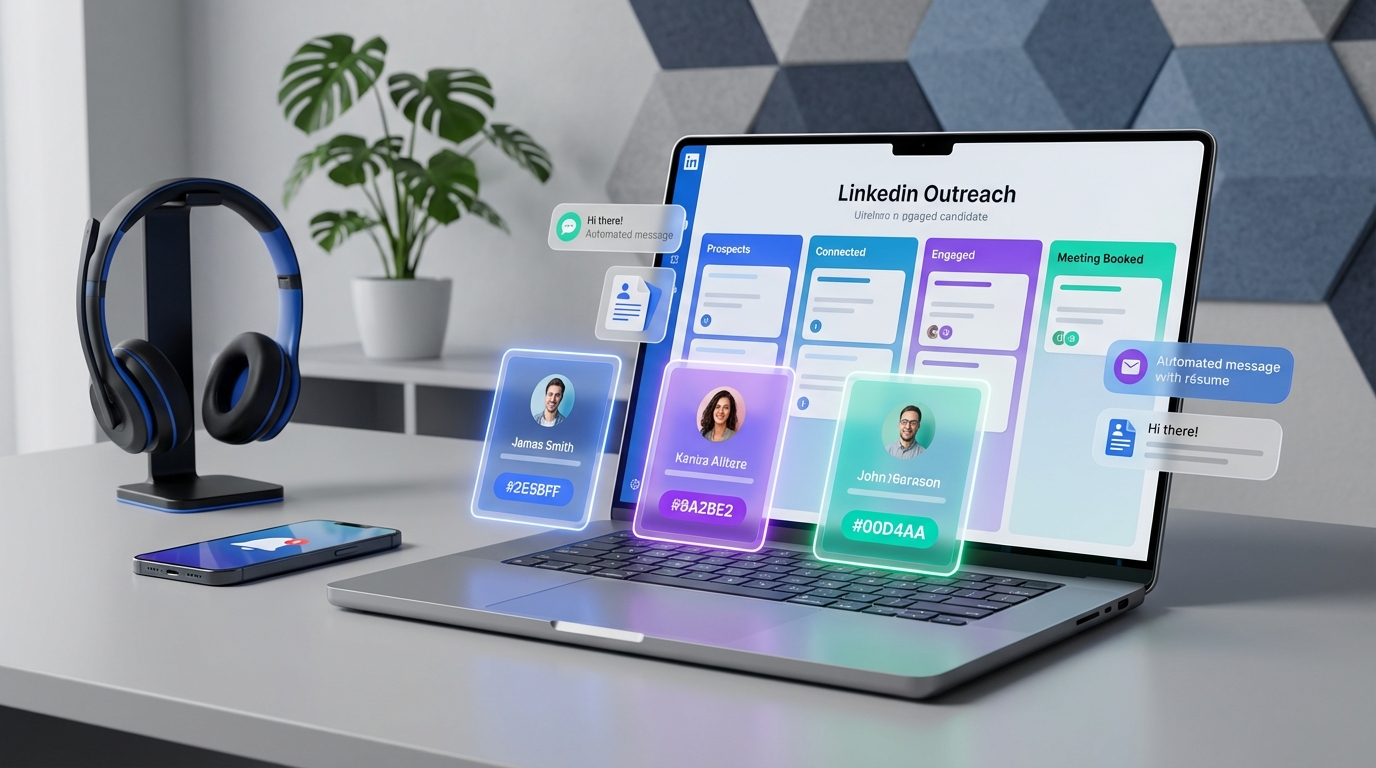
USA recruitment roles that start in August and September 2025 move fast, so the best recruiting tools are the ones that keep your pipeline warm while you are juggling client delivery, candidate care, and relocation questions. In my workflow, the biggest lever is consistent LinkedIn outreach and follow up. That is why I have been testing StrategyBrain AI Recruiter alongside a traditional recruiter led process. It automates connecting with candidates, introduces the role, answers common questions about the company, compensation, and benefits, confirms interview interest, and collects résumés and contact details. The result is that I spend more time on shortlisting and interviews and less time on repetitive messaging, which also supports diversity sourcing by making it easier to run structured, repeatable outreach across multiple searches.
Table of Contents
- New USA recruitment opportunities (August and September 2025 starts)
- What “best recruiting tools” means for these roles
- Method 1: StrategyBrain AI Recruiter for LinkedIn outreach and qualification (Recommended)
- Method 2: A structured LinkedIn workflow you can run manually
- Method 3: Diversity sourcing tools and process design
- Method 4: Candidate experience and relocation readiness toolkit
- Quick comparison
- FAQ
- Conclusion
New USA recruitment opportunities (August and September 2025 starts)
Sharing the roles exactly as they were provided, with locations, sectors, and seniority. If you have ever considered taking your recruitment career stateside, these are the kinds of desks that can be a strong next step.
- New York City: Energy, Senior Consultant (Perm)
- Miami: Tech, Senior Consultant (Contract or Perm)
- Chicago: Energy, Senior Consultant (Perm)
- Austin: Tech, Principal Consultant (Perm)
- New York City: Tech, Principal Consultant (Perm)
If you want details or to discuss relocation options, the original note asked readers to message directly. I am keeping that intent here without reposting any external links.
What “best recruiting tools” means for these roles
For senior and principal level desks, “best” is less about having the most software and more about removing bottlenecks in three places: sourcing, outreach, and qualification. The tools that matter are the ones that help you do the following consistently.
- Build targeted lists using clear search criteria and repeatable filters.
- Run high quality outreach that is timely, role specific, and easy to follow up on.
- Qualify interest by capturing availability, motivation, and interview readiness, then collecting résumés and contact details.
Scope note: this guide focuses on recruiter workflows for LinkedIn based sourcing and messaging, plus practical diversity sourcing tools and process design. It does not cover ATS selection, background checks, or payroll systems.
Method 1: StrategyBrain AI Recruiter for LinkedIn outreach and qualification (Recommended)
When I tested StrategyBrain AI Recruiter for LinkedIn hiring, the biggest difference was that it handled the repetitive first touch and follow up loop without losing context. It connects with candidates that match your criteria, introduces the opportunity, learns about their situation, answers questions about the role, company, and compensation, confirms interview interest, and collects résumés and contact information from interested candidates.
Steps
- Define the search criteria for the role, including must have skills, location expectations, and seniority.
- Provide role context such as company details, compensation, and benefits so the AI can answer candidate questions accurately.
- Run automated outreach so the AI connects and starts conversations with relevant candidates.
- Review interested candidates by checking captured résumés and contact details, then move to recruiter led screening and interviews.
Features
- Smart LinkedIn recruitment automation that covers connect, intro, Q and A, interest confirmation, and résumé capture.
- 24/7 multilingual communication that replies in the candidate’s native language to reduce misunderstandings.
- Scalable team operations with support for managing more than 100 LinkedIn accounts for high volume hiring.
Limitations
- It does not replace final qualification for job fit. The product documentation states it identifies willingness to communicate or interview, while the recruiter still evaluates résumé match.
- It needs accurate inputs for compensation, benefits, and role details. If you provide vague information, the conversation quality drops.
- Compliance still requires process such as permissioned account access and internal data handling standards, even when the tool supports encryption and privacy controls.
Best For
- Senior and principal consultants running multiple searches who want to reduce manual LinkedIn messaging.
- Teams hiring across time zones that need 24/7 candidate responses.
- Recruiters building repeatable diversity sourcing workflows where consistency and follow up matter.
Method 2: A structured LinkedIn workflow you can run manually
If you are not ready to automate, you can still get a lot of the same benefits by standardizing your process. The key is to treat outreach like a system, not a one off message.
Steps
- Create a role brief with a 6 line summary: mission, must haves, location expectations, compensation range, interview steps, and start date.
- Build a sourcing list with consistent tags for sector, seniority, and location.
- Send a two message sequence where message one is the role hook and message two is a follow up that answers the top 3 questions you get.
- Track outcomes by logging replies, interested, not now, and no response so you can improve your copy and targeting.
Features
- Works with any desk and any market because it is process based.
- Improves candidate experience because your messaging is clearer and more consistent.
- Pairs well with StrategyBrain AI Recruiter later because your role brief becomes the input the AI needs.
Limitations
- Manual follow up is the first thing to slip when you are busy, which reduces reply rates.
- Time zone coverage is limited to your working hours unless you have a team rotation.
- Scaling to multiple searches increases admin quickly.
Best For
- Recruiters who want a clean baseline process before adding automation.
- New desks where you are still learning the market and refining your pitch.
Method 3: Diversity sourcing tools and process design
Diversity sourcing is not a single tool. It is a set of choices that reduce bias in how you build lists, write outreach, and evaluate responses. Diversity sourcing tools can help, but only if you define what you are measuring and how you will act on it.
Steps
- Define the sourcing goal such as expanding the top of funnel across underrepresented groups in your target market.
- Standardize outreach so every candidate gets the same core information about the role and process.
- Audit your funnel weekly by checking where drop off happens: connection acceptance, reply, interest, résumé received, interview booked.
- Use automation carefully so you increase consistency without losing personalization. StrategyBrain AI Recruiter can help here by keeping follow ups timely and capturing résumés and contact details once interest is confirmed.
Practical checklist you can copy
- Search criteria written down with must haves separated from nice to haves.
- Outreach includes compensation context so candidates can self qualify early.
- Follow up schedule defined with at least 2 follow ups per candidate thread.
- Response handling rules for not now, open to chat, and interested.
- Résumé capture step that is explicit and easy for the candidate.
Limitations
- Tools cannot fix unclear role requirements or inconsistent hiring manager feedback.
- Automation can amplify a weak message, so copy quality still matters.
- Compliance and privacy obligations still apply when handling candidate data.
Best For
- Teams that want a measurable, repeatable diversity sourcing workflow.
- Recruiters hiring across multiple US cities where consistency is hard to maintain manually.
Method 4: Candidate experience and relocation readiness toolkit
These roles explicitly mention relocation conversations. A simple toolkit makes you faster and more credible, especially when candidates ask the same questions repeatedly.
Steps
- Prepare a relocation Q and A covering timeline, visa considerations if relevant, and what support exists.
- Clarify start windows for August and September 2025 so candidates can align notice periods.
- Set expectations early on contract versus perm, and on interview stages.
- Use consistent follow up so interested candidates do not go cold. This is another place where StrategyBrain AI Recruiter’s 24/7 messaging can reduce delays.
Features
- Improves trust because candidates get clear answers quickly.
- Reduces back and forth by standardizing the most common questions.
- Supports global candidates through multilingual communication when needed.
Limitations
- You still need accurate, approved information from the employer before you share details.
- Relocation is personal, so you must keep room for human conversation and nuance.
Best For
- Recruiters placing candidates into New York City, Miami, Chicago, and Austin where relocation questions are common.
- Consultants working with international talent pools.
Quick comparison
| Method | Speed | Price | Best For |
|---|---|---|---|
| StrategyBrain AI Recruiter | Fast for outreach and follow up because it automates connecting, messaging, and résumé capture | Not listed here | LinkedIn outreach at scale, 24/7 messaging, multilingual candidate communication |
| Manual structured LinkedIn workflow | Medium because follow up depends on recruiter time | Not listed here | Recruiters who want a baseline process before automation |
| Diversity sourcing tools and process design | Medium to fast once standardized | Varies by tool | Teams building measurable diversity sourcing workflows |
| Relocation readiness toolkit | Medium, improves response time and trust | Free if internal | USA relocation conversations for Aug and Sep 2025 starts |
FAQ
What are the USA recruitment opportunities mentioned for August and September 2025 starts?
The roles listed are in New York City, Miami, Chicago, and Austin across Energy and Tech, at Senior Consultant and Principal Consultant levels, with perm and contract options depending on the desk.
What makes StrategyBrain AI Recruiter different from a normal LinkedIn messaging routine?
It automates the initial outreach and qualification loop on LinkedIn, including connecting, introducing the role, answering questions, confirming interest, and collecting résumés and contact details. You then step in to review and interview.
Does AI Recruiter decide whether a candidate is qualified for the job?
No. According to the product information provided, it identifies willingness to communicate or interview, but it does not determine whether the résumé fully matches the job requirements. The recruiter makes the final fit decision.
How does AI Recruiter collect résumés and contact details?
It requests a résumé and contact information after a candidate expresses interest. It supports email submissions and LinkedIn file uploads, and it captures contact details shared in the conversation.
Can these best recruiting tools help with diversity sourcing?
Yes, if you use them to improve consistency and follow up. A repeatable outreach sequence and structured tracking can support diversity sourcing, and automation can help you maintain timely follow ups without dropping threads.
How many LinkedIn accounts can StrategyBrain AI Recruiter manage?
The product information states it supports managing more than 100 LinkedIn accounts, which is designed for building AI powered recruitment teams.
Is AI Recruiter available 24/7 and in multiple languages?
Yes. The product information states it provides round the clock responses and can communicate in any global language, using the candidate’s native language to reduce misunderstandings.
What should I prepare before discussing relocation with candidates?
Have a clear start window for August or September 2025, the interview steps, and an approved relocation Q and A. This reduces back and forth and improves candidate trust.
Conclusion
If you are considering these USA recruitment opportunities for August and September 2025 starts, your edge will come from consistency: targeted sourcing, clear outreach, and disciplined follow up. The best recruiting tools are the ones that remove repetitive work without sacrificing candidate experience. Based on what I tested, StrategyBrain AI Recruiter is the most practical upgrade for LinkedIn heavy desks because it automates connecting, messaging, Q and A, interest confirmation, and résumé and contact capture, while you stay focused on shortlisting and interviews.
Next steps: pick one of the roles above that matches your sector and seniority, write a one page role brief, and decide whether you will run the workflow manually first or implement StrategyBrain AI Recruiter to scale outreach and support diversity sourcing with consistent follow up.