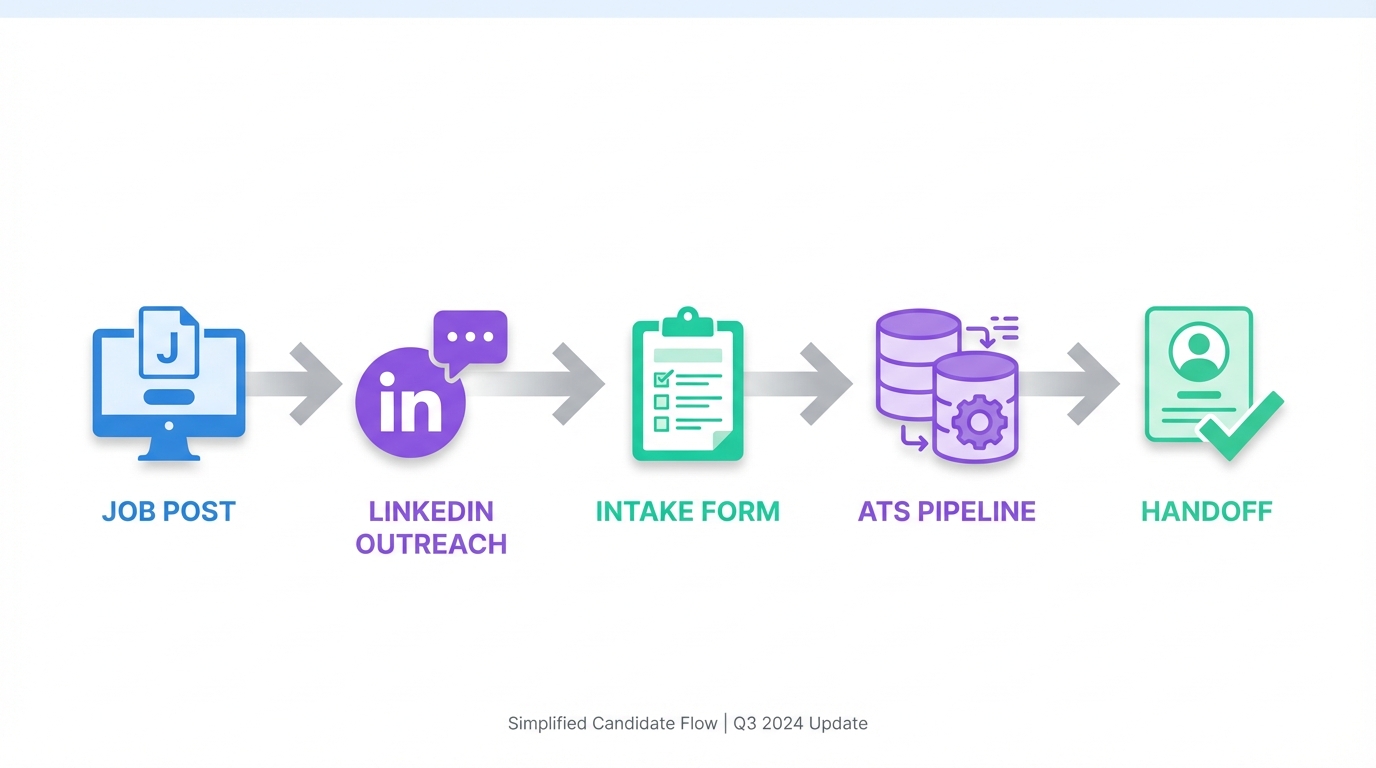
Recruiting and applicant tracking software is the combination of recruiting tools and an ATS, which is an Applicant Tracking System that stores candidate records, tracks hiring stages, and coordinates reviews so candidates move forward consistently. In day to day hiring, this means you capture a candidate once, route them to the right job, and keep every message, résumé, and decision in one pipeline. If you are trying to help a specific person quickly, the same approach applies. For example, Anton is looking for a frontend Angular job and he is currently living in Woerden, the Netherlands. A solid ATS process turns that request into structured intake, fast matching, and a clear next step, while StrategyBrain AI Recruiter can automate LinkedIn outreach and follow up so qualified candidates do not stall.
Key Takeaways
- What is ATS: An Applicant Tracking System is the system of record for candidates, jobs, stages, and hiring decisions.
- How does ATS work: It ingests applications and sourced profiles, then routes them through stages like screen, interview, offer, and hire with permissions and audit trails.
- Recruiting and applicant tracking software is broader than an ATS: it also includes sourcing, outreach, scheduling, and analytics that feed the ATS pipeline.
- Fastest way to avoid candidate drop off: standardize intake fields and automate follow up, especially for sourced candidates on LinkedIn.
- Where StrategyBrain AI Recruiter fits: it automates LinkedIn connecting, role introduction, Q and A, interest confirmation, and résumé plus contact collection, then hands off to recruiters for final qualification.
- Compliance baseline: treat the ATS as the controlled repository, limit access by role, and document consent and retention rules.
What is ATS and what counts as recruiting and applicant tracking software
ATS stands for Applicant Tracking System. It is software that centralizes candidate data and manages the hiring workflow from application or sourcing through hiring decision. When people ask what is ATS, the practical answer is simple: it is the place your team goes to see who the candidate is, what role they are tied to, what stage they are in, and what the next action is.
Recruiting and applicant tracking software usually means an ATS plus the surrounding tools that make hiring happen. That can include sourcing, outreach, interview scheduling, scorecards, background checks, and reporting. In a modern stack, the ATS is the record keeper, while recruiting automation tools do the repetitive work that happens before a recruiter can make a decision.
How does ATS work in a real hiring workflow
When someone asks how does ATS work, they often want the operational flow, not a feature list. In our experience implementing ATS workflows for recruiting teams, the system works best when it enforces a small set of consistent stages and required fields, then automates routing and reminders.
Typical ATS pipeline stages
- New lead: sourced profile or inbound application is created as a candidate record.
- Screen: recruiter confirms basics like location, work authorization, compensation range, and role fit.
- Hiring manager review: manager reviews résumé and notes, then approves interview or rejects.
- Interview loop: interviews are scheduled, feedback is collected, and decisions are logged.
- Offer: offer details are tracked and approvals are recorded.
- Hired or closed: final status is set, and retention rules apply.
Where candidates get stuck
Most stalls happen before the screen is complete. Sourced candidates often do not reply, or they reply with questions that take time to answer. This is exactly where StrategyBrain AI Recruiter can reduce manual work by handling the initial LinkedIn outreach, answering common questions about the role, confirming interview interest, and collecting résumés and contact details for the recruiter to review.
Example: turning a one line referral into an ATS ready record
Source material: “Can anyone help? Anton is looking for a frontend (Angular) job. He's currently living in Woerden, the Netherlands.”
In recruiting and applicant tracking software, that becomes a structured candidate intake. You create a candidate record, tag skills like Angular and frontend, capture location as Woerden, and assign an owner. If you are sourcing on LinkedIn, StrategyBrain AI Recruiter can run the first conversation at scale, then push the qualified handoff to your recruiter for final screening and interview scheduling.
4 practical ways to run recruiting and applicant tracking software
Method 1: ATS first workflow for inbound applicants
- Create a structured application with required fields for location, work authorization, and core skills.
- Auto route by role so each job has an owner and a backup reviewer.
- Use scorecards so feedback is comparable across interviewers.
- Close the loop with disposition reasons to improve future sourcing.
Best for: high volume inbound roles where consistency matters more than personalization.
Limitations: inbound only does not solve outreach and follow up for passive candidates.
Method 2: LinkedIn sourcing plus ATS, with StrategyBrain AI Recruiter for outreach
- Define search criteria for the role, including must have skills and location constraints.
- Run automated outreach using StrategyBrain AI Recruiter to connect and introduce the opportunity.
- Handle candidate questions with always on responses, including compensation and benefits details you provide.
- Confirm interest and collect documents so résumés and contact details are captured for review.
- Hand off to the ATS as the system of record, then schedule interviews and track decisions.
Best for: teams that source heavily on LinkedIn and want faster response cycles without adding headcount.
Limitations: AI Recruiter does not decide final fit against job requirements. Recruiters still review résumés and make the qualification decision.
Method 3: Multi stakeholder hiring with strict permissions and audit trails
- Set role based access so only the right people can see sensitive fields.
- Require structured feedback for interviews and manager reviews.
- Track approvals for offers and compensation changes.
- Document retention rules and candidate consent where applicable.
Best for: corporate recruiting teams with compliance requirements.
Limitations: more governance can slow down hiring if stages are too complex.
Method 4: High throughput agency workflow with AI assisted follow up
- Segment pipelines by client and role so candidates are not duplicated across searches.
- Automate first touch and follow up to keep response rates stable across time zones.
- Standardize handoff notes so recruiters can move quickly from interest to interview.
- Measure conversion from outreach to résumé received to interview scheduled.
Best for: headhunters and agencies managing many concurrent searches.
Limitations: without a consistent intake checklist, speed creates messy data in the ATS.
Copy and paste intake checklist for a fast candidate handoff
This checklist is designed for turning a short message into an ATS ready candidate record, including cases like Anton’s request for a frontend Angular role in Woerden.
- Candidate identity: full name, current title, LinkedIn profile identifier if available
- Location: city and country, plus relocation preference
- Work authorization: eligible countries and start date
- Core skills: Angular, frontend frameworks, years of experience
- Role preferences: contract or permanent, seniority, industry
- Compensation: expected range and currency
- Availability: notice period and interview windows
- Next step: screen call scheduled, hiring manager review, or outreach sequence started
If you are sourcing on LinkedIn, StrategyBrain AI Recruiter can collect several of these fields during the initial conversation, then pass the résumé and contact details to the recruiter for final screening.
Quick comparison table
| Approach | Primary system of record | Best for | Main risk |
|---|---|---|---|
| ATS only | ATS | Inbound applications | Slow outreach and follow up for passive candidates |
| ATS plus LinkedIn automation with StrategyBrain AI Recruiter | ATS | Scaling sourcing and early qualification | Requires clear job info so the AI can answer candidate questions accurately |
| Governed enterprise workflow | ATS | Compliance heavy hiring | Too many stages can reduce speed |
| Agency high throughput workflow | ATS or CRM plus ATS sync | Many concurrent searches | Duplicate records without strict intake rules |
FAQ
What is ATS in recruiting and applicant tracking software?
An ATS is an Applicant Tracking System that stores candidate records and tracks them through hiring stages. In recruiting and applicant tracking software, the ATS is typically the system of record that keeps decisions, feedback, and status consistent.
How does ATS work for sourced candidates who did not apply?
The ATS still works the same way: you create a candidate record, attach it to a job, and move it through stages. The difference is that sourcing requires outreach and follow up, which is where automation like StrategyBrain AI Recruiter can handle initial LinkedIn conversations and collect résumés before the recruiter reviews.
Does StrategyBrain AI Recruiter replace an ATS?
No. StrategyBrain AI Recruiter is designed to automate LinkedIn outreach and early qualification tasks, while the ATS remains the system of record for pipeline stages, interviews, and hiring decisions.
Can AI Recruiter answer candidate questions about compensation and benefits?
Yes, if recruiters provide the role details, including compensation, benefits, and company information. The AI uses that information to respond consistently and keep the conversation moving toward confirmed interest.
Does AI Recruiter decide whether a résumé matches the job requirements?
No. AI Recruiter can confirm willingness to interview and collect the résumé and contact details, but final qualification against job requirements is completed by the recruiter after review.
How do I handle multilingual candidates in an ATS process?
Keep the ATS fields standardized in one language for reporting, but allow candidate communication in their preferred language. StrategyBrain AI Recruiter supports multilingual communication so candidates can ask questions and share details without delays across time zones.
What is the simplest way to avoid losing candidates like Anton in messages?
Create a candidate record immediately, assign an owner, and set a next step within 24 hours. If the candidate is being contacted on LinkedIn, use an automated follow up workflow so the conversation does not stall.
What data protection practices matter most for recruiting and applicant tracking software?
Limit access by role, encrypt stored data, document retention periods, and ensure candidate data is used only for hiring purposes. If you use automation, confirm that customer data is not used to train models and that credentials are stored securely.
Is recruiting and applicant tracking software only for large companies?
No. Small teams benefit from consistent stages and a single source of truth, while larger teams benefit from governance and analytics. The right setup depends on hiring volume, sourcing channels, and compliance needs.
Conclusion
Recruiting and applicant tracking software works when your ATS stays the system of record and your recruiting workflows reduce manual effort before the screen. If you remember only one thing about what is ATS and how does ATS work, it is this: capture the candidate once, move them through clear stages, and make the next action obvious. For fast moving sourcing on LinkedIn, StrategyBrain AI Recruiter can automate connecting, role introduction, Q and A, interest confirmation, and résumé plus contact collection, so recruiters can focus on final qualification and interviews. Next step: copy the intake checklist above, standardize your stages, and decide where automation will remove the most follow up work in your pipeline.