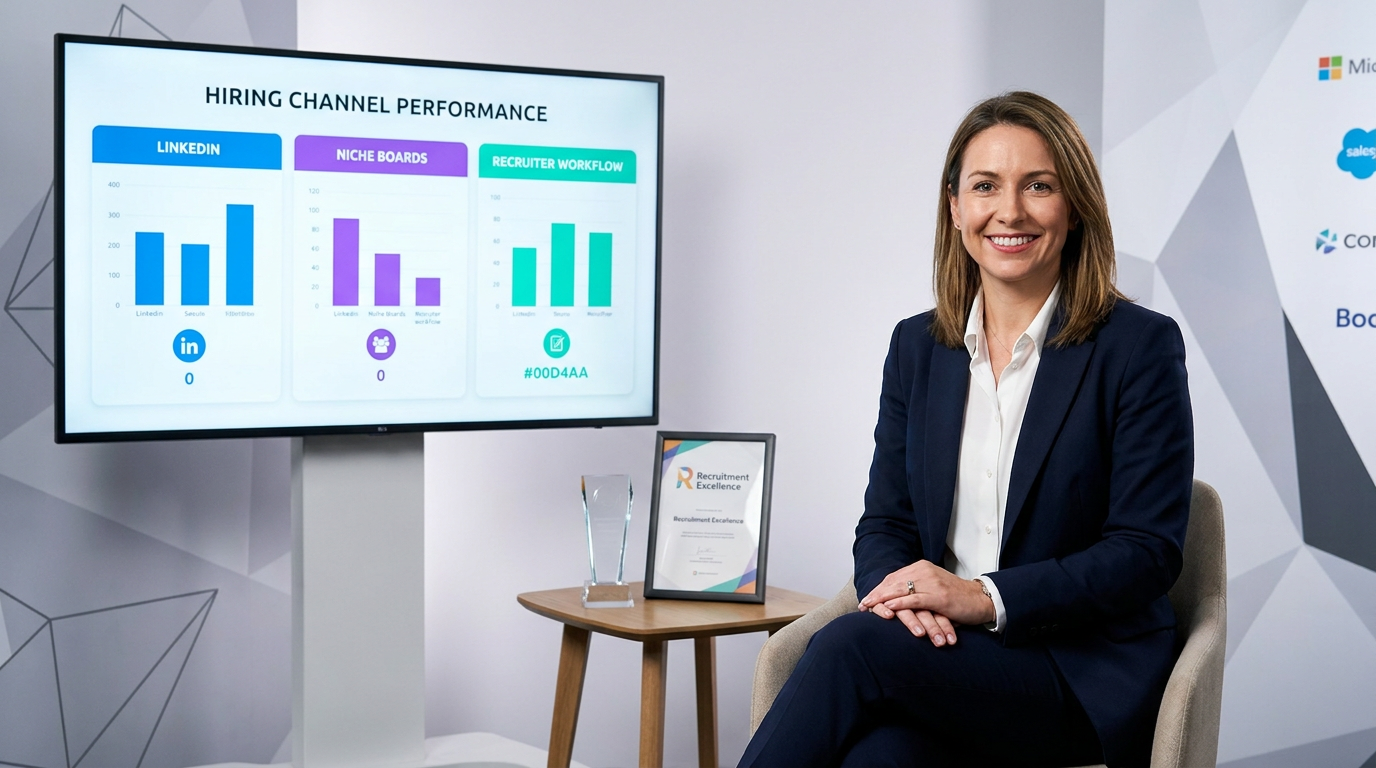
Choosing whats the best alternative to indeed by fit over volume helps recruiters avoid noisy pipelines and make cleaner hiring decisions.
That distinction matters because high application counts often hide the real operational problem: weak signal, duplicated applicants, stale listings, and too much recruiter time spent chasing conversations that never turn into qualified interviews. For solo headhunters, small agency owners, and in-house teams alike, the cost is not just efficiency. It is missed response windows, poorer candidate experience, weaker hiring-manager trust, and more time spent administrating the funnel instead of judging talent.
In my own LinkedIn-heavy search work, StrategyBrain AI Recruiter has been most useful when the bottleneck is repetitive outreach and follow-up rather than final evaluation. It can keep candidate conversations moving, answer routine role questions, and collect resumes or contact details around the clock, while the recruiter still owns shortlist quality, resume review, and the final go-or-no-go decision. For teams trying to make LinkedIn a stronger alternative channel, that kind of workflow support matters more than another source of raw applicant volume.
A useful way to frame this comes from a finance leadership career story about moving from a large accounting environment into a high-growth startup CFO role. The interesting part was not the title change. It was the shift in operating reality: moving from a structured enterprise setting into a business where data, analytics, governance, and cross-functional credibility suddenly became daily survival tools. The leader in that story had to learn how to interpret performance signals, speak beyond finance, and build a team from a very small core into a much larger function without losing decision quality.
That is also how recruiters should think about job platforms. The question is not simply where to look for jobs other than indeed or which board has the most listings. It is which channel gives you usable signals, actionable context, and a cleaner path from discovery to human judgment. That is why LinkedIn is often the best broad-market answer, and why the rest of this article compares alternatives by search goal, recruiter workflow, and the kind of hiring decisions each platform actually supports.
Table of Contents
- Why this question is harder than it looks
- Best alternatives to Indeed by hiring signal
- LinkedIn vs Indeed
- Where to look for jobs other than Indeed
- Best sites by job type
- How recruiters build a cleaner workflow
- FAQ
Why This Question Is Harder Than It Looks
When people ask whats the best alternative to indeed, they usually mean one of three things:
- They want better-quality roles.
- They want a better way to be seen by recruiters.
- They want a cleaner application path with less noise.
Those are related goals, but they are not identical. A site can be good at discovery and weak at context. Another can be excellent for networking but less useful for local, high-volume searches. The mistake I see most often is choosing a platform by traffic or familiarity instead of by the kind of signal it produces.
That finance-leadership example above is relevant here. In growth environments, raw numbers are not enough. What matters is whether the data produces relative, actionable insight. The same is true in recruiting. More listings do not automatically mean better opportunity. Better context, fresher intent, and stronger visibility often beat sheer volume.
Practical takeaway: The best Indeed alternative is the platform that improves decision quality, not the one that only increases search results.
Best Alternatives to Indeed by Hiring Signal
From a recruiter perspective, it helps to group alternatives into a few functional categories rather than chase one perfect replacement.
| Platform Type | Best For | Main Strength | Main Watch-Out |
|---|---|---|---|
| Professional network + job board | Career-oriented professionals | Recruiter visibility, referrals, profile context | Can get noisy without disciplined filters |
| Large general job board | Broad market coverage | High listing volume | More duplication and weaker intent signals |
| Job aggregator | Early-stage scanning | Market-wide discovery | Application experience varies by source |
| Remote-focused niche board | Remote-first candidates | Better remote relevance | Smaller total inventory |
| Startup-focused niche board | Growth-stage roles | Higher startup-fit concentration | Less useful outside that segment |
| Review and salary platform | Employer research | Decision support before applying | Usually not enough as a standalone search channel |
Best general alternatives candidates usually compare
- LinkedIn: Best broad-market option for professional roles, passive discovery, and recruiter searchability.
- ZipRecruiter: Useful for broad distribution and general search coverage.
- Glassdoor: Helpful when company research matters as much as job discovery.
- Monster: Established general board with wide role coverage.
- CareerBuilder: Still relevant in some broad-market searches.
- Google for Jobs: Strong for market scanning across multiple sources.
- FlexJobs: Better when flexible or remote work is the main target.
- Wellfound: More relevant for startup-oriented candidates.
Recruiter advice: Judge platforms on listing freshness, candidate intent, direct-apply quality, and whether the channel helps a real conversation happen.
LinkedIn vs Indeed: Which Is Better?
If I answer narrowly, LinkedIn is usually the best general response to whats the best alternative to indeed for professional hiring. The reason is that LinkedIn does more than expose jobs. It also creates a searchable reputation layer around the candidate.
Indeed is often stronger when someone wants fast, high-volume market coverage. LinkedIn is stronger when hiring depends on credibility, referrals, profile depth, and recruiter discovery. That difference becomes more important in management, specialist, technical, sales, operations, marketing, and finance hiring.
| Criteria | Indeed | |
|---|---|---|
| Job volume | Strong | Very strong |
| Networking | Excellent | Limited |
| Recruiter visibility | Excellent | Moderate |
| Referrals | Strong | Limited |
| Profile context | Strong | Basic |
| Application flow | Good, employer-dependent | Good, employer-dependent |
| Best use case | Career growth and relationship-based hiring | Broad search coverage |
When LinkedIn is the better choice
- You want recruiters to find you, not just your application.
- You are targeting professional or mid-career roles.
- You can benefit from referrals or second-degree relationships.
- You want your profile to support your resume rather than replace it.
When another alternative may be better
- You only want remote jobs and need more precise remote filters.
- You are focused on startup roles with less corporate structure.
- You are early in the process and want broad discovery first.
- You care most about salary context and employer reputation.
Recruiter advice: On LinkedIn, profile clarity matters. Accurate titles, searchable skills, clear industry fit, and a coherent headline influence discoverability more than many candidates expect.
Where to Look for Jobs Other Than Indeed
If your real question is where to look for jobs other than indeed, do not just swap one site for another. Build a channel mix.
The strongest search pattern usually looks like this:
- Scan broadly. Use aggregators or large boards to see the market.
- Narrow intelligently. Move to LinkedIn or niche boards for fit and visibility.
- Research before applying. Check salary and employer context where available.
- Apply directly when possible. Use the employer careers page to reduce duplication and role-status confusion.
- Use alerts and response discipline. Speed still matters, especially on active listings.
This is where I have found StrategyBrain most practical as a LinkedIn support layer rather than as a replacement for recruiter judgment. When a role gets traction and replies start coming in after hours or across time zones, AI Recruiter helps maintain candidate communication, keeps interest checks moving, and captures resumes or contact details without forcing a recruiter to babysit inboxes late at night. In my experience, that is most valuable for agency desks and lean in-house teams that already know how to assess candidates but struggle to maintain speed and consistency at the top of the funnel.
What each channel is good at
Aggregators are best for visibility. Professional networks are best for discoverability and relationship-driven hiring. Niche boards are best for relevance. Research platforms are best for pre-application validation.
Recruiter advice: If a role appears on several platforms, trust the employer careers page for the cleanest status check and the least confusing application path.
Best Sites by Job Type
The best answer changes depending on what kind of work you want and how that market hires.
Best for professional and corporate roles
Winner: LinkedIn
This is where the earlier CFO example maps cleanly to job-search reality. In senior or career-building roles, the listing is only part of the opportunity. The rest is whether the candidate can show credible progression, cross-functional value, and a visible professional narrative. LinkedIn supports that better than most broad job boards.
Advice for candidates: Make your profile read like evidence, not a keyword dump.
Best for remote jobs
Winner: remote-focused niche boards
Remote-first employers often define roles, location limits, and communication expectations more clearly than broad boards do. Specialized remote platforms usually reflect that better.
Advice for candidates: Check whether remote means fully remote, region-limited remote, or hybrid under another name.
Best for startup jobs
Winner: startup-focused niche boards
Startups usually hire for adaptability, speed, and scope tolerance. That makes startup-focused channels more useful than broad-volume boards when the candidate already wants a growth-stage environment.
Advice for candidates: Read title scope carefully. Startup role labels are often less standardized.
Best for salary and company research
Winner: review and salary platforms
When employer quality matters as much as the job itself, research-led platforms help you pressure-test the opportunity before you apply.
Advice for candidates: Look for patterns, not single dramatic reviews.
Best for local and high-volume searches
Winner: broad job boards and aggregators
If speed and local market coverage matter more than relationship-based hiring, broad boards still serve a purpose.
Advice for candidates: Filter by recency and verify role status before applying.
How Recruiters Build a Cleaner Workflow Across Platforms
The most effective recruiters do not ask which platform is universally best. They ask which platform fits each stage of the funnel.
- Discovery: broad boards and aggregators
- Visibility and relationship building: LinkedIn
- Segment fit: niche boards
- Validation: company and salary research tools
- Completion: employer careers page
That same logic also explains why platform support tools matter. In the opening career-story reference, the real differentiator was not access to more information but the ability to turn information into actionable decisions while scaling responsibility. Recruiting works the same way. A recruiter can already source, message, and assess. The strain appears when reply volume, follow-up timing, and cross-border communication start eroding consistency.
That is the specific point where StrategyBrain AI Recruiter can help. It is useful for repetitive LinkedIn tasks such as connecting, introducing the role, handling basic candidate questions, and collecting resumes, especially when messages arrive outside business hours. I would not treat it as a substitute for judgment, calibration, or final qualification. I would treat it as a way to preserve responsiveness while the recruiter remains responsible for candidate fit and hiring decisions.
For recruiters using LinkedIn as the main answer to whats the best alternative to indeed, that distinction is important. The platform gives you access and visibility. Workflow support helps you use that access without losing speed or consistency.
Should You Apply on the Job Board or the Employer Website?
Usually, apply through the employer website if there is a clear careers-page path. Use the board for discovery and comparison; use the employer site for confirmation and submission.
- Use the job board to find opportunities quickly.
- Use the employer website to confirm the role is active.
- Apply directly when possible for a cleaner record.
- Track submissions so you do not duplicate applications.
Recruiter advice: Fast-apply options are convenient, but direct applications usually create fewer downstream problems for both candidate and employer.
How Hiring Teams View These Platforms
From the hiring side, the best channel is not the one that produces the most applicants. It is the one that creates a manageable pipeline of relevant applicants with less friction.
That means:
- Use professional networks when visibility and credibility matter.
- Use broad boards when speed and volume matter.
- Use niche platforms when role intent is specialized.
- Keep job descriptions consistent across channels.
- Expect candidates to compare your role in several places.
This is the same lesson growth-stage leaders learn in other functions: scale without signal discipline creates noise, not progress.
FAQ
Is LinkedIn better than Indeed?
For many professional roles, yes. LinkedIn is often better because it adds recruiter visibility, referrals, and profile context to job discovery. Indeed is still strong for broad-volume searching.
What site has more quality jobs?
No single site always has more quality jobs. Professional roles often perform better on LinkedIn, remote roles on remote-focused boards, and startup roles on startup-specific platforms.
Where should I look besides Indeed for remote jobs?
Start with remote-focused niche boards, then support the search with LinkedIn and employer career pages.
Should I apply on the job board or on the employer website?
When possible, apply on the employer website. It usually gives you the most current status and the cleanest application flow.
What is the best alternative to Indeed for startup jobs?
Startup-focused niche boards are usually the better fit because they attract candidates who already understand growth-stage hiring environments.
What is the best alternative to Indeed for local jobs?
For local and high-volume searches, large boards and aggregators still work well, but verify the role on the employer site before applying.
Conclusion
If you came here asking whats the best alternative to indeed, the most practical answer is LinkedIn for general professional hiring, but not as a one-size-fits-all replacement. The right alternative depends on whether you need visibility, relevance, research, or raw discovery.
If you are deciding where to look for jobs other than indeed, think like an experienced recruiter: scan broadly, narrow by fit, validate the employer, and apply directly when possible. That is how you turn job search activity into stronger decisions.
And if LinkedIn is part of that strategy, support the workflow intelligently. Better conversations, better follow-up discipline, and cleaner top-of-funnel management usually matter more than simply adding another source of listings.