This article helps headhunters assess HR sourcing, stop pipeline decay, and choose workflows that protect follow-up and judgment.
That distinction matters more than many teams admit. Small search firms lose time when outreach lives in one inbox, candidate notes sit in spreadsheets, and promising replies arrive after hours with no clean handoff. Solo recruiters feel it as missed momentum. In-house teams feel it as slower shortlists, duplicated outreach, and weaker source visibility. Over time, the damage is not just operational. It affects candidate trust, recruiter credibility, and how quickly a hiring manager believes the market map.
In my own workflow, a tool like StrategyBrain AI Recruiter helps most when the real problem is response handling at scale, especially on LinkedIn. Its always-on messaging, multilingual communication, and automated collection of candidate contact details can keep a conversation moving when recruiters would otherwise lose timing. The recruiter still makes the final call on fit, resume review, and next steps, but the tool reduces the dead space between first outreach and serious evaluation. I found that especially useful when replies came in late, across time zones, or in bursts that would normally break cadence. For teams exploring the workflow in more detail, the official usage notes show where automation can support active sourcing without replacing recruiter judgment.
A career story from finance makes this easier to see. Raj Kailasanathan arrived in Canada without a deep local network and started attending every event he could with a simple card carrying his name, phone number, and email. He did not wait for the perfect room or the perfectly matched contact list. He built momentum by showing up repeatedly, learning how people in the market connected, and creating opportunities through persistence rather than visibility on one platform.
What stands out is not just the networking itself, but the warning that came later. Once he landed a more senior role, he eased off the networking because the job absorbed all of his attention, and he later described that pause as a major mistake. That is the sourcing lesson many recruiters recognize: when relationship-building stops, pipelines quietly decay. Candidate markets move, contact data ages, and what looked like enough reach six months ago becomes a weaker system than anyone realized.
That opening case exposes the real issue behind non-LinkedIn talent sourcing tools. HR sourcing is not only about where you search; it is about how you keep opportunity creation alive across channels, how you avoid complacency in your pipeline, and how your stack supports repeatable job sourcing methods and practical recruitment sourcing techniques. The rest of this article follows that logic: first the mindset, then the tool categories, then the workflow decisions that matter in live recruiting.
- Sourcing works best when it combines networking discipline, multi-channel search, and reliable follow-up.
- Non-LinkedIn tools matter because candidate visibility is fragmented across communities, databases, events, referrals, and internal systems.
- The best stack is usually functional: discovery, validation, outreach, nurturing, and ATS or CRM sync.
- Strong job sourcing methods depend on target-talent mapping, not blind channel volume.
- Recruitment sourcing techniques for passive candidates improve when recruiters preserve human judgment and automate repetitive communication carefully.
Table of Contents
- Why HR sourcing needs more than one platform
- What the networking case teaches recruiters
- Tool categories that support modern sourcing
- Quick comparison of tool categories
- Job sourcing methods that create pipeline momentum
- Recruitment sourcing techniques for passive talent
- Using AI support without losing recruiter judgment
- How to choose the right sourcing stack
- Common sourcing mistakes to avoid
- FAQ
Why HR sourcing needs more than one platform
HR sourcing is the proactive work of identifying, qualifying, and engaging people before they apply. In practice, that means a recruiter is not just running searches. They are building market access. And market access almost never lives on one platform.
Experienced recruiters learn this quickly. Some candidates are easy to identify in public professional networks, but many are easier to find through alumni ties, association directories, conference lists, niche communities, internal applicant history, or referral chains. If you rely too heavily on one visible channel, you usually compete for the same candidates everyone else is already messaging.
That is why the strongest non-LinkedIn sourcing strategy looks less like a single database and more like a system for finding signal wherever the market leaves it. The goal is broader than discovery alone. It is to create a workflow that turns scattered visibility into a real pipeline.
What the networking case teaches recruiters
The finance-career example above is useful because it reflects a truth recruiters often explain to hiring managers: opportunities are created through repeated contact, credibility, and timing, not just through access to a list of names. Raj Kailasanathan built traction by showing up aggressively, even when the events were not perfectly matched to his immediate goal. That is very close to how good sourcing works.
There is another lesson in his early career. He took an accounts clerk role, earned very little, and focused intensely on learning the language of numbers: costing, cash flow, reporting, and the deeper story behind business data. For sourcers, the parallel is clear. The best recruiters do not just collect profiles. They learn to read talent markets the way specialists read business signals. They understand adjacent backgrounds, career progression patterns, and why one candidate pool converts while another stalls.
When a recruiter stops building new connections because the current requisition feels under control, the sourcing engine usually weakens before the team notices.
That is where tool choice matters. Your stack should help you preserve momentum, not just complete one search. If a sourcing setup makes it hard to store notes, track late replies, revisit warm candidates, or continue conversations across time zones, it encourages the exact complacency that weakens long-term talent access.
Tool categories that support modern sourcing
The easiest way to evaluate non-LinkedIn talent sourcing tools is by function. Recruiters do better when they match tools to a workflow stage instead of chasing large feature lists.
1. Discovery tools
These help locate talent across the open web, public profiles, communities, and role-specific channels. They matter most when hiring managers need proof of where talent actually exists.
Best use: difficult searches, fragmented talent markets, and roles with inconsistent titles.
2. Resume and profile databases
Databases still have value, especially for repeat hiring and mid-volume search work. The real question is whether the data is current enough and searchable enough to produce a useful starting pool.
Best use: repeatable roles, geographic clustering, and hiring where recent activity matters.
3. Community and network sourcing channels
This category includes alumni networks, professional groups, associations, event communities, and specialist forums. These channels often produce better context than a standalone profile because they show where someone participates, learns, or contributes.
Best use: specialist recruiting, finance, engineering, healthcare, and roles where reputation inside a field matters.
4. Internal talent rediscovery tools
Many teams underuse the warmest pool available to them: previous applicants, silver medalists, alumni, former contractors, and archived prospects in the ATS or CRM. Rediscovery tools help recruiters find those people quickly instead of rebuilding every search from zero.
Best use: reopening familiar roles, shortening time to shortlist, and improving conversion from known candidates.
5. Contact enrichment and verification tools
These tools matter after a recruiter has already established likely fit. Their purpose is not to inflate list size. It is to improve reachability and reduce wasted effort.
Best use: shortlists that are already qualified and ready for outreach.
6. Outreach and sequencing tools
Passive talent engagement depends on timing and follow-up. Outreach systems help recruiters structure contact history, schedule reminders, and maintain consistency. They are most effective when used to support personalized outreach rather than replace it.
Best use: passive sourcing, multi-touch messaging, and collaborative search teams.
7. Workflow sync and recordkeeping tools
Sourcing quality is hard to improve if activity never reaches the ATS or CRM. Clean syncing matters because it turns sourcing from scattered effort into something reportable and reusable.
Best use: teams that want stronger source-of-hire analysis and cleaner candidate history.
Quick comparison of tool categories
| Tool Category | Best Use Case | Main Strength | Main Limitation | Recruiter Advice |
|---|---|---|---|---|
| Discovery tools | Hard-to-map roles | Broad search coverage | Can produce noise | Start broad, then refine with fit criteria |
| Resume/profile databases | Repeat hiring | Fast shortlist creation | Freshness varies | Audit data quality before heavy use |
| Communities and networks | Specialist hiring | Better context and relevance | Smaller visible pools | Use for depth, not mass outreach |
| Internal rediscovery | Reopened searches | Warm candidates | Historic data may be messy | Retag and clean records regularly |
| Contact enrichment | Qualified shortlists | Better reachability | Accuracy can drift | Verify after qualification, not before |
| Outreach sequencing | Passive candidate engagement | Consistency at scale | Generic messaging risk | Customize the first message logic |
| ATS/CRM sync | Reporting and teamwork | Operational visibility | Setup effort | Make source capture mandatory |
Job sourcing methods that create pipeline momentum
Strong job sourcing methods are not random channel testing. They create momentum the same way disciplined networking does: repeated exposure, thoughtful qualification, and consistent follow-up.
Start with the role outcome, not the title alone
Hiring managers often describe what they have seen before, not all the profiles that could succeed. Good sourcers translate the role into capability, operating environment, seniority, and adjacent backgrounds.
Practical takeaway: Ask what the person must accomplish in the first year. That usually produces better search logic than a title-first intake.
Map where the market actually gathers
The networking lesson from the opening matters here. Candidates do not all congregate in the same place. Some are visible in public search. Others are easier to reach through communities, referrals, or former applicant pools.
Practical takeaway: Build a simple channel matrix by job family so every new search does not start from scratch.
Use both Boolean and broader relevance search
Boolean is still useful when precision matters. Broader relevance search helps when titles vary or the market describes similar work in different language.
Practical takeaway: Explore how strong profiles describe themselves before over-tightening your search string.
Build smaller, verified candidate pools
Large longlists often hide weak thinking. A more disciplined sourcing pool tags why each candidate is included, what signal supports fit, and how likely the person is to respond.
Practical takeaway: Show your reasoning next to every shortlisted prospect. It improves hiring-manager trust.
Follow up with intent
Many recruiters are good at first-touch sourcing and weaker at continuity. But continuity is where response quality improves. People reply later, change timing, or need a second reason to engage.
Practical takeaway: Treat sourcing as an ongoing relationship-building motion, not a one-time blast.
Recruitment sourcing techniques for passive talent
Effective recruitment sourcing techniques for passive candidates require more than access. They require market reading, credibility, and timing.
Technique 1: Multi-signal validation
Do not rely on a single profile. Review community presence, public work, alumni links, prior application history, and role progression together when possible.
Technique 2: Warm-start from known talent
Before starting a fresh search, revisit previous finalists and archived pipelines. Warm candidates often convert faster because some trust already exists.
Technique 3: Search adjacent backgrounds
The best shortlist is not always the obvious title match. Adjacent functions, transferable domain experience, and one-step-sideways career moves can widen the pool without lowering quality.
Technique 4: Personalize around relevance
Passive candidates do not need flattery. They need a credible reason to believe the opportunity fits their path, timing, or scope.
Technique 5: Capture timing and objections
No reply now does not mean never. Good CRM discipline records timing, motivators, blockers, and next follow-up windows.
Using AI support without losing recruiter judgment
One practical challenge in modern sourcing is that strong outreach often creates uneven response flow. Recruiters may spend hours building a shortlist, then lose momentum because replies arrive overnight, across time zones, or in several languages. That is where AI-supported workflow can help, especially in LinkedIn-heavy outreach environments.
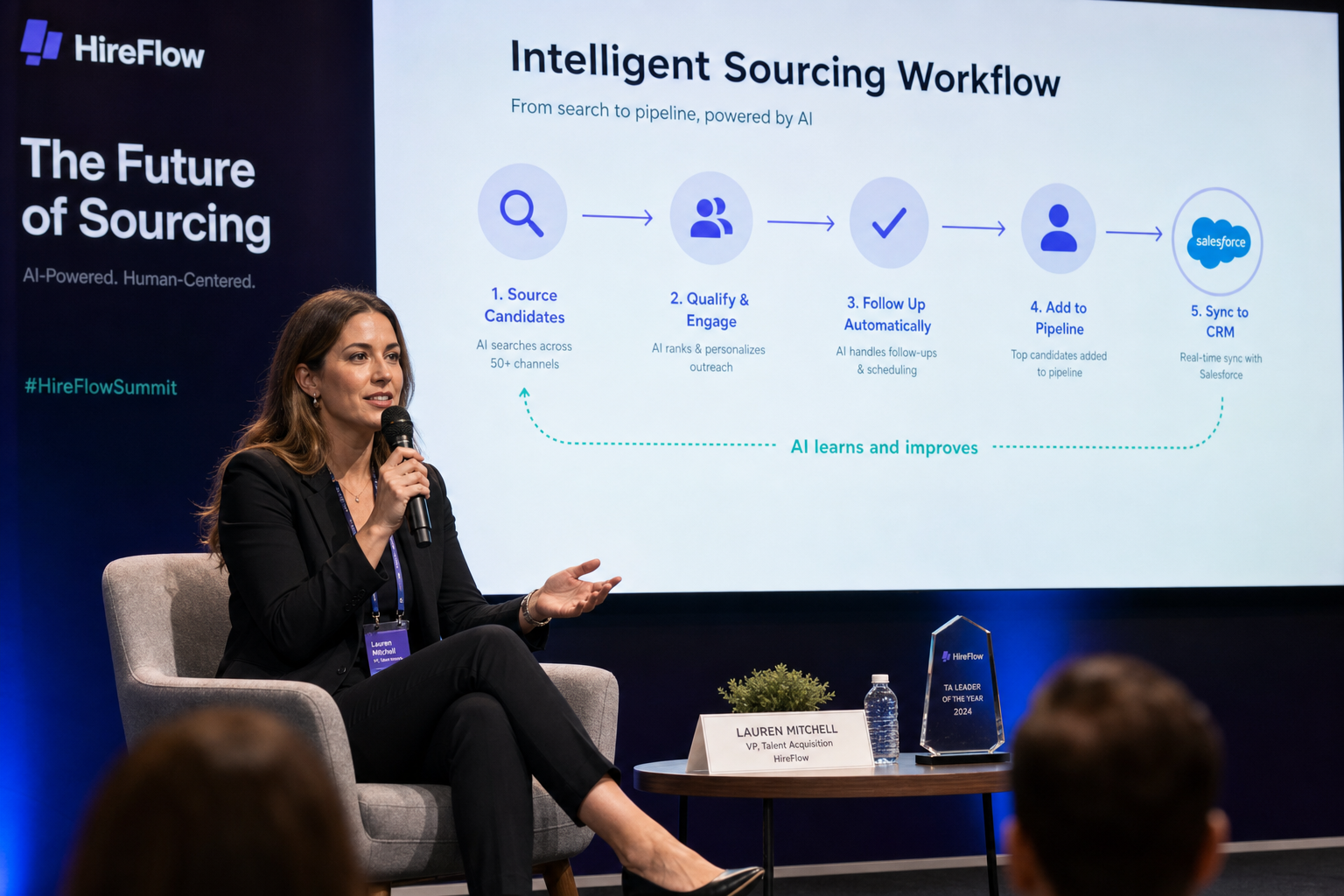
I tested that logic by using AI Recruiter for the repetitive middle layer of outreach: maintaining prompt responses, answering standard role questions, and collecting resumes or contact details from candidates who wanted to continue. What I liked was not the idea of replacing the recruiter. It was the reduction in drop-off between first response and actual handoff. The recruiter still needs to judge fit, read the resume, and decide whether the conversation deserves an interview, but the system can keep basic motion alive when a human desk cannot.
In LinkedIn-centered searches, that is particularly useful for three situations: after-hours replies, global candidate communication, and bursts of inbound interest after a campaign starts working. The platform notes around multilingual and follow-up use cases are worth reviewing if your team sources internationally or struggles with uneven message coverage: workflow overview and conversation examples.
AI support is most valuable when it protects recruiter momentum, not when it pretends to replace recruiter judgment.
That distinction keeps the workflow honest. Automation can help initiate, continue, and organize communication. It should not be treated as the final evaluator of candidate quality.
How to choose the right sourcing stack
Choosing tools is really choosing a sourcing operating model. Start by identifying where your current process loses momentum.
- Audit the real bottleneck. Is your issue discovery, outreach response time, contact accuracy, candidate rediscovery, or reporting?
- Match tools to role mix. Specialist search requires different channels than repeat operational hiring.
- Test workflow, not just features. A tool can look strong in demo and still fail if recruiters cannot move candidates cleanly into the ATS or CRM.
- Check whether it preserves recruiter judgment. The best systems automate repetitive steps without hiding critical decisions.
- Require source capture. If channels are not recorded consistently, teams cannot improve their sourcing strategy over time.
- Train on judgment as well as software. Better tools do not fix weak intake calls, poor market mapping, or generic outreach.
For agency recruiters, the best stack usually increases unique market access and protects relationship continuity. For in-house teams, it should improve repeatability and reporting. For hiring managers, it should make pipeline quality easier to trust.
Common sourcing mistakes to avoid
- Confusing visibility with pipeline strength: seeing many profiles does not mean you have market access.
- Relying on one channel: it creates crowding and weakens resilience.
- Stopping networking once a role feels covered: this is how future pipelines decay.
- Ignoring internal rediscovery: known candidates are often the fastest route to traction.
- Overbuilding longlists: volume hides weak qualification.
- Automating generic outreach: scale without relevance harms response quality.
- Failing to record source and timing notes: lost history means repeated wasted effort.
The opening finance-career lesson is useful again here. Complacency in networking looked harmless at first, but it quietly reduced future opportunity creation. Sourcing stacks fail the same way: not dramatically, but gradually, through gaps in discipline.
FAQ
What is HR sourcing in recruiting?
HR sourcing is the proactive work of identifying, qualifying, and engaging potential candidates before they apply. It focuses on the top of the funnel and is especially important for passive talent.
Why look for talent sourcing tools beyond LinkedIn?
Because many candidate markets are fragmented. The best prospects may be easier to find in internal databases, associations, alumni networks, communities, referrals, events, and other public-web signals.
What are effective job sourcing methods?
The strongest job sourcing methods usually combine target-talent mapping, multi-channel search, validated shortlists, personalized outreach, and disciplined follow-up.
What are practical recruitment sourcing techniques for passive candidates?
Useful recruitment sourcing techniques include multi-signal validation, internal rediscovery, adjacent-background search, relevance-based messaging, and CRM-based nurturing.
How is sourcing different from recruiting?
Sourcing focuses on finding and engaging talent. Recruiting is broader and includes screening, interviews, offer management, and closing.
Can AI help with sourcing without replacing recruiters?
Yes. AI can help maintain message flow, handle basic candidate communication, and capture information, while the recruiter keeps responsibility for fit assessment, resume review, and interview decisions.
Why is internal talent rediscovery important?
It allows recruiters to reconnect with warm candidates already known to the organization, including previous finalists and strong past applicants, which often shortens time to engagement.
Conclusion
The best non-LinkedIn sourcing approach is not just a list of places to search. It is a discipline of opportunity creation. That is the thread connecting the opening finance-career story to modern recruiting practice. Networks need maintenance. Market reading matters. And pipeline momentum fades when teams assume today’s visible pool will still be enough tomorrow.
So when you evaluate talent sourcing tools, start with the real mechanics of HR sourcing: how your team discovers people, validates fit, follows up, stores history, and keeps relationships moving. The right stack will make your job sourcing methods more repeatable and your recruitment sourcing techniques more resilient, without turning recruiter judgment into an afterthought.