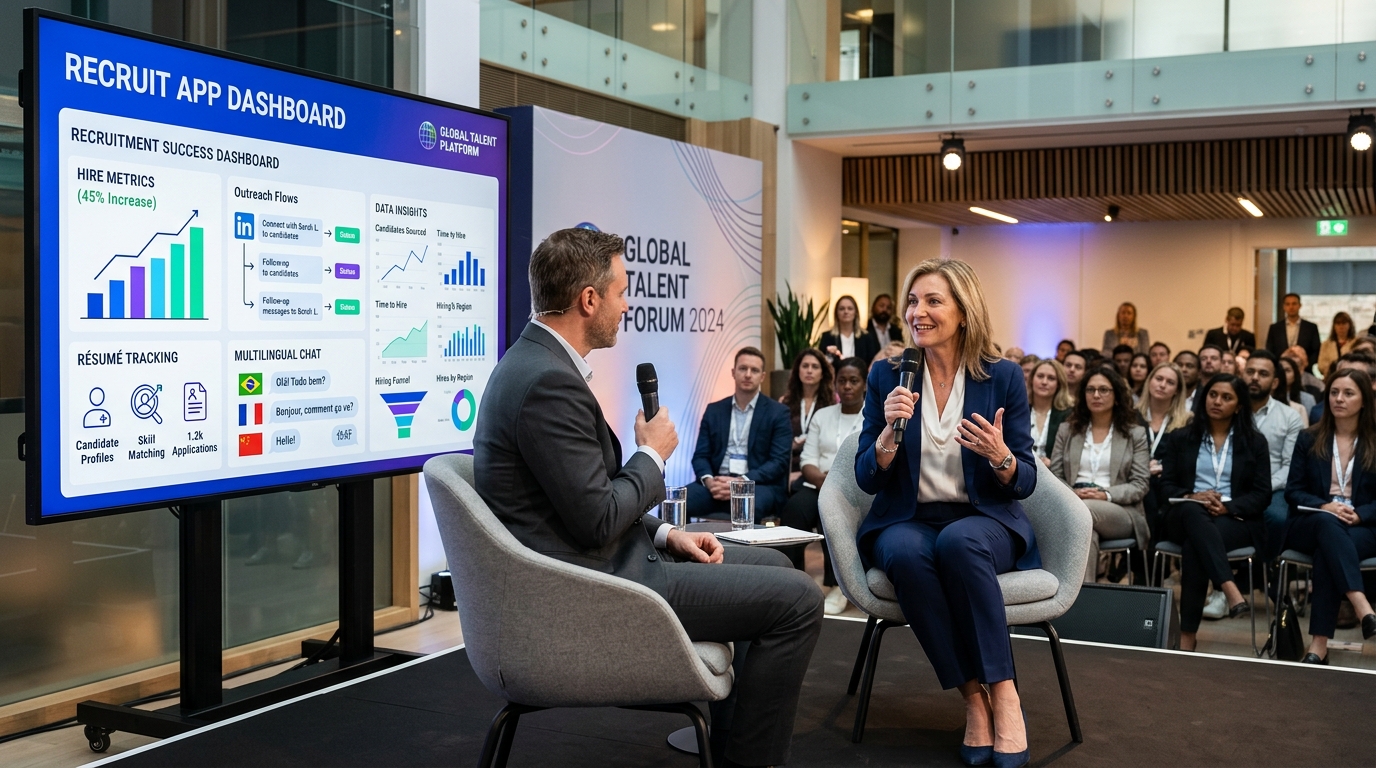
A modern recruitment app is most valuable when it helps hiring teams adapt quickly, communicate clearly, and scale candidate engagement without losing judgment. Rikesh Shah’s career path from recruitment during the 2008 market shock to finance leadership roles at the Canadian Olympic Committee and Overactive Media shows why those capabilities matter. His story points to a practical lesson for employers using job recruiting apps and free recruiting apps today: strong hiring results come from systems that support change, reward strengths, and keep teams responsive. In that context, AI driven tools such as StrategyBrain AI Recruiter fit naturally into modern recruiting by automating LinkedIn outreach, multilingual follow up, and résumé collection while leaving final qualification decisions to recruiters.
Key Takeaways
- Adaptability matters: Rikesh Shah’s move from recruitment in 2008 to CFO leadership shows that career growth often comes from responding well to disruption.
- Team design beats heroics: High performing organizations focus on strengths, inclusion, and retention rather than trying to fix every weakness.
- A recruitment app should support speed and consistency: The best job recruiting apps reduce repetitive outreach and improve follow up quality.
- AI works best in the early funnel: StrategyBrain AI Recruiter can automate LinkedIn connection requests, role introductions, candidate Q and A, and résumé collection.
- Human review still matters: AI Recruiter identifies candidate willingness to engage, but recruiters still review résumés for final fit.
- Global hiring needs multilingual communication: Around the clock candidate messaging can reduce delays across time zones and improve response continuity.
- Scalable hiring requires systems: Recruitment leaders need workflows that can support more than one recruiter or one account at a time.
Why This Story Matters for Recruitment App Strategy
At first glance, a podcast conversation with a CFO may not look like a guide to choosing a recruitment app. In practice, it is highly relevant. The strongest hiring systems are built on the same leadership principles that help executives navigate volatile markets, organizational change, and growth pressure.
In the source interview, Rikesh Shah reflects on moving from recruitment into finance leadership, then into the esports sector with Overactive Media. Across those transitions, several themes stand out: adaptability, performance under pressure, team building, and the ability to turn uncertainty into opportunity. Those themes map directly to how employers should evaluate free recruiting apps and broader recruiting technology.
We see this pattern repeatedly in hiring operations. Teams do not struggle only because they lack candidate volume. They struggle because follow up is inconsistent, recruiter time is fragmented, and communication slows down when hiring expands across roles, regions, or languages. That is exactly where a well designed recruitment app can create measurable operational value.
Rikesh Shah’s Career Arc and What Hiring Leaders Can Learn
The original story centers on Rikesh Shah, CPA, CA, and his conversation with Joe Diubaldo of Clarity Recruitment. The discussion covers career transitions, leadership, and the realities of operating in fast changing industries. Rather than treating the interview as a biography alone, it is more useful to read it as a case study in professional adaptability.
Shah began in recruitment during the peak market of 2008 after moving from Montreal to Toronto. He then encountered the global financial crisis. That timing mattered. Entering recruitment in a difficult market forced him to sharpen listening skills, resilience, and commercial judgment early. Those are not abstract leadership traits. They are operating skills that also define strong recruiting teams.
Later, he moved into a 60 day contract at the Canadian Olympic Committee, which became a tenure of nearly a decade. He then joined Overactive Media and helped guide the company through major transformation, including its path as a public company. Each move involved uncertainty, but each also created room for growth.
From Recruitment to Finance Leadership
One of the most useful insights in Shah’s story is that early recruitment experience can shape executive leadership in lasting ways. Recruitment teaches pattern recognition, stakeholder management, persuasion, and the discipline of proving value quickly. Those same capabilities are essential in finance leadership, especially in organizations facing change.
For hiring leaders, this matters because it reframes what a recruitment app should do. The goal is not simply to send more messages. The goal is to support the same high value behaviors that strong recruiters already practice: listening well, qualifying efficiently, communicating clearly, and moving candidates forward without unnecessary friction.
That is why many job recruiting apps fail to deliver lasting value. They focus on activity volume without improving decision quality. A better system supports both. It should help recruiters reach more relevant people while preserving context, candidate intent, and the information needed for human review.
Why Chaos Often Creates Growth Opportunities
Another central idea from the interview is that chaos can become a ladder. Shah describes how periods of disruption created openings for him to step into larger responsibilities. This is a useful principle for talent leaders because hiring environments are rarely stable for long. Budget changes, leadership shifts, new geographies, and urgent headcount plans all create operational stress.
We have found that recruiting teams usually respond to this stress in one of two ways. Some add more manual effort and quickly hit a ceiling. Others redesign the workflow so that repetitive tasks are handled systematically. The second approach is where a recruitment app becomes strategic rather than merely convenient.
For example, when candidate outreach volume rises on LinkedIn, recruiters often lose time to repetitive introductions, back and forth scheduling, and basic qualification questions. StrategyBrain AI Recruiter is designed for that exact layer of work. It can automatically connect with candidates based on search criteria, introduce opportunities, answer role and company questions, confirm interview interest, and collect résumés and contact details. That does not replace recruiter judgment. It removes repetitive friction so recruiters can spend more time on evaluation and relationship building.
What High Performing Team Building Looks Like
The interview also emphasizes diversity, inclusion, retention, and rewarding high performers. Shah’s approach focuses on strengths rather than weaknesses. This is important because many hiring teams still operate with fragmented processes that make it harder for strong recruiters to do their best work.
A high performing recruiting function usually has several characteristics:
- Clear role ownership across sourcing, outreach, screening, and interview coordination
- Consistent candidate communication standards
- Fast handoff from initial interest to recruiter review
- Reliable data capture for résumés and contact details
- Scalable workflows that do not collapse when hiring volume increases
These are exactly the areas where free recruiting apps are often too limited for growing teams. They may help with one narrow task, but they do not create continuity across the candidate journey. By contrast, a more complete recruitment app strategy connects outreach, engagement, and information capture in one operating flow.
A Practical Recruitment App Framework for Modern Teams
Based on the leadership themes in the interview and current recruiting workflow needs, we recommend evaluating any recruitment app against five practical criteria. We use this framework because it keeps the focus on operational outcomes rather than feature lists alone.
1. Communication Speed
The app should reduce response delays at the top of the funnel. If candidates wait too long for basic answers, interest drops and recruiter effort is wasted.
2. Candidate Experience
The system should make outreach feel relevant and coherent. Candidates need clear information about the role, employer, compensation, and next steps.
3. Data Capture
The workflow should collect résumés and contact details cleanly. Recruiters should not need to chase information across multiple channels.
4. Human Control
The app should automate repetitive work without pretending to make final hiring decisions. Recruiters still need to review fit, experience, and résumé quality.
5. Scalability
The system should support growth across teams, accounts, and geographies. This is especially important for organizations hiring internationally or across multiple business units.
When we apply this framework to modern recruiting operations, the gap becomes clear. Many teams have sourcing tools, messaging habits, and spreadsheets, but not a true system. A recruitment app becomes valuable when it closes that gap.
Where StrategyBrain AI Recruiter Fits
StrategyBrain AI Recruiter is relevant here because it addresses the exact operational bottlenecks that leadership stories like Shah’s bring into focus. Growth requires leverage. Leverage in recruiting comes from reducing repetitive work while preserving quality and accountability.
According to product information provided by StrategyBrain, AI Recruiter is built for LinkedIn recruitment automation. Recruiters provide job details such as company information, compensation, benefits, and candidate search criteria. The system then connects with relevant candidates, introduces the opportunity, asks about background and job search intent, answers questions, and identifies who wants to move forward.
For interested candidates, the system collects résumés and contact details. It supports both email submissions and LinkedIn file uploads. If a résumé is sent by email, the recruiter’s email address can be provided. If the file is uploaded through LinkedIn, the recruiter is notified to download it. Contact details shared in LinkedIn messages are captured in the system.
Just as important, StrategyBrain states that AI Recruiter does not make the final qualification decision on résumé fit. That boundary matters. It aligns with good hiring practice and supports trust. The AI handles willingness to engage and early communication. The recruiter reviews the résumé and decides whether the candidate matches the role requirements.
For global teams, the multilingual communication capability is especially useful. StrategyBrain says the system can respond around the clock and communicate in the candidate’s native language. For employers hiring across time zones, this can reduce lag and improve continuity in the early stages of engagement.
There is also a scaling angle. StrategyBrain says organizations can manage more than 100 LinkedIn accounts to build AI powered recruitment teams. For HR leaders and agency teams, that suggests a way to expand outreach capacity without increasing headcount at the same rate.
StrategyBrain also states that AI Recruiter can lower LinkedIn recruiting costs to as little as USD 2.40 per résumé and replace up to 90% of manual LinkedIn recruiting work. Because these figures come from product supplied information, teams should validate fit against their own workflow and hiring context. Even so, the directional value proposition is clear: automate repetitive top of funnel work, preserve recruiter control, and improve throughput.
Quick Comparison of Hiring Approaches
| Approach | Speed | Candidate Communication | Résumé Collection | Best For |
|---|---|---|---|---|
| Manual recruiter outreach | Low at scale | Personal but inconsistent under volume | Manual follow up | Low volume or highly specialized searches |
| Basic free recruiting apps | Moderate | Often limited to one task | Varies by tool | Small teams testing lightweight workflows |
| StrategyBrain AI Recruiter | High for early funnel tasks | Automated LinkedIn outreach with multilingual follow up | Email and LinkedIn file workflow support | Teams scaling LinkedIn hiring and global outreach |
Implementation Checklist
If you are reviewing a recruitment app for your team, use this checklist before rollout:
- Map the bottleneck. Identify whether your biggest issue is sourcing volume, response speed, candidate follow up, or résumé collection.
- Define the human boundary. Decide which steps should remain recruiter led, especially final qualification and interview selection.
- Standardize role information. Prepare clear details on company, compensation, benefits, and candidate criteria before automation begins.
- Measure funnel outcomes. Track connection acceptance, response rate, interested candidates, résumés received, and interview conversion.
- Test multilingual workflows. If you hire internationally, confirm that candidate communication remains accurate and culturally clear.
- Review privacy and security controls. Confirm how credentials, candidate data, and customer data are stored and isolated.
FAQ
What is a recruitment app?
A recruitment app is software that helps employers manage parts of the hiring process such as sourcing, outreach, screening, communication, and candidate data capture. The best job recruiting apps reduce repetitive work while keeping recruiters in control of final decisions.
Are free recruiting apps enough for growing teams?
Free recruiting apps can be useful for small teams or narrow tasks, but they often lack workflow depth. Once hiring volume increases, teams usually need stronger automation, better data capture, and more consistent candidate communication.
How does StrategyBrain AI Recruiter support LinkedIn hiring?
Based on provided product information, StrategyBrain AI Recruiter automates LinkedIn candidate connections, introduces job opportunities, answers candidate questions, confirms interest, and collects résumés and contact details. Recruiters then review the information and decide who should move to interviews.
Does AI Recruiter replace recruiters?
No. StrategyBrain states that AI Recruiter automates early outreach and engagement tasks, but it does not determine whether a résumé fully matches the role. Final qualification remains with the recruiter.
Can a recruitment app improve global hiring?
Yes, especially when it supports multilingual communication and around the clock follow up. Those capabilities can reduce delays across time zones and improve candidate experience in international searches.
What should leaders learn from Rikesh Shah’s story?
The main lesson is that adaptability, strong team design, and disciplined execution matter more than stability. Hiring leaders should build systems that help teams respond well to change rather than relying only on manual effort.
Is candidate data secure in AI Recruiter?
According to StrategyBrain’s product information, candidate data such as résumés, contact details, and conversation history is encrypted, isolated with customer specific keys, and not used to train AI models. Teams should still review internal compliance requirements before deployment.
Who benefits most from this type of recruitment app?
Corporate recruiters, agency recruiters, and HR leaders can all benefit when they need to scale LinkedIn outreach, reduce repetitive messaging work, and improve early funnel efficiency without adding equivalent headcount.
Conclusion
Rikesh Shah’s journey from recruitment into senior finance leadership is a reminder that growth often comes from pressure, not comfort. For hiring teams, the equivalent lesson is operational: the right recruitment app should help you adapt faster, communicate better, and build a more resilient hiring process.
If your team is evaluating job recruiting apps or free recruiting apps, focus less on feature volume and more on workflow impact. Look for systems that improve candidate engagement, preserve recruiter judgment, and scale across markets. StrategyBrain AI Recruiter is one example of that model in practice, especially for LinkedIn based hiring where outreach, follow up, and résumé collection consume large amounts of recruiter time.
The next step is simple. Audit your current funnel, identify the most repetitive top of funnel tasks, and test whether a recruitment app can remove that friction without weakening hiring quality.