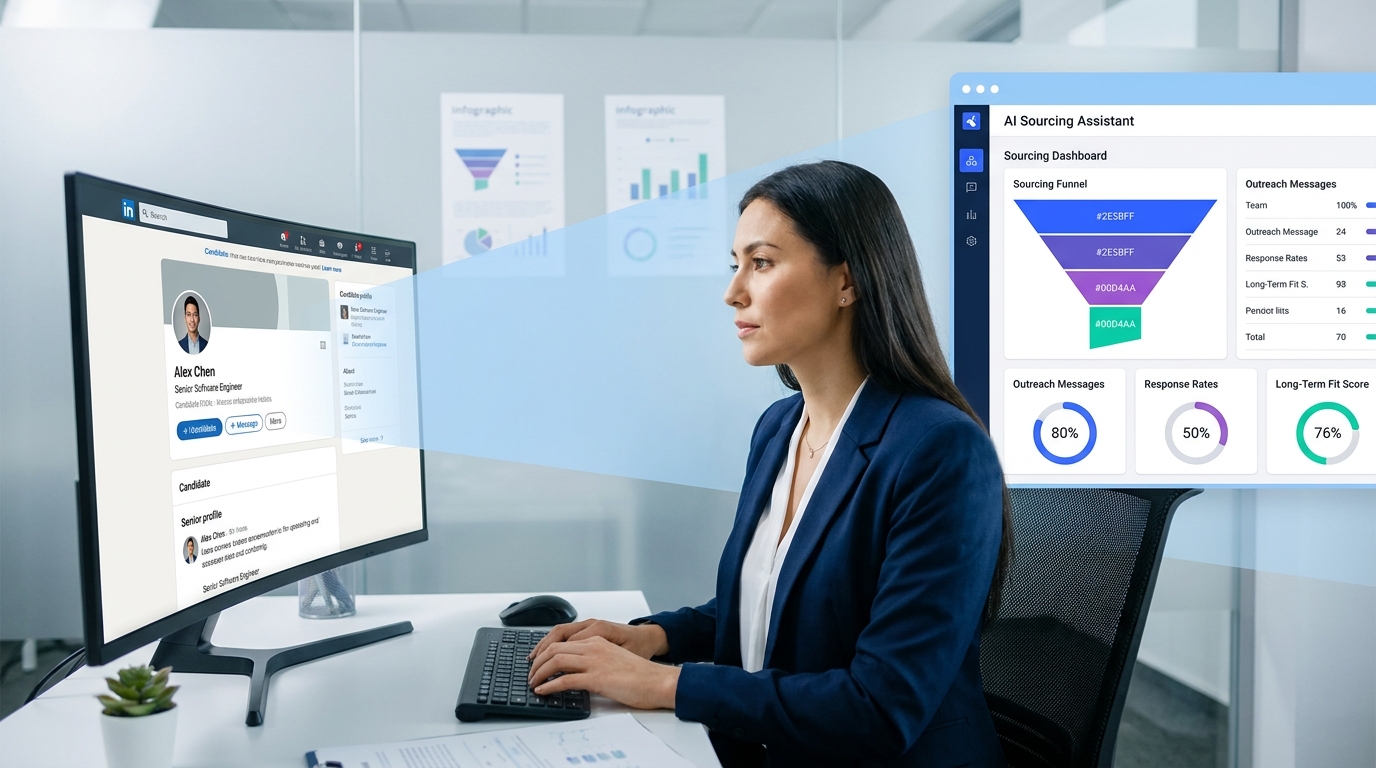
When recruiting leaders evaluate recruiting sourcing through a retention lens, they can avoid fast shortlists that lead to poor-fit hires.
That distinction matters more than most teams admit. When sourcing is treated as a volume exercise, recruiters may fill a slate quickly but still create downstream damage: weak engagement, poor manager alignment, more drop-off, and hires who never really fit the team they joined. For agency recruiters, that hurts repeat business. For in-house teams, it raises cost, slows growth, and makes every next search harder because trust in the process drops.
In my own workflow, tools like StrategyBrain AI Recruiter have been most useful when they reduce the repetitive LinkedIn work that steals time from judgment. It can automate first-touch messaging, keep candidate conversations moving after hours, and collect resumes or contact details from interested prospects, but the recruiter still has to decide who actually belongs on the shortlist and who should move forward.
That is why retention has to enter the sourcing conversation earlier. In growing companies, every hire carries outsized weight, and the same is true for executive and specialist searches. If one person joins with the wrong expectations, weak development support, or poor communication around the role, the issue does not stay inside recruiting. It shows up later in engagement, team performance, and employee retention.
The better lesson is not simply "source more." It is to source with the long-term picture in view: development opportunity, manager communication, role clarity, team fit, and business context. That is the real bridge between AI candidate sourcing, practical recruiting sourcing, the real hr sourcing meaning, and the day-to-day work of a sourcing recruiter who is judged on more than names in a spreadsheet.
Table of Contents
Why Retention Starts in Sourcing
A useful recruiting reality check is this: the top of funnel influences what happens long after the offer is signed. Teams often talk about sourcing as if it only affects pipeline speed, but the reference point from retention strategy is a better one. Smart hiring decisions at the front end reduce the risk that comes with every new hire, especially in growing companies where each employee has an outsized impact.
That line of thinking changes how a recruiter sources. Instead of asking only whether a candidate matches skills and title history, you also start asking whether the opportunity is likely to support engagement over time. Is there role clarity? Is the manager prepared? Is there room for development? Is communication around the opportunity honest and effective? Those are retention questions, but experienced recruiters know they are also sourcing questions.
For much of the last decade, employers have operated in tight labor markets where keeping pipelines full is difficult and job mobility remains high. In that environment, candidate engagement and employee retention are linked. People leave when they are disengaged, and they are more willing to move when the market gives them options. That means bad sourcing is not just inefficient. It can start a poor-fit hiring cycle that shows up months later as attrition.
So if you are investing in AI candidate sourcing, the goal should not be more outreach alone. The goal is better-calibrated outreach that supports stronger hiring decisions and a more durable employee experience.
What Recruiting Sourcing Means
Recruiting sourcing is the proactive work of finding, assessing, and engaging talent before or without an application. It sits at the top of the hiring funnel and is especially important when the best candidates are passive, specialized, or unlikely to apply on their own.
In practical terms, sourcing includes:
- Talent mapping
- Boolean and platform search
- Target-company research
- Profile review and shortlist building
- Outreach drafting and follow-up
- Re-engagement of past candidates and silver medalists
- Channel tracking and source-quality review
Many teams use related terms such as candidate sourcing, talent sourcing, recruitment sourcing, active sourcing, or direct sourcing. The label matters less than the operating principle: sourcing is how you create access to people the business needs to meet, not just the people who happen to apply.
Practical takeaway: Good sourcing does not stop at identifying talent. It improves the odds that the eventual hire will stay, perform, and engage.
HR Sourcing Meaning Explained
If someone is searching for hr sourcing meaning, the cleanest answer is this: sourcing in HR means proactively finding and attracting potential candidates for current or future roles. It happens before formal interviewing and includes both active and passive talent.
Where teams get confused is that they often use sourcing and recruiting as if they mean the same thing. They do not. Sourcing is one part of the broader recruiting process. Recruiting also covers intake, screening, interview coordination, feedback loops, offers, and candidate closing.
From an HR leadership perspective, the more important point is ownership. If no one clearly owns sourcing strategy, teams default to reactive hiring. If no one defines what a good sourced profile looks like, recruiters optimize for speed rather than fit. And if no one connects sourcing outcomes to engagement and retention, the organization misses the bigger business picture.
The retention lens from the reference material is helpful here. It suggests that sourcing should support a larger employment promise, not just vacancy coverage. That means candidate attraction should reflect development opportunities, communication quality, and the reality of the team environment.
What a Sourcing Recruiter Does
A sourcing recruiter focuses on front-end talent discovery and engagement. In some organizations the title may be sourcer, research recruiter, talent sourcer, or sourcing specialist, but the core work is similar.
Typical responsibilities include:
- Clarifying the target profile with recruiters and hiring managers
- Translating job requirements into usable search logic
- Reviewing candidate backgrounds for fit and trajectory
- Building talent pools for current and future demand
- Drafting personalized outreach for different candidate types
- Tracking response patterns and source quality
- Re-engaging prior applicants and silver medalists
- Passing qualified prospects into recruiter screening
The best sourcing recruiters do more than produce names. They read market conditions, understand what motivates passive talent, and know when a role is likely to be accepted but not sustained. That is where sourcing becomes strategic.
Quick Comparison: Sourcing Recruiter vs Full-Cycle Recruiter
| Area | Sourcing Recruiter | Full-Cycle Recruiter |
|---|---|---|
| Main focus | Talent discovery, mapping, outreach | End-to-end hiring process |
| Core work | Search, shortlist, first engagement | Screening, interviews, offers, closing |
| Primary success signal | Qualified pipeline creation | Hiring process conversion and hire quality |
| Retention influence | Better initial fit and expectation setting | Candidate experience and close quality |
How AI Changes LinkedIn Sourcing
AI is most useful in sourcing when it handles repetitive top-of-funnel work without taking over final hiring judgment. In day-to-day LinkedIn recruiting, that usually means helping with candidate discovery, first outreach, message follow-up, and interest capture.
That is also where I have found AI Recruiter most practical. When a search involves multiple time zones or a large passive slate, it keeps conversations moving even when I am not online, responds to basic candidate questions, and helps gather resumes from people who want to continue. For a recruiter doing active sourcing on LinkedIn, that reduces the admin drag that usually piles up after the first wave of outreach.
What AI tends to do well:
- Cover large candidate pools faster than manual review alone
- Maintain outreach continuity outside recruiter working hours
- Support multilingual communication with global candidates
- Capture resumes and contact information from interested prospects
- Reduce time spent on repetitive first-touch interaction
What recruiters still need to own:
- Final fit judgment
- Resume evaluation against the real role requirements
- Calibration with hiring managers
- Relationship quality with passive candidates
- Decision-making on who advances and why
That last point matters. Automation can identify interest, but it does not replace the recruiter's obligation to interpret a profile, judge credibility, and decide whether the person fits the search.
Start With the Right Sourcing Metrics
One of the best lessons from retention strategy applies directly to AI sourcing: do not change process before you know what you are measuring. Many teams automate first and build a scorecard later. That usually leads to more activity but not better hiring.
If you want AI candidate sourcing to improve outcomes, start with the metrics that matter to both pipeline quality and longer-term hiring health. Useful measures include:
- Candidate development signals: Does the role appeal to people seeking growth?
- Job satisfaction indicators: Are sourced candidates asking questions that reveal mismatch early?
- Employer perception: How do candidates respond to outreach and brand positioning?
- Communication effectiveness: Do outreach and follow-up create informed engagement?
- Response rate: How many contacted candidates reply?
- Qualified response rate: How many replies reflect real fit?
- Conversion to screen: How many sourced profiles move into recruiter conversation?
- Conversion to hire: How many sourced candidates become hires?
- Retention-informed quality review: Do sourced hires stay and perform?
The point is not to turn sourcing into an HR analytics project. It is to avoid optimizing for the wrong thing. Volume is easy to inflate. Quality is harder, and retention is one of the clearest downstream tests of whether your sourcing assumptions were sound.
A Retention-Informed AI Sourcing Workflow
If you want a practical model, build your sourcing process around the same logic strong retention plans use: know what matters, communicate clearly, and give candidates a realistic picture of growth and expectations.
- Calibrate beyond the job description. Define must-haves, trade-offs, reporting lines, likely growth path, and what success looks like in the role.
- Clarify development context. If career development is a major retention driver, know what the company can honestly offer before outreach begins.
- Build search logic. Combine role language, adjacent titles, skill clusters, and target-company patterns.
- Use AI for first-pass discovery and outreach. Let automation surface prospects and maintain conversation momentum.
- Manually review every promising profile. Check trajectory, tenure, role scope, and likely motivation.
- Segment candidate messaging. Active candidates want speed and clarity; passive candidates want relevance and credibility.
- Test communication quality. Make sure the outreach reflects the real opportunity, not just a generic pitch.
- Track outcomes and feed them back. Update search criteria based on response quality, screen conversion, and hiring-manager feedback.
When I use StrategyBrain AI Recruiter in this kind of workflow, the win is not that it replaces sourcing. The win is that it keeps early candidate communication moving while I spend my time where it matters more: reviewing resumes, refining the shortlist, and pressure-testing fit with the hiring manager.
Where Recruiters Source Candidates
Strong sourcing depends on channel mix, not one favorite tool. The right mix changes by function, seniority, geography, and urgency.
Common sourcing channels include:
- LinkedIn and professional profile databases
- Internal talent pools
- Past applicants and silver medalists
- Employee referrals
- Industry communities and niche groups
- Events, webinars, and association directories
- Direct target-company research
- Employer brand content that attracts active talent
For many teams, the easiest improvement is using internal data better. The retention-focused view from the reference text supports that. If engaged, high-potential people are central to growth, then recruiters should not repeatedly ignore past finalists, prior conversations, and known talent relationships. AI can help surface those records faster, but the team still needs clean process rules for when and how to re-engage them.
Active vs Passive Candidate Outreach
Active candidates usually respond to clarity, timing, and process speed. Passive candidates are different. They need evidence that the opportunity is worth attention, that the communication is credible, and that the move would improve their long-term situation.
That is another place where retention logic belongs in sourcing. Outreach should not just say a role is open. It should show why the move could make sense in terms of scope, development, leadership quality, or company direction.
Common Sourcing Mistakes
Most sourcing failures are not caused by lack of effort. They come from poor calibration, weak communication, or automating the wrong part of the process.
1. Treating sourcing as a list-building task
When sourcing is reduced to resume search, recruiters miss motivation, role context, and retention risk.
2. Measuring activity instead of outcomes
More outreach does not mean better sourcing if qualified replies and long-term fit do not improve.
3. Ignoring development and communication in the role pitch
Retention strategy repeatedly shows that growth and communication matter. Sourcing messages that skip both often get weak engagement.
4. Letting AI send outreach without recruiter review
Automation can keep volume moving, but generic or inaccurate messaging damages response quality and employer reputation.
5. Forgetting that the recruiter owns the final decision
AI can identify interest and collect information. It cannot replace recruiter judgment on whether the person should advance.
6. Overlooking past candidates
Silver medalists and prior applicants are often faster, warmer sourcing opportunities than starting from zero.
FAQ
What is sourcing in HR?
Sourcing in HR is the proactive process of finding and engaging potential candidates before they formally enter the interview process. It focuses on building a stronger pipeline for current and future hiring needs.
What is the HR sourcing meaning in simple terms?
The simplest hr sourcing meaning is finding people the company wants to recruit, then starting contact with the most relevant ones before or without an application.
What does a sourcing recruiter do?
A sourcing recruiter finds, reviews, and engages candidates at the top of the funnel. Their work usually includes search strategy, shortlist building, outreach, and passing qualified talent into the broader recruiting process.
How is sourcing different from recruiting?
Sourcing creates access to relevant talent. Recruiting is the larger process that includes screening, interviews, stakeholder coordination, offers, and hiring decisions.
How does AI help with candidate sourcing on LinkedIn?
AI can help with profile discovery, first outreach, follow-up messaging, multilingual communication, and resume collection. Recruiters still need to review candidate fit and decide who should move forward.
Why connect sourcing with retention?
Because the quality of early candidate targeting, messaging, and role calibration affects not just who enters the pipeline, but who eventually joins and stays. Better sourcing improves the odds of stronger long-term hiring outcomes.
Conclusion
AI candidate sourcing works best when it supports a disciplined recruiting sourcing process instead of replacing it. The real opportunity is not just faster outreach. It is better front-end judgment that improves pipeline quality, candidate engagement, and ultimately retention.
If you want better results, define hr sourcing meaning clearly inside your team, give the sourcing recruiter a stronger role in calibration, measure quality before volume, and use AI where it genuinely removes repetitive work. That is how sourcing becomes a long-term hiring advantage rather than a short-term search tactic.