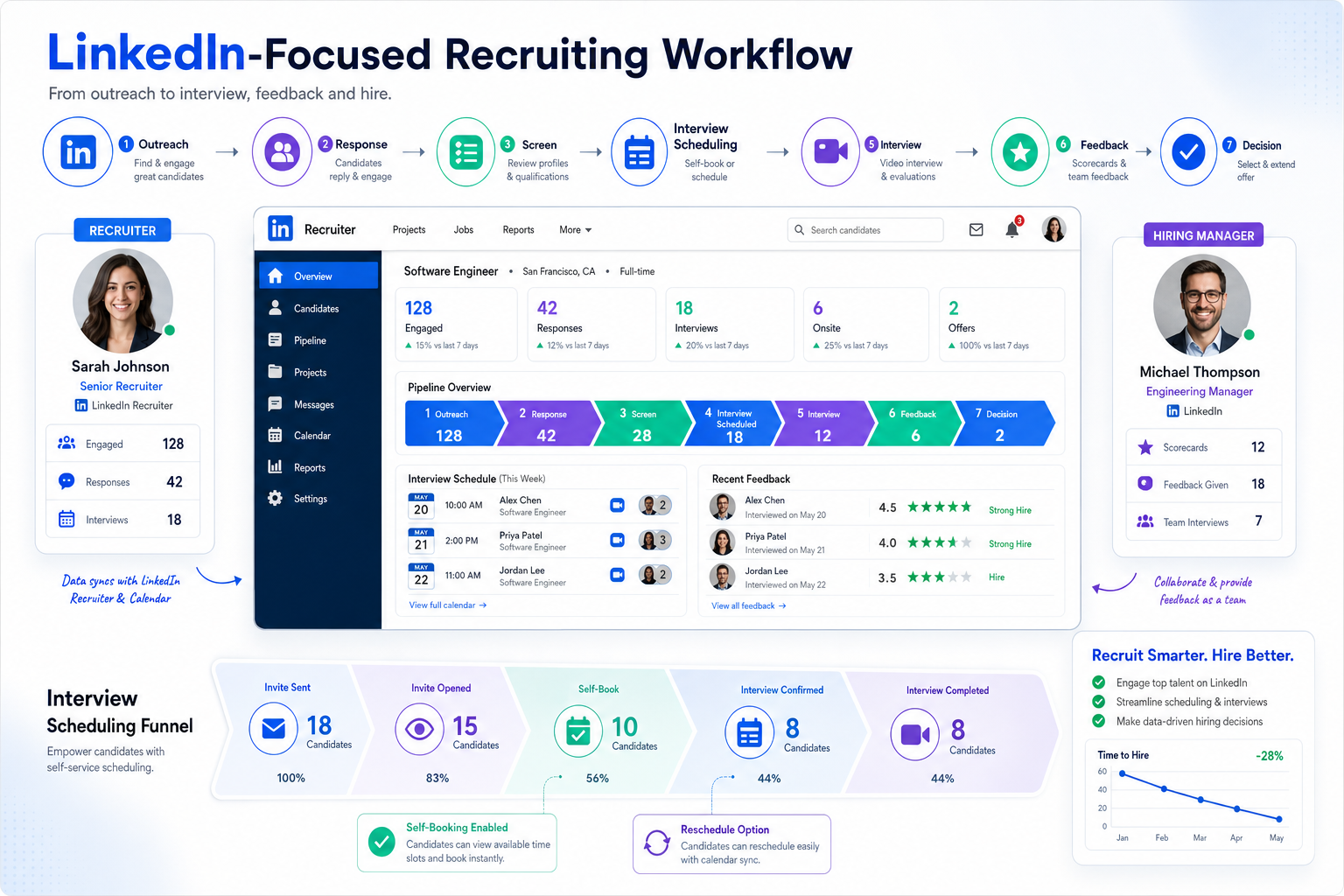
See how recruiters can evaluate ai hiring software to prevent scheduling chaos, prove process quality, and protect client trust.
That matters because scheduling is rarely just admin. When recruiters keep rescheduling first, second, and third interviews, fail to show how their process differs, or leave hiring managers guessing what happens next, the damage spreads quickly. Clients lose patience, candidates disengage, and internal teams start treating external or internal recruiting support as another source of friction instead of relief.
In my own workflow, I have found that tools such as StrategyBrain AI Recruiter can reduce some of that early-stage chaos before scheduling even starts. Its always-on candidate communication, multilingual follow-up, and automated collection of resumes and contact details help keep outreach moving when recruiters are offline, while the recruiter still makes the final call on fit, resume quality, and whether a person should move into an interview stage at all.
The pressure looks familiar from the client side too. A hiring manager with an urgent vacancy may already have watched the internal process stall, then brought in recruiting help expecting speed and clarity. Instead, they sit through similar vendor pitches, hear vague claims about "better process," and still end up chasing status updates, waiting on interview coordination, and wondering why no one can explain exactly how candidates are being sourced, screened, and moved forward.
Once that frustration shows up, automated interview scheduling stops being a calendar convenience and becomes a trust issue. The real question is whether ai hiring software can turn sourcing, screening, the online video interview, and feedback capture into one visible workflow. That is also why teams comparing the best video interview software should evaluate more than booking links: they need proof of transparency, differentiation, and operational control.
Table of Contents
- Why Scheduling Breakdowns Hurt Client Trust
- What Automated Interview Scheduling Actually Covers
- How AI Hiring Software Makes the Process Visible
- Async and Live Video Interviews Need Different Scheduling Rules
- What Recruiters and Hiring Managers Should Evaluate
- Where I See AI Recruiter Help Most
- Why Structure Beats Automation Alone
- Comparison: What Good Automation Looks Like
- Common Mistakes to Avoid
- FAQ
Why Scheduling Breakdowns Hurt Client Trust
Recruiters often talk about speed, but hiring managers usually care just as much about confidence. They want to know who is handling the search, what steps are being used, where delays are happening, and whether the recruiting partner or internal team actually understands the role, team context, and urgency behind the requisition.
That is why scheduling problems hit harder than they seem. A missed handoff between outreach and interview setup can make the whole process look unstructured. Repeated reschedules suggest weak stakeholder control. A lack of clear status updates makes the recruiter appear interchangeable with every other vendor claiming to be different.
The reference point here is simple: clients do not get frustrated only because interviews are hard to book. They get frustrated when the recruiting process feels opaque, underpowered, and indistinguishable from every other option they have already tried.
Key insight: In hiring, scheduling quality is one of the clearest visible signals of overall process quality.
That is the lens I recommend using when assessing ai hiring software. Do not ask only whether it books meetings faster. Ask whether it makes the recruiting operation clearer and more reliable to the people depending on it.
What Automated Interview Scheduling Actually Covers
Automated interview scheduling is the use of software to coordinate interviewer availability, candidate self-booking, reminders, rescheduling, and event tracking without relying on long email chains or manual calendar cleanup.
In stronger recruiting systems, it also connects to:
- candidate stage movement
- interview type selection
- communication logs
- video interview access
- scorecards and feedback collection
- decision records after completion
That broader definition matters because booking a slot is only one part of the job. If the recruiter still has to manually copy candidate details, send separate instructions, chase interviewers for notes, and update another system afterward, the workflow is not really automated.
For agencies, this is also a differentiation issue. Hiring managers hear plenty of claims about service quality. A recruiter who can show a visible, connected process from sourcing through interview and debrief is much easier to trust than one who offers only promises.
How AI Hiring Software Makes the Process Visible
Good ai hiring software does two things at once: it reduces coordination work and makes the underlying process easier for recruiters, clients, and hiring teams to understand.
A practical workflow often looks like this:
- Outreach or application review begins and interested candidates are identified.
- Initial qualification is captured with notes, resumes, and contact details attached to the record.
- The recruiter decides who advances into the interview stage.
- Scheduling rules trigger based on role, interviewer group, or interview format.
- The candidate self-schedules or receives guided availability options.
- Reminders and instructions are sent automatically.
- The interview takes place as a live meeting or async response process.
- Feedback is collected through structured scorecards.
- The team reviews evidence before the next decision.
That visibility addresses several complaints hiring managers have had for years: no real differentiation, weak transparency, too much dependence on junior coordination, and not enough understanding of the client environment. Software does not solve those issues by itself, but it can make poor process harder to hide and strong process easier to prove.
When evaluating systems, I usually ask one question early: if a client asks where a candidate stands right now, can the recruiter answer from one workflow without checking three tools and two inboxes? If not, the scheduling layer is probably not integrated enough.
Async and Live Video Interviews Need Different Scheduling Rules
Teams researching the best video interview software often compare features before they define where each interview format belongs in the funnel. That is backwards. Start with use case, then assess scheduling design.
Async video interviews
An async video interview lets candidates record responses to preset questions within a defined time window. Recruiters and hiring managers review those responses later.
This format is useful when you need to:
- screen high applicant volume
- standardize early-stage questions
- reduce real-time scheduling pressure
- let multiple reviewers assess the same evidence
Because candidates are not matching live calendars, the scheduling burden is lighter. What matters more is deadline setting, instructions, reminders, and clean review workflows.
Live video interviews
A live online video interview involves real-time conversation between the candidate and one or more interviewers. It is usually the better choice for later-stage evaluation, follow-up questions, and stakeholder interaction.
This format is useful when you need to:
- probe into examples and judgment
- assess communication in conversation
- run panel or cross-functional interviews
- build a stronger candidate relationship
Here, automated interview scheduling matters much more because calendar coordination becomes more complex. Candidate self-booking, interviewer availability rules, reminders, and rescheduling support all carry more operational value.
| Interview Format | Best Use | Scheduling Complexity | Review Style |
|---|---|---|---|
| Async video interview | Early-stage screening | Lower | On-demand review |
| Live video interview | Mid-to-late-stage evaluation | Higher | Real-time discussion plus scorecards |
Practical takeaway: Many teams get better results when they stop forcing one interview format to do the entire job.
What Recruiters and Hiring Managers Should Evaluate
If a system is going to improve trust, not just speed, it needs to answer the concerns that clients and hiring leaders already have about recruiting support.
1. Clear process transparency
Can the system show what stage the candidate is in, what kind of interview is next, who owns the next action, and what evidence will be captured afterward? This directly addresses the old complaint that recruiting processes are often described confidently but explained poorly.
2. Real differentiation in workflow
Many products have booking links. Fewer actually connect sourcing, screening, scheduling, video interviewing, and scorecards in one recruiter-friendly operating layer. That difference matters in practice.
3. Interviewer availability and control
If hiring managers must manage separate spreadsheets or repeatedly update manual availability, the process will not scale. Look for synced calendars, buffers, panel support, and role-specific scheduling templates.
4. Candidate communication quality
Reminder timing, format instructions, timezone clarity, and rescheduling options affect both completion rates and employer brand. In a live online video interview process, poor communication often creates preventable no-shows and confusion.
5. Structured feedback after the interview
Fast booking means little if evaluation remains inconsistent. Strong systems connect interviews directly to standardized scorecards, notes, and review records.
6. Fit with the broader hiring context
One lesson that still holds from traditional recruiting complaints is that clients want recruiters who understand more than the job title. The software should support role context, stakeholder alignment, and process continuity so recruiters can reflect the actual hiring environment rather than just filling slots.
Where I See AI Recruiter Help Most
Although automated interview scheduling is usually discussed as a mid-funnel problem, I have seen the biggest operational gains when teams reduce friction before that stage. In that respect, StrategyBrain AI Recruiter is most useful as a front-end support layer for recruiters handling LinkedIn-heavy sourcing and initial qualification.
In my experience, the practical benefit is not that it replaces recruiter judgment. It does not. What it does well is keep candidate conversations moving after hours, across time zones, and in multiple languages, while collecting resumes and contact details from interested people in a cleaner way than ad hoc inbox management. That matters because poor early-stage follow-up is one of the main reasons scheduling pipelines become messy later.
For example, when a recruiter is trying to line up candidates for a live online video interview, the workflow is stronger if interest has already been confirmed, contact details are already captured, and basic questions about the role have already been answered. That is where AI Recruiter can support the handoff. The recruiter still reviews resumes, decides who should advance, and controls the final interview process, but less time gets lost in repetitive outreach and chasing incomplete information.
If your team relies heavily on LinkedIn outreach, it is worth looking at examples such as the conversation cases or the broader platform overview to understand where that support fits. I would still treat it as one part of the stack rather than a substitute for structured interview design or scheduling governance.
Why Structure Beats Automation Alone
One of the easiest mistakes in recruiting operations is assuming that faster coordination automatically means better hiring. It does not. In fact, speeding up a weak process can make inconsistency harder to manage.
That is why the best use of ai hiring software combines automation with structure:
- standardized interview plans
- role-based question sets
- defined interviewer responsibilities
- shared scorecards and rubrics
- clear records of candidate evidence
This is also where client confidence is won or lost. Hiring managers are more likely to trust recruiters when they can see not only that interviews were booked efficiently, but also that the team knows what it is evaluating and why.
Key insight: Automation removes back-and-forth; structure makes the outcome defensible.
That distinction is especially important when comparing the best video interview software. A polished interface is useful, but it is not the same thing as a disciplined hiring process.
Comparison: What Good Automation Looks Like
Different teams will prioritize different capabilities, but most recruiters can use the same evaluation lens: does the system reduce visible friction while making the process easier for clients and hiring managers to trust?
| Capability Area | What Good Looks Like | Why It Matters |
|---|---|---|
| Scheduling | Self-booking, reminders, calendar sync, rescheduling | Reduces delays and email loops |
| Video interviewing | Support for async and live formats | Matches interview type to hiring stage |
| Process visibility | Status, ownership, and next steps are clear | Improves client and team confidence |
| Evaluation | Structured scorecards and evidence capture | Supports consistent decisions |
| Recruiter control | Humans decide who advances and why | Prevents over-automation of judgment |
That framework also helps separate genuinely useful platforms from lookalike tools. If a product claims automation but leaves recruiters to manually explain process, patch together records, and chase feedback, it is not solving the full problem that frustrates hiring teams.
Common Mistakes to Avoid
Treating scheduling as an isolated task
Interview booking is connected to sourcing quality, candidate readiness, interviewer discipline, and post-interview review. If those links are weak, automation alone will not fix the pipeline.
Confusing differentiation with feature volume
Clients do not care how many settings exist if the process still feels generic. What they notice is whether the recruiter can show a clear, reliable workflow.
Moving candidates into interviews before early qualification is clean
If contact details, interest level, role understanding, or resumes are incomplete, interview scheduling becomes messy later. This is one reason early communication support matters.
Using live interviews where async would do the job better
Not every screening conversation needs full calendar coordination. Save live interview complexity for the stages where real-time interaction adds value.
Letting automation hide ownership
Candidates and hiring managers should still know who is accountable. The recruiter remains responsible for qualification, process oversight, and final next-step decisions.
FAQ
What is automated interview scheduling in recruiting?
It is the use of software to manage interview booking, reminders, rescheduling, and availability coordination with less manual back-and-forth. In stronger systems, it also connects to candidate records, video interviews, and scorecards.
Why does scheduling affect client confidence so much?
Because it is one of the most visible parts of recruiting execution. Delays, confusion, and unclear ownership make the whole hiring process appear less credible.
How does ai hiring software improve an online video interview process?
It can connect candidate stage movement, scheduling, reminders, interview access, and feedback capture in one workflow, which reduces manual gaps and makes the process easier to monitor.
What should teams look for in the best video interview software?
Start with workflow fit, not just features. Look for support for both async and live formats, clear scheduling controls, structured evaluation, and strong record continuity.
Can outreach automation help interview scheduling indirectly?
Yes. When early candidate communication is more consistent and interested candidates have already shared resumes and contact details, recruiters can move qualified people into interviews with less cleanup work.
Conclusion
Automated interview scheduling is most valuable when it solves the bigger problem behind the calendar: client trust in the recruiting process. The strongest ai hiring software does more than book time. It makes the path from outreach to interview to decision more visible, more consistent, and easier to manage.
For teams refining a live online video interview process or comparing the best video interview software, the practical test is simple. Can the workflow reduce friction without creating more opacity? Can it help recruiters show real process differentiation instead of just claiming it?
If the answer is yes, scheduling automation becomes more than convenience. It becomes part of a hiring operation that clients, hiring managers, and recruiters can actually trust.