When follow-up gaps stall hiring, this article helps headhunters judge which ai recruiting tool improves candidate response flow without weakening fit decisions.
That matters because recruiting failures rarely start with a weak dashboard. They usually start when outreach is inconsistent, replies arrive after hours, candidate intent is missed, and promising people go cold before a recruiter can respond. For a solo recruiter, that means wasted sourcing hours and uneven delivery. For a small agency owner, it means lower consultant capacity and weaker client confidence. For an in-house TA lead, it means slower pipelines, avoidable drop-off, and a candidate experience that feels less attentive than the team intends.
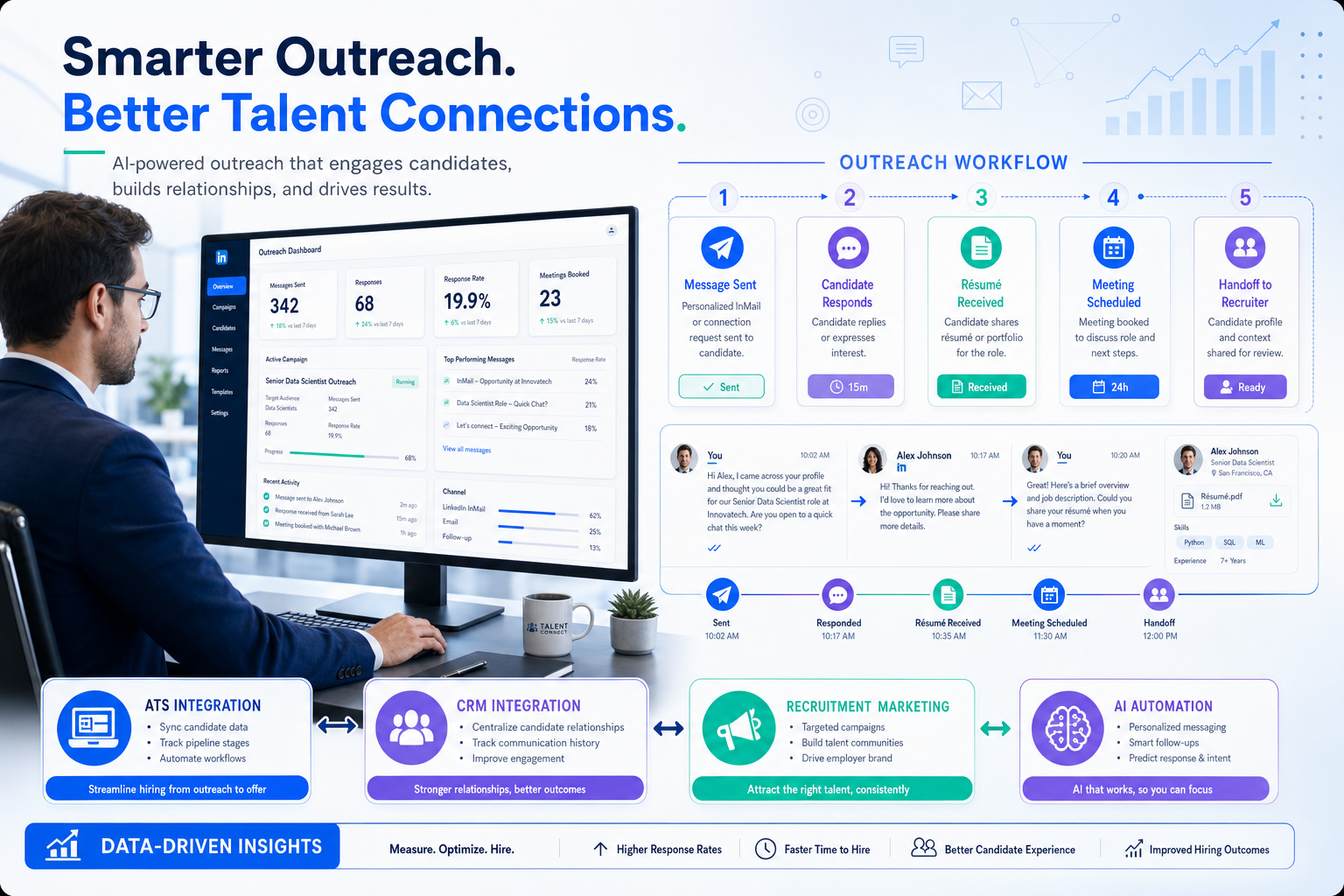
In my own workflow, tools that only add reporting have never solved that problem. What helped more was using StrategyBrain AI Recruiter as a support layer for LinkedIn outreach, after-hours replies, and initial interest checks, especially when candidates answered outside my working day or in another language. It handled repetitive communication and résumé collection more consistently, while I still made the final call on fit, résumé quality, and whether to move someone to interview.
The reason this matters is easy to see in early-career hiring. Employers have long said that new graduates often arrive with solid education but uneven workplace communication, humility, pacing, and professional manners. Those qualities are not obvious from a job title search alone. A recruiter has to start the conversation, ask follow-up questions, read how the person responds, and decide whether the candidate is ready for a real team environment rather than just an academic one.
That is where manual process breaks down. A recruiter sends LinkedIn messages, checks who replied, answers questions about the role, asks whether the candidate is open to change, requests a résumé, and tries to keep each conversation polite and timely. If those steps are delayed or scattered across inboxes, the team loses exactly the soft-signal evidence needed to judge early-career readiness. That is why recruitment automation tools deserve a more practical review: not as hype, but as systems for improving communication quality, recruiter follow-through, and the handoff between outreach, screening, recruitment marketing software, and a talent acquisition crm.
- How an ai recruiting tool supports real recruiter judgment
- Where recruitment marketing software and talent acquisition crm fit
- Why communication workflows matter as much as sourcing volume
- How to evaluate automation without overbuying
- What to test before changing your recruiting stack
Table of Contents
- Why Communication Is the Real Automation Problem
- What an AI Recruiting Tool Actually Does
- How the Stack Fits Together
- ATS vs Talent Acquisition CRM
- Recruitment Marketing Software vs AI Recruiting Tool
- Features That Matter Most
- Real Workflows for Headhunters and TA Teams
- How to Choose Without Overbuying
- Common Buying Mistakes
- FAQ
Why Communication Is the Real Automation Problem
Most recruiting teams do not need more software categories. They need fewer dropped conversations and cleaner execution between first outreach and recruiter review.
That is especially true when hiring people whose readiness is not captured by credentials alone. In the same way employers have historically worried that many new graduates lack workplace communication and professionalism, recruiters still struggle to assess motivation, responsiveness, and maturity from static profiles. The process depends on communication behavior: who replies, how they ask questions, whether they show interest clearly, and whether they follow through.
In practice, those signals often get buried under volume. A recruiter may be handling current reqs, silver medalists, passive talent, and inbound applicants at the same time. The result is a familiar pattern: messages go out, some candidates reply at night, others ask basic role questions, a few send contact details, and several disappear because no one responds quickly enough.
Key insight: The best use of an ai recruiting tool is not replacing recruiter judgment. It is protecting candidate conversations so judgment can happen with better context.
That framing also clarifies why buyers compare several categories at once. Some need top-of-funnel attraction. Some need long-term relationship management. Others need an operational layer that keeps LinkedIn outreach, follow-up, and résumé capture from becoming manual bottlenecks.
What an AI Recruiting Tool Actually Does
An ai recruiting tool uses automation and machine-assisted support to reduce repetitive recruiting work. Depending on the product category, that can include sourcing help, outreach assistance, interest checking, message handling, profile summaries, rediscovery, screening support, and workflow prompts.
What matters in real recruiting is not the broad definition but the point of use. If your team spends hours sending first messages, answering repetitive candidate questions, waiting for résumés, or trying to monitor LinkedIn replies across time zones, the highest-value automation may sit in communication rather than in scoring.
That is one reason I separate communication automation from final qualification. In my own testing, the strongest support came from tools that could keep candidate outreach moving, collect documents, and maintain timely interaction without pretending to decide who should be hired. That boundary matters. Recruiters still need to review the résumé, compare it to the brief, and make the call on shortlist quality.
For LinkedIn-heavy workflows, I found AI Recruiter most useful when a role required repeated first-touch messaging and candidates responded unpredictably. It could continue the initial exchange, explain the opportunity, identify whether someone was open to interview conversations, and gather a résumé or contact details. What it did not do, and should not be expected to do, was replace my final assessment of candidate fit.
How the Stack Fits Together
Recruitment automation tools overlap more than ever, which is why buyers often confuse product labels. The easiest way to evaluate them is to map each category to the problem it solves.
| Layer | Main Purpose | Typical Use | Main Benefit |
|---|---|---|---|
| ATS | Track jobs, applicants, stages, and approvals | Req-based hiring workflow | Control and visibility |
| Talent acquisition CRM | Manage candidate relationships over time | Nurture, rediscovery, talent pools | Better use of warm talent |
| Recruitment marketing software | Attract candidates and measure campaigns | Employer brand, landing pages, job distribution | Stronger top-of-funnel flow |
| AI recruiting tool | Automate repetitive recruiting tasks | Messaging, screening support, summaries, search | Less manual work |
Many teams do not need all four layers at once. But most growing recruiting functions eventually need to distinguish between job management, relationship management, candidate attraction, and communication automation.
If your process breaks down because no one follows up fast enough, your priority may be an AI layer. If your issue is low inbound quality, you may need recruitment marketing software. If your problem is forgetting strong past candidates, a talent acquisition crm may create more value than another sourcing seat.
Useful recruiting acronyms
- ATS: Applicant Tracking System
- CRM: Candidate Relationship Management
- TRM: Talent Relationship Management
- Rediscovery: Finding relevant past candidates in your database
- Nurture: Ongoing communication with talent before a live requisition match
ATS vs Talent Acquisition CRM
This distinction becomes clearer if you think about the difference between a transaction and a relationship.
An ATS is built around open jobs. It tracks status changes, interview progression, team visibility, approvals, and reporting by requisition. That structure is essential, and for many teams it is the system of record that should stay in place even after automation is added.
A talent acquisition crm, by contrast, is built around people who matter before or after a specific role is live. It is useful when you want to re-engage silver medalists, segment communities, keep passive prospects warm, or store relationship history that should not disappear when one req closes.
When the ATS may be enough
- You mainly hire against active openings
- Your recruiter volume is manageable
- You are not running nurture campaigns
- Your historical database is still searchable and used
When a talent acquisition CRM becomes more important
- You repeatedly source the same talent pools
- You want to re-engage prior finalists or alumni
- You need segmented nurture over time
- You want recruiters to own community relationships, not just reqs
In candidate markets where communication matters as much as credentials, the CRM layer often becomes the bridge between first interest and future conversion. It preserves the context that gets lost when every interaction is tied only to an open role.
Recruitment Marketing Software vs AI Recruiting Tool
These categories can work together, but they solve different parts of the funnel.
Recruitment marketing software is usually focused on attraction. That includes career site content, job distribution, campaign landing pages, talent community forms, employer brand messaging, and source analytics.
An ai recruiting tool usually matters more once a person is already discoverable or has engaged. It helps keep the recruiting motion going through search, messaging, summarization, basic qualification support, and recruiter task reduction.
| Question | Recruitment Marketing Software | AI Recruiting Tool |
|---|---|---|
| Main focus | Bring talent into the funnel | Move conversations forward efficiently |
| Most visible stage | Top of funnel | Mid funnel and activation |
| Core capabilities | Campaigns, landing pages, source tracking | Outreach support, interest checks, summaries |
| Best outcome | More relevant inbound flow | Less recruiter admin and faster follow-up |
In many organizations, the combination is what works best. Attraction brings people in. CRM keeps them organized. AI helps recruiters act on that data without drowning in manual communication.
Features That Matter Most
When evaluating recruitment automation tools, I recommend ignoring long feature grids at first and instead asking which parts of recruiter execution currently fail under pressure.
1. Timely outreach and follow-up
If your team works heavily on LinkedIn or with passive talent, consistency matters more than volume. Candidates reply when they are available, not when your team is free.
Practical takeaway: Test whether the tool can maintain natural back-and-forth communication, handle after-hours replies, and keep conversations moving without sounding robotic.
2. Interest detection and résumé capture
One of the most useful automation points is the handoff from curiosity to real candidate intent. If someone expresses interest, the next steps should be clear and easy.
Practical takeaway: Look for workflows that can explain the role, ask if the candidate wants to proceed, and collect a résumé or contact details without forcing a recruiter to monitor every message manually.
3. Human-controlled qualification
Automation should support qualification, not overclaim it. A tool may identify willingness to continue the conversation, but the recruiter still needs to judge relevance, depth, and hiring risk.
Practical takeaway: Prefer systems that make the recruiter's role explicit instead of pretending the software can replace final shortlisting.
4. Rediscovery and database activation
This remains one of the strongest use cases across recruiting models. Past applicants and prior finalists are often more valuable than another cold search.
Practical takeaway: Check whether recruiters can find candidates by role family, skills, response history, geography, and recency.
5. Candidate communication quality
The soft-skill angle from early-career hiring applies here too. Polite, clear, and well-timed communication affects response rates and brand impression.
Practical takeaway: Evaluate whether messages can reflect tone, language preference, and role context instead of relying on rigid templates.
6. Security and compliance
Candidate messaging and résumé collection involve sensitive data. Any automation layer should be reviewed for privacy handling, access control, and integration boundaries.
Practical takeaway: Confirm how candidate information is stored, whether data is isolated, and how your team controls access before you scale usage.
Real Workflows for Headhunters and TA Teams
Automation becomes easier to judge when you map it to real recruiting motions rather than product claims.
LinkedIn outreach for hard-to-reach candidates
- The recruiter identifies target profiles on LinkedIn.
- The system sends first-touch outreach and introduces the opportunity.
- Candidates ask about role basics, compensation range, or location.
- The automation handles common early questions and checks interest.
- Interested candidates share a résumé or contact details.
- The recruiter reviews and decides who advances.
This is one of the scenarios where I saw the clearest value from AI Recruiter. It reduced the repetitive front-end workload without taking over the decision that should remain with the recruiter.
Always-on communication across time zones
- A candidate replies after local business hours.
- The system continues the conversation promptly.
- Follow-up questions are answered in the candidate's language when needed.
- The recruiter receives the context later and picks up at the right point.
For firms doing international hiring, this can be the difference between a live pipeline and a stale one. Candidates often engage when human recruiters are offline.
Top-of-funnel campaign to nurture path
- Recruitment marketing software drives candidates to a landing page or community.
- The candidate enters a segmented pool.
- A talent acquisition crm stores relationship history and nurture status.
- An AI layer helps activate the pool for a new role through targeted outreach.
- The recruiter validates replies and moves candidates into the ATS.
This workflow is especially useful when hiring patterns repeat and the cost of starting from zero each time is too high.
How to Choose Without Overbuying
In my experience, the right setup depends less on company size alone and more on where recruiter effort is currently leaking.
Choose an ATS-first approach if:
- Your process is still inconsistent
- You need stronger workflow discipline first
- You do not yet run talent communities or heavy nurture
- Your main issue is stage visibility, not communication volume
Add a talent acquisition CRM if:
- You want long-term relationship management
- You keep losing track of warm candidates
- You hire repeatedly for similar talent segments
- You want pipeline health beyond current reqs
Add recruitment marketing software if:
- Your top-of-funnel flow is weak
- You need better campaign attribution
- You are investing in employer brand and conversion paths
- You want more structured talent community growth
Add an AI recruiting tool if:
- Recruiters lose time in repetitive messaging
- LinkedIn outreach is important to your model
- Candidates often reply outside normal hours
- You want faster handoff from interest to recruiter review
A simple evaluation method is to score each option across four dimensions: workflow fit, recruiter adoption, integration effort, and communication quality. That last category is often underrated. Yet in many hiring environments, especially early-career, multilingual, or passive-candidate recruiting, communication quality is where pipeline value is won or lost.
Common Buying Mistakes
Buying the label instead of solving the bottleneck
Teams often ask whether they need AI, CRM, or marketing software before they define the actual breakdown. Start with the failure point: outreach, response handling, rediscovery, nurture, or reporting.
Expecting automation to replace recruiter judgment
No serious recruiting team should outsource final fit assessment to an opaque tool. Interest and availability can be automated more safely than judgment of capability, motivation, and cultural fit.
Ignoring candidate communication quality
Fast automation that feels clumsy can still harm response rates. If the interaction does not sound respectful and clear, you may save time while damaging candidate trust.
Overestimating ATS communication depth
Many ATS platforms are good at tracking status but weak at relationship continuity and front-end conversation management.
Adding tools before checking data flow
If candidate details, résumés, and interaction history do not move cleanly between systems, recruiters end up doing manual admin anyway.
FAQ
What does an AI recruiting tool actually do?
An ai recruiting tool helps automate repetitive recruiting work such as candidate outreach, message handling, interest checks, résumé capture, summaries, rediscovery, and workflow support. The strongest tools reduce manual effort while keeping final recruiter judgment intact.
How is a talent acquisition CRM different from an ATS?
An ATS is built for managing applicants against live jobs. A talent acquisition crm is built for long-term candidate relationships, nurture, segmentation, and rediscovery beyond one requisition.
What is recruitment marketing software used for?
Recruitment marketing software helps attract candidates through campaigns, landing pages, job distribution, employer brand content, talent community capture, and source analytics.
When is LinkedIn automation most useful in recruiting?
It is most useful when recruiters spend too much time on repetitive first-touch outreach, after-hours replies, and moving interested candidates toward a résumé submission or recruiter conversation.
Can automation assess candidate soft skills?
Not fully. Automation can help surface communication behavior and keep interactions timely, but recruiters still need to interpret professionalism, judgment, and readiness through human review.
Conclusion
The smartest way to evaluate recruitment automation tools is to start where recruiting quality actually breaks down. In many teams, that is not sourcing volume alone. It is inconsistent communication, weak follow-up, and poor conversion from candidate interest to recruiter action.
That is why the ai recruiting tool category has become more relevant. Used well, it supports the part of recruiting that too often gets lost between dashboards, requisitions, and inboxes. A talent acquisition crm strengthens relationship memory. Recruitment marketing software strengthens attraction. AI strengthens execution.
If your hiring model depends on LinkedIn outreach, multilingual conversations, or round-the-clock candidate replies, then the right automation layer can add real operational value without removing recruiter control. The best setup is the one that protects human judgment by removing the manual steps most likely to weaken it.