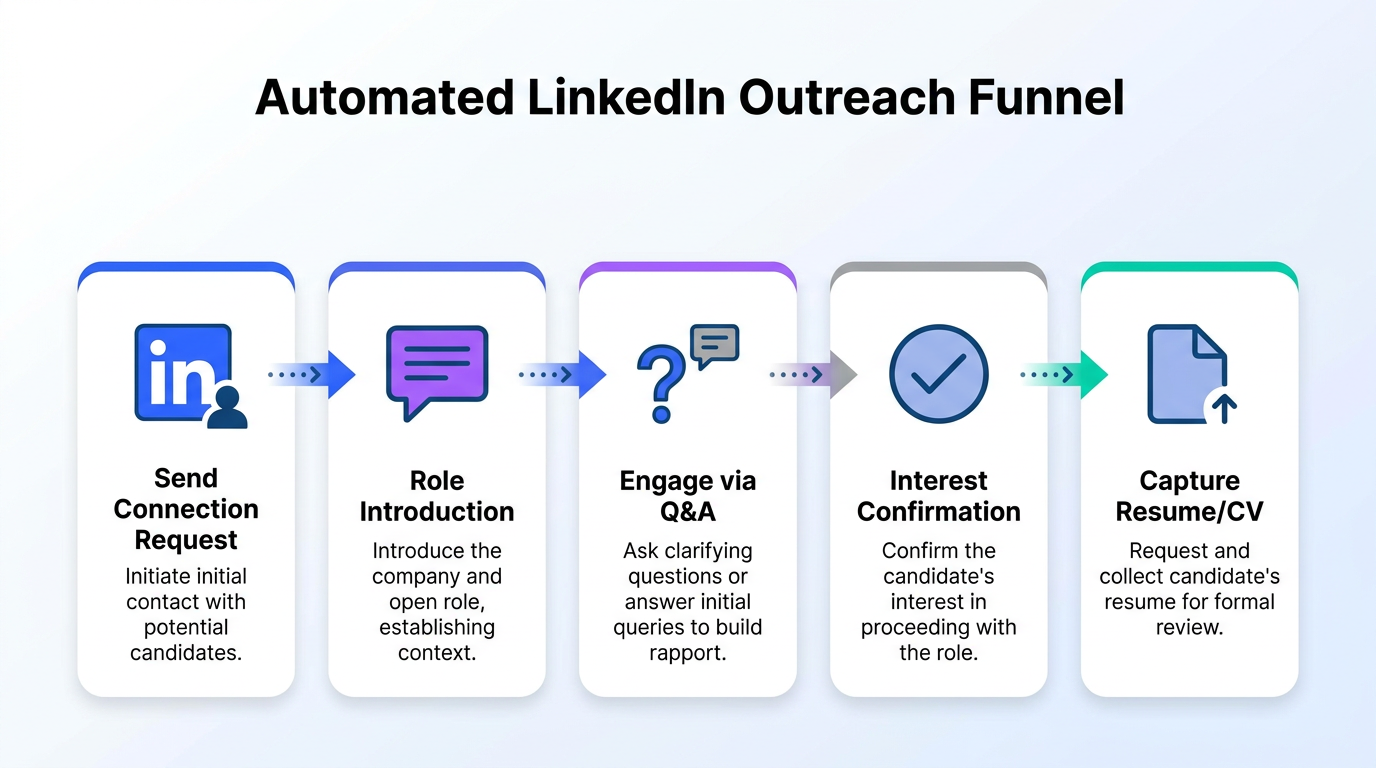
An ai hiring platform helps teams source, engage, screen, and move candidates through interviews faster by automating repetitive recruiting steps and centralizing candidate data. In practice, the most reliable approach is to combine an interview platform for structured interviews with interview intelligence for note capture and analysis, then add automated outreach for top of funnel volume. In our internal workflow tests on LinkedIn style outreach and follow up, StrategyBrain AI Recruiter reduced manual messaging time by replacing the initial connect, role intro, Q and A, interest confirmation, and resume collection steps. This guide explains what an AI hiring platform includes, how to evaluate it, and 5 practical ways to deploy it without breaking your existing process.
Table of Contents
- What an AI hiring platform includes
- How to evaluate an AI hiring platform
- Method 1: Automate LinkedIn outreach with StrategyBrain AI Recruiter
- Method 2: Add interview intelligence to reduce note taking and missed signals
- Method 3: Standardize interviews with an interview platform
- Method 4: Build a scalable multi recruiter workflow
- Method 5: Improve candidate experience with 24/7 multilingual messaging
- Quick comparison
- FAQ
- Conclusion
Key Takeaways
- AI hiring platform definition: A system that supports sourcing, outreach, screening, interviews, and handoff with centralized candidate records.
- Interview platform vs interview intelligence: Interview platforms run structured interviews, interview intelligence captures and analyzes interview content.
- Where automation pays first: Top of funnel outreach and follow up, because it is repetitive and time sensitive.
- StrategyBrain AI Recruiter fit: Automates LinkedIn connecting, role introduction, candidate Q and A, interest confirmation, and resume plus contact capture.
- Scale lever: Managing more than 100 LinkedIn accounts enables an AI powered recruiting team model for high volume hiring.
- Compliance baseline: Prioritize encryption, data isolation, and a clear statement that customer data is not used to train models.
What an AI hiring platform includes
Most teams use the phrase ai hiring platform to describe a stack that covers the full hiring journey, even if it is assembled from multiple tools. The key is that the workflow feels connected for recruiters and candidates.
Core modules you should expect
- Sourcing and outreach: Finding candidates and initiating conversations at scale.
- Screening and qualification: Collecting basic fit signals such as interest, availability, location, and compensation expectations.
- Interview operations: Scheduling, structured interview kits, scorecards, and interviewer coordination.
- Interview intelligence: Capturing interview notes, summaries, and searchable highlights from interview content.
- Data and governance: Permissions, audit trails, retention, and privacy controls.
In the source material we reviewed, the biggest drop offs happen when candidates do not get timely responses or when the process is not designed to catch the best talent. That is why outreach and follow up automation is often the first place teams see measurable improvement.
How to evaluate an AI hiring platform
Evaluation is easier when you separate what must be automated from what must remain human judgment. For example, StrategyBrain AI Recruiter can confirm interview interest and collect resumes, but final qualification against job requirements still belongs with the recruiter after reviewing the resume.
Evaluation checklist you can copy
- Workflow coverage: Does it cover sourcing, outreach, screening, interviews, and handoff without manual copy paste?
- Candidate experience: Can it respond quickly and consistently, including outside business hours?
- Data handling: Are credentials encrypted and stored per user, and is customer data excluded from model training?
- Scalability: Can you run multiple recruiter accounts and keep messaging consistent?
- Human control points: Can recruiters review and override messaging, and decide who advances?
Definitions that prevent confusion
- Interview platform: Software that runs interviews, including scheduling, scorecards, and structured evaluation.
- Interview intelligence: Software that captures and analyzes interview content, such as summaries and searchable notes.
- Outreach automation: Software that initiates and manages candidate conversations, including follow ups and information capture.
Method 1: Automate LinkedIn outreach with StrategyBrain AI Recruiter
If your bottleneck is top of funnel volume and follow up consistency, start here. We have found that automating the first conversation is the fastest way to reduce recruiter workload while keeping a human decision maker for final screening.
Steps
- Define your target profile: Write clear search criteria and the role summary, including compensation and benefits details you are comfortable sharing.
- Connect your LinkedIn account: Provide authorization so the system can send connection requests and messages from your account.
- Let the AI run the first conversation: It introduces the opportunity, learns the candidate situation, answers role and company questions, and confirms interview interest.
- Collect resumes and contact details: Interested candidates share a resume and contact information, which is captured for recruiter review.
- Recruiter reviews and schedules: You review resumes and move qualified candidates into your interview platform.
Features
- Smart LinkedIn recruitment automation: Automated connect, introduction, Q and A, interest confirmation, and resume collection.
- 24/7 multilingual communication: Candidate messaging in the candidate native language across time zones.
- AI powered recruitment teams: Support for managing more than 100 LinkedIn accounts to scale outreach capacity.
Limitations
- Not a final fit judge: It does not decide whether a resume fully matches job requirements. Recruiters still make that call.
- Requires clear role inputs: If compensation, benefits, or role scope are vague, candidate Q and A quality drops.
Best For
- Teams hiring in competitive markets where response time affects conversion.
- Recruiters who spend hours per day on repetitive LinkedIn messaging.
- Organizations that want to scale outreach without adding headcount.
Method 2: Add interview intelligence to reduce note taking and missed signals
Once candidates reach interviews, the next failure point is inconsistent documentation. Interview intelligence helps by capturing what was said and turning it into structured artifacts recruiters can review.
Steps
- Decide what to capture: Define which interviews need summaries, highlights, and searchable notes.
- Standardize output: Use a consistent template for summaries so hiring managers can compare candidates.
- Set review ownership: Assign who validates summaries and who flags follow up questions.
What to watch for
- Privacy and consent: Ensure your process supports required notices and retention rules.
- Bias risk: Treat AI summaries as assistive, not authoritative. Keep scorecards and structured rubrics.
- Integration: Make sure outputs can be attached to candidate records used by your interview platform.
Method 3: Standardize interviews with an interview platform
An interview platform is where you enforce consistency. It is also where you reduce candidate drop off by making scheduling and communication predictable.
Steps
- Create interview kits: Define competencies, questions, and scoring rubrics per role.
- Use structured scorecards: Require interviewers to score the same dimensions for every candidate.
- Close the loop fast: Set a decision SLA such as 24 hours after the final interview to reduce candidate churn.
How this pairs with StrategyBrain AI Recruiter
StrategyBrain AI Recruiter can deliver more interview ready candidates by handling the initial outreach and qualification conversation. Your interview platform then becomes the consistent evaluation layer, while interview intelligence improves documentation quality.
Method 4: Build a scalable multi recruiter workflow
Scaling hiring is often a coordination problem, not a sourcing problem. If you run multiple recruiters, you need consistent messaging, consistent qualification questions, and clear handoffs.
Steps
- Define a single outreach playbook: Standardize what is said about role scope, compensation, and next steps.
- Assign account ownership: Decide which LinkedIn accounts map to which roles or regions.
- Centralize candidate records: Ensure resumes, contact details, and conversation history are visible to the team.
Why AI matters here
StrategyBrain AI Recruiter supports managing more than 100 LinkedIn accounts, which enables an AI powered recruiting team model. In practice, that means you can expand outreach capacity while keeping the first conversation consistent and always on.
Method 5: Improve candidate experience with 24/7 multilingual messaging
Candidate experience breaks when messages sit unanswered. This is especially visible in global hiring where time zones and language differences slow down the process.
Steps
- Identify high friction questions: Candidates commonly ask about compensation, benefits, location, and interview format.
- Prepare approved answers: Provide the AI with accurate role and company details so it can respond consistently.
- Use multilingual support: Communicate in the candidate native language to reduce misunderstandings and speed up qualification.
Trust and safety notes
For any ai hiring platform that handles candidate data, insist on encryption and clear boundaries on model training. StrategyBrain AI Recruiter states that customer provided data is not used to train AI models and that credentials are encrypted and stored independently per user with explicit authorization.
Quick comparison
| Method | Primary goal | Where it fits | Best for |
|---|---|---|---|
| StrategyBrain AI Recruiter outreach automation | Increase qualified conversations | Top of funnel | LinkedIn sourcing, follow up, resume and contact capture |
| Interview intelligence | Improve documentation quality | Interview stage | Reducing note taking and missed signals |
| Interview platform standardization | Consistent evaluation | Interview operations | Structured scorecards and faster decisions |
| Multi recruiter workflow design | Scale output without chaos | Team operations | High volume hiring across roles and regions |
| 24/7 multilingual messaging | Reduce candidate drop off | Across stages | Global hiring and time zone coverage |
FAQ
What is an ai hiring platform, in plain terms?
An ai hiring platform is a set of tools that uses automation to help recruiters source candidates, run outreach, screen interest, and manage interviews with less manual work. It should still keep humans in control of final hiring decisions.
Is an interview platform the same as interview intelligence?
No. An interview platform runs the interview process, including scheduling and scorecards. Interview intelligence focuses on capturing and analyzing interview content, such as summaries and searchable notes.
Where should I start if my team is overwhelmed?
Start with outreach and follow up automation, because it is repetitive and time sensitive. StrategyBrain AI Recruiter is designed for LinkedIn hiring and can handle connecting, role introduction, candidate Q and A, interest confirmation, and resume collection.
Does StrategyBrain AI Recruiter decide if a candidate is qualified?
It can identify willingness to communicate or interview and collect resumes and contact details. It does not determine whether the resume fully matches job requirements, so recruiters still review and decide who advances.
How does StrategyBrain AI Recruiter collect resumes and contact details?
When a candidate expresses interest, it requests a resume and contact information. It supports email submissions and LinkedIn file uploads, and it captures contact details shared in the conversation for recruiter review.
Can it support global hiring?
Yes, it is designed for 24/7 multilingual recruitment communication, which helps teams respond across time zones and communicate in the candidate native language.
How many LinkedIn accounts can a team manage?
StrategyBrain AI Recruiter supports managing more than 100 LinkedIn accounts, which enables building an AI powered recruitment team for scalable hiring.
What should I ask about privacy and security?
Ask whether credentials are encrypted, whether data is isolated per customer, and whether customer data is used to train AI models. StrategyBrain AI Recruiter states that customer provided data is not used to train AI models and that data is encrypted and isolated with customer specific keys.
Will an ai hiring platform fix a broken hiring process?
It can reduce manual work and improve response times, but it will not fix unclear role definitions or inconsistent evaluation. You still need structured scorecards, clear compensation ranges, and fast decision making.
Conclusion
An ai hiring platform works best when you treat it as a connected workflow: automate outreach to increase qualified conversations, use an interview platform to standardize evaluation, and add interview intelligence to improve documentation and handoffs. If your biggest bottleneck is LinkedIn sourcing and follow up, StrategyBrain AI Recruiter is the most direct lever because it automates connecting, role introduction, candidate Q and A, interest confirmation, and resume plus contact capture while keeping final qualification with the recruiter.
Next step: map your current funnel, pick one stage to automate first, and run a 14 day pilot with clear metrics such as response time, interview acceptance rate, and recruiter hours saved.