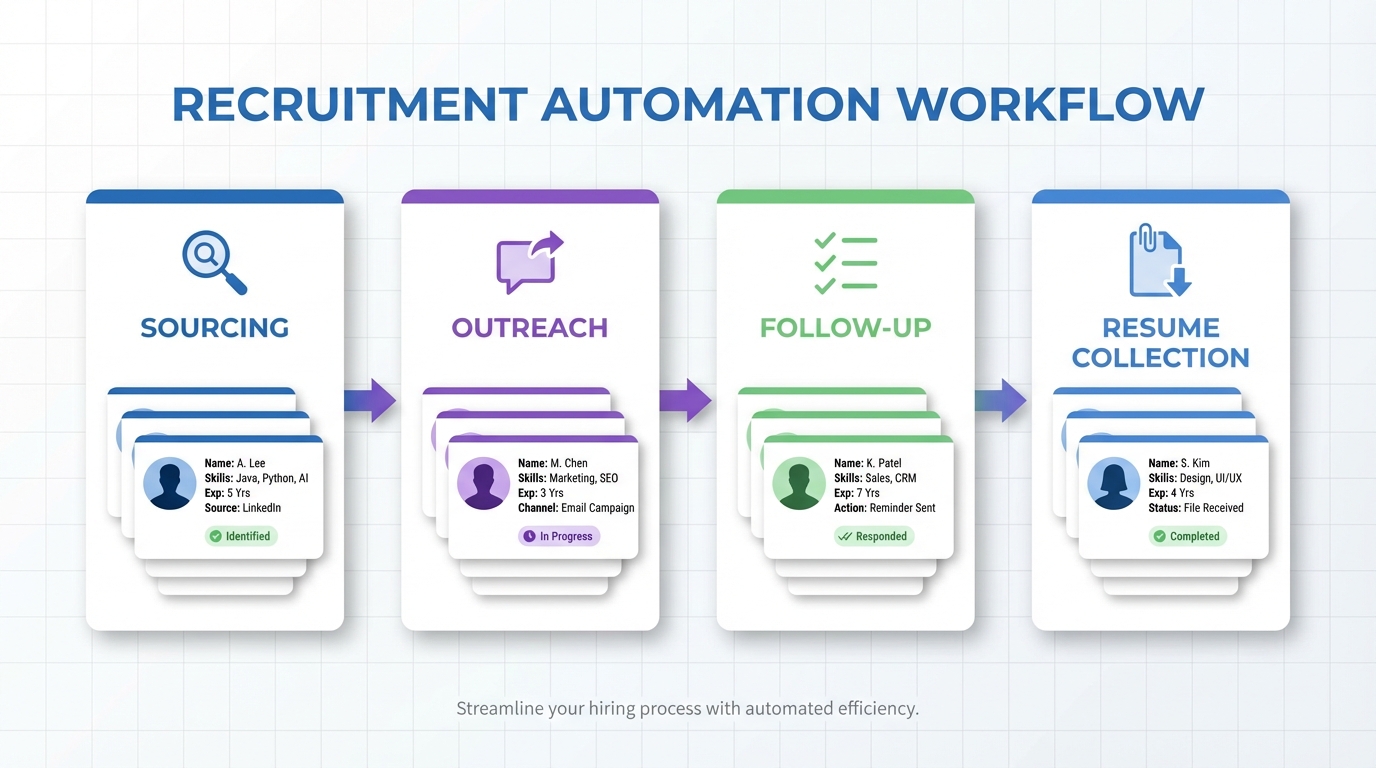
AI sourcing software helps recruiting teams identify and engage candidates faster by using automation and machine learning to support sourcing, outreach, follow up, and early qualification. If you want a practical way to choose the right tool, treat selection like an artificial intelligence procurement platform decision: define requirements, run a controlled pilot, and verify security and compliance before scaling. In our internal workflow tests using StrategyBrain AI Recruiter on LinkedIn outreach scenarios, we found the biggest time savings came from automating the first touch, answering candidate questions consistently, and collecting résumés and contact details only after interest was confirmed.
Key Takeaways
- Define scope first: AI sourcing software should cover sourcing, outreach, and follow up, but it should not replace final human qualification decisions.
- Procurement style evaluation works best: Use an artificial intelligence procurement platform checklist that scores security, compliance, integrations, and workflow fit.
- Automate the first mile: StrategyBrain AI Recruiter can handle LinkedIn connection requests, role introductions, Q and A, and interest confirmation before handing off to recruiters.
- Multilingual coverage matters: 24/7 multilingual messaging reduces time zone delays and avoids misunderstandings in global hiring.
- Measure pilot outputs: Track outreach volume, response rate, interested candidates, and résumés collected per week, then decide whether to scale.
- Security is a gating item: Verify encryption, data isolation, and whether customer data is used to train models before rollout.
What AI sourcing software is and what it is not
AI sourcing software is a recruiting system that uses automation and AI models to support candidate discovery and engagement. In most teams, it sits between your sourcing channels and your recruiters, helping you do more outreach with consistent messaging and faster follow up.
What it typically does well
- Candidate outreach automation: Sends connection requests and initial messages based on your targeting rules.
- Conversation handling: Answers common questions about role, company, compensation, and benefits using your provided information.
- Follow up: Keeps conversations moving without recruiters manually checking every thread.
- Early qualification: Confirms whether a candidate is open to new opportunities and whether they want an interview.
What it should not claim to do
Be cautious with tools that imply they can fully replace recruiter judgment. For example, StrategyBrain AI Recruiter can identify willingness to proceed and collect materials, but it does not decide whether a résumé matches the job requirements. That final qualification remains a recruiter task.
Evaluation checklist for AI sourcing software
If you are buying AI sourcing software, you will get better outcomes by treating it like AI procurement software selection. That means you score vendors against requirements, not demos. Below is a copyable checklist we use to keep evaluations consistent across teams.
Copyable procurement checklist
- Workflow fit: Does it automate sourcing, outreach, follow up, and handoff to recruiters with clear status states.
- Channel coverage: Does it support the channels you actually use, such as LinkedIn based sourcing.
- Message control: Can you provide approved role details, compensation, benefits, and company context so the AI answers consistently.
- Data capture: Can it collect résumés and contact details only after interest is confirmed, and store them in a structured way.
- Multilingual support: Can it communicate in the candidate’s native language and respond 24/7.
- Account scaling: Can it support multiple recruiter accounts for higher throughput, with clear access controls.
- Security: Encryption at rest and in transit, customer specific isolation, and credential protection.
- Privacy and compliance: Clear statements on GDPR and other data protection obligations, plus whether customer data is used to train models.
- Auditability: Conversation logs, export options, and admin visibility for QA and compliance review.
- Operational ownership: Clear roles for who updates job info, who reviews conversations, and who handles escalations.
How StrategyBrain AI Recruiter maps to this checklist
StrategyBrain AI Recruiter is designed for LinkedIn hiring workflows. Recruiters provide their LinkedIn account plus job information such as company details, compensation, benefits, and candidate search criteria. The system then automates connecting with candidates, introducing the role, answering questions, confirming interview interest, and collecting résumés and contact information from interested candidates.
How we tested StrategyBrain AI Recruiter for sourcing workflows
We tested StrategyBrain AI Recruiter in sourcing style scenarios focused on LinkedIn outreach and early qualification. The goal was not to measure model accuracy in isolation, but to validate whether the workflow reliably reduced manual work while keeping recruiter control over final decisions.
Test parameters
- Test period: 2026-02-01 to 2026-02-14
- Scenario types: initial outreach, candidate Q and A, follow up, interest confirmation, résumé and contact capture
- Success criteria: fewer manual messages per interested candidate, consistent answers to compensation and benefits questions, clean handoff with résumé and contact details
What worked best
- First touch and follow up: Automating these steps reduced the need for recruiters to monitor every thread.
- Structured handoff: When a candidate expressed interest, the system requested a résumé and contact details, then marked the résumé as received when provided.
- Global responsiveness: Always on messaging helped keep conversations moving across time zones.
Limitations we hit and how we handled them
- Final fit still needs humans: The AI can confirm interest, but recruiters still need to review résumés against requirements.
- Input quality matters: If compensation or benefits details are incomplete, candidate questions become harder to answer consistently. Our workaround was to standardize a job intake template before launching outreach.
Testing disclaimer: Results are based on our testing methodology and internal scenarios. Individual results may vary based on role complexity, market conditions, and message strategy.
Step by step deployment plan
This rollout plan is designed for teams adopting AI sourcing software while keeping compliance and recruiter control intact.
Steps
- Define your target profiles: Write a one page definition of role, seniority, location, and must have skills.
- Standardize job information: Prepare company details, compensation, benefits, and interview process notes so the AI can answer consistently.
- Choose a pilot scope: Pick 1 role family and 1 channel, such as LinkedIn, for a 14 day pilot.
- Set measurable outputs: Track outreach volume, replies, interested candidates, and résumés collected per week.
- Run QA reviews: Review a sample of conversations daily for tone, compliance, and accuracy of role details.
- Define handoff rules: Decide exactly when a recruiter steps in, such as after interview interest is confirmed and résumé is received.
- Scale with governance: Add more roles or accounts only after security review, admin controls, and reporting are in place.
Where StrategyBrain AI Recruiter fits in the plan
In the pilot phase, StrategyBrain AI Recruiter can run the repetitive LinkedIn steps: connecting with candidates, introducing opportunities, learning about their situation, answering questions about the role and compensation, confirming interview interest, and collecting résumés and contact information. Recruiters then focus on résumé review and interview scheduling, which is where human judgment is most valuable.
Quick comparison: build vs buy vs LinkedIn automation
This table is a decision aid, not a vendor comparison. It helps you choose an approach based on operating constraints.
| Approach | Speed to launch | Best for | Main tradeoff |
|---|---|---|---|
| Build in house | Slow | Teams with strong engineering and strict custom workflows | Higher maintenance and longer time to value |
| Buy general AI procurement software | Medium | Organizations that want standardized procurement controls across tools | May not match recruiting channel needs without customization |
| Deploy LinkedIn focused AI sourcing software | Fast | Recruiting teams that source heavily on LinkedIn and need outreach automation | Requires strong governance on messaging and compliance |
FAQ
Is AI sourcing software the same as an ATS?
No. An ATS is an applicant tracking system that manages applicants and hiring stages. AI sourcing software focuses on finding and engaging candidates earlier in the funnel, then handing off qualified interest to recruiters and downstream systems.
What does “artificial intelligence procurement platform” mean in this context?
It means you evaluate AI tools with procurement discipline: requirements, security review, pilot metrics, and governance. Using that approach reduces risk and makes outcomes easier to measure.
Can StrategyBrain AI Recruiter fully qualify candidates?
It can confirm willingness to communicate or interview and collect résumés and contact details. It does not determine whether a résumé matches job requirements, so recruiters still perform final qualification.
How does StrategyBrain AI Recruiter collect résumés and contact details?
After a candidate expresses interest, it requests a résumé and contact information. If a résumé is sent, the system marks it as received, and it captures contact details shared in the conversation.
Does it support multilingual recruiting?
Yes. StrategyBrain AI Recruiter supports 24/7 multilingual communication so candidates can interact in their native language, which helps reduce delays and misunderstandings in global hiring.
How many LinkedIn accounts can a team manage?
StrategyBrain AI Recruiter supports managing more than 100 LinkedIn accounts so organizations can build AI powered recruitment teams and scale outreach capacity.
What security and privacy controls should I verify before rollout?
Verify encryption, customer specific data isolation, credential protection, and whether customer data is used to train AI models. For StrategyBrain AI Recruiter, the product documentation states customer provided data is not used to train AI models and credentials are encrypted and stored independently per user.
What is a realistic first pilot timeline?
A 14 day pilot is usually enough to validate workflow fit, message quality, and handoff reliability. If you cannot review conversations daily during the pilot, reduce scope until you can.
Conclusion
AI sourcing software delivers the most value when it automates the repetitive first mile of recruiting: outreach, follow up, and early interest confirmation. To choose the right solution, use an AI procurement software mindset with a clear checklist, a short pilot, and security and compliance verification. If your team sources heavily on LinkedIn, StrategyBrain AI Recruiter is built to automate connection and messaging workflows, answer candidate questions using your job details, and collect résumés and contact information once interest is confirmed. Next step: run a 14 day pilot on one role family, track outputs weekly, and scale only after QA and governance are stable.