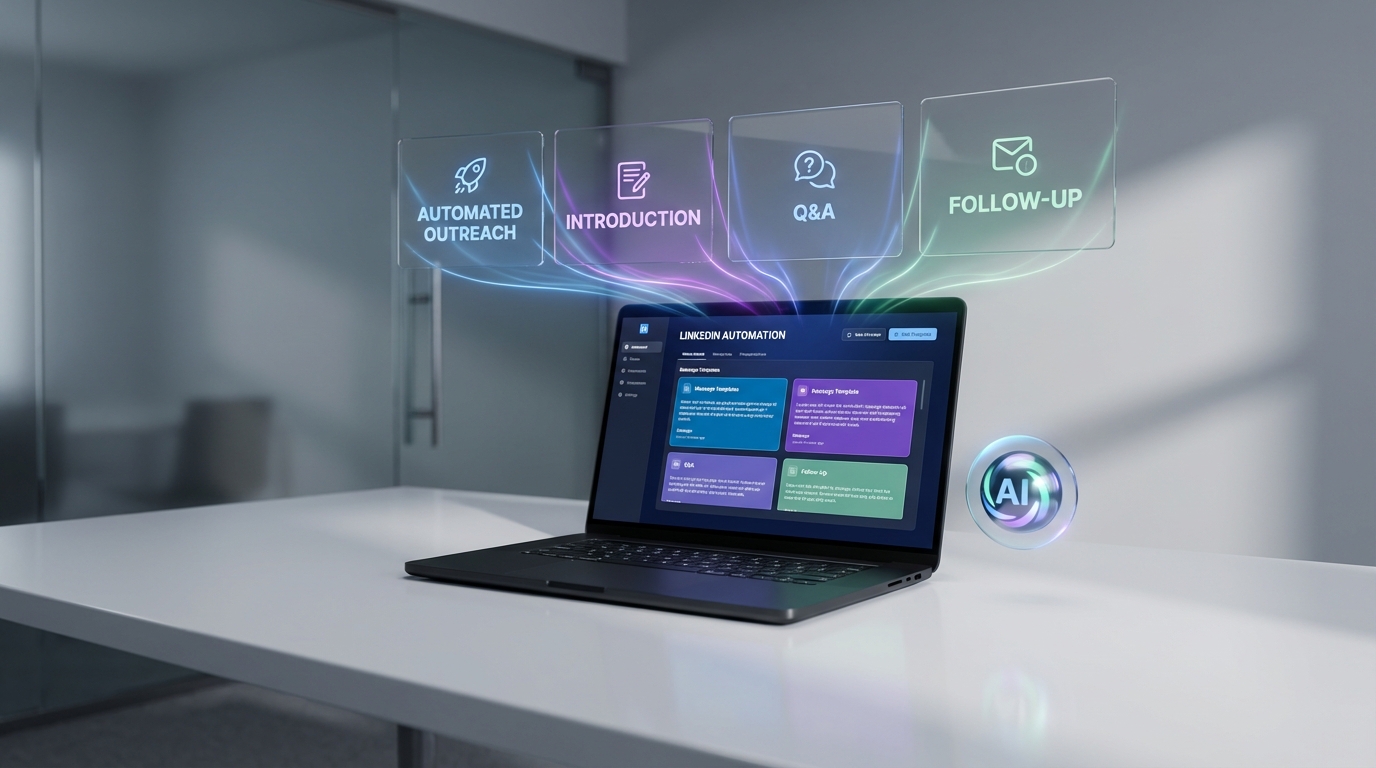
Artificial intelligence for recruiting is most valuable when it protects your employer brand while increasing hiring output. The simplest way to do that is to standardize what you say to candidates and employees, then use AI to execute the repetitive parts consistently: initial outreach, role introduction, Q&A, follow up, and collecting resumes and contact details from interested people. In our experience running AI assisted recruiting workflows, brand risk usually comes from inconsistency and silence, not from speed. This guide explains how brand reputation is created or damaged in recruiting, why negative stories scale quickly online, and how StrategyBrain AI Recruiter can automate LinkedIn recruiting conversations in a way that stays aligned with your policies and candidate experience standards.
Key Takeaways
- Brand in recruiting is lived experience: what employees and candidates can credibly say about how they were treated.
- Bad experiences scale fast: one negative story can reach large second degree networks through social sharing.
- Artificial intelligence and recruitment must be policy led: AI should follow your rules for tone, compensation transparency, and respectful rejection.
- LinkedIn outreach is a high leverage use case: automating connect, intro, Q&A, and follow up reduces delays and inconsistency.
- StrategyBrain AI Recruiter can run 24/7 multilingual conversations: candidates get timely responses in their native language, reducing friction across time zones.
- Scale requires governance: managing many LinkedIn accounts is powerful, but needs guardrails, auditability, and privacy controls.
What “brand” means in recruiting
In recruiting, a brand is not your logo, your careers page, or your tagline. It is the accumulated story people tell about what it is like to work with you and for you. That story is built from small moments: how managers treat employees, how recruiters communicate, whether compensation questions are answered clearly, and whether candidates feel respected when they are not selected.
When a company has strong brand recognition, employees often become voluntary promoters. They wear branded items, share workplace photos, and join fan communities. That kind of advocacy is earned, and it is fragile if the internal experience does not match the external image.
How brand reputation collapses in the digital age
Digital sharing changed the math of reputation. Employees and candidates can document their experience instantly and distribute it to large networks. A friend who never considered working for your company can become aware of you through a single post, either positive or negative.
In the source story that inspired this article, one company with a globally recognized brand was reportedly damaging its reputation through a practice described as constructive dismissal. Constructive dismissal is a legal concept where an employer makes working conditions intolerable or materially changes terms so an employee feels forced to resign. The unintended consequence is that people who feel mistreated can amplify their experience online, and communities can form around that dissatisfaction.
The recruiting lesson is straightforward: your hiring team inherits the consequences of how employees are treated. Artificial intelligence for recruiting cannot fix a broken employee experience, but it can prevent avoidable candidate experience failures that create new negative stories.
Where artificial intelligence for recruiting helps most
Artificial intelligence and recruitment fit best where work is repetitive, time sensitive, and easy to standardize. That includes outreach, follow up, answering common questions, and collecting structured information. It is less suitable for final hiring decisions, nuanced performance assessments, or anything that requires sensitive judgment without human review.
To keep terms precise, here is how we use them in this guide:
- Outreach: the first message and connection request to a potential candidate.
- Qualification: confirming interest, availability, location constraints, and basic fit signals. This is not the same as final selection.
- Candidate experience: the end to end perception of fairness, clarity, and respect during hiring.
Method 1: Standardize your candidate messaging playbook
Before you automate anything, write down what “good” looks like. A messaging playbook is the fastest brand protection tool because it reduces inconsistency across recruiters and time zones.
Steps
- Define non negotiables: tone, response time targets, and what must be disclosed when asked about compensation and benefits.
- Write approved message blocks: connection note, role introduction, interview invitation, rejection, and re engagement.
- Create an escalation rule: list the topics that must route to a human, such as complex compensation negotiations or sensitive accommodations.
- Review quarterly: update for new roles, new regions, and new compliance requirements.
Features
- Brand consistency: candidates hear one coherent story.
- Faster onboarding: new recruiters ramp faster with approved language.
- Lower risk: fewer off brand or non compliant messages.
Limitations
- It does not create trust by itself: if internal practices are unfair, messaging cannot cover it.
- It can feel scripted: you need personalization rules to keep it human.
Best For
- Teams hiring across multiple recruiters or agencies
- Organizations expanding into new regions
- Roles with high candidate volume on LinkedIn
Method 2: Automate LinkedIn outreach and follow up with StrategyBrain AI Recruiter
LinkedIn is where brand and speed collide. Candidates expect fast, respectful communication, but recruiters often cannot keep up with message volume. This is a practical place to apply the benefits of AI in recruitment because the workflow is repeatable and measurable.
StrategyBrain AI Recruiter is designed to automate the early LinkedIn recruiting cycle. It can connect with candidates that match your search criteria, introduce the opportunity, learn about the candidate’s situation, answer questions about the role, company, compensation, and benefits, confirm interview interest, and collect resumes and contact information from candidates who want to proceed.
Steps
- Provide role context: company details, compensation, benefits, and the candidate search criteria you want to target.
- Enable automated conversations: the AI handles initial outreach, Q&A, and follow up while staying aligned with your messaging rules.
- Review interested candidates: recruiters focus on the resumes and contact details collected from candidates who opted in to move forward.
Features
- Automated connect and intro: reduces manual outreach workload.
- Two way Q&A: answers common questions consistently, including compensation and role details when provided.
- Resume and contact capture: collects candidate submitted information for recruiter review.
Limitations
- Not final qualification: per product guidance, it identifies willingness to communicate or interview, but recruiters still evaluate resume fit.
- Requires good inputs: unclear role details produce unclear conversations, so your playbook matters.
Best For
- Recruiters who spend hours per day on repetitive LinkedIn messaging
- Teams that want consistent candidate experience across recruiters
- Hiring managers who want faster shortlists without adding headcount
Method 3: Use multilingual 24/7 communication to improve candidate experience
One of the most overlooked brand risks is delay. Candidates interpret silence as disinterest or disorganization. When you recruit globally, time zones make this worse, and language barriers can create misunderstandings that feel like disrespect.
StrategyBrain AI Recruiter supports round the clock responses and can communicate in any global language using the candidate’s native language. In practice, this means candidates can ask questions when they are available, and they receive timely answers without waiting for a recruiter’s local business hours.
Steps
- Decide your response standard: define what “timely” means for your team, such as same day replies.
- Localize key messages: ensure role introductions and expectations translate clearly, not just literally.
- Monitor conversation quality: sample conversations weekly to confirm tone and clarity.
Features
- Always on messaging: fewer dropped conversations.
- Native language communication: reduces cultural friction and confusion.
- Consistent answers: fewer contradictory statements across recruiters.
Limitations
- Escalation still matters: sensitive topics should route to a human.
- Localization is ongoing: you must keep role details current across regions.
Best For
- International hiring and overseas expansion
- Roles with high inbound questions
- Teams that want to reduce candidate drop off due to slow replies
Method 4: Build an AI powered recruiting team with multiple LinkedIn accounts
Scaling recruiting usually means adding recruiters, which increases cost and introduces variability. Another approach is to scale the execution layer while keeping human decision making focused on interviews and final selection.
StrategyBrain AI Recruiter supports managing more than 100 LinkedIn accounts, enabling organizations to build AI powered recruitment teams. The brand benefit is that you can keep response quality consistent while increasing outreach capacity, as long as you apply governance and monitoring.
Steps
- Segment accounts by role family: keep messaging and targeting tight for each hiring lane.
- Assign ownership: every account needs a responsible recruiter for oversight and escalation.
- Set volume guardrails: define daily outreach limits and quality checks to avoid spam signals.
Features
- Scalable outreach: expand capacity without linear headcount growth.
- Operational consistency: shared playbooks applied across accounts.
- Pipeline resilience: fewer single points of failure when one recruiter is unavailable.
Limitations
- Requires oversight: scaling without monitoring can create brand risk.
- Process maturity needed: teams without clear role definitions will struggle to standardize.
Best For
- High growth companies hiring across multiple functions
- Agencies and headhunters managing many searches
- HR leaders who need more output without adding staff
Method 5: Add privacy, compliance, and brand safety controls
Trust is part of brand. If candidates believe their data is mishandled, the reputational damage can be immediate. Any artificial intelligence for recruiting program should clearly define how data is stored, who can access it, and whether it is used to train models.
According to the provided product information, StrategyBrain AI Recruiter is designed with privacy and security controls such as encryption, customer specific isolation, and a commitment that customer provided data is not used to train AI models. It also states compliance with privacy regulations in the EU, United States, and Canada.
Steps
- Document data handling: what data you collect, where it is stored, and retention timelines.
- Limit access: only recruiters who need candidate data should have it.
- Audit conversations: review samples for tone, fairness, and policy alignment.
- Publish a candidate notice: explain how AI is used in early stage communication and how candidates can request human follow up.
Features
- Brand safety: fewer surprises in candidate communication.
- Compliance readiness: clearer answers when candidates ask about data use.
- Operational confidence: recruiters know what the system will and will not do.
Limitations
- Policies must be enforced: documentation without enforcement does not reduce risk.
- Local requirements vary: confirm region specific obligations with counsel.
Best For
- Organizations hiring in regulated environments
- Teams operating across multiple countries
- Any employer that treats candidate trust as a brand asset
Quick Comparison
| Approach | Speed Impact | Cost Impact | Best For |
|---|---|---|---|
| Messaging playbook standardization | Medium | Low | Consistency and brand alignment across recruiters |
| StrategyBrain AI Recruiter for LinkedIn outreach | High | Medium | Automating connect, intro, Q&A, follow up, and resume collection |
| 24/7 multilingual candidate communication | High | Medium | Global hiring and time zone coverage |
| Multi account AI recruiting team model | High | Variable | Scaling hiring capacity without linear headcount growth |
| Privacy and compliance controls | Low | Low | Reducing reputational and regulatory risk |
FAQ
What is artificial intelligence for recruiting in plain terms?
Artificial intelligence for recruiting is the use of AI systems to automate or assist recruiting tasks such as sourcing, outreach, candidate communication, and early stage screening. It is most effective when it standardizes repetitive work while humans keep control of final hiring decisions.
Does AI help employer brand or hurt it?
It can do either. AI helps when it improves response time, consistency, and clarity. It hurts when it creates spammy outreach, inconsistent answers, or unclear data practices that reduce trust.
How does StrategyBrain AI Recruiter fit into artificial intelligence and recruitment workflows?
StrategyBrain AI Recruiter focuses on LinkedIn recruiting automation. It can connect with targeted candidates, introduce the role, answer questions about the company and compensation when provided, confirm interest, and collect resumes and contact details for recruiter review.
Can AI Recruiter decide who is qualified?
It can identify willingness to communicate or interview, but it does not determine whether a resume fully matches job requirements. Recruiters still review resumes and make the final qualification decision.
How does AI Recruiter collect resumes and contact details?
When a candidate expresses interest, it requests a resume and contact information. It supports email submissions and LinkedIn file uploads, and it captures contact details shared in the conversation for recruiter access.
What are the benefits of AI in recruitment for global hiring?
The biggest benefits are speed and coverage. Always on multilingual communication reduces delays across time zones and helps candidates get answers in their native language, which can reduce misunderstandings and drop off.
How do I prevent AI outreach from feeling like spam?
Use a messaging playbook, set outreach volume guardrails, and require personalization rules. Also add escalation triggers so complex questions route to a human quickly.
What should I disclose to candidates when using AI?
At minimum, explain that AI may be used for early stage communication, what data is collected, and how candidates can request human follow up. Clear disclosure supports trust and reduces reputational risk.
Is candidate data used to train AI models in StrategyBrain AI Recruiter?
Based on the provided product information, customer provided data is not used to train AI models and is used only to personalize communication for the customer’s AI instance. You should still confirm your organization’s configuration and policies before rollout.
Conclusion
Brand in recruiting is the story people can truthfully tell about how they were treated, and the digital world makes that story travel fast. Artificial intelligence for recruiting is a strong brand protector when it reduces silence, inconsistency, and avoidable friction, especially on LinkedIn where speed matters. Start with a messaging playbook, then automate the repetitive execution with StrategyBrain AI Recruiter so recruiters can focus on human judgment: reviewing resumes, running interviews, and making fair decisions. Next step: audit your current LinkedIn outreach for response time, message consistency, and candidate drop off, then choose one role family to pilot an AI assisted workflow with clear guardrails.