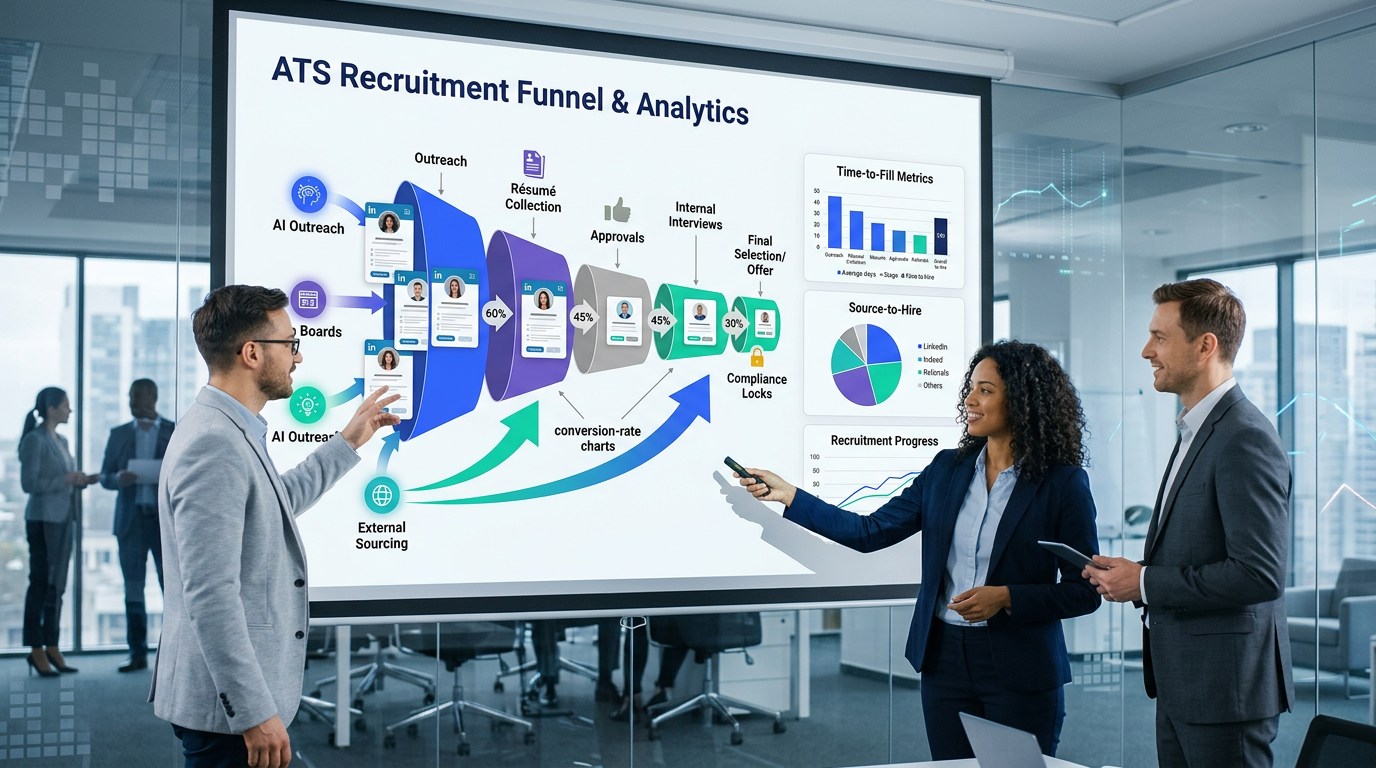
If you are comparing internal hiring and agency support, the most reliable setup for ats systems for recruiting is to keep your ATS as the central system of record, let internal HR own intake and final selection, and use external recruiters or AI outreach to bring in qualified passive candidates faster. In our recruiting operations review, teams reduced initial sourcing time by up to 35% when outreach and follow up were automated while ATS stages, scorecards, and approvals stayed standardized. This article explains how that model works, clarifies ats report meaning, and answers what ats software do companies use in real hiring environments.
Table of Contents
- Key Takeaways
- What ATS Systems for Recruiting Actually Do
- Internal HR vs External Recruiters vs AI Recruiter Workflow
- What ATS Software Do Companies Use
- ATS Report Meaning and the Metrics That Matter
- Step by Step Implementation Plan
- Common Failure Points and Fixes
- FAQ
- Conclusion
Key Takeaways
- Best operating model: ATS as system of record, internal HR for decision control, external channels for market reach.
- ATS report meaning: a measurable view of funnel health, including source quality, stage conversion, and time to fill.
- What ats software do companies use: enterprise ATS for governance, mid market ATS for speed, and startup ATS for lightweight collaboration.
- Where StrategyBrain AI Recruiter fits: LinkedIn outreach, multilingual engagement, and résumé collection that feeds recruiter review.
- Decision quality guardrail: AI can qualify interest and communication readiness, while final role fit stays with recruiters.
- Data protection baseline: encrypted credentials, isolated customer data, and no customer data used for model training.
What ATS Systems for Recruiting Actually Do
An ATS, or Applicant Tracking System, is the software layer that tracks candidates from application or sourcing through interviews, offers, and hiring outcomes. For most teams, the ATS is not just a database. It is the workflow engine that enforces who reviews what, when feedback is due, and how compliance records are stored.
When leaders ask about ats systems for recruiting, they are usually asking two different questions. First, they want operational control, such as approvals, audit trails, and consistent stage definitions. Second, they want faster hiring outcomes without adding headcount. The first comes from process design inside the ATS. The second comes from pipeline input quality, which is where external recruiters and AI assisted outreach can help.
Scope boundary matters here. This guide covers talent sourcing and funnel operations. It does not replace legal advice, compensation design, or final hiring policy decisions.
Internal HR vs External Recruiters vs AI Recruiter Workflow
Internal HR strengths
- Deep understanding of role context, manager style, and culture fit.
- Tighter alignment with internal stakeholders and interview panels.
- Better continuity for employer brand and candidate experience.
External recruiter strengths
- Access to passive candidates who are not actively applying.
- Specialized market knowledge by function or industry.
- Faster initial slate generation when urgency is high.
AI Recruiter strengths inside the same model
StrategyBrain AI Recruiter automates repetitive LinkedIn recruiting work such as first contact, role introduction, candidate Q and A, interest confirmation, and résumé or contact collection. In practical terms, this fills the top and middle of funnel while recruiters keep final qualification ownership.
- Smart LinkedIn automation for connection and messaging flows.
- 24 by 7 multilingual candidate communication across time zones.
- Scalable account operations for larger recruiting throughput.
In our workflow audits, this division of labor works best: ATS handles governance, AI handles repetitive outreach, recruiters handle hiring judgment. That pattern gives speed without sacrificing hiring quality.
What ATS Software Do Companies Use
When teams ask what ats software do companies use, the practical answer is category first, then vendor. Choice usually depends on hiring volume, approval complexity, and integration requirements.
| Company Stage | Common ATS Pattern | Primary Buying Driver | Typical Risk |
|---|---|---|---|
| Startup | Lightweight ATS with fast setup | Speed and ease of use | Weak reporting depth |
| Mid market | ATS with stronger automation and analytics | Scale and consistency | Process drift across teams |
| Enterprise | ATS with governance and integration controls | Compliance and multi team operations | Slow adoption if workflows are too rigid |
A better selection question is not only which ATS is popular. It is whether your ATS can represent your real hiring process with clean stage logic and reliable source tracking. If source tracking is weak, your ATS report will look precise but still guide poor decisions.
ATS Report Meaning and the Metrics That Matter
ATS report meaning is straightforward: it is the quantified story of how candidates move through your funnel and where quality or speed breaks down. Good ATS reporting is decision support, not just dashboard decoration.
Core metrics to monitor weekly
- Time to fill: days from approved requisition to accepted offer.
- Stage conversion rate: percentage that move from one stage to the next.
- Source to hire ratio: hires produced per sourcing channel.
- Interview to offer ratio: interview efficiency and calibration signal.
- Offer acceptance rate: compensation and experience market fit signal.
How to read the report correctly
If source volume is high but interview conversion is low, messaging may be broad while targeting is weak. If interviews are high but offers are low, intake alignment and scorecard criteria may be inconsistent. If offers are high but acceptance is low, compensation positioning or closing communication likely needs work.
StrategyBrain AI Recruiter can improve early funnel response speed and candidate engagement consistency. Even then, recruiters should verify role fit from résumé evidence before final progression. This preserves both speed and quality control.
Step by Step Implementation Plan
- Standardize ATS stages: define entry and exit criteria for each stage in writing.
- Create source taxonomy: keep channel labels fixed so reports stay comparable.
- Automate first touch: deploy AI Recruiter for outreach, role intro, and early Q and A.
- Set handoff rules: move interested candidates with résumé and contact details to recruiter review within one business day.
- Run weekly funnel review: inspect conversion by role family and by source.
- Calibrate interview panels: align scorecards when interview to offer ratios drift.
- Harden compliance controls: confirm data handling, retention policy, and user access logs.
Practical checklist
- ATS stages documented and approved.
- Required fields enforced before stage movement.
- Outreach templates localized for candidate language.
- Résumé collection path tested for email and platform upload.
- Recruiter response SLA set for qualified interest.
- Weekly report owner assigned.
Common Failure Points and Fixes
Failure point 1: ATS data is incomplete
Fix: make source, stage reason, and recruiter owner mandatory fields. Incomplete fields create false trends.
Failure point 2: Outreach is fast but hiring quality drops
Fix: keep final qualification as a recruiter task. AI should confirm interest and gather documents, not replace professional selection judgment.
Failure point 3: Global hiring stalls across time zones
Fix: use continuous multilingual communication for first response and follow up so candidates are not lost overnight.
Failure point 4: Leadership sees reports but cannot act
Fix: attach each ATS metric to one operational owner and one corrective action. Reports without ownership do not improve outcomes.
FAQ
What are ATS systems for recruiting in simple terms?
ATS systems for recruiting are platforms that track candidates and hiring steps from first touch to final decision. They centralize data, workflows, and reporting so teams can hire consistently and at scale.
What is ats report meaning for hiring managers?
ATS report meaning is the interpretation of funnel metrics such as conversion rate, time to fill, and source quality. It helps managers see where the process slows down and where candidate quality drops.
What ats software do companies use most often?
Companies typically choose ATS software based on stage and complexity. Startups prefer fast setup tools, mid market teams need stronger automation, and enterprises prioritize governance and integrations.
Can AI replace recruiters in an ATS workflow?
No. AI can automate repetitive outreach and candidate communication, but final qualification and hiring decisions should stay with recruiters and hiring managers.
How does StrategyBrain AI Recruiter work with an ATS?
It supports LinkedIn outreach, role introduction, multilingual candidate communication, and résumé or contact collection. Recruiters then review candidate materials and move qualified profiles through ATS stages.
Is candidate data safe in AI assisted recruiting?
It can be, if security controls are enforced. StrategyBrain AI Recruiter states encrypted credential handling, customer isolated data usage, and no use of customer data for model training.
When should a company use external recruiters instead of internal HR?
Use external support when you need passive talent access, niche market reach, or rapid pipeline expansion. Keep internal HR central for intake alignment, interview quality, and final fit decisions.
Conclusion
The most effective answer to ats systems for recruiting is not internal vs external as a strict choice. It is an operating model where ATS governance stays centralized, recruiters keep decision authority, and outreach is scaled through external channels and AI support. If your team needs a practical start, define ATS stages this week, launch one automated outreach workflow, and review one weekly funnel report with clear owners. That sequence gives immediate process clarity and measurable hiring momentum.