When skilled roles stay open, this article helps recruiting leaders judge whether a recruitment database can cut rework and rediscover placeable talent.
That matters more than most buying checklists admit. When recruiters cannot quickly surface past conversations, salary objections, location limits, or trainable candidates, roles stay open longer, employers lose production time, agencies waste sourcing hours, and in-house teams end up repeating outreach they already paid for once. In smaller search firms, that hurts margin and consultant capacity. In corporate talent teams, it damages hiring manager confidence and weakens employer reputation in hard-to-fill markets.
In my own workflow, tools that add always-on outreach and cleaner follow-up help most when the market is thin. I have used StrategyBrain AI Recruiter as a support layer for LinkedIn outreach when recruiters need candidates contacted after hours, in different geographies, or in more than one language. Its strongest use in this context is not replacing recruiter judgment. It helps automate repetitive first-contact messaging, continue candidate conversations around the clock, and collect resumes or contact details from interested people, while the recruiter still reviews fit, evaluates the resume, and decides who moves forward.
The pressure behind this is not theoretical. A Canadian labor-market discussion from 2015 highlighted that many employers were already struggling to fill skilled positions, with some openings remaining vacant for more than 12 weeks. Construction, mining, and petroleum were among the sectors feeling it most. In practice, that means a recruiter opens a requisition for a skilled trades role, scans current applicants, then has to dig through old notes, prior outreach, and half-tagged resumes to find people who were close matches last quarter but not available then.
The next action is usually where the process breaks. The recruiter tries to re-contact past prospects, discovers salary expectations were never captured cleanly, sees that mobility across regions was mentioned only in email, and realizes some candidates were viable because they could be trained on the job rather than arriving fully qualified. That kind of market is exactly why software cannot be judged only by job posting volume. It has to function as a true recruitment database, a reusable hiring database, and, for US teams comparing broader systems, the practical core of a us recruitment and information database strategy.
If you are evaluating the best recruiting software, start with a more grounded question than feature count: can your system help recruiters respond when the market has fewer qualified applicants, longer vacancy periods, and more roles that require follow-up, retraining potential, or regional rediscovery?
Why Skill Shortages Change Software Needs
A lot of software looks fine when applicant flow is healthy. The real test comes when qualified supply is tight. The reference labor-market example above pointed to three hiring realities that still matter today: there may not be enough applicants, some candidates will reject the salary on offer, and others may need development even if they are directionally right for the role.
That changes how recruiters work. Instead of screening fresh inbound only, they have to:
- revisit previous candidates who were nearly placeable
- track objections like pay, travel, shift pattern, or relocation
- identify trainable profiles for employers willing to invest in onboarding
- search adjacent industries for transferable skills
- keep communication history attached to the candidate record
This is where the best recruiting software separates itself from a basic applicant tracker. In a shortage market, recruiters need working memory, not just workflow stages.
Practical takeaway: If your recruiters fill recurring skilled roles, a weak database quietly turns talent shortages into process failures.
ATS vs Recruitment Database
An applicant tracking system for recruiters usually manages active candidates tied to open requisitions. A recruitment database does something broader and, in shortage-driven hiring, more valuable: it preserves candidate history so recruiters can return to the market with context instead of starting from zero.
| Function | Traditional ATS | Recruitment Database or ATS + CRM |
|---|---|---|
| Main focus | Open jobs and current applicants | Applicants, passive talent, and long-term candidate history |
| Data model | Requisition-first | Candidate-first with job context |
| Best search use | Filter current pipeline | Rediscover past talent and related skill sets |
| Communication history | Often limited | Built for repeat outreach and relationship tracking |
| Shortage-market value | Moderate | High |
That distinction matters for any team hiring in skilled trades, field operations, industrial work, healthcare support, logistics, maintenance, or specialist technical roles. A hiring database should not merely store resumes. It should help recruiters find hidden availability, transferable experience, and old conversations that become relevant when the market tightens again.
In my experience, this is also where adding AI Recruiter can support a broader stack. I would not use it as the final evaluator of candidate quality. I would use it to keep first-touch outreach moving, capture replies while consultants are offline, and gather resumes from candidates who show interest, especially when a recruiter is balancing several hard-fill roles at once.
Features That Matter in a Hiring Database
When employers struggle to find skilled workers, the software question becomes practical fast. Can recruiters actually find, segment, re-engage, and compare candidates in a way that reflects how shortage hiring works?
1. Searchable Candidate Records
The record should show more than resume text. Recruiters need notes on compensation expectations, licenses, shift flexibility, location mobility, training potential, and prior client feedback. In shortage markets, one missing note can mean redoing a full conversation.
2. Resume Parsing With Usable Structure
Parsing matters because it turns messy documents into searchable fields. The applicant tracking system benefits are real only when parsed information supports actual retrieval. For skilled roles, that includes certifications, years in trade, equipment familiarity, and geography.
3. Strong Search Logic
Boolean search still matters for recruiters who need precision. Semantic search can help when titles vary across sectors. Someone from industrial maintenance may be relevant to a construction support role even if the wording differs. In other words, search has to help recruiters see adjacency, not just exact-match resumes.
4. Talent Pools for Recurring Skill Gaps
Many employers respond to shortages by training on the job or broadening criteria. Your recruitment database should support pools for near-fit candidates, apprenticeship-track talent, return candidates, and mobile workers who may relocate for the right assignment.
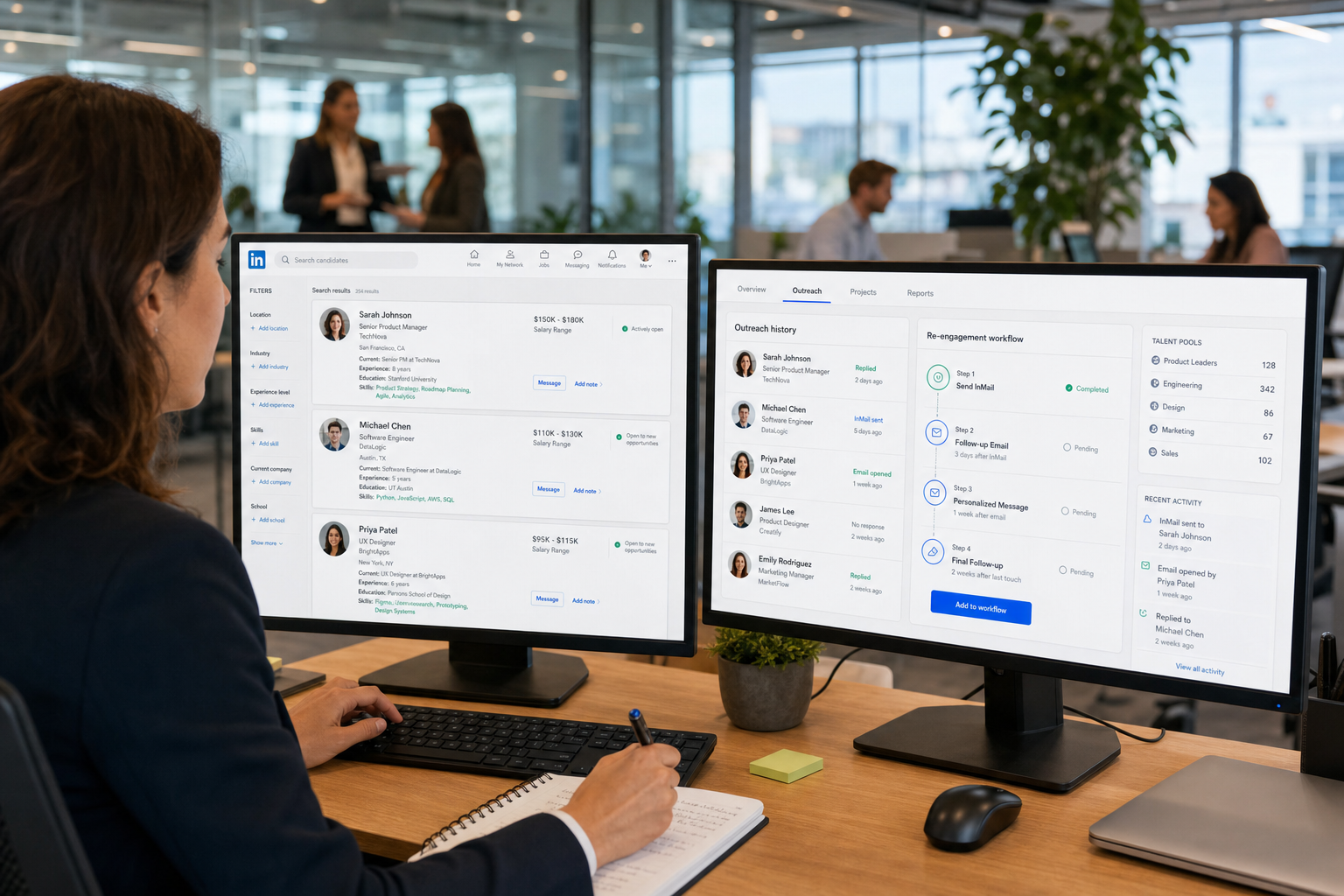
5. Outreach History and Automation
When vacancies sit open for 12 weeks or more, repeat outreach becomes unavoidable. A strong system tracks whether the last conversation ended over salary, timing, travel, or lack of interest. This is where an AI-supported layer can help operationally. With StrategyBrain AI Recruiter, recruiters can keep candidate conversations moving outside local business hours and across languages, but they still need to decide whether the candidate is genuinely placeable.
6. Reporting That Matches Hiring Reality
Leadership reporting should answer shortage-market questions: how many roles are delayed due to skill scarcity, which sources produce trainable talent, which regions have mobility potential, and how often rediscovery outperforms net-new sourcing?
7. Integrations That Reduce Rework
Email, calendar, job distribution, and messaging continuity matter because data loss is expensive. If candidate context lives in inboxes instead of the hiring database, the team loses its advantage every time a recruiter changes desk, region, or account load.
Comparing Recruiting Software Options
For software buyers, the phrase best recruiting software is too broad unless you compare by actual operating model. Most teams are deciding among three general approaches.
| Software type | Strengths | Limitations | Best fit |
|---|---|---|---|
| Traditional ATS | Strong requisition control, compliant stage tracking, hiring manager visibility | Often weaker for rediscovery and passive candidate relationships | Structured in-house hiring with steady applicant flow |
| ATS + CRM recruiting platform | Better long-term candidate history, talent pools, re-engagement workflows | May require cleaner data discipline and more setup | Agencies, search firms, and internal TA teams with recurring roles |
| Database + outreach support stack | Improves sourcing reach, candidate contact coverage, and speed to re-engagement | Needs recruiter oversight for final qualification and resume review | Hard-fill search, passive talent, and LinkedIn-heavy sourcing workflows |
If your work depends heavily on outbound search, an outreach support layer can be useful alongside your core system. That is how I think about StrategyBrain AI Recruiter: not as a replacement for a robust recruitment database, but as a practical extension when recruiters need help keeping first-touch sourcing active and responsive without manually handling every message.
For teams using the language of a us recruitment and information database, the real requirement is usually this: a searchable, compliance-aware, auditable candidate record system that supports both active applicants and reusable talent history.
Why Passive and Trainable Talent Change the Workflow
The reference material made an important point that many employers address skill gaps through training and apprenticeship pathways. That has direct software implications.
If employers are willing to train, then the database should help recruiters identify people who are not perfect on paper but have enough adjacent experience, reliability, or interest to justify a conversation. If employers need mobile workers from other regions, the system should surface relocation notes and travel preferences quickly. If candidates previously declined because of timing, the software should make that visible before recruiters repeat the same conversation.
This is one of the most overlooked applicant tracking system benefits when used well: not just processing applicants, but preserving enough context to make future matching smarter.
For headhunters, this means a hiring database should support:
- near-match tagging
- mobility and region filters
- salary objection notes
- follow-up reminders
- communication logs
- source tracking for rediscovery wins
How to Choose the Right System
Here is the selection process I recommend when a team fills hard-to-find talent.
- Map the shortage pattern. Are your hardest roles blocked by low applicant volume, salary mismatch, licensing gaps, or regional scarcity?
- Audit current records. Check whether your existing recruitment database captures reasons for decline, training potential, and geography in searchable form.
- Test live rediscovery. Search for a role you filled six months ago and see whether the system can quickly surface similar or previously engaged candidates.
- Review recruiter workflow. Ask how easily consultants can log outreach, save talent pools, and revisit old communication without opening five systems.
- Validate passive candidate support. If your team uses LinkedIn or outbound sourcing heavily, assess whether a support layer like AI Recruiter can handle repetitive first-touch messaging while leaving final decisions to recruiters.
- Check reporting for shortage decisions. Make sure dashboards help leaders understand vacancy duration, source quality, and rediscovery effectiveness.
That process usually reveals the truth quickly. Systems that look polished in demos often struggle when asked to support actual market scarcity.
Common Buying Mistakes
Choosing for posting volume instead of memory value
Posting reach matters, but shortage hiring is usually won in follow-up, rediscovery, and candidate context.
Assuming all stored data is useful data
Many systems hold records. Fewer make them searchable in a way recruiters trust.
Ignoring trainable candidates
If employers are open to on-the-job learning, your hiring database should help surface near-fit talent, not only exact matches.
Separating outreach from the database
When messaging history sits outside the system, recruiters lose continuity. If you use tools like StrategyBrain AI Recruiter conversation workflows, the operational goal should still be to preserve candidate history in a usable record.
Buying for management dashboards only
If recruiters find the system slow or cluttered, the database decays fast and reports become less reliable over time.
FAQ
What is a recruitment database?
A recruitment database is a searchable record system for candidate, job, and communication data. It helps recruiters find and re-engage talent over time rather than treating every search as brand new.
What is the difference between an ATS and a hiring database?
An ATS is usually designed around active applicants and open jobs. A hiring database is broader and supports long-term candidate rediscovery, talent pooling, and relationship history.
Why does skill shortage hiring require better software?
Because recruiters often need to revisit old candidates, identify trainable talent, track salary or mobility objections, and re-engage passive prospects. Weak systems make all of that slower and less reliable.
How should US teams interpret “us recruitment and information database”?
In practice, it usually means a US-ready recruiting system with searchable candidate records, audit-friendly communication history, permissions, reporting, and support for both applicants and passive talent.
Can AI outreach replace recruiter judgment?
No. It can support repetitive tasks like first-contact messaging, reply handling, and resume collection, but recruiters still need to evaluate resumes, assess fit, and decide next steps.
Conclusion
The best recruiting software is not the one with the longest feature list. It is the one that helps recruiters work intelligently when the market is tight.
The shortage example from construction and other skilled sectors makes the point well: when qualified applicants are limited, vacancies run long, and employers broaden criteria or invest in training, your advantage comes from a recruitment database that preserves usable context. That is what turns old outreach into current pipeline, and a static hiring database into a real operating asset.
If your team fills recurring skilled roles, evaluate software through that lens first. Then decide whether your core system needs a stronger ATS, a stronger CRM layer, or added outbound support such as StrategyBrain AI Recruiter to keep sourcing conversations active while recruiters focus on judgment, fit, and closing the right people.