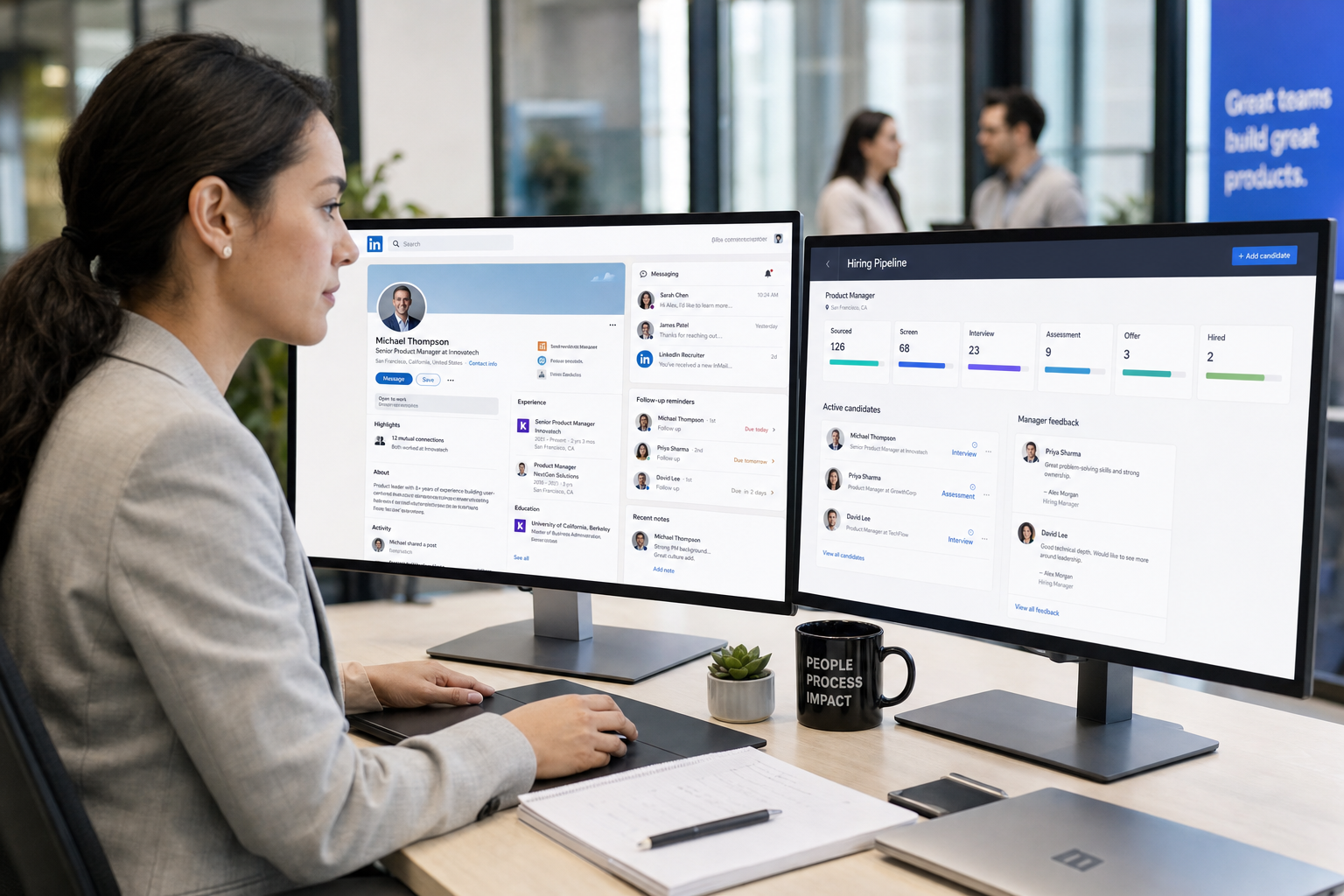
This article helps recruiting leaders judge the best recruitment platforms to avoid weak handoffs, delays, and candidate drop-off.
That matters more than most demos suggest. When recruiting work is split across inboxes, spreadsheets, social messages, and manager follow-ups, the damage is not only operational. Agency recruiters lose momentum with warm prospects, in-house teams delay decisions, and employers create a poor impression at the exact moment candidates are judging whether to trust them. In my experience, the cost shows up in missed follow-up, weaker handoffs, and relationships that become harder to recover later.
One reason I now pay closer attention to workflow support is that tools such as StrategyBrain AI Recruiter can take pressure off the most repetitive top-of-funnel work. Used well, it helps with LinkedIn outreach automation, after-hours candidate replies, and multilingual follow-up, which is especially useful when a recruiter is trying to keep communication timely without letting sourcing admin swallow the day. The recruiter still owns final résumé review, fit judgment, and next-step decisions, but the workflow becomes easier to sustain.
Think about the moment a candidate has decided to leave a job and wants to do it professionally. They speak to their direct manager first, not the whole market. They try to give enough notice, often two weeks or more. They may need to submit a formal resignation letter to HR, wrap up open work, and preserve relationships with colleagues who could later become references, clients, or future hiring contacts.
That scenario is about leaving well, but it exposes a recruiting truth that software buyers often miss: hiring does not start with applications alone. It starts with timing, trust, direct communication, and careful handoffs. A recruiter who reaches people at that moment needs more than basic software for job posting. They need systems that support outreach, tracking, follow-up, hiring manager visibility, and in many cases social recruiting software that keeps every interaction connected instead of scattered.
If you are comparing the best recruiting software today, that is the frame I would use. The strongest systems do not just store applicants. They help teams handle sensitive timing, maintain professionalism on both sides of the process, and move from first contact to final decision without losing context. Below, I break down how the best recruitment platforms differ from a basic ATS, what features matter most in day-to-day recruiting, and where LinkedIn-heavy workflows fit into the decision.
Why Relationship-Driven Hiring Needs More Than a Basic Tool
When people search for the best recruitment platforms, they are usually trying to solve a real operational problem, even if they describe it too narrowly at first. A team may begin by looking for software for job advertising or applicant storage. After a few demos, they realize the real problem is broader: candidate communication is inconsistent, sourcing and tracking live in separate places, hiring managers respond late, and recruiters rebuild the same talent pool every time a similar role opens.
The strongest platforms reduce that fragmentation. In practical recruiting terms, they help you do three things better:
- Reach candidates at the right moment through job distribution, sourcing support, and channel management
- Keep the process visible so recruiters, coordinators, and managers can see what is pending
- Protect relationships by making follow-up, handoff, and communication more consistent
The reference point from the resignation scenario is useful here. People leaving a role are often highly attentive to professionalism, timing, and future relationships. Recruiting systems that ignore those realities create friction fast. The best recruiting software should help teams communicate clearly, document next steps, and avoid the careless gaps that make candidates disengage.
Key insight: The best recruiting software is not just a record system. It is a workflow and relationship-management layer for time-sensitive hiring decisions.
ATS vs Recruitment Platform: The Difference Buyers Feel Later
One of the most common buying mistakes is assuming that every ATS is effectively one of the best recruitment platforms. It is not. An applicant tracking system may be enough if your hiring motion is simple and mostly inbound. But once your team depends on repeat sourcing, talent pooling, hiring manager collaboration, or social outreach, a broader platform usually becomes more useful.
| Area | Basic ATS | Broader Recruitment Platform |
|---|---|---|
| Application intake | Strong | Strong |
| Stage tracking | Core function | Core function |
| Candidate relationship management | Often limited | Usually deeper |
| Social recruiting software capability | Basic posting | Broader promotion and engagement |
| Recruiter automation | Simple triggers | Wider workflow support |
| Visibility for hiring managers | Varies | Often better structured |
| Onboarding handoff | Sometimes partial | More commonly connected |
The practical difference shows up after implementation. If recruiters still have to chase social replies manually, copy notes from one channel to another, and remind hiring managers outside the system, then the software is tracking applicants without really supporting recruiting.
That is why buyers who hire in competitive markets often move from asking for an applicant tracking system for recruiters to asking for the best recruitment platforms instead.
Features That Prevent Hiring Drop-Off
When I evaluate the best recruiting software, I look less at broad feature lists and more at where candidate momentum is usually lost. The right comparison points are the moments where recruiting work stalls or relationships cool off.
1. Job Posting and Channel Distribution
If your current process requires manual reposting, inconsistent job copy, or separate tracking by channel, the system is creating extra labor. Good software for job distribution should let recruiters publish roles centrally and keep attribution clean enough to evaluate source quality later.
- Centralized role publishing
- Consistent branding across channels
- Clean source tracking
2. Applicant Tracking That Actually Supports Recruiters
A strong ATS is still the foundation. Recruiters need quick stage movement, clear ownership, searchable notes, and a feedback loop that hiring managers will actually use. One of the real applicant tracking system benefits is not complexity but discipline. It creates a visible process everyone can follow.
- Fast candidate movement between stages
- Structured feedback collection
- Clear view of stalled roles and pending actions
3. Communication History and CRM-Like Follow-Up
This is where many systems separate themselves. Candidates considering a move often need multiple touchpoints before they apply or interview. If your team cannot see previous outreach, re-engagement history, or the last conversation, you lose continuity. That is a major weakness for recruiters who work repeat roles or relationship-led searches.
The advantages of applicant tracking system expansion into CRM functionality are especially clear when you want to re-contact past finalists, previous applicants, or passive LinkedIn prospects.
4. Interview Coordination and Manager Accountability
Many delayed hires are not sourcing failures. They are coordination failures. The best recruiting software should reduce calendar friction, make interview ownership obvious, and give recruiters a clear path to follow up without chasing people in five places.
5. Reporting That Explains Bottlenecks
Good reporting should answer practical recruiting questions, not just generate executive snapshots.
- Where are candidates dropping out?
- Which roles are waiting on feedback?
- Which sources produce qualified applicants?
- How long does each stage really take?
These are the applicant tracking system benefits leaders tend to appreciate most once they start managing hiring through data instead of anecdote.
Where LinkedIn and Social Recruiting Software Fit
For many recruiters, especially agency teams and in-house sourcers in competitive functions, social recruiting software is not a nice extra. It is a working layer of the funnel. The issue is that social activity often sits outside the core hiring system, which breaks continuity the moment a response arrives.
That is where I have found AI Recruiter useful as a workflow complement rather than a replacement for recruiter judgment. In LinkedIn-heavy searches, I have seen value in three specific areas: automated first-touch outreach, candidate replies that continue after business hours, and multilingual communication when cross-border sourcing creates delays. It can collect initial interest and contact details while the recruiter stays focused on reviewing résumés and deciding who should move forward.
That matters because LinkedIn recruiting usually breaks down in exactly the places candidates notice most. A recruiter sends outreach, gets a late-night reply, plans to respond later, then loses the thread across multiple conversations. Or an international candidate asks a basic role question and waits too long for an answer. Or a warm prospect says they are open to talking after they give notice at their current employer, but the reminder lives in a personal inbox instead of the hiring workflow.
When you review social recruiting software, ask these questions:
- Can socially sourced candidates be tracked inside the same pipeline?
- Can recruiters see communication history without toggling between tools?
- Does the workflow support future re-engagement?
- Can the team separate interest capture from final qualification?
That last point matters. Even with automation support, the recruiter should still decide whether the résumé matches the role, whether the timing is right, and whether the candidate should enter the next stage.
What Different Hiring Teams Should Prioritize
In-House Talent Acquisition Teams
Internal TA teams usually need balanced capability: ATS structure, hiring manager collaboration, reporting, and enough CRM or sourcing support to avoid starting from zero on every role.
Priority: choose a platform that improves handoffs between recruiter, manager, and HR instead of only streamlining application intake.
Staffing and Search Firms
Agency recruiters often need more mobility in the workflow. Candidate history, communication tracking, submission readiness, and fast follow-up matter more here than in a basic inbound environment.
Priority: look for platform depth around relationship management, sourcing continuity, and social recruiting software support.
Small and Growing Businesses
Smaller employers often begin with software for job posting and lightweight tracking. That is understandable, but if hiring is becoming more cross-functional, the system should support growth in process complexity.
Priority: buy slightly ahead of your current need so you do not outgrow the workflow in a year.
High-Volume or Multi-Location Employers
These teams benefit most from process control, visibility, and consistent communication standards. The applicant tracking system benefits are often strongest here because standardization directly reduces delay and confusion.
Priority: focus on approvals, scheduling, reporting, and repeatable workflows before chasing more front-end features.
How to Evaluate the Best Recruitment Platforms
Software comparisons are more reliable when you test them against a real recruiting journey. I recommend using the same kind of process discipline that professionals use when they leave a job well: direct communication, enough notice for handoffs, formal documentation, and a clean closeout of unfinished work. Those principles map surprisingly well to recruiting operations.
- Map the full hiring path. Start at job approval and end at offer or handoff. Include sourcing, outreach, manager review, feedback, and re-engagement points.
- Identify where timing matters most. Candidates making a move are sensitive to delays, so test where your current process loses responsiveness.
- Test documentation quality. Notes, feedback, communication history, and status changes should be easy to record and easy to find.
- Check handoff readiness. Can one recruiter, coordinator, or manager step in without rebuilding context?
- Evaluate channel integration. If LinkedIn or social sourcing matters, review whether the process stays connected once candidates reply.
- Review recruiter judgment points. The system should support decisions, not pretend to replace them.
- Assess future fit. If your team may need stronger CRM or social recruiting software later, do not ignore expansion capability now.
This approach usually reveals whether a tool is merely organized software or one of the best recruitment platforms for your operating model.
Common Mistakes Buyers Make
Buying for Surface Features
Visual demos can make almost every platform look complete. What matters is whether the system reduces friction in real recruiter behavior: posting, sourcing, moving, documenting, following up, and getting feedback.
Ignoring Candidate Timing
Candidates are often evaluating a move carefully, especially when they want to leave their current employer professionally. If your workflow cannot support timely, respectful communication, software choice becomes a candidate experience problem.
Underestimating Social Workflow Complexity
Teams that rely on LinkedIn or social channels often assume basic posting is enough. In practice, social recruiting software needs to connect with pipeline tracking and communication history to be useful.
Assuming Automation Removes Recruiter Judgment
Automation can support outreach, reminders, and initial interest capture. It should not replace the recruiter’s role in fit assessment, résumé review, or stakeholder guidance.
Solving Only the First Pain Point
A team may start by looking for software for job advertising and later discover the bigger challenge is sourcing continuity, process visibility, or hiring manager discipline. Buy for the broader operating reality.
FAQ
What is the difference between recruiting software and an ATS?
An ATS mainly handles applicant intake and stage tracking. Recruiting software is a broader category that can include ATS functions plus sourcing, CRM, social recruiting software, communication tools, reporting, and workflow automation.
What are the most practical applicant tracking system benefits?
The most practical applicant tracking system benefits are visibility, process consistency, cleaner handoffs, better documentation, and easier collaboration with hiring managers.
When do you need the best recruitment platforms instead of a basic ATS?
You usually need a broader platform when your team depends on proactive sourcing, repeated hiring for similar roles, manager coordination across many openings, or multichannel candidate outreach.
How does social recruiting software help recruiters?
It helps recruiters promote openings, engage passive talent, and bring social responses into a structured hiring workflow. It is most valuable when it connects directly to candidate tracking and communication history.
Is software for job posting enough for a small company?
Sometimes at the very beginning, yes. But if hiring volume grows or more stakeholders get involved, most teams need stronger workflow support than posting alone can provide.
Can LinkedIn automation fit into a serious recruiting workflow?
Yes, if it supports responsiveness and recordkeeping without replacing recruiter judgment. In practice, it works best when outreach, replies, and candidate interest are connected to the wider recruiting process.
Conclusion
The best recruiting software helps teams do more than move applicants through stages. It supports the real conditions under which people change jobs: careful timing, professional communication, relationship risk, and the need for clean handoffs. That is why the best recruitment platforms usually outperform narrower systems once hiring becomes more proactive or more collaborative.
If you are evaluating options now, start with the moments where your process loses trust or momentum. From there, compare how each platform handles outreach, tracking, manager follow-up, documentation, and social recruiting software needs. That is the shortest path to choosing software that actually improves recruiting work.