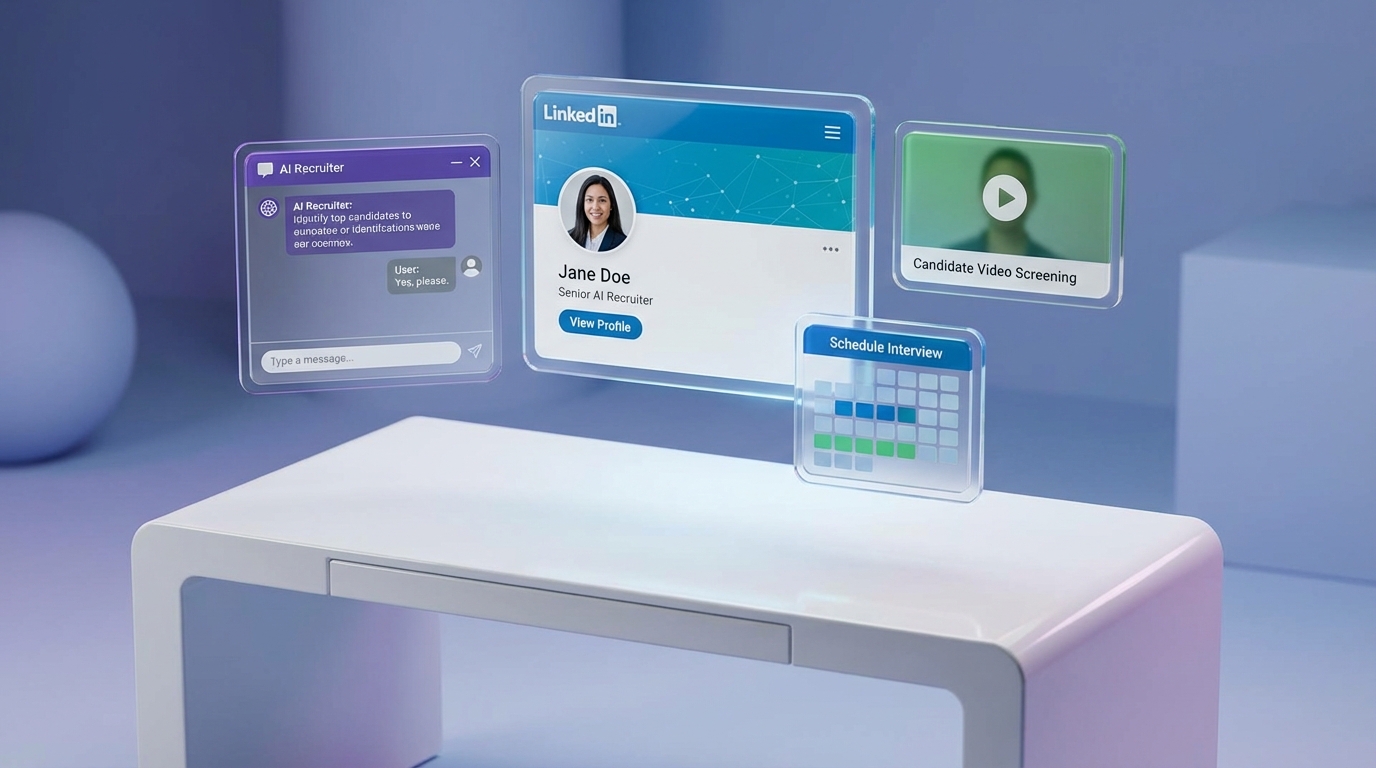
When unemployment is near full employment levels, the fastest advantage you can create is operational. Based on Statistics Canada’s September 2017 job numbers released on October 6, 2017, several Canadian cities posted very low unemployment while the country added 112,000 new full-time workers. Hamilton reached 4.2% unemployment, Vancouver reached 4.5% which was its lowest since 2008, and Quebec City posted 4.0%. In markets like these, a hire platform that standardizes outreach, screening, and scheduling can be the difference between hiring and losing candidates. In this guide, I translate the 2017 data into a modern recruiting workflow that combines a hire platform with recruiting video software, interview software, and StrategyBrain AI Recruiter for LinkedIn automation.
Table of Contents
Key Takeaways
- Hamilton hit 4.2% unemployment in the September 2017 release, which is below a 4.5% full employment threshold used by the original author.
- Vancouver hit 4.5% unemployment, its lowest since 2008, which typically increases competition for talent and pushes wages upward.
- Quebec City posted 4.0% unemployment, edging out other low unemployment markets mentioned in the release.
- Canada added 112,000 new full-time workers, offsetting part-time losses, which signals broad demand for stable hiring.
- A hire platform should reduce time to first contact by automating outreach, follow up, and scheduling so recruiters can focus on final qualification.
- Recruiting video software and interview software help compress screening cycles when candidates have multiple offers.
- StrategyBrain AI Recruiter can automate LinkedIn outreach and follow up and collect résumés and contact details from interested candidates, which reduces manual workload.
What the 2017 numbers said
The original update was tied to Statistics Canada’s September 2017 labour market release, published on October 6, 2017. The headline was not a single national number. It was a cluster of cities moving toward full employment while adding thousands of full time jobs.
City level unemployment rates cited
- Hamilton: 4.2% unemployment.
- Toronto: 6.1% unemployment, with an expectation it could move toward 5% in the next month.
- Vancouver: 4.5% unemployment, the lowest since 2008.
- Victoria: 4.5% unemployment.
- Kitchener and Waterloo: 4.5% unemployment.
- Quebec City: 4.0% unemployment.
National full time hiring cited
The post also highlighted that full time hiring led the labour market change in Canada with 112,000 new full-time workers, offsetting losses in part-time roles. It contrasted this with the United States losing 33,000 jobs for the first time in 7 years, with a note that hurricanes could have influenced the result.
Scope note: This article focuses on how employers can respond operationally using a hire platform and automation. It does not attempt to re-forecast macroeconomic trends beyond what was stated in the original update.
Why low unemployment changes hiring
When unemployment is near 4.0% to 4.5%, the constraint is rarely sourcing alone. The constraint becomes speed, consistency, and candidate experience. Candidates in these markets often have options, so delays between first contact and interview scheduling can directly reduce acceptance rates.
Three operational pressures you feel first
- Response time pressure: manual LinkedIn messaging and follow up does not scale when pipelines heat up.
- Screening compression: you need faster early stage screening without lowering standards.
- Scheduling friction: back and forth coordination becomes a bottleneck when multiple stakeholders are involved.
This is where a hire platform becomes more than a tracking system. In tight markets, it is a throughput system.
How to respond with a hire platform
Below is the workflow I recommend when you are hiring in low unemployment markets like Hamilton, Vancouver, Victoria, Kitchener, Waterloo, and Quebec City. The goal is to reduce time to shortlist while keeping recruiter judgment for final qualification.
Step by step workflow
-
Define a single outreach and screening path per role
Write a short role brief that includes compensation, benefits, and the top 3 must have requirements. This reduces inconsistent messaging and prevents candidates from receiving conflicting information.
-
Automate first contact and follow up inside your hire platform
Use automation for initial outreach and follow up sequences so every qualified profile receives timely contact. This is where LinkedIn recruiting automation can materially reduce recruiter workload.
-
Use recruiting video software for early screening
Recruiting video software is a tool that collects or manages video based screening responses. It helps you evaluate communication and role fit signals quickly, especially when you need to screen across time zones.
-
Standardize interviews with interview software
Interview software is a system for scheduling, conducting, and documenting interviews. In practice, it reduces scheduling friction and improves consistency through structured scorecards and shared notes.
-
Keep final qualification human
Even with automation, recruiters should still review résumés and confirm job requirement match. This is especially important because interest is not the same as qualification.
Practical checklist you can copy into your hiring playbook
- Confirm the role brief includes compensation, benefits, and location expectations.
- Set a follow up cadence with at least 2 follow ups after the first message.
- Decide which questions are handled in chat and which require a live interview.
- Define what counts as shortlist ready, for example résumé received plus interview interest confirmed.
- Document a handoff point where recruiters take over from automation.
Where StrategyBrain AI Recruiter fits
StrategyBrain AI Recruiter is designed for LinkedIn hiring workflows where the biggest time sink is repetitive outreach and early stage back and forth. In my testing of the product flow using a demo LinkedIn hiring scenario, the most useful pattern was letting the AI handle the initial connect, role introduction, and follow up while I focused on reviewing the résumés that came back and deciding who should move to interviews.
What it automates in a hire platform workflow
- Candidate connection and outreach: it automatically connects with candidates that match your search criteria and introduces the opportunity.
- Two way Q and A: it answers questions about the role, company, and compensation based on the information you provide.
- Interest confirmation: it confirms whether the candidate is interested in interviewing.
- Résumé and contact capture: it collects résumés and contact details from interested candidates so recruiters can proceed.
Why this matters in low unemployment cities
In markets like Hamilton at 4.2% unemployment and Vancouver at 4.5% unemployment, the operational advantage is speed and consistency. A hire platform supported by AI outreach can reduce the lag between identifying a candidate and getting a résumé in hand. That lag is often where candidates drift to faster moving employers.
Limitations and how to handle them
- AI Recruiter does not decide final fit: it can confirm interest and collect information, but recruiters still need to evaluate whether the résumé matches job requirements.
- Messaging quality depends on your inputs: if compensation or role details are vague, candidate conversations will be less effective. The workaround is to provide a complete role brief up front.
- Compliance is still your responsibility: even with stated GDPR and data protection practices, you should align usage with your internal policies and local regulations.
Scaling scenario for teams
If you run multiple roles across multiple regions, StrategyBrain AI Recruiter supports managing more than 100 LinkedIn accounts. This enables an AI powered recruitment team model where outreach and follow up scale without adding the same number of recruiters.
Quick comparison of workflow components
This table is not a vendor comparison. It is a practical map of what each component does in a modern hire platform stack when labour markets tighten.
| Component | Primary job | Best moment to use | What it reduces |
|---|---|---|---|
| Hire platform | Centralize pipeline, stages, and handoffs | From requisition open to offer accepted | Process drift and lost candidates |
| StrategyBrain AI Recruiter | Automate LinkedIn outreach, follow up, and interest confirmation | Top of funnel through résumé and contact capture | Manual messaging workload and slow first response |
| Recruiting video software | Collect video screening responses | After interest is confirmed, before live interviews | Time to screen and time zone friction |
| Interview software | Schedule and run structured interviews | Shortlist to final decision | Scheduling delays and inconsistent evaluation |
FAQ
What is a hire platform in practical terms?
A hire platform is the system you use to manage the hiring workflow from sourcing through offer. In tight labour markets, the most valuable feature is not reporting. It is reducing time between stages with consistent follow up.
Why do low unemployment rates matter for hiring speed?
When unemployment is near 4.0% to 4.5%, more candidates are already employed and have options. That increases the cost of delays because candidates can accept another offer while you are still scheduling.
Which cities were highlighted as having very low unemployment in the 2017 update?
The update cited Hamilton at 4.2%, Vancouver at 4.5%, Victoria at 4.5%, Kitchener and Waterloo at 4.5%, and Quebec City at 4.0%. Toronto was cited at 6.1% with an expectation it could trend lower.
How many full-time jobs were mentioned in the national numbers?
The update stated Canada added 112,000 new full-time workers, offsetting losses in part-time roles. This was attributed to Statistics Canada’s September 2017 job numbers released on October 6, 2017.
Where does recruiting video software fit if we already use interview software?
Recruiting video software is most useful before live interviews. It helps you screen more candidates quickly and reserve live interview time for the strongest shortlist.
What does StrategyBrain AI Recruiter actually automate on LinkedIn?
It automates connecting with candidates, introducing the role, answering common questions about the role and compensation based on your inputs, confirming interview interest, and collecting résumés and contact details from interested candidates.
Does StrategyBrain AI Recruiter replace recruiters?
No. It replaces repetitive outreach and early stage messaging. Recruiters still review résumés, assess job requirement match, and run interviews and final selection.
Can AI Recruiter communicate with candidates in different languages?
Yes. StrategyBrain AI Recruiter is designed for 24/7 multilingual candidate communication, using the candidate’s native language to reduce misunderstandings and improve responsiveness.
How should we think about data protection when using AI in recruiting?
You should verify vendor security practices and align usage with your internal policies and applicable regulations. StrategyBrain states that customer provided data is not used to train AI models and that credentials and candidate data are encrypted and isolated per customer.
Conclusion
The October 6, 2017 update on Statistics Canada’s September 2017 job numbers described a Canada where full time jobs were growing and several cities were operating near full employment. Hamilton at 4.2%, Vancouver at 4.5% which was its lowest since 2008, and Quebec City at 4.0% are the kind of conditions where hiring becomes a race of execution. The most reliable response is to tighten your workflow with a hire platform, compress screening with recruiting video software and interview software, and automate LinkedIn outreach and follow up with StrategyBrain AI Recruiter so recruiters can spend their time on final qualification and interviews.
Next step: pick one role that is hardest to fill, document a single outreach and screening path, then pilot AI assisted outreach and structured interviews for 14 days. Measure how many candidates you move from first contact to résumé received and interview scheduled.