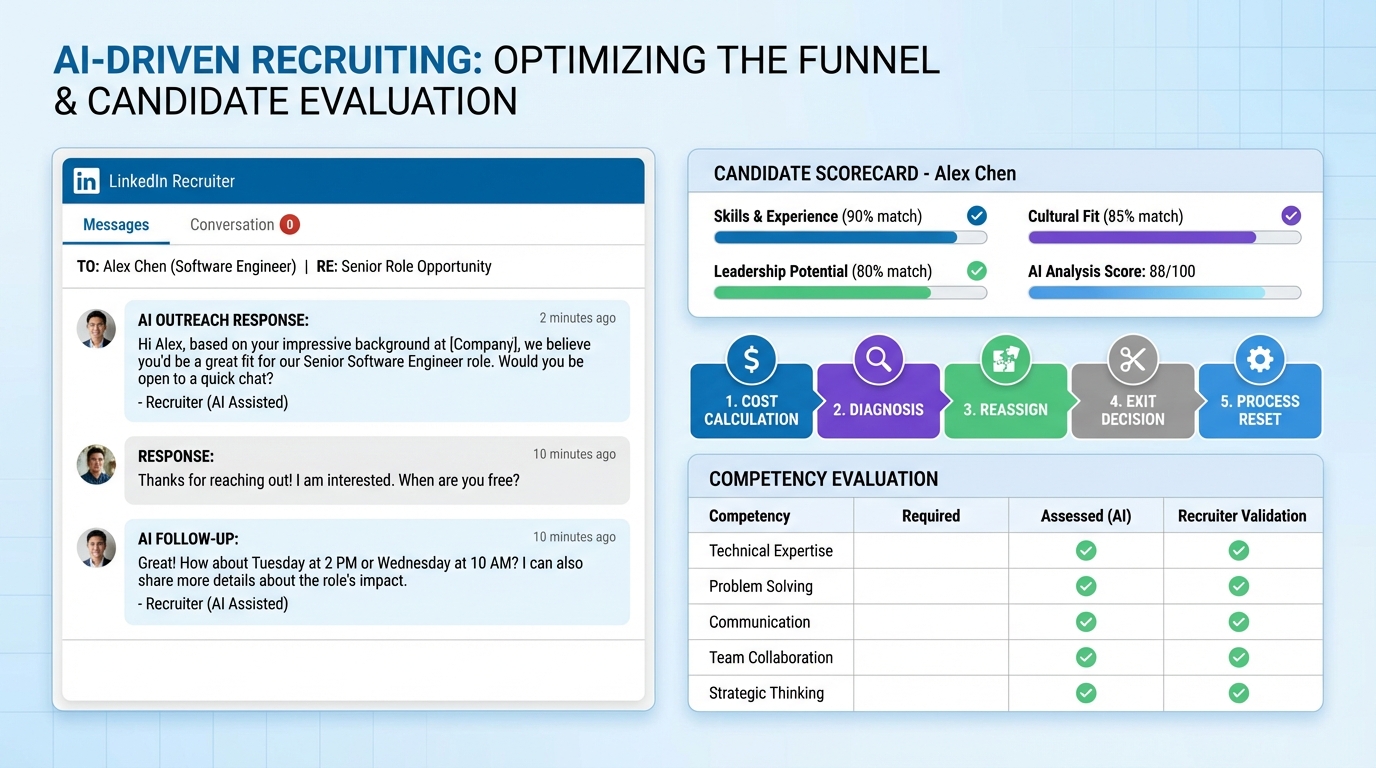
If you have made a bad finance hire, act fast in 5 moves: calculate the full cost, diagnose why the hire is failing, check whether the person is simply miscast, make a time bound keep or exit decision, and then rebuild your hiring process so it does not happen again. Human resource recruitment software is most valuable in that final step because it enforces consistent evaluation, reduces delays between interviews, and keeps candidate communication organized. In this updated version, we keep the original practical tone and add a prevention layer that uses structured scorecards, an HR software comparison mindset, and AI assisted LinkedIn outreach with StrategyBrain AI Recruiter to reduce repetitive messaging while recruiters retain final qualification control.
Key Takeaways
- Move quickly: a bad hire can damage output, morale, and culture, so set a decision timeline in days and weeks, not quarters.
- Quantify the risk: the original guidance cites a maximum impact of 5× annual salary for a wrong hire, which is why cost visibility comes first.
- Diagnose before you replace: separate cultural mismatch from skill gaps and from fixable onboarding issues.
- Miscast is the best case: redeploying someone into a better fit role can preserve value and reduce disruption.
- Prevention is a systems problem: use scorecards, tighter interview pacing, and clearer job messaging to reduce repeats.
- Human resource recruitment software adds control: it standardizes evaluation and reduces process drift across hiring teams.
- AI can remove repetitive LinkedIn work: StrategyBrain AI Recruiter can automate initial outreach and follow up while recruiters keep final resume based qualification.
Step 1: Know the costs
Start by naming the costs you are already paying. In finance and accounting roles, the damage is rarely limited to one person’s output. It spreads into missed deadlines, rework, and leadership distraction.
In the original guidance, the cost categories included recruiting spend, salary, training time, lost business opportunities, reduced morale, and negative culture impact. That list still holds, and it is a useful template for a quick internal assessment.
Cost categories to document
- Direct costs: recruiting fees, salary paid, onboarding and training hours.
- Operational costs: rework, missed close cycles, delayed reporting, manager time.
- Opportunity costs: lost deals, slower decision making, delayed projects.
- People costs: morale drop, team friction, attrition risk.
- Culture costs: lowered standards, tolerance of poor performance, trust erosion.
The original article also states that hiring the wrong person can cost up to 5 times their annual salary. Treat that as a ceiling for scenario planning, not a guaranteed outcome, and use it to justify fast action.
Step 2: Evaluate why
Next, diagnose the failure mode. This is where many teams lose time because they mix multiple issues together. Keep the analysis simple and evidence based.
Common root causes
- Cultural mismatch: values, communication style, pace, or accountability norms do not align.
- Skill gap: technical capability is below what the role requires.
- Role clarity gap: expectations were not explicit, or success metrics were not defined.
- Onboarding gap: the person could succeed with targeted mentoring and clearer ramp goals.
Decide whether the situation is salvageable. If it is salvageable, define the exact intervention and the deadline for improvement. If it is not salvageable, define the timeline for replacement so the team is not stuck in limbo.
Step 3: Check for miscast
Sometimes the hire is not “bad” so much as “miscast.” This is the best case scenario because you can preserve the investment and reduce disruption.
Look for evidence that the person has valuable strengths that are simply not being used in the current seat. For example, a finance hire who struggles with stakeholder management might still excel in a more analytical, individual contributor role.
Decision questions
- Which tasks do they do well, and are those tasks critical somewhere else?
- Is there a role with clearer boundaries where their strengths matter more than their weaknesses?
- Can you move them without creating a second gap that is just as costly?
Step 4: Cut your losses
Time matters. A struggling hire can reduce team productivity and create a drag on high performers. If the diagnosis shows the situation is beyond repair, make the decision and execute it professionally.
If you need guidance on handling an exit respectfully, the original article referenced a separate resource about letting an employee go graciously. The key point to preserve is the intent: be clear, be humane, and protect the team’s ability to move forward.
Practical guardrails
- Set a decision date and communicate it to the relevant leaders.
- Document performance expectations and what was observed.
- Plan coverage for critical finance deliverables during the transition.
Step 5: Re evaluate the process
Once the immediate situation is contained, treat this as a process failure, not just an individual failure. The original article listed clear signals that your hiring process needs a makeover: not attracting the right talent, losing candidates late, or a weak interview process.
Below is the same core advice, rewritten into an operational format you can implement inside your hiring workflow and your human resource recruitment software.
Process improvements to implement
- Alignment: ensure HR and the hiring manager agree on must have skills, nice to have skills, and non negotiables before sourcing starts.
- Remove inefficiencies: shorten the time between interviews and remove unnecessary steps so top candidates do not drop out.
- Access to the line manager: if you use external recruiting support, ensure they can calibrate directly with the decision maker.
- Scorecard: use a structured scorecard to compare candidates on the same factors and reduce bias and memory errors.
- Research: validate market compensation and prepare targeted questions based on the candidate’s background.
- Job postings: speak directly to the candidates you want, and avoid generic descriptions that attract the wrong profiles.
When teams ask for “top HRM software” or run an “HR software comparison,” what they often really need is not more features. They need a system that forces consistency: consistent intake, consistent evaluation, consistent communication, and consistent documentation.
Where human resource recruitment software helps most
Human resource recruitment software is not a magic fix for judgment. It is a control system for the parts of hiring that fail under time pressure: tracking, pacing, evaluation consistency, and follow up.
1) Standardize evaluation with scorecards
A scorecard is a structured rubric that lists the competencies you will assess and the evidence you expect to see. In practice, scorecards reduce “halo effect” decisions and make debriefs faster because everyone is reacting to the same criteria.
2) Reduce cycle time without lowering the bar
The original article emphasized removing inefficiencies because top talent is often being courted by multiple firms. Recruitment software helps by making interview scheduling, reminders, and stage transitions visible so candidates do not stall in your pipeline.
3) Improve candidate communication and follow up
This is where AI can be additive when used responsibly. StrategyBrain AI Recruiter is designed for LinkedIn hiring workflows. It can automatically connect with candidates that match your search criteria, introduce the role, answer common questions about the role, company, and compensation, and confirm interview interest. It also collects resumes and contact details from interested candidates, which means recruiters spend less time chasing replies and more time reviewing qualified profiles.
4) Keep recruiters in control of final qualification
One limitation to be explicit about is that StrategyBrain AI Recruiter identifies willingness to communicate or interview, but it does not decide whether a resume fully matches the job requirements. That final qualification step remains with the recruiter, which is often the right governance model for finance roles where nuance matters.
5) Scale outreach across time zones and languages
StrategyBrain AI Recruiter supports 24/7 multilingual communication and can be managed across more than 100 LinkedIn accounts for teams that need scalable hiring capacity. If your finance hiring includes international talent pools, this reduces delays caused by time zones and language friction.
Quick comparison
This table is a practical way to think about an HR software comparison when your goal is to prevent another bad hire. It focuses on outcomes, not vendor names.
| Approach | Speed impact | Consistency impact | Best for |
|---|---|---|---|
| Manual process with ad hoc notes | Low | Low | Very small teams hiring rarely |
| Human resource recruitment software with scorecards | Medium | High | Teams that need repeatable, auditable hiring |
| Recruitment software plus AI assisted LinkedIn outreach using StrategyBrain AI Recruiter | High | High | High volume sourcing and follow up, especially on LinkedIn |
Process reset checklist
Copy this checklist into your hiring playbook after you resolve the immediate bad hire situation.
- Define role outcomes for the first 30 days, 60 days, and 90 days.
- Write a scorecard with 6 to 10 competencies and evidence examples.
- Align HR and the hiring manager on must haves and deal breakers.
- Set a maximum interview cycle time and enforce it in your workflow.
- Prepare targeted interview questions based on the candidate’s resume.
- Calibrate compensation to market reality before you start outreach.
- Standardize candidate communication templates and response times.
- If LinkedIn is a primary channel, decide what can be automated safely with StrategyBrain AI Recruiter and what must remain human reviewed.
- Run a post hire review after 30 days to validate the process, not just the person.
FAQ
What is human resource recruitment software in practical terms?
Human resource recruitment software is a system that manages the hiring workflow from sourcing through offer, including candidate tracking, interview stages, and evaluation artifacts like scorecards. Its value is process consistency and visibility, not just storage.
How do I know if a finance hire is fixable or not?
Start with a root cause diagnosis: cultural mismatch, skill gap, role clarity gap, or onboarding gap. If you can define a specific intervention and a deadline for improvement, it may be fixable. If not, set a replacement timeline to protect the team.
What does “miscast” mean in hiring?
Miscast means the person has valuable skills but is in the wrong role. If you can move them into a position where strengths are used and weaknesses are less critical, you may salvage the hire and reduce disruption.
How can top HRM software reduce the chance of another bad hire?
The best systems enforce structured intake, consistent scorecards, and clear stage ownership. That reduces process drift, speeds up decisions, and makes it easier to spot weak signals earlier.
What should an HR software comparison focus on for finance roles?
Focus on whether the system supports scorecards, fast stage transitions, auditability of decisions, and reliable candidate communication. Those capabilities directly address the failure points that lead to costly mismatches.
How does StrategyBrain AI Recruiter fit into a recruitment workflow?
StrategyBrain AI Recruiter automates LinkedIn outreach and early conversation steps: connecting, introducing the role, answering common questions, confirming interest, and collecting resumes and contact details. Recruiters then review resumes and make the final qualification decision.
Does StrategyBrain AI Recruiter replace recruiters?
No. It replaces repetitive LinkedIn tasks such as initial outreach, follow up, and information collection. Recruiters remain responsible for assessing resume fit, interviewing, and hiring decisions.
How does the tool handle multilingual candidate communication?
It supports 24/7 multilingual messaging so candidates can communicate in their native language across time zones. This is most useful when your sourcing pool is global and response delays are costing you candidates.
What about privacy and compliance?
According to the provided product information, StrategyBrain AI Recruiter is designed to comply with privacy regulations in the EU, United States, and Canada, does not use customer provided data to train AI models, and stores credentials and candidate data with encryption and customer isolation controls.
Conclusion
A bad finance hire happens, and the fastest way to limit damage is to quantify the cost, diagnose the cause, decide whether the person is miscast or truly mismatched, and then act on a clear timeline. The long term win comes from rebuilding your process with consistent scorecards, tighter pacing, and better candidate communication. If LinkedIn is a major sourcing channel, pairing human resource recruitment software with StrategyBrain AI Recruiter can reduce repetitive outreach and follow up work while keeping recruiters accountable for final qualification. Your next step is simple: run the checklist above, then implement the scorecard and cycle time rules in your workflow before the next requisition opens.