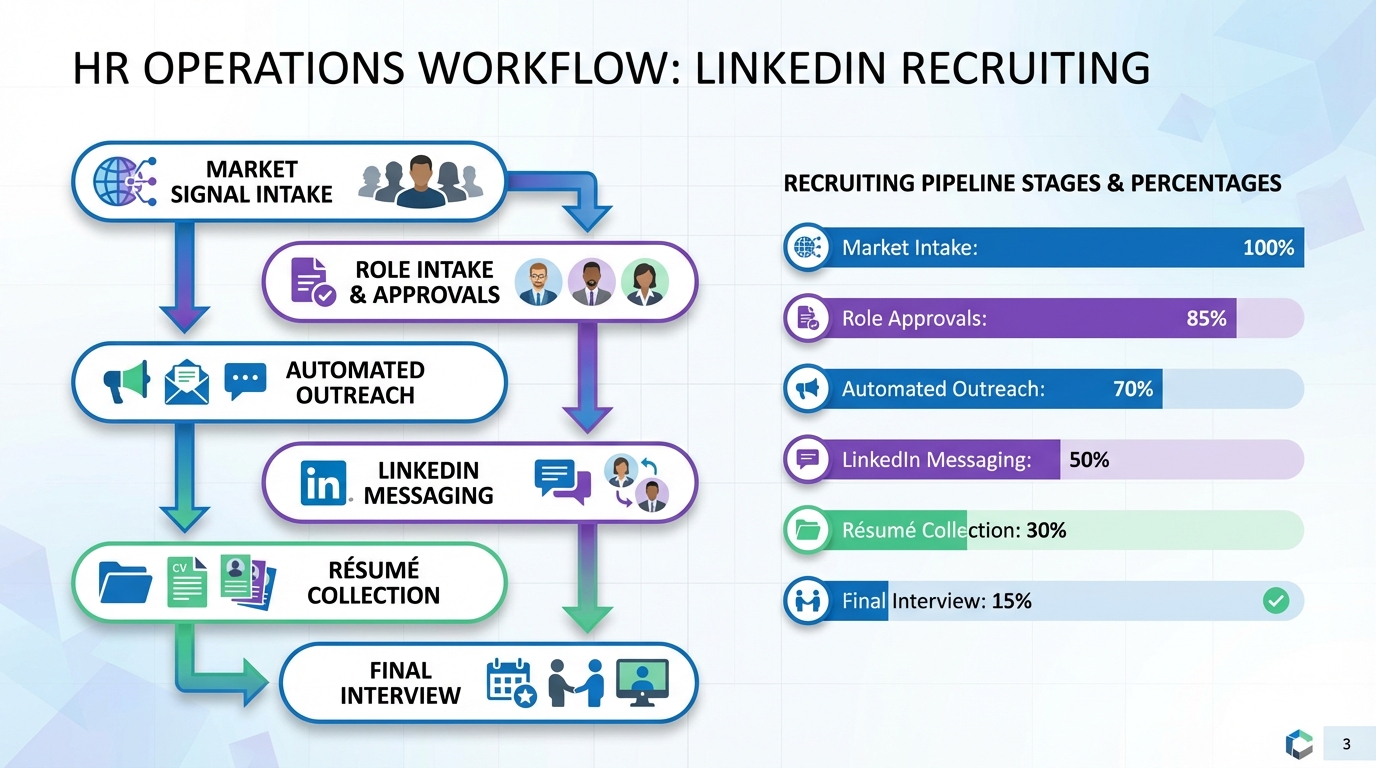
Human resource recruitment software helps HR teams respond faster when labor markets tighten by standardizing intake, tracking candidates, and automating outreach and follow up. In Western Canada, where hiring demand can shift quickly across industries and regions, the practical win is speed and consistency: you capture role requirements once, route approvals, keep candidate communication timely, and maintain a searchable record of decisions. This article reframes a market update from Cam Macmillan, Co Founder and Chief Strategist, into an HR operations lens, then shows how modern HR management software and HR systems can support recruiters when conditions change. It also explains how StrategyBrain AI Recruiter can automate LinkedIn based outreach, multilingual candidate conversations, and résumé collection so recruiters can focus on interviews and final qualification.
Table of Contents
- What the Western Canada market shift signals for hiring
- Translating market signals into HR system requirements
- A practical workflow using HR management software and recruitment automation
- Where StrategyBrain AI Recruiter fits in LinkedIn recruiting
- Limitations and risk controls
- FAQ
- Conclusion and next steps
What the Western Canada market shift signals for hiring
Cam Macmillan described Western Canada as a region where hiring signals show up early because of constant conversations with job seekers, senior leaders, entrepreneurs, and CEOs. His core point is operationally important for HR leaders: when information moves fast, recruiting processes must be able to adapt without creating chaos.
He highlighted several themes that can change recruiting demand quickly. In British Columbia, he noted a tighter market for companies seeking top talent and pointed to proposed liquefied natural gas plants in the North as a potential hiring catalyst. In Alberta, he mentioned subtle growth signals and increased interest in senior operations and general management hires, driven by succession planning and expectations of economic recovery.
He also called out diversification efforts and advised watching the AI space in Edmonton where world class talent was gaining international attention. Separately, he noted medical marijuana as a fast moving national hiring topic. He tied these shifts to a dynamic political climate at provincial, federal, and global levels.
His advice to employers was consistent and practical: own your space, focus on what you can control, and filter out clutter. For recruiting teams, that translates into building repeatable systems that keep throughput high even when priorities change week to week.
Why this matters to HR operations
- Demand volatility increases requisition volume spikes and shortens time to respond.
- Role mix changes from frontline to senior leadership requires different sourcing and screening patterns.
- Geography and language become more complex when hiring expands across provinces and internationally.
Translating market signals into HR system requirements
When the market tightens, the biggest recruiting failure mode is not effort. It is inconsistency. Different recruiters use different messages, different spreadsheets, and different definitions of what qualified means. That is where human resource recruitment software and broader HR systems create leverage.
Below is a practical translation from the market signals Cam described into what HR management software should support. This is not a vendor checklist. It is an operating checklist that you can map to your current stack.
Core capabilities to prioritize
- Structured intake and approvals so hiring managers define must have requirements once and changes are tracked.
- Candidate relationship management so outreach, replies, and follow up are logged and searchable.
- Pipeline visibility so leaders can see bottlenecks by stage and by recruiter.
- Compliance and privacy controls so candidate data is handled consistently across teams and regions.
- Automation hooks so repetitive steps like initial outreach and scheduling prompts can be delegated to systems.
Definitions used in this article
- Human resource recruitment software means software that supports sourcing, applicant tracking, candidate communication, and hiring workflows.
- HR management software means broader HR platforms that may include recruiting plus onboarding, HRIS records, and reporting.
- HR systems is a general term for the tools and processes that manage HR data and workflows across the organization.
A practical workflow using HR management software and recruitment automation
We have seen teams move faster in volatile markets when they treat recruiting like an operational pipeline rather than a set of individual tasks. The workflow below is designed to be reproducible in most HR systems, even if your tools differ.
Step by step workflow
- Lock the role intake in one place inside your HR management software, including compensation, benefits, location expectations, and must have skills.
- Standardize the outreach message so candidates get consistent information and recruiters do not rewrite the same introduction repeatedly.
- Automate first touch and follow up for channels where response time matters, while keeping a clear audit trail of what was sent and when.
- Capture résumés and contact details into the candidate record so handoffs do not depend on inbox searches.
- Reserve human time for final qualification by having recruiters review résumés and conduct interviews after interest is confirmed.
- Review weekly pipeline metrics by stage and by role family, then adjust sourcing focus as the market shifts.
Quick checklist you can copy into your hiring playbook
- Role clarity: compensation and must have requirements are documented before outreach starts.
- Message consistency: the first message and follow up templates are approved and versioned.
- Response coverage: candidate questions receive replies within the same business day or via automation.
- Data capture: résumé and contact details are attached to the candidate record, not left in chat threads.
- Decision traceability: rejection reasons and stage changes are logged for later review.
Where StrategyBrain AI Recruiter fits in LinkedIn recruiting
Cam’s market view implies a simple recruiting reality: when demand rises, the limiting factor becomes recruiter time. StrategyBrain AI Recruiter is designed to remove a large portion of repetitive LinkedIn recruiting work by automating the initial outreach and early conversation steps, while keeping recruiters responsible for final qualification and interviews.
What AI Recruiter automates on LinkedIn
- Candidate connections and introductions based on your target search criteria and job information.
- Two way messaging that answers questions about the role, company, and compensation using the information you provide.
- Interest confirmation by determining whether the candidate wants to proceed to an interview process.
- Résumé and contact collection by requesting documents and capturing details shared in messages.
Why multilingual and 24/7 coverage matters in a shifting market
When hiring expands across regions or time zones, response delays can cost you candidates. AI Recruiter supports 24/7 candidate communication and can communicate in the candidate’s native language, which helps reduce misunderstandings and keeps conversations moving even when recruiters are offline.
Scaling with multiple LinkedIn accounts
For teams that need volume, AI Recruiter supports managing more than 100 LinkedIn accounts so organizations can build AI powered recruiting teams. This is useful when market shifts create sudden spikes in outreach needs across multiple roles.
What stays human by design
AI Recruiter can confirm interest and collect information, but it does not decide whether a résumé fully matches job requirements. Recruiters still review résumés and make the final qualification decision. In practice, this division of labor keeps accountability clear and reduces the risk of over automating judgment calls.
Operational results and cost framing
Based on StrategyBrain product information, AI Recruiter can replace up to 90% of manual LinkedIn recruiting work related to connecting, messaging, screening for interest, and collecting résumés. The same source states it can lower LinkedIn recruiting costs to as little as USD 2.40 per résumé. Treat these figures as product reported outcomes that can vary by role, market, and messaging quality.
Limitations and risk controls
Automation is not a substitute for a hiring strategy. It is a force multiplier when your process is already clear. During our reviews of recruiting workflows, the most common issues show up when teams automate before they standardize.
Common limitations to plan for
- Input quality risk: if compensation, benefits, or role scope are unclear, automated messaging can amplify confusion.
- Over reliance on one channel: LinkedIn is powerful, but many roles still require multi channel sourcing.
- Governance needs: multi account operations require clear ownership, access controls, and audit practices.
Privacy and compliance notes
According to StrategyBrain product information, AI Recruiter is designed to comply with privacy regulations in the EU, United States, and Canada. The same source states that customer provided data is not used to train AI models, and that credentials and candidate data are encrypted and isolated per customer. Your organization should still validate fit with internal policies and legal counsel for your specific jurisdiction and use case.
FAQ
What is human resource recruitment software in practical terms?
Human resource recruitment software is the system that manages the hiring pipeline from role intake through candidate communication and selection. In practice, it replaces ad hoc spreadsheets and inbox based tracking with structured stages, templates, and reporting.
How is HR management software different from recruitment software?
HR management software often includes recruiting plus HRIS records, onboarding, and workforce reporting. Recruitment software focuses more narrowly on sourcing, applicant tracking, and candidate relationship management.
When markets tighten, what should HR systems optimize for first?
Optimize for speed and consistency. That means standardized intake, approved messaging templates, and a single source of truth for candidate status so leaders can remove bottlenecks quickly.
How does StrategyBrain AI Recruiter help with LinkedIn recruiting?
AI Recruiter automates initial LinkedIn outreach, follow up, and early candidate conversations. It can introduce the role, answer common questions using your provided job details, confirm interest, and collect résumés and contact information for recruiter review.
Does AI Recruiter decide whether a candidate is qualified?
No. AI Recruiter can identify willingness to proceed and collect information, but final qualification against job requirements is completed by the recruiter after reviewing the résumé.
Can AI Recruiter communicate with candidates in different languages?
Yes. StrategyBrain product information states AI Recruiter supports multilingual communication and can respond in the candidate’s native language, which is helpful for global hiring and cross border recruiting.
How should we measure whether recruitment automation is working?
Track response time, reply rate, number of interested candidates per week, and the percentage of recruiter time spent on interviews versus repetitive messaging. Use the same definitions across roles so comparisons are meaningful.
What is the safest way to introduce automation into an existing process?
Start with one role family and one approved message set, then review transcripts and outcomes weekly. Expand only after you confirm that role information, compensation details, and handoff steps are consistently captured in your HR systems.
Conclusion and next steps
Cam Macmillan’s view of Western Canada highlights a hiring environment where signals change quickly across provinces and industries. The teams that perform best are the ones that filter noise, keep role definitions tight, and run recruiting as a measurable pipeline. Human resource recruitment software and broader HR management software provide the structure, while recruitment automation can protect recruiter time when demand spikes.
If you want a practical next step, document one role intake template, standardize your first message, and ensure résumé and contact capture is consistent. Then evaluate where StrategyBrain AI Recruiter can take over LinkedIn based outreach, multilingual candidate conversations, and follow up so your recruiters can focus on interviews and final qualification.