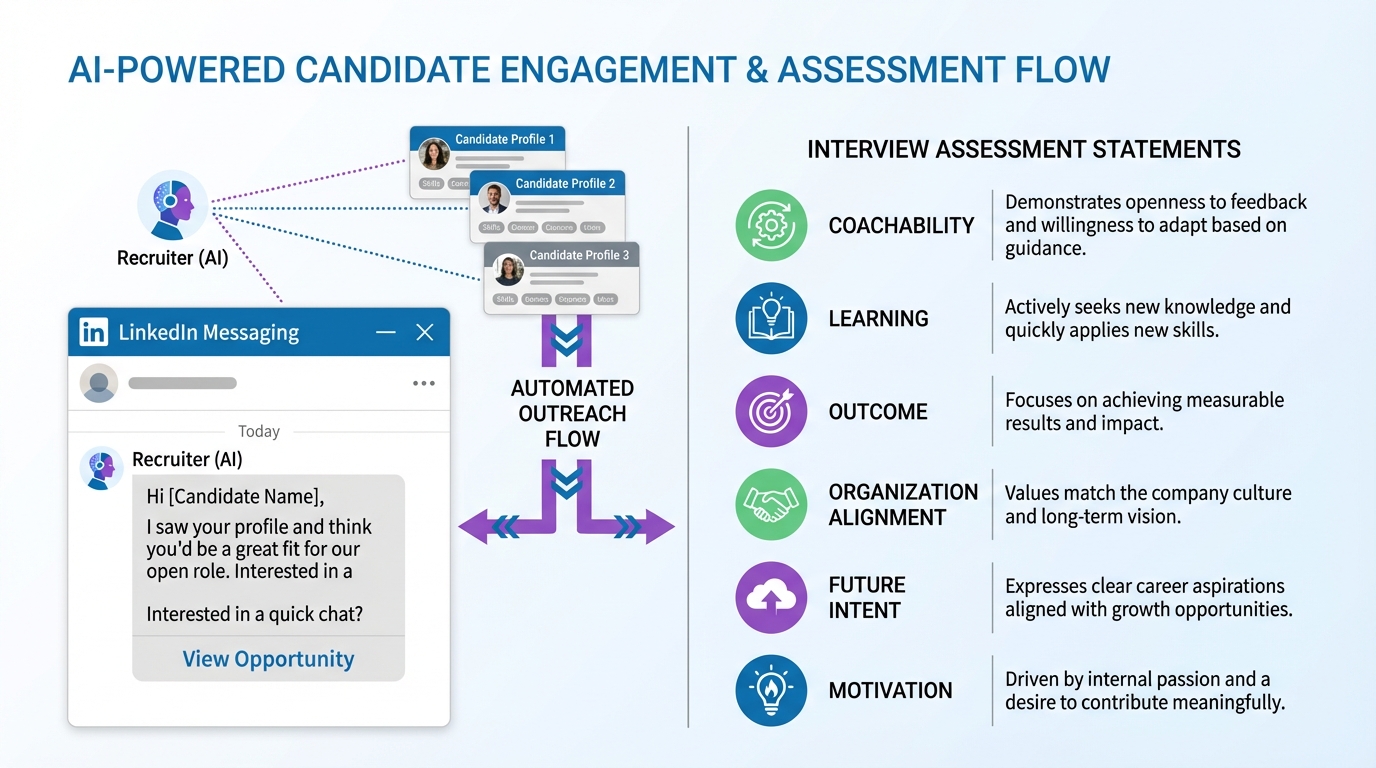
Human resource recruitment software helps hiring teams evaluate candidates consistently by standardizing interview notes, scorecards, and follow ups. If you want to stand out in an accounting interview, the most effective approach is to speak in a way that maps directly to how modern human resource systems track performance: coachability, learning from mistakes, measurable outcomes, alignment with the organization, long term intent, and motivation. In this guide, we translate six high impact interview statements into software friendly evidence, show how recruiters document them in a list of HR software workflows, and explain how StrategyBrain AI Recruiter can automate early LinkedIn outreach and qualification so hiring teams spend more time on high signal interviews.
Table of Contents
- Why these statements work in human resource recruitment software
- 1) I am coachable
- 2) I learned
- 3) I was pleased with the outcome
- 4) With your organization
- 5) In the future
- 6) I am highly motivated
- Quick checklist you can copy into your interview prep
- Where StrategyBrain AI Recruiter fits in the hiring workflow
- FAQ
- Conclusion
Why these statements work in human resource recruitment software
In many organizations, interview feedback is captured inside human resource recruitment software as structured fields such as competencies, evidence, risk flags, and hire or no hire recommendations. That means your answers are not only heard, they are translated into a record that other stakeholders will review later.
When you use clear statements with specific evidence, you make it easier for the interviewer to document you accurately in human resource systems. In practice, this reduces ambiguity during debriefs and increases the chance that your strengths survive handoffs between interviewers, hiring managers, and HR.
We also see a growing split between early stage sourcing and later stage interviewing. Tools like StrategyBrain AI Recruiter can automate the initial LinkedIn outreach and interest confirmation, then pass qualified candidates to recruiters for deeper evaluation. That makes the interview itself more evidence driven, because the team expects you to back up claims with examples and outcomes.
1) I am coachable
Employers often treat coachability as a predictor of how quickly you will adapt to new processes, new tools, and feedback loops. In human resource recruitment software, this typically shows up as a competency rating such as “adaptability” or “receptiveness to feedback,” supported by a short evidence note.
What to say
I am coachable. Then immediately add a concrete example of receiving feedback, applying it, and improving performance.
How to make it easy to document in a scorecard
- Feedback source: manager, peer, client, or audit reviewer
- Change you made: the specific behavior or process you adjusted
- Result: what improved after you applied the feedback
Example (adapted from common accounting scenarios)
In a previous role, I struggled at first with a new financial software workflow. After my supervisor gave detailed feedback, I asked for extra training and practiced the process until it became consistent. Within 30 days, I was able to document the steps clearly enough that other team members could follow the same approach.
Limitations to avoid
- Do not claim you “love feedback” without showing how you used it.
- Do not blame the tool or the team for the initial struggle.
2) I learned
Hiring teams want candidates who can recover from mistakes and improve the system, not just the individual. In a list of HR software workflows, this is often captured as “continuous improvement,” “accountability,” or “process discipline.”
What to say
I learned. Then describe the mistake, what you did immediately, and what you changed to prevent recurrence.
Example
At one company, I misinterpreted a data entry and it affected a quarterly report. Once I noticed it, I corrected the error, informed the right stakeholders, and added a double check step to the process. That experience taught me to validate inputs earlier and it improved the reliability of our reporting routine.
How recruiters typically record this in human resource systems
- Ownership: did the candidate acknowledge the error directly
- Remediation: did the candidate fix the issue quickly
- Prevention: did the candidate improve the process for the team
3) I was pleased with the outcome
Responsibilities are easy to list, but outcomes are what hiring teams compare. In human resource recruitment software, outcomes become the evidence that supports a “strong hire” recommendation, especially when multiple candidates have similar experience.
What to say
I was pleased with the outcome. Then share a short story with a measurable result.
Example
In one role, our reconciliation process was consistently delayed. I proposed a streamlined approach using the tools we already had and the team reduced closing time by 40 percent. I was pleased with the outcome because it improved accuracy and reduced end of month pressure.
How to present numbers without sounding rehearsed
- Use one metric only, such as time saved, error rate reduced, or cycle time improved.
- State the baseline and the improvement, then stop.
- Explain why the metric mattered to the business.
4) With your organization
Recruiters look for candidates who understand the organization’s direction and can connect their skills to it. In human resource systems, this is often captured as “role alignment,” “values alignment,” or “business acumen.”
What to say
With your organization is the phrase that signals you did your homework. Then connect one of your strengths to a specific priority the company has.
Example
I noticed your organization emphasizes sustainable finance. With my background in green financing and experience supporting a sustainability project, I can contribute to that direction and help the team report on it more consistently.
How this ties into modern recruiting operations
When sourcing starts on LinkedIn, early conversations often focus on role basics and interest confirmation. StrategyBrain AI Recruiter can handle that initial outreach and Q and A at scale, then recruiters can use the interview to validate deeper alignment with the organization’s priorities. This division of labor makes your “with your organization” answer more important, because it becomes a differentiator rather than a formality.
5) In the future
Employers want to understand whether the role fits your trajectory. In human resource recruitment software, interviewers often summarize this as “retention risk” or “career intent,” especially for roles with long ramp up times.
What to say
In the future is your cue to describe a realistic three to five year path that matches the role’s growth opportunities.
Example
Joining your company is not just a job change for me. In the future, I want to deepen my accounting expertise while supporting expansion into new markets. In five years, I would like to lead projects, mentor junior team members, and contribute to stronger reporting and controls.
What not to do
- Do not describe a future that requires a different job title immediately.
- Do not promise a timeline you cannot justify.
6) I am highly motivated
Motivation is not a personality claim, it is a behavior pattern. In a list of HR software evaluation fields, motivation is often inferred from examples of initiative, ownership under pressure, and follow through.
What to say
I am highly motivated. Then describe a time you went beyond the minimum, why it mattered, and what the result was.
Example
During a year end close, our team lead became unavailable and deadlines were at risk. I stepped in to coordinate across departments, worked extended hours, and ensured we met the deadline with accurate reporting. The experience showed me I can stay focused under pressure and still protect quality.
How recruiters capture this in human resource systems
- Trigger: what created urgency
- Action: what you did that was above baseline expectations
- Outcome: what improved for the team or business
Quick checklist you can copy into your interview prep
Use this as a pre interview self review. It is written to match how interview notes are typically summarized inside human resource recruitment software.
- Coachability: I have 1 example of feedback received, change made, and result achieved.
- Learning: I have 1 example of a mistake, remediation, and prevention step.
- Outcomes: I have 1 metric with a baseline and an improvement.
- Organization alignment: I can name 1 company priority and connect it to my experience.
- Future intent: I can describe a realistic 3 to 5 year path that fits the role.
- Motivation: I have 1 example of initiative under pressure with a clear outcome.
Where StrategyBrain AI Recruiter fits in the hiring workflow
Many teams now separate recruiting into two phases. Phase one is high volume outreach and interest confirmation. Phase two is high signal interviewing and assessment. StrategyBrain AI Recruiter is designed for phase one on LinkedIn, where it can automatically connect with candidates that match your search criteria, introduce the opportunity, answer common questions about the role and company, confirm interview interest, and collect resumes and contact details from interested candidates.
In our experience reviewing recruiting operations, this changes what interviewers expect. When early qualification is handled consistently, interview time is reserved for evidence and judgment. That is exactly where the six statements above help, because they translate cleanly into structured notes inside human resource systems.
Two practical boundaries matter. First, AI Recruiter can confirm willingness to proceed, but final qualification against job requirements still belongs to the recruiter or hiring manager after reviewing the resume. Second, if you are a candidate, you should still be prepared to restate key facts clearly in the interview, because human resource recruitment software records what is said in the interview, not what was implied in earlier messages.
FAQ
How does human resource recruitment software affect interview outcomes?
It increases consistency by turning interview feedback into structured fields such as competencies, evidence, and recommendations. Because multiple stakeholders review the same record, clear examples and measurable outcomes tend to travel better than vague claims.
What is the difference between human resource recruitment software and human resource systems?
Human resource recruitment software focuses on hiring workflows such as sourcing, interviewing, and offer management. Human resource systems are broader and can include payroll, benefits, performance management, and employee records.
Do I need to mention a list of HR software tools in my interview?
No. What matters is demonstrating the behaviors those tools measure, such as learning, accountability, and results. If asked about tools, describe what you used and what outcomes you achieved, not a long list of product names.
What is the single best thing to say in an accounting interview?
Coachability is a strong starting point when you support it with evidence. A concise story about feedback received, change made, and improved outcome is easy for interviewers to document and compare.
How does StrategyBrain AI Recruiter support LinkedIn hiring?
It automates early stage LinkedIn recruiting tasks such as connecting with candidates, introducing the role, answering common questions, confirming interest, and collecting resumes and contact details. Recruiters can then focus on deeper evaluation and interviews.
Does StrategyBrain AI Recruiter replace recruiters?
No. It replaces repetitive outreach and initial qualification steps, but recruiters still review resumes, assess fit against requirements, and run interviews. Think of it as scaling the top of the funnel while keeping human judgment for final decisions.
Can StrategyBrain AI Recruiter communicate with candidates in different languages?
Yes. It supports multilingual communication so candidates can interact in their native language, which can reduce misunderstandings during early stage outreach and follow up.
What should I do if I do not have metrics like 40 percent improvement?
Use a different measurable signal such as cycle time reduced, errors prevented, or volume handled per week. If you cannot quantify, describe the baseline problem, the change you made, and the observable impact in concrete terms.
Conclusion
Human resource recruitment software rewards clarity because interviewers must translate what you say into structured notes that others will review. If you anchor your answers around coachability, learning, outcomes, organization alignment, future intent, and motivation, you make it easy for hiring teams to document you as a strong candidate inside their human resource systems.
Next step: pick one story for each of the six statements and practice telling it in 45 to 60 seconds with one measurable result. If you are on the hiring side, consider using StrategyBrain AI Recruiter to automate LinkedIn outreach and early qualification so your team can spend more time on high quality interviews and consistent evaluation.