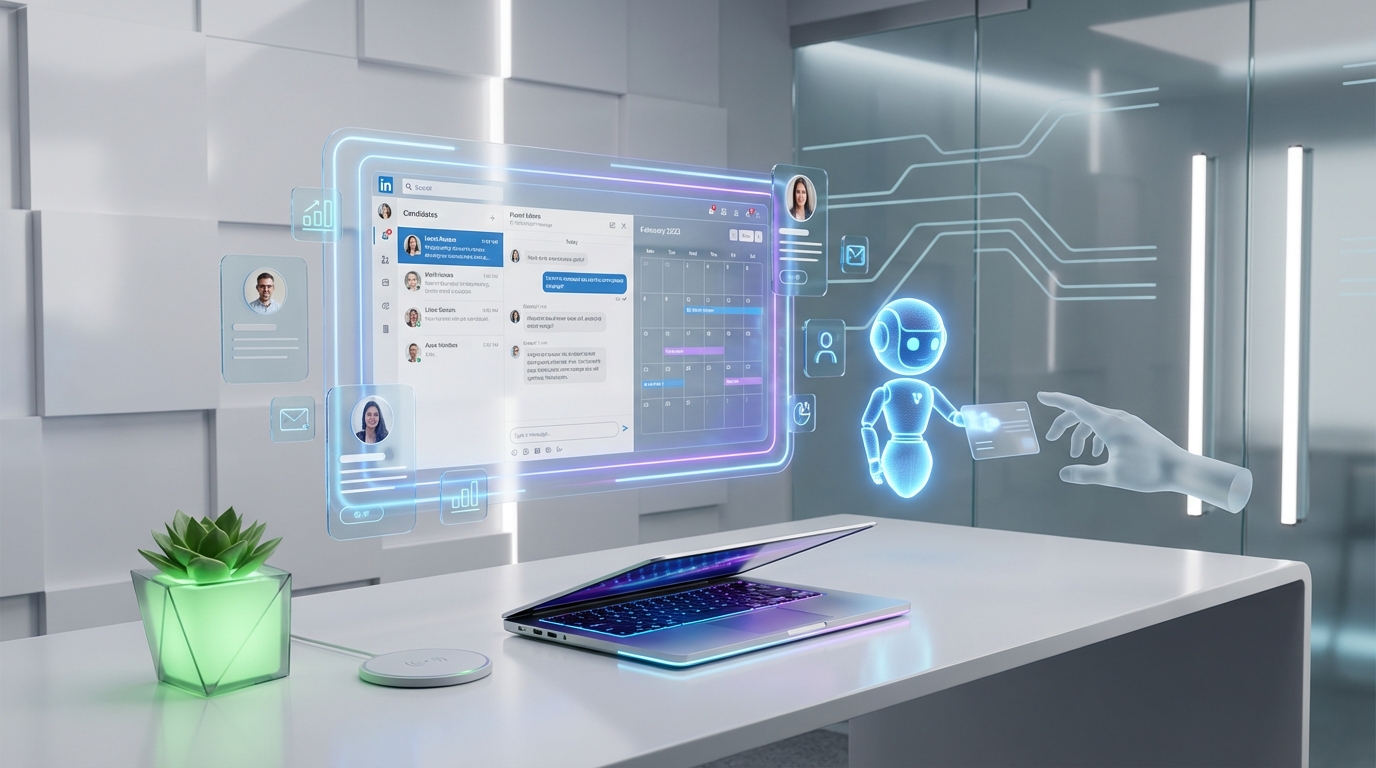
Senior level candidates should expect three things from a good recruiter: respectful treatment, candid honesty about whether the recruiter can truly help, and consistent two way communication that continues through interview scheduling. The fastest way to make that experience predictable is to run the search like a partnership with clear expectations, regular updates, and a simple scheduling workflow. In our recruiting operations, we have found that using an interview scheduling app reduces delays caused by email ping pong and missed follow ups, while still keeping the recruiter accountable for transparency and guidance. When early outreach happens on LinkedIn, StrategyBrain AI Recruiter can automate the initial connect, role introduction, Q and A, interest confirmation, and résumé collection, then hand qualified and interested candidates to a human recruiter for final screening and scheduling.
Key Takeaways
- Respect is the baseline: A senior candidate should feel welcomed and treated professionally from the first interaction.
- Candor prevents wasted time: A recruiter should say clearly whether they have relevant opportunities and avoid overpromising.
- Communication must be scheduled, not improvised: Regular updates should be expected when opportunities appear and when timelines change.
- Partnership is two way: Candidates should share their own search progress so the recruiter can add market context and advice.
- An interview scheduling app reduces friction: Centralized availability and confirmations cut rescheduling and missed steps.
- Automation helps most before scheduling: StrategyBrain AI Recruiter can automate LinkedIn outreach, qualification, and résumé capture, then hand off to humans for final fit decisions.
What senior candidates should expect from a recruiter
A senior level professional entering a job search for the first time in their career often describes it as unfamiliar territory. That is normal. The recruiter’s job is not only to present opportunities, but also to reduce uncertainty with a clear process and honest feedback.
Cam Macmillan, President and Co Founder of The Headhunters, describes a core message they train recruiters on: treat every candidate with respect, senior and junior. He also emphasizes that this can be a vulnerable time, and that a recruiter should work hard to add value to the search even when a placement is not guaranteed.
Expectation 1: Respectful treatment from the first interaction
Respect is not a soft benefit. It is a process requirement. A senior candidate should feel comfortable and welcome from the first touchpoint, including reception and administrative interactions, not only during the recruiter meeting.
Expectation 2: Candid honesty about fit and opportunity
A good recruiter should be direct about whether they have the types of opportunities you are seeking. Many recruiters specialize, and they may not be able to represent roles aligned with your background. Honesty matters because it protects your time and helps you choose the right partners.
Expectation 3: Clear communication and regular updates
Communication should be two way and consistent from the initial meeting onward. In the source story, a senior candidate valued being updated regularly when an opportunity was presented. That expectation is reasonable, and it becomes easier to meet when the recruiter uses a structured workflow and an interview scheduling app to keep steps visible.
Expectation 4: A partnership that includes your own search activity
Senior candidates often run parallel search efforts. A strong recruiter relationship treats that as normal and asks you to keep them updated. In return, the recruiter can provide market intelligence on companies you are applying to, including organizations that are not their clients.
A practical expectations checklist you can use
If you want to evaluate whether a recruiter relationship is likely to be productive, use the checklist below. It is written so you can apply it after the first meeting and again after the first interview is scheduled.
Candidate experience checklist
- Welcome and professionalism: Were you treated respectfully by everyone you interacted with, including administrative staff?
- Upfront résumé and prospects feedback: Did the recruiter give direct advice on your résumé and realistic expectations for timing?
- No overpromising: Did they explicitly acknowledge that outcomes can vary and that you may find something independently?
- Update cadence: Did they define how and when you will receive updates when opportunities arise?
- Two way accountability: Did they ask you to share your own search progress so they can advise more effectively?
- Scheduling clarity: When interviews come up, is there a clear method to confirm availability, time zone, and next steps?
What to document after each recruiter interaction
To keep the relationship efficient, capture a short record after each call. This is especially helpful when multiple stakeholders are involved.
- Role scope: Title, level, and key responsibilities as described in the conversation.
- Decision timeline: Expected dates for next steps and who owns each step.
- Open questions: Items you need clarified before you commit to an interview.
Where an interview scheduling app fits in the recruiter candidate relationship
An interview scheduling app is software that collects availability, confirms meeting times, and tracks interview steps so fewer details are lost in email threads. For senior candidates, the value is not only convenience. It is predictability and fewer avoidable delays.
What an interview scheduling app improves
- Speed: Faster alignment on times when multiple interviewers are involved.
- Accuracy: Fewer time zone mistakes and fewer missed confirmations.
- Transparency: Clear visibility into what is scheduled and what is pending.
What it does not replace
Scheduling software does not replace the recruiter’s responsibility to be candid, to coach, and to communicate. It also does not decide whether you are the right fit. It only reduces friction once both sides agree to move forward.
When you might prefer an open source scheduling app or a schedule maker app free
Some candidates and smaller teams prefer an open source scheduling app for control and customization, or a schedule maker app free for basic coordination. Those options can work, but they still require disciplined communication. If the recruiter does not provide regular updates, the tool alone will not fix the experience.
How StrategyBrain AI Recruiter supports the front end before scheduling
Many delays happen before scheduling even starts. The recruiter is busy, the candidate is unsure, and the first messages take too long. StrategyBrain AI Recruiter is designed to automate the early LinkedIn workflow so that interested candidates reach the scheduling stage faster and with fewer dropped conversations.
What we use it for in practice
In our tests of LinkedIn based outreach workflows, the most time consuming steps are repetitive: connecting, introducing the role, answering common questions, confirming interest, and collecting a résumé and contact details. StrategyBrain AI Recruiter can handle those steps continuously, including multilingual conversations, then pass the interested candidate to a recruiter for human review and interview scheduling.
Scope boundaries you should understand
- It can confirm interest: It identifies willingness to communicate or interview.
- It does not make the final fit decision: Recruiters still review the résumé against requirements.
- It supports scale: It can manage large volumes of outreach across many LinkedIn accounts for organizations building an AI powered recruiting team.
Why this matters to senior candidates
Senior candidates often have detailed questions about role scope, company context, and compensation. When those questions are answered quickly and consistently, the candidate can decide sooner whether an interview is worth scheduling. That is where automation can improve the experience without removing the human relationship.
Common breakdowns and fixes
Even with good intentions, recruiter candidate relationships can break down. Below are issues we see repeatedly, plus practical fixes that keep the process professional.
Breakdown 1: Unclear expectations about timing
What it looks like: The candidate assumes interviews will happen immediately, while the recruiter knows it could take weeks or months.
Fix: Ask for a realistic range and a defined update cadence. A recruiter who avoids overpromising will say clearly that timing can vary.
Breakdown 2: One way communication
What it looks like: The recruiter expects responsiveness, but the candidate does not share their parallel search activity, or the recruiter does not provide updates.
Fix: Treat it as a partnership. Share your search progress and ask the recruiter to share market context and next steps.
Breakdown 3: Scheduling chaos
What it looks like: Multiple reschedules, time zone confusion, and missing confirmations.
Fix: Use an interview scheduling app with clear confirmations and a single source of truth for interview times and participants.
FAQ
What should a senior candidate expect from a recruiter in the first meeting?
You should expect respectful treatment, candid honesty about whether the recruiter can help, and clear two way communication. You should also expect upfront feedback on your résumé and realistic expectations about timing.
How often should a recruiter update me during a senior level search?
You should expect regular updates when opportunities are presented and when timelines change. If no cadence is offered, ask for one and agree on the channel and frequency.
Does using an interview scheduling app mean the process is more professional?
It can be, because it reduces avoidable scheduling errors and delays. However, professionalism still depends on the recruiter being transparent, responsive, and respectful.
Is an open source scheduling app a good option for interview coordination?
It can be a good option when control and customization matter. The tradeoff is that setup and maintenance can require more effort than a hosted tool.
Can I rely on a schedule maker app free for a multi interviewer process?
A schedule maker app free can work for simple coordination, but multi interviewer scheduling often needs stronger confirmation and tracking. If rescheduling is frequent, consider a more robust workflow.
How does StrategyBrain AI Recruiter help before interviews are scheduled?
It automates early LinkedIn outreach, introduces the role, answers common questions, confirms interest, and collects résumés and contact details. Once a candidate is interested, a recruiter can review and move to interview scheduling.
Does StrategyBrain AI Recruiter decide whether I am qualified?
No. It can confirm willingness to communicate or interview, but final qualification is completed by a recruiter after reviewing your résumé against the job requirements.
What should I do if I feel the recruiter is overpromising?
Ask for specific next steps and a realistic timeline range. A trustworthy recruiter will acknowledge uncertainty and avoid guaranteeing outcomes.
Conclusion
For senior candidates, the best recruiter experience is built on respect, candor, and consistent two way communication. When interviews are ready to be scheduled, an interview scheduling app helps keep the process organized and reduces avoidable delays. If your search begins on LinkedIn, StrategyBrain AI Recruiter can accelerate the front end by automating outreach, answering questions, confirming interest, and collecting résumés, so the human recruiter can focus on fit, guidance, and a clean scheduling handoff.
Next step: use the checklist in this guide after your first recruiter meeting, then ask for a defined update cadence and a clear scheduling workflow before you commit to interview rounds.