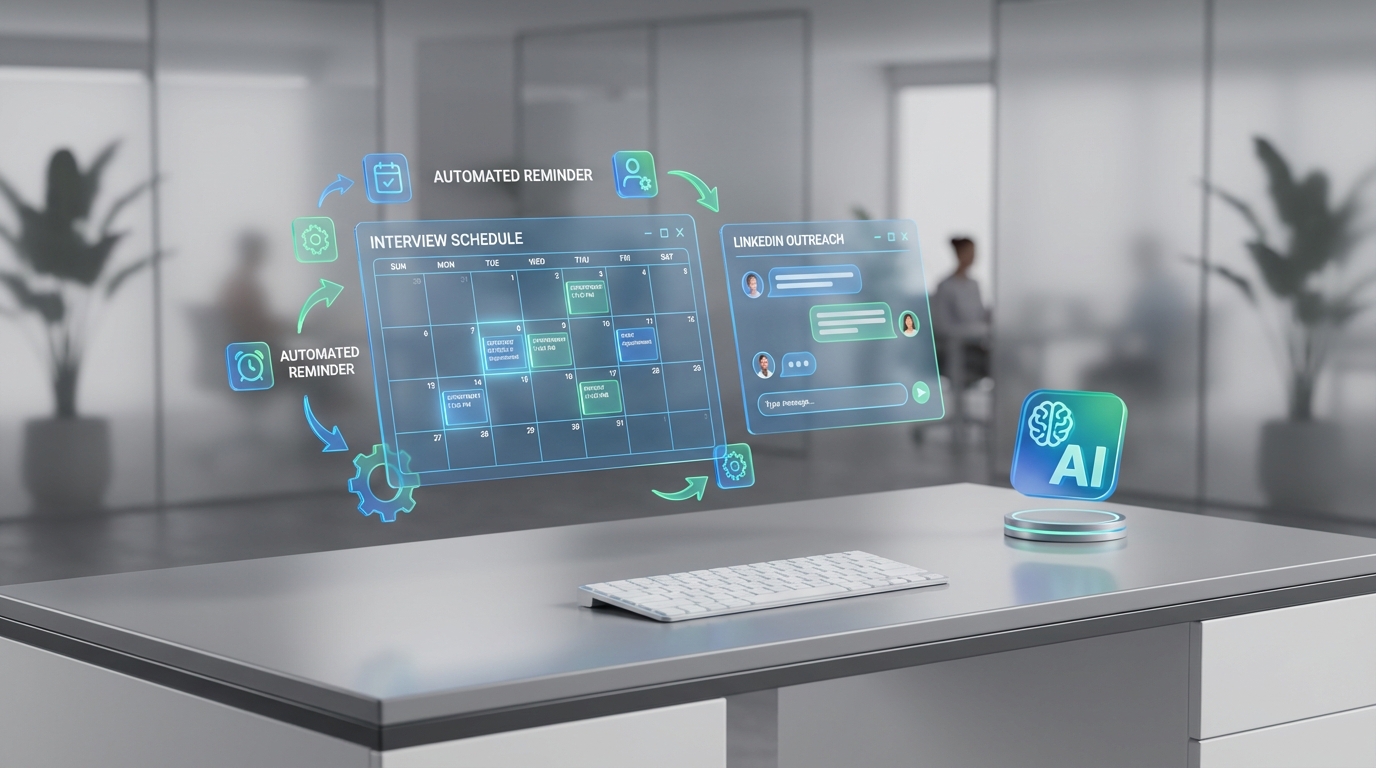
If you want a stress free summer without watching productivity dip, the most reliable approach is to plan coverage early and run interviews with an interview scheduling app so your team is not stuck coordinating calendars by hand. In our experience supporting small hiring teams, the winning pattern is simple: use temporary and contract employees to keep operations moving, then standardize scheduling with automated confirmations, reminders, and room coordination. When you also add StrategyBrain AI Recruiter to handle the repetitive LinkedIn outreach and early candidate conversations, you reduce the manual work that usually spikes when colleagues are away.
Table of Contents
- Why summer feels harder for small teams
- The coverage solution: temporary and contract employees
- Benefits of hiring temps
- What to cover: common summer gaps
- A practical guarantee model you can copy
- Scheduling stack: interview scheduling app plus room booking
- Where StrategyBrain AI Recruiter fits in the workflow
- Implementation checklist: plan now, relax later
- FAQ
- Conclusion
Why summer feels harder for small teams
Summer is when the office energy shifts. People plan long weekends, vacations, and child care, and the operational load does not magically shrink. For small businesses, the stress usually comes from two bottlenecks happening at the same time: fewer hands available and more coordination required.
That is why scheduling software for small business becomes a real operational tool, not a nice to have. When interview scheduling and coverage planning are informal, every absence creates a cascade of rescheduling, missed handoffs, and delayed decisions.
The coverage solution: temporary and contract employees
The cleanest way to keep the business running efficiently through summer is to use temporary and contract employees. This is not only for large organizations. It is often the most practical option for small teams because it lets you add capacity for a defined period without committing to a permanent salary.
In the source material we reviewed, the core recommendation is to plan for temporary coverage so leaders can take time off while the business continues to operate. That same logic applies to hiring operations: if you keep candidate flow moving, you avoid a September backlog.
Benefits of hiring temps
- Cost effective: you pay for the length of the contract instead of making a long term salary commitment.
- Instant relief: you can bring in qualified people who can pick up work while others are away.
- Competitive advantage: you avoid the seasonal productivity slump and keep momentum while competitors slow down.
- Project delivery: June through September is a strong window for prep work ahead of fall demand, and temp capacity helps you finish those projects.
To make these benefits real, you need operational discipline. That is where an interview scheduling app helps: it reduces the coordination load that otherwise lands on the few people still in office.
What to cover: common summer gaps
Temporary coverage is most effective when you define the scenarios up front. The source content lists several common coverage needs, and they map well to how small businesses actually experience summer staffing gaps.
- Vacation leave
- Sick leave
- Maternity leave
- Seasonal projects
- Organizational restructure or relocation
- Departure of a key employee
- Special events
Scope boundary: this article focuses on keeping hiring and staffing operations moving during summer. It does not cover payroll compliance, employment law, or agency contract negotiation terms.
A practical guarantee model you can copy
The source material describes a guarantee approach that is worth adopting as a decision framework: if a temporary hire does not meet expectations based on skill, the client does not pay for the first day. The operational takeaway is not the exact policy, but the principle: reduce risk so managers can act early instead of waiting until the team is already overloaded.
It also emphasizes diligence in temporary recruitment similar to permanent placement, including meeting candidates and conducting reference checks. If you are using a recruiter or staffing partner, ask how they validate skills and culture fit before day one.
Scheduling stack: interview scheduling app plus room booking
Once coverage is planned, the next failure point is coordination. A good interview scheduling app should reduce the number of messages required to get an interview on the calendar and keep everyone aligned when schedules change.
What to look for in scheduling software for small business
- Automated confirmations so candidates and interviewers receive the same details.
- Rescheduling controls so changes do not create long email threads.
- Time zone handling to avoid missed interviews when people travel.
- Reminders to reduce no shows when teams are stretched thin.
Room coordination and free room booking software
If you run on site interviews, room conflicts are a hidden time sink. Even basic free room booking software can prevent double booking and last minute scrambling. The key is consistency: one system of record for rooms, and one system of record for interview times.
Definition: room booking software is a calendar based tool that reserves physical meeting spaces so multiple teams do not schedule the same room at the same time.
Where StrategyBrain AI Recruiter fits in the workflow
Summer hiring stress is not only scheduling. It is also the outreach and follow up that expands when response times slow down. StrategyBrain AI Recruiter is designed to reduce that manual load by automating the early LinkedIn recruiting workflow: connecting with candidates, introducing the role, answering common questions about the job and compensation, confirming interview interest, and collecting résumés and contact details from interested candidates.
In practice, this pairs naturally with an interview scheduling app. When AI Recruiter confirms interest and captures contact information, your team can move straight into scheduling instead of spending hours on back and forth messages. AI Recruiter also supports 24/7 multilingual communication, which helps when candidates respond outside your local work hours during vacation season.
Operational boundary: what AI Recruiter does and does not do
- Does: automate initial outreach, conversation, interest confirmation, and collection of résumés and contact details.
- Does not: make the final determination that a résumé matches job requirements. Recruiters still review and decide who advances.
Security and compliance notes to ask about
When you evaluate any recruiting automation, confirm how candidate data is protected. StrategyBrain states that customer provided data is not used to train AI models, and that credentials and candidate information are encrypted and isolated per customer environment. For regulated teams, also confirm how the vendor supports privacy obligations across regions.
Implementation checklist: plan now, relax later
Use this checklist to turn the strategy into a repeatable summer playbook.
- Map your coverage window: list the exact dates of planned vacations and expected reduced capacity.
- Choose coverage type: decide which gaps need temporary or contract employees and define contract length in weeks.
- Document handoffs: write a one page handoff for each critical process so temps can start quickly.
- Standardize scheduling: pick one interview scheduling app workflow for confirmations, reminders, and rescheduling.
- Coordinate rooms: if you do onsite interviews, set up a single room calendar or free room booking software process.
- Automate LinkedIn outreach: configure StrategyBrain AI Recruiter with job details, compensation, benefits, and candidate search criteria.
- Define the review step: set a daily 20 minute block for a recruiter or hiring manager to review résumés collected by AI Recruiter and trigger scheduling.
Common pitfalls we see in summer hiring
- Waiting until the team is already overloaded, which forces rushed hiring decisions.
- Letting scheduling live in email, which increases errors when people are out of office.
- No single owner for candidate follow up, which causes good candidates to go cold.
FAQ
What is the fastest way to reduce summer scheduling chaos?
Use one interview scheduling app workflow for every role and interviewer, with automated confirmations and rescheduling rules. Then keep room reservations in a single calendar so onsite interviews do not collide.
Do I need scheduling software for small business if I only hire a few roles per year?
If summer vacations affect your availability, yes. Even low volume hiring can stall when decision makers are away, and scheduling software reduces the coordination time per interview.
How do temporary employees help beyond basic coverage?
They protect project delivery and prevent a fall backlog. They also reduce the stress that comes from asking remaining staff to absorb extra work for weeks at a time.
Can StrategyBrain AI Recruiter replace recruiters?
No. StrategyBrain AI Recruiter automates repetitive LinkedIn outreach and early conversations, but recruiters still review résumés and make final qualification decisions.
How does StrategyBrain AI Recruiter help with interview scheduling?
It helps upstream by confirming interest and collecting résumés and contact details, so your team can schedule faster once a candidate is ready. Pair it with an interview scheduling app to complete the handoff from interest to booked interview.
Does AI Recruiter support multilingual candidate communication?
Yes. StrategyBrain states it can communicate in any global language and respond 24/7, which is useful when candidates reply outside your local work hours.
Is free room booking software enough for onsite interviews?
For many small teams, yes, as long as everyone uses the same room calendar and you enforce a single process. The bigger risk is not the tool, it is inconsistent usage.
What should I verify before using recruiting automation on LinkedIn?
Verify data security, credential handling, and privacy commitments. Also confirm the workflow boundaries, including what the system automates and what still requires recruiter review.
Conclusion
A stress free summer is achievable when you treat coverage and coordination as systems. Use temporary and contract employees to keep operations stable, then run interviews through an interview scheduling app so scheduling does not become a daily fire drill. If LinkedIn outreach and follow up are your bottleneck, StrategyBrain AI Recruiter can remove much of the repetitive messaging and hand qualified, interested candidates into your scheduling flow.
Next step: build your summer coverage map this week, choose one scheduling workflow, and define a daily review block to move candidates from interest to booked interviews.