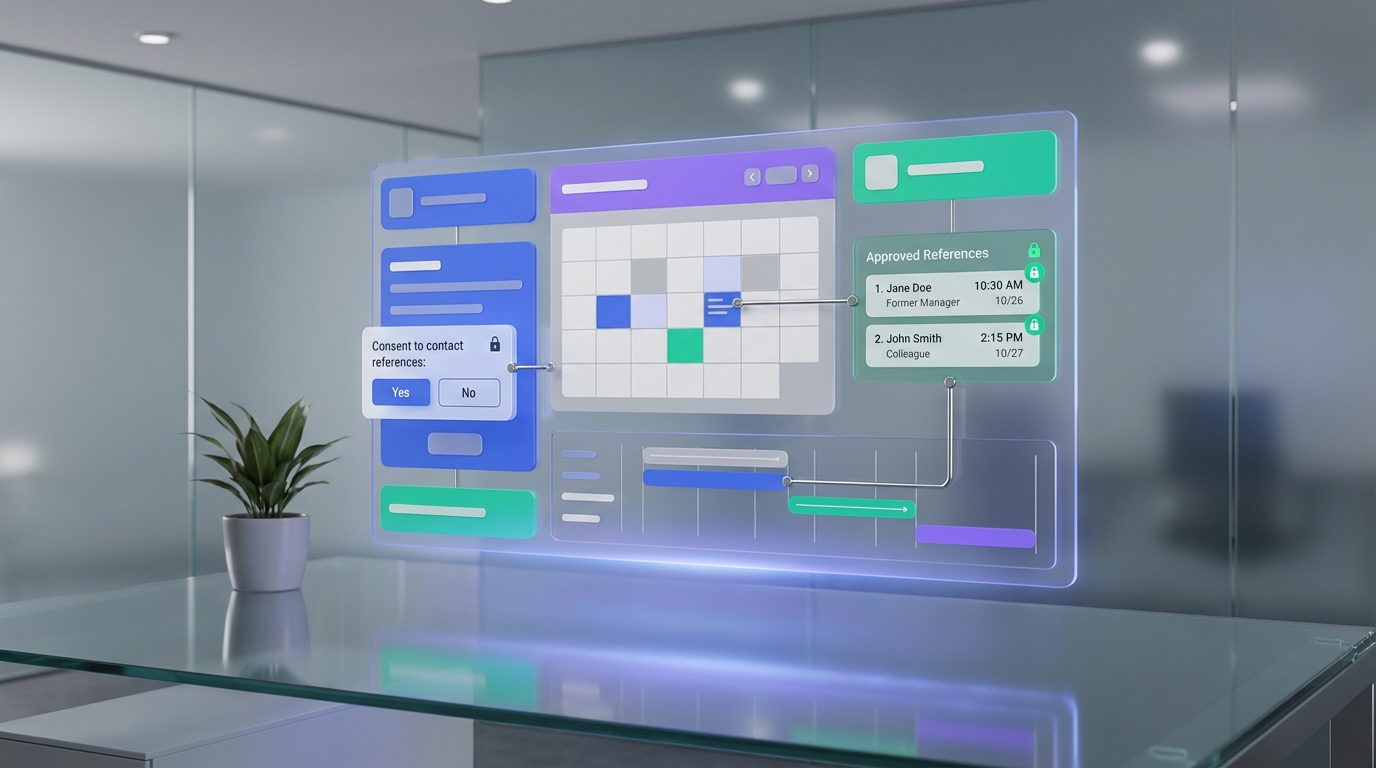
If you are using an interview scheduling app to keep your interview schedule moving, the most important safeguard is not a calendar feature. It is consent. In a tight knit industry, it can feel efficient to call someone you know who used to work with a candidate. In practice, that is a high risk move. The correct approach is to get explicit permission, keep a written record, and schedule reference checks only after consent is confirmed. This article focuses on that workflow and how to operationalize it for small teams using the best scheduling software for small business style processes.
Key Takeaways
- Do not contact unauthorized references: Only contact people the candidate explicitly approved, and keep a written record of that approval.
- Confidentiality is part of candidate trust: Leaks in a small market can harm the candidate and damage your employer reputation.
- Make consent a required step: Your interview scheduling app should not allow reference checks to be scheduled until consent is captured.
- Use structured fields: Track “approved references,” “do not contact,” and “reason for restriction” as separate fields, not free text.
- AI can reduce scheduling friction: StrategyBrain AI Recruiter can handle initial LinkedIn outreach and follow up, while humans keep control of reference checks and final decisions.
- Document everything: A simple paper trail is often the difference between a clean process and a compliance headache.
A compliant interview schedule workflow you can run every time
This is a repeatable process you can use whether you are hiring 2 people per quarter or 20 people per month. It is written to be easy to implement in the best scheduling software for small business setups, where you may not have a dedicated compliance team.
Step by step process
- Ask for references and consent in writing
Collect the names, relationship, and contact details for each reference, plus explicit permission to contact them. If the candidate says a specific person should not be contacted, record that restriction. - Confirm boundaries when you recognize a mutual contact
If you realize you know someone who worked with the candidate, ask the candidate whether that person can be used as a reference. If the answer is no, do not push past it. Ask for an alternative reference instead. - Schedule reference checks only after consent is verified
Reference checks should be a scheduled stage in your interview schedule, not an ad hoc phone call. The scheduling trigger is “consent verified,” not “I happen to know someone.” - Keep a paper trail
Store the consent record with the candidate file. The goal is simple: if someone asks “who approved this contact,” you can answer with a timestamped record. - Escalate unclear situations
If a candidate refuses a reference and the reason is unclear, treat it as a signal to investigate through standard, authorized channels. Do not “solve” uncertainty by calling around informally.
Scope boundaries
This article is about process design and operational safeguards. It is not legal advice. If you operate in multiple regions, confirm your reference checking policy with qualified counsel and align it with your privacy and employment practices.
How to configure your interview scheduling app to enforce consent
An interview scheduling app is most valuable when it prevents “fast but risky” behavior. Below is a configuration checklist you can apply to most scheduling and ATS setups.
Configuration checklist (copy and use)
- Required field: “Consent to contact references received” with values Yes or No.
- Structured list: “Approved references” as a list of people with role, relationship, and contact method.
- Restriction field: “Do not contact” list with a short reason field.
- Stage gate: Block scheduling of “Reference Check” events unless consent is Yes.
- Audit log: Ensure edits to consent and reference fields are logged with user and timestamp.
- Templates: Use standardized messages for requesting references and confirming consent.
Why this works for small teams
Small businesses often choose the best scheduling software for small business based on speed and simplicity. The trick is to keep the workflow simple while still enforcing the one rule that matters. A single stage gate can eliminate most unauthorized reference mistakes.
Where StrategyBrain AI Recruiter fits in a modern workflow
Scheduling is only one part of hiring friction. The other part is the back and forth that happens before a candidate is ready to book time. StrategyBrain AI Recruiter is designed for LinkedIn hiring workflows where the system can handle repetitive outreach and early conversation steps, then hand off qualified, interested candidates to your team for interviews and reference checks.
What we use it for before the interview schedule fills up
- Automated LinkedIn outreach and follow up: It can connect with candidates that match your criteria and start the initial conversation.
- Interest confirmation: It can confirm whether the candidate is open to interviewing before you spend time scheduling.
- Q and A coverage: It can answer common questions about the role, company, compensation, and benefits using the information you provide.
- Resume and contact collection: For interested candidates, it can request resumes and capture contact details for recruiter review.
- Multilingual communication: It can communicate in the candidate’s native language, which helps reduce misunderstandings across time zones.
What it does not replace
StrategyBrain AI Recruiter does not make the final qualification decision based on resume fit. Your recruiter or hiring manager still reviews resumes, runs interviews, and conducts reference checks using the consent based workflow described earlier.
How this improves compliance indirectly
When early stage communication is consistent and documented, teams are less likely to rely on informal side channels. In other words, you can keep the process inside your system of record, then use your interview scheduling app to run a clean, auditable interview schedule that includes authorized reference checks only.
Common mistakes and fixes
Mistake 1: Treating “I know someone” as permission
Fix: Ask the candidate directly whether that person can be a reference. If the answer is no, stop there and request an alternative.
Mistake 2: Doing reference checks off the calendar
Fix: Make reference checks a scheduled stage in your interview schedule with a consent gate in your interview scheduling app.
Mistake 3: Storing consent in a chat thread only
Fix: Copy the consent outcome into a structured field with a timestamp. Chat logs are useful, but they are not a reliable control.
Mistake 4: Over collecting information
Fix: Collect only what you need for the hiring decision and store it securely. Keep access limited to people who need it for the process.
FAQ
Can I contact a reference I found through my network if the candidate did not list them?
No. Only contact references the candidate explicitly approved. If you recognize a mutual contact, ask the candidate for permission first and document the answer.
What should I do if a candidate says a specific person cannot be contacted?
Respect the boundary and ask for an alternative reference. Record the restriction in your system so no one contacts that person later by mistake.
How do I build consent into an interview scheduling app workflow?
Create a required “consent received” field and block scheduling of reference check events until it is marked Yes. Also store an approved reference list as structured data, not free text.
Does an interview scheduling app reduce legal risk by itself?
Not automatically. Risk goes down when the app enforces your policy through stage gates, required fields, and audit logs.
Is this only relevant for large companies?
No. Small businesses often face higher reputational risk in tight markets because word travels quickly. A simple, consistent workflow is usually enough.
How does StrategyBrain AI Recruiter help with scheduling?
It helps before scheduling by automating LinkedIn outreach, answering candidate questions, confirming interest, and collecting resumes and contact details. Your team then schedules interviews and runs consent based reference checks.
Does StrategyBrain AI Recruiter decide if a candidate is qualified?
No. It can identify willingness to communicate or interview and gather information, but final qualification based on resume fit remains a human decision.
What is the minimum documentation I should keep for reference checks?
Keep the approved reference list, the consent confirmation, and a timestamped record of who contacted whom and when. This is the core paper trail most teams need.
Conclusion
An interview scheduling app is a powerful way to keep your interview schedule organized, but the safest hiring teams treat consent as a hard gate, not a courtesy. Get explicit permission, document it, and schedule reference checks as a defined step. If you also want to reduce the pre scheduling back and forth, StrategyBrain AI Recruiter can automate LinkedIn outreach and early candidate conversations so your recruiters spend more time on interviews, evaluation, and compliant reference checks.
Next step: Add the consent gate and approved reference fields to your scheduling workflow today, then run your next 5 candidates through the same process to confirm it works under real time pressure.