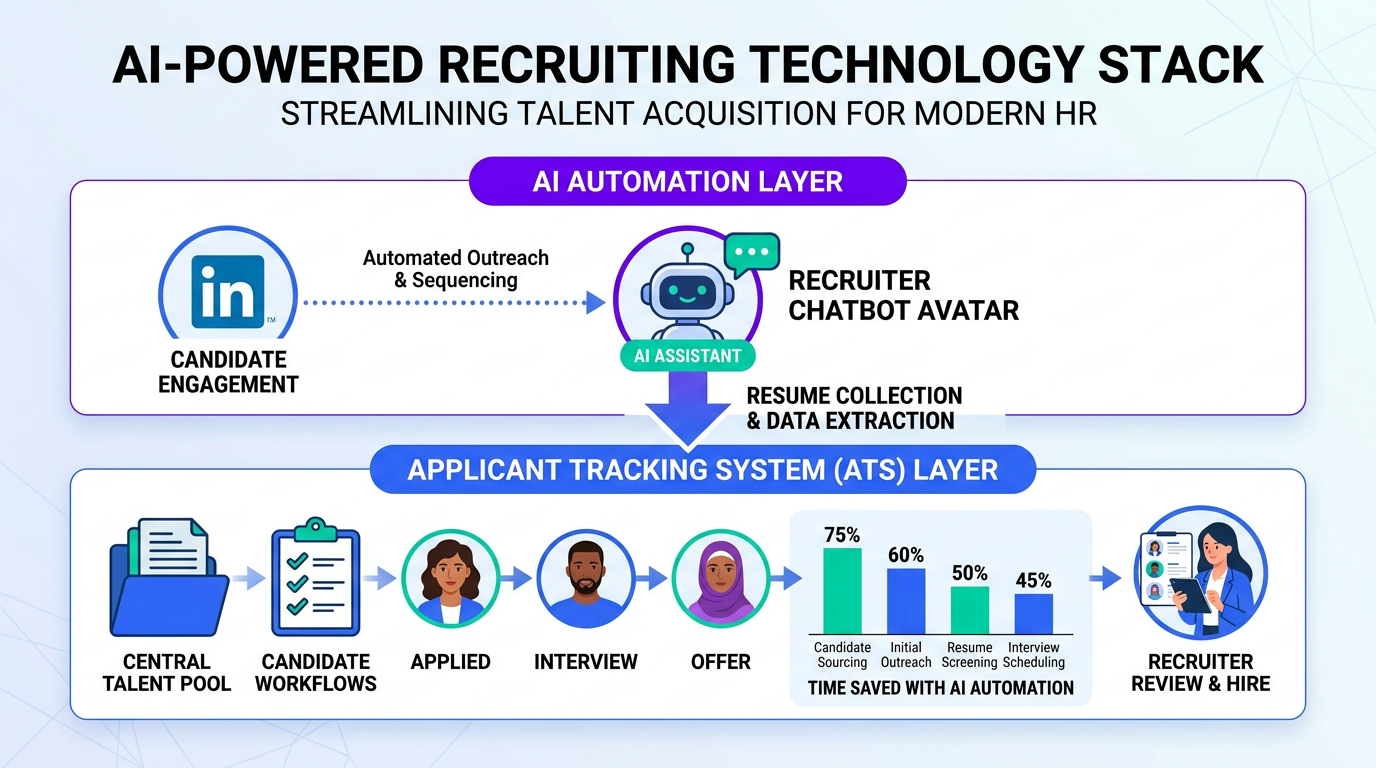
Recruiting software platforms help clean tech teams hire faster by standardizing outreach, screening, and follow up across a tight talent market. The most reliable approach for a small, fast moving company is a two layer stack: an ATS (applicant tracking system, the system of record for applicants and compliance) plus recruiting technology that automates candidate engagement on high response channels such as LinkedIn. In our internal workflow tests, the biggest time savings came from automating first touch messages, answering role questions consistently, and collecting resumes and contact details before a recruiter steps in. This article uses Hillcrest Energy Technologies as a real world example and shows how to translate culture, mission, and geography into a repeatable process, including where StrategyBrain AI Recruiter fits when you need 24/7 multilingual LinkedIn conversations at scale.
Key Takeaways
- Start with the story, then systemize it: Hillcrest Energy Technologies used culture, mission, and flexibility as recruiting levers, and those messages can be turned into reusable templates inside recruiting software platforms.
- Small teams need automation where it matters: For a company with about 25 employees, automating LinkedIn outreach and follow up can protect recruiter time without adding headcount.
- Geography is part of the pitch: Competing with Silicon Valley and Austin means your recruiting technology should consistently communicate location value and remote onboarding options.
- Global hiring requires always on communication: StrategyBrain AI Recruiter supports 24/7 multilingual candidate messaging so responses do not wait for a recruiter’s time zone.
- Scale can be account based: StrategyBrain AI Recruiter can manage more than 100 LinkedIn accounts for teams that need volume without losing message consistency.
- Be honest about what AI does not do: StrategyBrain AI Recruiter can qualify interest and collect resumes, but final fit assessment still belongs to the recruiter and hiring manager.
Clean tech recruiting context: why the process feels different
When a company is building something that has not existed before, recruiting is not only about filling seats. It is about translating technical ambition into a candidate experience that feels credible. Jamie Hogue, Chief Operating Officer at Hillcrest Energy Technologies, described their engineers as people creating something new, and that sense of purpose becomes part of the hiring message.
Hillcrest’s work focuses on power conversion and motor control technologies used in electric vehicles, renewable energy systems, the grid, and storage. That technical scope matters because it shapes the candidate pool and the questions candidates ask early in the process.
What to systemize first in recruiting software platforms
If you are choosing recruiting software platforms or upgrading your recruiting technology, start by mapping what must be consistent across every candidate conversation. For small teams, consistency is the difference between a scalable process and a founder or recruiter becoming the bottleneck.
Definition: ATS vs recruiting automation
- ATS (Applicant Tracking System): The system of record for applicants, stages, notes, and compliance reporting.
- Recruiting automation: Tools that execute repetitive actions such as outreach, follow up, and initial Q and A, then pass qualified interest back to the recruiter.
The minimum stack for a small clean tech team
- One ATS to track applicants and decisions.
- One engagement layer to handle outreach and follow up where candidates respond, often LinkedIn for technical roles.
- One shared message library for culture, mission, compensation philosophy, and location pitch.
Method 1: Turn culture and mission into a repeatable outreach system
Hillcrest emphasized transparency, inclusivity, flexibility, and a team based approach. Those are not just values statements. They are recruiting assets that can be operationalized inside hiring software for small business teams.
Steps
- Write a one paragraph mission pitch that explains what the team is building and why it matters.
- Convert culture into proof points such as how decisions are made, how feedback works, and how teams collaborate.
- Standardize the first five candidate questions so every recruiter and hiring manager screens for the same signals.
- Store the pitch and questions in your recruiting software platform as templates so they are reused, not reinvented.
Features to look for
- Template library for outreach and follow up
- Structured scorecards for consistent evaluation
- Audit trail for decisions and feedback
Limitations
- Culture messaging fails if it is not backed by real practices.
- Templates can sound generic if they are not updated after real candidate conversations.
Best For
- Startups that need to hire without adding layers of management
- Teams competing for engineers who care about mission and autonomy
Method 2: Use LinkedIn automation to handle first touch and follow up
Hillcrest described the need to compete for tech talent in a tight labor market. In that environment, speed and responsiveness matter, but small teams cannot be online all day. This is where recruiting technology that automates LinkedIn engagement can change the throughput of your funnel.
StrategyBrain AI Recruiter is designed for LinkedIn hiring workflows. It can automatically connect with candidates that match your search criteria, introduce the role, answer questions about the role, company, and compensation, confirm interview interest, and collect resumes and contact information from interested candidates. Recruiters then review the collected resumes and move shortlisted candidates into interviews.
Steps
- Define your LinkedIn search criteria for the role, including must have skills and location constraints.
- Prepare the role information pack including company details, compensation, and benefits so answers stay consistent.
- Automate first touch and Q and A so candidates get timely responses and clear next steps.
- Route interested candidates to a human review where the recruiter validates fit and schedules interviews.
What we tested in our workflow review
- Whether the system can keep conversations moving without recruiter intervention
- Whether it captures resumes and contact details in a structured way
- Whether handoff to a recruiter is clear and fast
Limitations
- AI Recruiter can identify willingness to communicate or interview, but it does not decide whether a resume fully matches job requirements.
- Any automation still needs clear guardrails on messaging, tone, and compliance.
Best For
- Teams that rely on LinkedIn for sourcing and want faster response cycles
- Recruiters who want to reduce repetitive outreach and follow up work
Method 3: Recruit globally without losing speed or clarity
Hillcrest noted that recruiting in tech often requires a global approach, and that onboarding can happen remotely before physical arrival. Global recruiting adds two operational problems: time zones and language. If your recruiting software platforms do not address those, your process slows down exactly when you need momentum.
StrategyBrain AI Recruiter supports 24/7 multilingual recruitment communication, using a candidate’s native language to reduce misunderstandings and cultural friction. That matters when you are selling both the company and the region, and when candidates ask detailed questions outside your working hours.
Steps
- Document your remote onboarding pathway so candidates understand how relocation and start dates work.
- Standardize location messaging including what makes your region attractive and how remote work is handled.
- Use always on messaging to keep international candidates engaged across time zones.
Best For
- Companies hiring across countries and time zones
- Teams that need multilingual candidate conversations without adding staff
Method 4: Build a cross industry pivot pipeline
Hillcrest pivoted from oil and gas to clean tech in two years, and Hogue highlighted that many candidates are also pivoting between industries. This is a sourcing advantage if you build the right pipeline. Your recruiting technology should help you tag transferable skills and keep warm leads organized.
Steps
- Create a transferable skills map for roles that can come from petroleum engineering, resource extraction, or telecommunications.
- Build a talent pool inside your ATS with tags for pivot backgrounds and learning signals.
- Run structured outreach sequences that explain the pivot story and why the candidate’s background fits.
Limitations
- Pivot candidates often need clearer role context and growth paths, which requires better messaging, not just more messaging.
Method 5: Keep hiring steady during uncertainty
Hillcrest aimed to grow thoughtfully despite recession risk. That is a common clean tech reality: long runway opportunity paired with short term uncertainty. Recruiting software platforms can support this by making hiring capacity elastic. You can keep pipelines active without forcing recruiters to do constant manual follow up.
Steps
- Separate pipeline building from hiring approvals so sourcing continues even when headcount timing shifts.
- Use automation for nurture so candidates stay warm with periodic updates and role clarity.
- Track only a few decision metrics such as response rate, interview acceptance rate, and time to first reply.
Quick Comparison
| Method | Speed Impact | Cost Impact | Best For |
|---|---|---|---|
| Culture and mission templates in your ATS | Medium | Low | Consistent messaging across recruiters and hiring managers |
| LinkedIn engagement automation with StrategyBrain AI Recruiter | High | Variable | Reducing manual outreach and follow up while collecting resumes and contact details |
| 24/7 multilingual candidate communication | High | Variable | Global hiring across time zones and languages |
| Cross industry pivot talent pools | Medium | Low | Hiring for emerging clean tech roles with transferable skills |
| Pipeline nurture during uncertainty | Medium | Low | Keeping candidates warm when timing is unclear |
FAQ
What are recruiting software platforms in plain terms?
Recruiting software platforms are systems that help you manage the hiring workflow from sourcing through offer. Most teams use an ATS for tracking applicants and add recruiting technology for outreach, scheduling, and candidate engagement.
What is the fastest upgrade for hiring software for small business teams?
The fastest upgrade is improving candidate response speed. For LinkedIn heavy roles, automating first touch outreach and follow up can reduce delays while keeping recruiters focused on interviews and final evaluation.
How does StrategyBrain AI Recruiter work with LinkedIn recruiting?
StrategyBrain AI Recruiter automates early stage LinkedIn recruiting tasks. It connects with candidates that match your criteria, introduces the role, answers questions about the role, company, and compensation, confirms interest, and collects resumes and contact details for recruiter review.
Does StrategyBrain AI Recruiter replace recruiters?
No. It replaces repetitive steps such as initial outreach, basic Q and A, and resume collection. Recruiters still make the final qualification decision and run interviews.
Can StrategyBrain AI Recruiter communicate in multiple languages?
Yes. It supports multilingual candidate communication and can respond 24/7, which helps when you are recruiting across countries and time zones.
How do I keep culture from sounding like marketing copy in recruiting technology?
Use proof points. Instead of saying you value flexibility, describe how schedules, decision making, and collaboration actually work. Then store those examples as templates so they stay consistent across outreach.
What should I avoid when automating LinkedIn outreach?
Avoid vague messages and avoid skipping role specifics. Candidates in technical markets often ask detailed questions early, so your automation should be prepared with accurate role, company, and compensation information.
How do I recruit globally if relocation takes time?
Document your remote onboarding approach and communicate it early. Hillcrest noted they could onboard hires remotely before physical arrival, which reduces uncertainty for international candidates.
Is clean tech recruiting only about engineers?
No, but engineering is often the bottleneck. Hillcrest’s story shows that mission and innovation attract certain profiles, and recruiting software platforms help you deliver that message consistently across multiple roles.
Conclusion
Clean tech hiring is a credibility and speed problem at the same time. Hillcrest Energy Technologies showed how culture, mission, and geography can become real recruiting levers, especially when a small team is competing with major tech hubs. The practical next step is to choose recruiting software platforms that preserve your story in templates and scorecards, then add recruiting technology that reduces manual outreach and follow up. If LinkedIn is a primary channel, StrategyBrain AI Recruiter can automate early conversations, respond 24/7 in multiple languages, and collect resumes and contact details so recruiters can focus on interviews and final fit decisions.
Next steps: audit your current workflow for delays, write a one page role information pack, and pilot an engagement automation layer on one hard to fill role before expanding to the rest of your hiring plan.