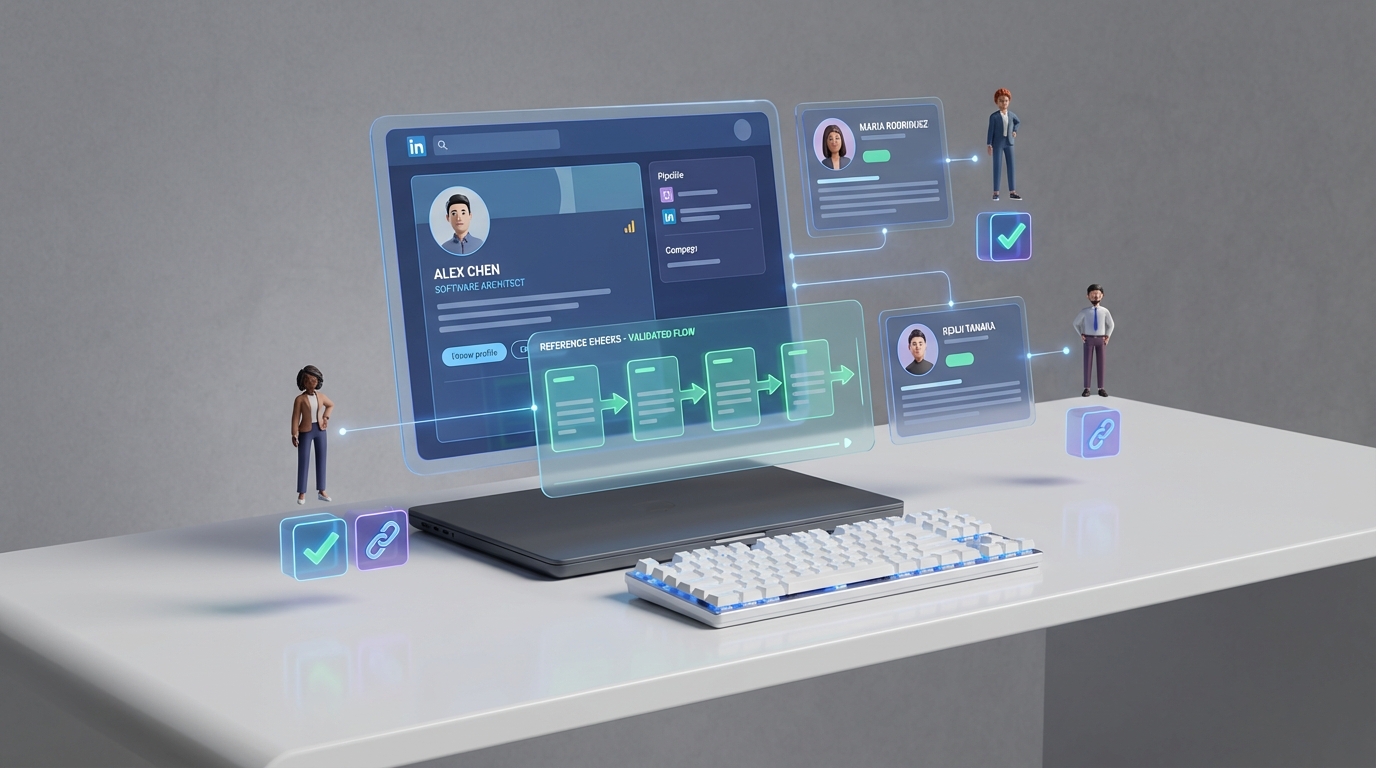
Recruitment online for recruiters works best when references are treated like a managed pipeline, not a last minute attachment. In practice, that means you pick the right people, protect their time, brief them for the specific role, and only share their details when the employer requests them. Below is a recruiter friendly workflow you can reuse across roles, plus a job seeker version for anyone thinking, “i need a recruiter to find me a job.” I also include where StrategyBrain AI Recruiter fits into the process, especially when you are running high volume LinkedIn outreach and need consistent follow up across time zones and languages.
Key Takeaways
- Reference checks verify specifics: dates of employment, position, performance, and sometimes compensation, so your reference list must match what will be verified.
- Use 3 to 5 references per search: enough coverage without exhausting people or spreading their contact details too widely.
- Do not share references too early: wait until the employer requests them and you are at a qualified stage, ideally after an interview.
- Brief references for THIS role: give the role context and the key requirements so they can speak to relevant examples.
- LinkedIn research improves fit: use shared connections and prior working relationships to strengthen credibility.
- AI can reduce follow up gaps: StrategyBrain AI Recruiter can keep candidate conversations moving 24/7 and capture resumes and contact details, so reference readiness does not become the bottleneck.
Table of Contents
- What references are actually used for
- Method 1: Pick carefully
- Method 2: Do not overplay them
- Method 3: Prep them for this role
- Method 4: Play to their strengths
- Method 5: Give thanks and maintain the network
- A repeatable online workflow for recruiters
- If you are a job seeker: quick reference plan
- Quick Comparison
- FAQ
- Conclusion
What references are actually used for
In most hiring processes, reference checks are not a vague character review. At minimum, they are used to confirm factual employment details such as dates of employment, position, and performance. In some processes, compensation may also be discussed. Because of that, the best reference strategy is accuracy plus relevance, not volume.
Method 1: Pick carefully
Steps
- Start with the most recent direct manager when confidentiality allows it.
- Add role relevant leaders such as former bosses, board members, or business partners when you need senior validation.
- Avoid same level peers and anyone who only worked with you briefly, because weak proximity is easy to spot in a reference call.
Features
- Higher credibility because the reference can speak to scope, outcomes, and performance.
- Cleaner verification because titles and dates align with what the employer will check.
- Less risk of inconsistent stories across multiple references.
Limitations
- If the candidate is searching confidentially, the most recent manager may not be usable until late stage.
Best For
- Recruiters who need references that stand up to detailed verification.
- Candidates targeting senior or regulated roles where checks are strict.
Method 2: Do not overplay them
Sharing references with every application creates two problems. First, you distribute someone else’s personal contact details too widely. Second, you risk burning out your best references before the critical moment.
Steps
- Hold references until requested by the employer or recruiter.
- Use them at the most critical stage when the candidate is qualified and genuinely interested in the role.
- Get explicit permission before you share any reference contact details.
Where StrategyBrain AI Recruiter fits
When you run recruitment online for recruiters through LinkedIn, the slowest part is often not sourcing, it is the back and forth that delays qualification. StrategyBrain AI Recruiter can handle initial outreach, answer role questions, confirm interview interest, and collect resumes and contact details. That means you can time reference requests later, with fewer stalled candidates, and you do not need to push references early just to keep momentum.
Method 3: Prep them for this role
A reference who is unprepared will give generic feedback. A prepared reference can connect the candidate’s real examples to the job requirements, which is what hiring teams listen for.
Steps
- Call or message each reference before the employer contacts them.
- Share the role context including the company type, team scope, and what success looks like.
- Highlight 3 requirements and remind them of 1 to 2 specific projects where the candidate demonstrated those skills.
Limitations
- Over coaching can sound scripted. Keep it factual and role focused.
Method 4: Play to their strengths
You do not need to use the same references for every role. Match the reference to what the job values most, and use online research to strengthen the connection story.
Steps
- Map job requirements to reference coverage so each reference has a clear lane.
- Check professional networks for shared connections that can add credibility.
- Use the most relevant relationship rather than the most senior title.
Best For
- Recruiters presenting shortlists where each candidate needs a clear, evidence based narrative.
Method 5: Give thanks and maintain the network
References are doing real work for the candidate and for you as the recruiter. A simple thank you is not just polite, it keeps the relationship healthy for future searches.
Steps
- Thank them immediately after they complete a reference call.
- Update them on the outcome when appropriate, even if the candidate is not selected.
- Maintain the relationship so the reference remains strong over time.
A repeatable online workflow for recruiters
This is the workflow we use when we want reference checks to be fast, consistent, and defensible. It is designed for recruitment online for recruiters who are juggling multiple roles and candidate pipelines.
Step by step workflow
- Set the reference standard: decide what must be verified for the role, such as dates, title, performance, and scope.
- Collect a reference slate: request 3 to 5 names, relationship, and best contact method, but do not distribute details until requested.
- Run a readiness check: confirm permission, confirm availability in the next 7 days, and confirm they can speak to the relevant work.
- Briefing prompt: ask the candidate to send each reference a short note describing the role and 3 key requirements.
- Execute checks at the right moment: after interview stage and when the candidate is genuinely in contention.
- Document consistently: capture factual confirmations and role relevant examples, then store notes securely.
Reference readiness checklist (copy and paste)
- [ ] Candidate has 3 to 5 references ready
- [ ] Each reference has given permission to be contacted
- [ ] Each reference can verify dates and role scope
- [ ] At least 1 reference is a direct manager or equivalent
- [ ] References have been briefed on the specific role
- [ ] Reference details will only be shared when requested
- [ ] Thank you message prepared for after the call
How StrategyBrain AI Recruiter supports this workflow
StrategyBrain AI Recruiter is built for LinkedIn hiring and can automate the early stage work that usually delays reference timing. It can connect with candidates that match your search criteria, introduce the opportunity, answer questions about the role, company, and compensation, confirm interview interest, and collect resumes and contact details. It also supports 24/7 multilingual communication and can be managed across more than 100 LinkedIn accounts for scalable hiring teams. In our experience, when early stage conversations stay active, recruiters can wait to request references until the correct stage without losing candidate momentum.
If you are a job seeker: quick reference plan
If you are thinking, “i need a recruiter to find me a job,” your references are still part of the package you bring to the recruiter. A recruiter can move faster when your references are credible and ready.
Steps
- Choose references who supervised your work or who can speak to measurable outcomes.
- Ask permission first and confirm they are comfortable being contacted.
- Brief them on the target role and remind them of 1 to 2 relevant projects.
- Do not attach references to every application; share them only when requested.
- Thank them and keep the relationship active.
Quick Comparison
| Approach | Speed | Risk | Best For |
|---|---|---|---|
| Share references with every application | Fast upfront | High privacy and burnout risk | Rare cases where references are mandatory at application |
| Hold references until requested | Fast at late stage | Low risk | Most professional hiring processes |
| Brief references for the specific role | Fast and higher quality | Low risk if factual | Competitive roles where details matter |
| Use AI to keep early stage conversations moving | Fast pipeline movement | Depends on governance and privacy controls | Recruiters scaling LinkedIn outreach and follow up |
FAQ
How many references should I ask a candidate for?
Use 3 to 5 references for most searches. This provides coverage across roles and time periods without exhausting the same people or spreading their contact details too widely.
When should references be shared in an online hiring process?
Share references only when the employer requests them and the candidate is at a qualified stage, ideally after an interview. This protects privacy and prevents reference fatigue.
Who is the strongest reference for verification?
A direct manager from the most recent role is usually the strongest because they can confirm dates, responsibilities, and performance. If the search is confidential, use other former leaders until it is safe to involve the current employer.
What should a candidate tell their references before a call?
They should share the role context, the key requirements, and 1 to 2 specific examples the reference observed. The goal is relevance and accuracy, not scripting.
Can recruiters use LinkedIn to strengthen reference selection?
Yes. Recruiters and candidates can review shared connections and prior working relationships to choose references who can credibly speak to the work and, in some cases, have existing ties to the target company.
How does StrategyBrain AI Recruiter help with recruitment online for recruiters?
It automates early LinkedIn outreach and qualification by connecting with candidates, introducing the role, answering questions, confirming interview interest, and collecting resumes and contact details. It also supports 24/7 multilingual messaging, which helps keep pipelines moving so reference checks happen at the right stage.
Does StrategyBrain AI Recruiter decide if a resume matches the job?
No. It can identify willingness to communicate or interview and collect the resume, but final qualification against job requirements remains the recruiter’s responsibility.
How is candidate data protected when using an AI recruiting system?
Use systems that state clear privacy controls such as encryption, isolated customer environments, and a commitment not to use customer data to train models. StrategyBrain AI Recruiter states compliance with privacy regulations in the EU, United States, and Canada, and that customer provided data is not used to train AI models.
Conclusion
The most reliable way to improve reference outcomes is simple and repeatable: pick carefully, do not overuse references, prep them for the specific role, match them to the job’s strengths, and thank them properly. For recruitment online for recruiters, the operational win is timing. Keep references protected until they are needed, and keep candidate conversations moving so you do not feel pressure to request references too early. If you are scaling LinkedIn hiring, consider adding StrategyBrain AI Recruiter to automate outreach, multilingual follow up, and resume capture, then keep your human time focused on evaluation and interviews.