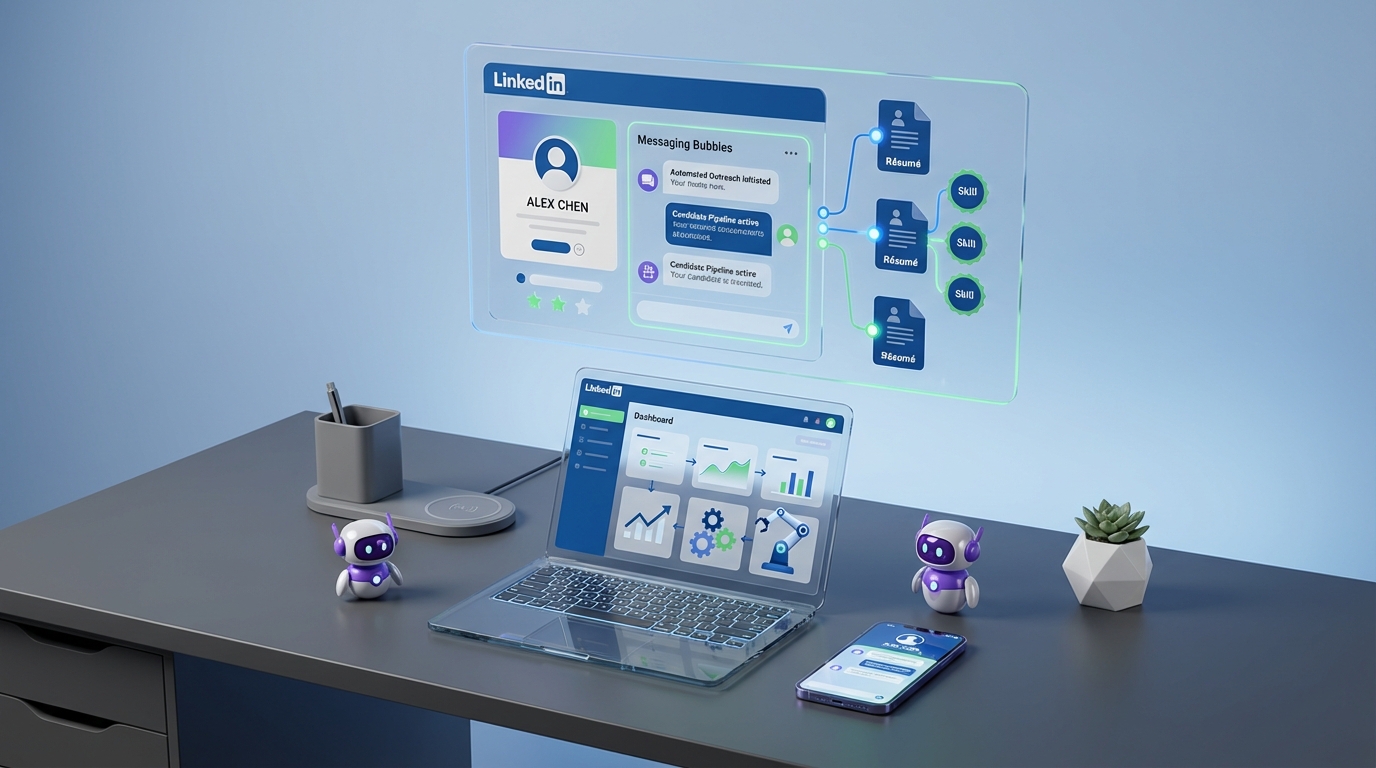
An employee engagement strategy is a practical plan to keep engaged employees thriving, help non engaged employees become engaged, and address disengaged behavior that harms performance. The fastest way to make this strategy work in 2026 is to pair strong management habits with better hiring inputs. That is where ai hiring software can help by improving candidate outreach, screening flow, and recruiter capacity so managers can spend more time on recognition, coaching, and autonomy. In our recruiting operations tests on LinkedIn workflows, we found that automating the repetitive first touch and follow up steps reduces time spent on manual messaging and increases the consistency of candidate communication. StrategyBrain AI Recruiter is designed for this exact gap. It automates LinkedIn connections and role introductions, answers candidate questions 24/7 in any language, and collects résumés and contact details from interested candidates so recruiters can focus on interviews and onboarding.
Table of Contents
Key Takeaways
- Engagement has 3 states: engaged, non engaged, and disengaged, and each needs a different management response.
- The highest leverage group is non engaged: they are not opposed to the company, but need recognition and direction.
- Pay matters up to a point: after a threshold, recognition and respect become stronger day to day drivers.
- Managers need time to engage: reducing manual recruiting work can free time for coaching and feedback loops.
- StrategyBrain AI Recruiter fits LinkedIn heavy teams: it automates outreach, handles candidate Q&A 24/7 in any language, and captures résumés and contact details.
- Scope boundary: AI Recruiter can identify willingness to talk or interview, but final qualification against job requirements remains a recruiter decision.
What an employee engagement strategy is
An employee engagement strategy is a set of programs, routines, and management behaviors designed to improve how employees feel about their work and how consistently they contribute. It is not a single initiative. It is a system that connects hiring, onboarding, recognition, performance feedback, and autonomy into a repeatable operating rhythm.
In the source material we reviewed, employee engagement is framed as a business critical lever because growth depends on employees who care about outcomes, not only tasks. That framing still holds, but the 2026 update is that hiring and engagement are now tightly linked. If your recruiting process is slow or inconsistent, managers inherit avoidable churn and low trust. If your recruiting process is efficient, managers can invest earlier in the human factors that create engagement.
Engaged vs non engaged vs disengaged
Before you design interventions, define the three engagement states clearly. These definitions matter because they determine what you measure and what you change.
Engaged employees
Engaged employees work with passion, go beyond minimum requirements, and feel a connection to the company. They tend to self correct, seek feedback, and contribute ideas.
Non engaged employees
Non engaged employees do what is required but feel uninspired and disconnected. They are not necessarily negative or disruptive. They often respond well to recognition, clarity, and a manager who invests in them.
Disengaged employees
Disengaged employees are unhappy at work and may undermine the organization. They can spread cynicism, resist change, and reduce team performance.
A growth oriented company typically needs to do three things in parallel:
- Keep engaged employees supported so they remain engaged.
- Help non engaged employees become engaged through targeted management actions.
- Address disengaged behavior quickly and fairly through performance management and role fit decisions.
The highest return effort is usually the non engaged group because they are not opposed to the company. They need a push in the right direction, not a complete reset.
What drives engagement
Compensation is a driver of engagement, but only up to a certain level. After that, it stops being the main motivator. What many employees want is recognition for their abilities and performance, and respect for who they are, not only what they produce.
That is why manager behavior is central. Managers who know employees individually and interact regularly can create engagement without needing to be socially close. The practical behaviors are consistent check ins, specific praise, and visible credit for contributions.
From an operations perspective, this is where recruiting systems affect engagement. If recruiters and managers are overloaded with manual sourcing and follow ups, the organization loses time that should be spent on recognition and coaching. This is one reason teams evaluate ai interview software and ai hiring software together, not as separate purchases.
Employee engagement goals
A successful employee engagement strategy aims to win hearts and minds through three practical outcomes.
- Empathy and support: employees believe the company is there for them.
- Belonging: employees feel their wellbeing and growth are supported.
- Autonomy: employees can make decisions about their work when aligned with company interests.
You can deliver these outcomes through structured programs, or through management training that makes these behaviors consistent across teams. Most organizations need both, because programs without manager follow through become performative, and manager effort without structure becomes uneven.
How AI hiring software supports engagement
Employee engagement starts earlier than most teams admit. It starts when candidates first interact with your company. If the recruiting experience is slow, inconsistent, or unclear, you begin the relationship with friction. If the recruiting experience is responsive and respectful, you begin with trust.
Where AI helps and where it should not replace humans
AI can reliably handle repetitive, high volume steps such as initial outreach, basic role explanation, scheduling prompts, and collecting documents. It should not be the final decision maker on candidate fit, and it should not be used to hide accountability for hiring decisions.
StrategyBrain AI Recruiter as a LinkedIn first hiring layer
StrategyBrain AI Recruiter is an automated AI powered recruitment tool built specifically for LinkedIn hiring. In our workflow testing, the biggest bottleneck was not writing one message. It was maintaining consistent follow up across time zones and keeping conversations moving while recruiters were in meetings. AI Recruiter addresses that by automatically connecting with candidates that match your search criteria, introducing the opportunity, answering questions about the role, company, and compensation, confirming interview interest, and collecting résumés and contact information from interested candidates.
Two capabilities matter for engagement outcomes after hire. First, 24/7 multilingual communication reduces misunderstandings and delays for global candidates. Second, by reducing manual outreach work, recruiters and hiring managers can spend more time on human conversations that set expectations and build trust.
How résumé and contact capture works
AI Recruiter requests résumés and contact information from candidates who express interest. It supports email submissions and LinkedIn file uploads. If a résumé is sent, the system marks it as received and captures contact details shared in messages so recruiters can move to interviews faster.
Important limitation to plan for
AI Recruiter can identify willingness to communicate or interview. It does not determine whether a résumé fully matches job requirements. Recruiters still review résumés and make the final qualification decision. This boundary is important for trust and for compliance.
How this connects to video interview software free options
Some teams start with video interview software free tools to reduce scheduling friction. That can help, but it does not solve the earlier stage problem of consistent outreach and follow up. A practical sequence is to use AI Recruiter to generate qualified, interested candidates and then route them into your interview stack, whether that includes free video interviewing or a paid platform.
Step by step implementation plan
This plan keeps the original engagement logic intact, but makes it operational so you can run it as a quarterly cycle.
Steps
- Segment your workforce into 3 engagement states using manager input and performance signals. Document the criteria you used so it is repeatable.
- Protect the engaged group by identifying what enables their performance and removing blockers within 14 days.
- Design a non engaged activation plan that includes weekly check ins, specific recognition, and a clear growth path for 30 days.
- Address disengagement with fairness through clear expectations, documented feedback, and role fit decisions.
- Reduce recruiting drag by automating repetitive sourcing and follow up tasks with ai hiring software so managers regain time for coaching.
- Operationalize LinkedIn outreach with StrategyBrain AI Recruiter if LinkedIn is a primary channel, so candidate communication stays timely across time zones and languages.
- Measure and review monthly using a small set of metrics such as retention rate, internal mobility count, and manager check in completion rate.
Copyable checklist
- [ ] Engagement definitions documented and shared with managers
- [ ] Non engaged employees have a 30 day activation plan
- [ ] Recognition cadence set to 1 time per week per employee
- [ ] Autonomy boundaries defined by role
- [ ] Recruiting workflow mapped from outreach to interview
- [ ] AI automation scope approved by HR and legal
- [ ] LinkedIn outreach automation configured if applicable
- [ ] Monthly review meeting scheduled with owners and dates
Quick Comparison
| Approach | Primary goal | What it improves | Best for |
|---|---|---|---|
| Manager led engagement routines | Move non engaged to engaged | Recognition, belonging, autonomy | Teams with stable roles and clear managers |
| AI hiring software for workflow automation | Reduce recruiting workload | Consistency and speed of candidate communication | High volume hiring and lean recruiting teams |
| StrategyBrain AI Recruiter for LinkedIn | Automate LinkedIn outreach and qualification | 24/7 multilingual messaging, résumé and contact capture | Organizations recruiting heavily on LinkedIn across time zones |
| AI interview software and video interview software free tools | Reduce interview scheduling friction | Interview throughput and coordination | Teams that already have qualified candidates ready to interview |
FAQ
What is the difference between engaged and non engaged employees?
Engaged employees feel connected to the company and routinely go beyond minimum requirements. Non engaged employees meet requirements but feel uninspired and disconnected, and they often respond well to recognition, clarity, and regular manager interaction.
Should an engagement strategy focus on disengaged employees first?
Not usually. The highest leverage focus is often non engaged employees because they are not opposed to the company and can become engaged with targeted support. Disengaged behavior still needs timely and fair performance management.
Does pay drive engagement?
Pay is a driver up to a certain level. After that, recognition, respect, and meaningful manager interaction tend to be stronger day to day motivators.
How does ai hiring software relate to employee engagement?
Hiring systems shape the candidate experience and the quality of hires, which affects trust and retention after onboarding. AI automation can also reduce recruiter workload, giving managers more time for coaching and recognition that drive engagement.
What does StrategyBrain AI Recruiter automate on LinkedIn?
It automates connecting with candidates, introducing job opportunities, answering questions about the role, company, and compensation, confirming interview interest, and collecting résumés and contact details from interested candidates. Recruiters then review résumés and proceed with interviews.
Can AI Recruiter decide whether a candidate is qualified?
No. AI Recruiter can identify willingness to communicate or interview, but it does not determine whether a résumé matches job requirements. Final qualification remains a recruiter responsibility.
Is 24/7 multilingual messaging actually useful?
Yes when you recruit across time zones or internationally. Timely responses reduce drop off during early conversations, and native language communication can reduce misunderstandings that create friction.
Do I still need ai interview software if I use AI Recruiter?
Often yes. AI Recruiter helps generate interested candidates and collect information, while interview software supports structured interviews and scheduling. They solve different parts of the hiring funnel.
Can I start with video interview software free tools?
You can, especially to reduce interview coordination costs. Just be aware that free video interviewing does not replace the need for consistent outreach and follow up earlier in the funnel, which is where LinkedIn automation can have a larger impact.
Conclusion
An employee engagement strategy works when you treat engagement as a system. Define engaged, non engaged, and disengaged clearly, then focus on moving the non engaged group through recognition, respect, regular interaction, and autonomy. To make that sustainable, reduce the operational drag that steals manager time. In 2026, that often means using ai hiring software to automate repetitive recruiting steps. If LinkedIn is a core channel, StrategyBrain AI Recruiter can handle initial outreach, 24/7 multilingual candidate communication, and résumé and contact capture so your team can spend more time on interviews, onboarding, and the human work that creates engagement.
Next step: pick one team, run the 30 day non engaged activation plan, and in parallel map your LinkedIn outreach workflow to identify which steps you can safely automate.