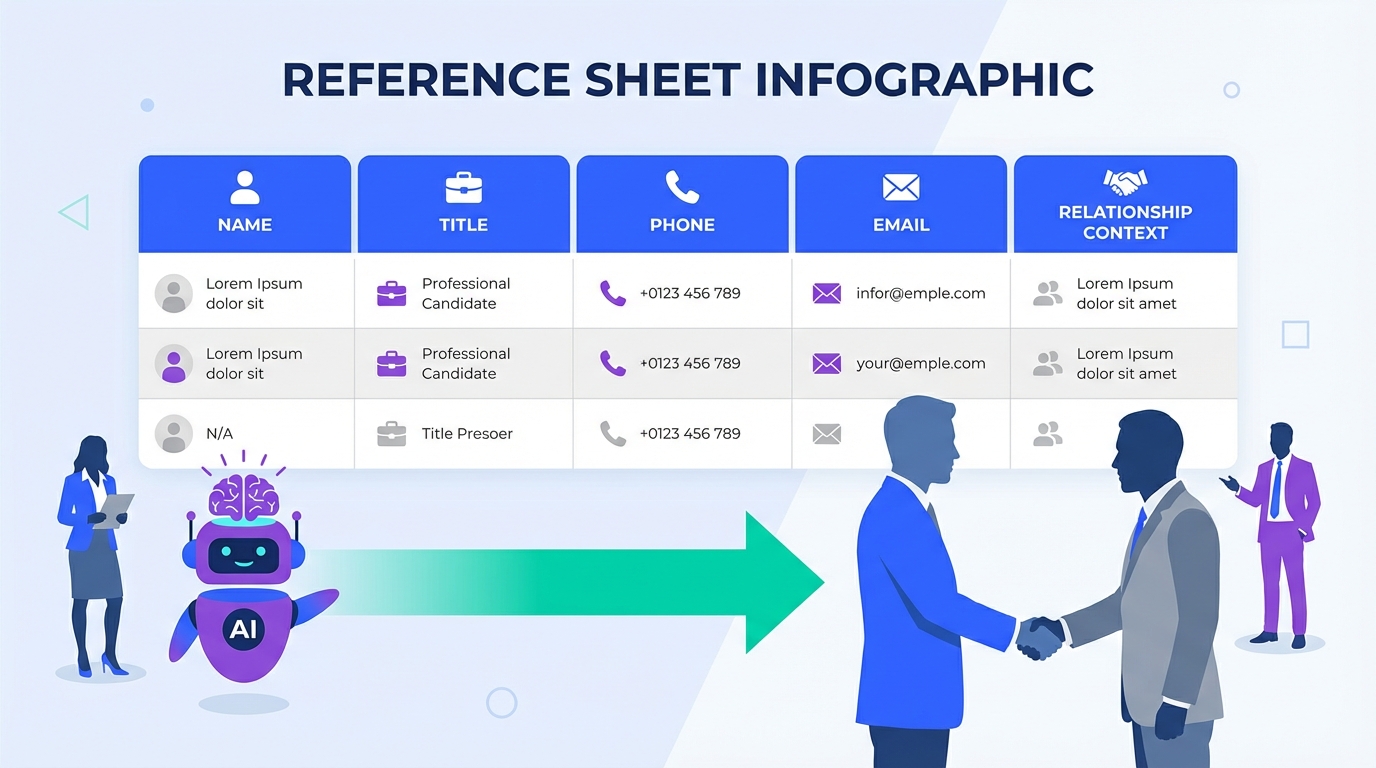
AI recruiting companies can speed up hiring, but references still decide many offers. The most reliable approach is to choose references who directly supervised your work, keep them current, and share them only when an employer requests them near the offer stage. In our recruiting workflows, we also see the best outcomes when candidates notify references in advance and provide a clean reference sheet with role, company, contact details, and relationship context. For teams using machine learning staffing and artificial intelligence recruitment agency support, pairing strong references with consistent, well documented outreach and screening reduces last minute risk. This guide explains how to pick references, when to include them, what to put on a reference sheet, and how AI assisted recruiting workflows like StrategyBrain AI Recruiter can reduce administrative load while keeping the human judgment that references provide.
Why references still matter in AI assisted hiring
Even when an artificial intelligence recruitment agency uses automation for sourcing, scheduling, and early screening, references remain one of the few inputs that can validate how you worked with real people over time. References can confirm outcomes, reliability, and how you fit into a team culture. That is why many employers still check references close to the offer stage.
In practice, AI recruiting companies tend to accelerate the front half of the funnel. The back half still depends on trust signals that are hard to infer from a resume alone. References are one of those signals, especially when they come from people who had accountability for your work.
How to choose references that hiring teams trust
The strongest references are usually direct or indirect supervisors. In the source material, a recruiting leader notes that supervisors tend to be more reliable than colleagues because colleagues can be curated while supervisors are harder to selectively choose. That distinction matters because reference checks are designed to reduce uncertainty, not to collect compliments.
Best reference types by career stage
- Experienced professionals: Current or recent managers, dotted line leaders, project leads with evaluation responsibility.
- Early career candidates: Professors, academic advisors, coaches, internship supervisors, or part time job supervisors.
- Career changers: Supervisors from transferable roles plus one reference who can speak to the new domain through a project, course, or contract.
Keep references current
A recurring concern in the source material is outdated references. One recruiter explicitly says they do not want to see references from 20 years ago because it signals the candidate has not kept their resume current. Older references can still help, but they should be paired with more recent supervisors so the story of your performance spans time.
What we see in real screening calls
When we review reference lists during screening, the most persuasive pattern is consistency across 10 to 15 years of employment. A small set of references that independently describe similar strengths and working style is more credible than a long list of loosely connected names.
Should you put references on a resume
For most candidates, do not list references directly on the resume. Employers typically request references near the end of the process, often just before an offer. Keeping references off the resume also protects your references’ privacy because their contact details are not distributed widely.
The phrase references available upon request is generally unnecessary because it is already assumed. Instead, keep a separate reference sheet ready so you can provide it quickly when asked.
Should you notify people before listing them
Yes. Notifying references is a professional courtesy and improves the quality of the reference check. Without notice, a reference can be caught off guard, which can lead to vague answers or delays. A quick heads up also confirms they are willing to speak and helps them recall the projects and outcomes you want them to emphasize.
When listing references can help
There are limited cases where listing references earlier can be useful. The source material highlights two scenarios.
- Students entering the workforce: When experience is limited, references from coaches, teachers, or supervisors can help you stand out.
- When a reference fills a credibility gap: If your resume lacks direct experience in a niche, a highly regarded reference from a relevant project can help you get a second look.
For most established professionals, it is still better to keep references on a separate sheet and share them only when requested.
What to include on a reference sheet
A reference sheet should be easy for a recruiter or hiring manager to use without follow up. At minimum, include the reference’s name, current title, company, phone number, email address, and a short description of your working relationship.
Reference sheet template
| Field | What to write | Example |
|---|---|---|
| Name | Full legal name | Jordan Lee |
| Title and company | Current role and employer | Engineering Manager, Acme Corp |
| Contact | Phone and email | Phone number, work email |
| Relationship | How you worked together | Direct manager for 18 months |
| Context | 1 sentence on scope | Led migration project and quarterly planning |
How to keep it current
- Update titles and companies every 90 days if you are actively interviewing.
- Keep 3 references ready for most roles and 4 references for leadership roles.
- Track supervisors you worked under and, when possible, keep letters of reference for your records.
Where StrategyBrain AI Recruiter fits in a modern workflow
Many teams searching for AI recruiting companies are really trying to solve a throughput problem. They need more qualified conversations without adding recruiter headcount. That is where automation can help, as long as it does not compromise candidate experience or compliance.
What StrategyBrain AI Recruiter automates
StrategyBrain AI Recruiter is built for LinkedIn hiring workflows. It automates the initial outreach and qualification steps by connecting with candidates that match your search criteria, introducing the role, answering questions about the company and compensation, confirming interview interest, and collecting resumes and contact details from interested candidates.
Why this matters for reference quality
In our experience, reference checks go smoother when the earlier stages are well documented. When outreach, role details, and candidate intent are captured consistently, the hiring team can focus reference conversations on performance and collaboration rather than re explaining basics. StrategyBrain AI Recruiter supports that consistency by handling repetitive messaging and follow up 24 hours a day in the candidate’s native language.
Scope boundary
StrategyBrain AI Recruiter can identify willingness to communicate or interview, but it does not decide whether a resume fully matches job requirements. Recruiters still make the final qualification decision after reviewing the resume and reference feedback.
Operational scale
For organizations building machine learning staffing capacity, StrategyBrain AI Recruiter supports managing more than 100 LinkedIn accounts so teams can scale outreach while keeping a consistent process.
Quick checklist you can copy
- Pick supervisors first: Choose direct or indirect managers when possible.
- Use current references: Include at least 1 supervisor from the last 24 months.
- Notify references: Ask permission and share the job context before listing them.
- Do not put references on the resume: Keep a separate reference sheet.
- Protect privacy: Share reference contact details only when requested.
- Prepare your AI assisted workflow: Use consistent outreach and follow up so late stage checks are easier to run.
FAQ
Do AI recruiting companies still check references
Yes. AI can speed up sourcing and screening, but references are still commonly used near the offer stage to validate performance, reliability, and collaboration.
Who are the best references for most roles
Direct or indirect supervisors are usually the strongest because they can speak to outcomes and accountability. For early career candidates, professors, advisors, or coaches can be appropriate.
Should I include references on my resume
Usually no. Keep a separate reference sheet and provide it only when requested. This also protects your references’ privacy.
Is it okay to use references from 20 years ago
Older references can be included, but they should be paired with recent supervisors. A list that is only decades old can signal that your materials are not current.
What should be on a reference sheet
Include name, current title, company, phone number, email address, and a brief description of your relationship. Add one sentence of context so the reader understands the scope of work.
How does StrategyBrain AI Recruiter help an artificial intelligence recruitment agency
It automates LinkedIn outreach, candidate messaging, follow up, and early qualification, and it collects resumes and contact details from interested candidates. Recruiters can then focus on resume review, interviews, and reference checks.
Does StrategyBrain AI Recruiter replace recruiter judgment
No. It automates repetitive steps and captures structured information, but recruiters still decide fit and make final hiring decisions, including how to interpret reference feedback.
How many references should I prepare
Prepare 3 references for most individual contributor roles and 4 references for leadership roles. Keep them updated and notify them before sharing their details.
Conclusion
AI recruiting companies can accelerate hiring, but smart reference choices still influence who gets the offer. Choose supervisors when possible, keep references current, notify them in advance, and share a separate reference sheet only when requested. If you are building a scalable machine learning staffing process, consider pairing strong reference hygiene with an AI assisted workflow like StrategyBrain AI Recruiter so outreach and early qualification run consistently while humans focus on interviews and final decisions.
Next step: Create a reference sheet today, then run one practice notification message to each reference so they are ready when the hiring team asks.