An ai recruiting tool is most useful when the role is high impact and the candidate pool is narrow, because it helps you widen the search intelligently, keep outreach consistent, and capture candidate intent without losing the human judgment needed for final selection. In this Ocean Orthodontics case, the winning approach was to define non negotiables, then expand the search beyond a dental background to find a leader with transferable operations experience. In our day to day recruiting work, this is also where StrategyBrain AI Recruiter fits naturally: it supports AI candidate sourcing and LinkedIn outreach at scale, handles first touch conversations and follow ups 24/7 in the candidate’s language, and collects resumes and contact details so recruiters can focus on evaluation and interviews.
Key Takeaways
- Clear non negotiables: Ocean Orthodontics required medical industry experience plus strong operational and financial capability for a practice manager role.
- Wider funnel, same bar: The client was open to non dental backgrounds, which increased qualified leadership options without relaxing requirements.
- Transferable leadership wins: The hired candidate brought people management, financial, and strategic experience from diagnostic and imaging settings.
- Where an ai recruiting tool helps: AI based recruitment tools can standardize outreach, speed up initial qualification, and reduce missed follow ups.
- LinkedIn execution at scale: StrategyBrain AI Recruiter automates connecting, role introduction, Q and A, and follow up on LinkedIn while recruiters keep final decision control.
- Cost and workload impact: StrategyBrain AI Recruiter is designed to replace up to 90% of manual LinkedIn recruiting work and can reduce costs to as little as USD 2.40 per resume, based on product documentation.
Table of Contents
- Case summary
- Role requirements and constraints
- Search strategy and why it worked
- How an ai recruiting tool supports this workflow
- Practical checklist you can reuse
- Quick comparison: manual vs AI assisted sourcing
- FAQ
- Conclusion
Case summary
Ocean Orthodontics needed to hire a practice manager for a busy office and wanted someone who could lead a large team while taking ownership of everything outside the clinical orthodontic work. They partnered with an external recruiter, Jessica Miles, to run the search and identify a candidate who could step into the role smoothly.
Role requirements and constraints
The hiring criteria combined operational leadership with domain context. The client needed a practice manager who could manage operations and finances, navigate workplace relationships, and bring experience from the medical world. Medical experience was treated as non negotiable, but a dental background was not required.
That distinction matters. It is a practical example of how to widen a funnel without lowering standards: keep the true constraints, then broaden everything else.
Search strategy and why it worked
Jessica’s search included candidates inside and outside the dental community. The successful hire came from outside orthodontics, but still matched the core requirements through adjacent medical leadership experience.
What made the hired candidate a fit
- Recent leadership: She had most recently managed a diagnostic centre.
- Relevant medical operations: She had also managed a medical imaging clinic.
- Broader healthcare exposure: She had worked in dermatology.
- Core capability match: Her people management, financial, and strategic experience aligned with the practice manager mandate.
Why cross industry hiring can outperform narrow sourcing
When a role is defined by leadership outcomes rather than a single industry label, adjacent industries can produce stronger candidates. In practice, this approach reduces time lost to low yield sourcing and increases the odds of finding “hidden” talent that would never appear in a strictly industry bound search.
How an ai recruiting tool supports this workflow
This case is a good fit for AI candidate sourcing because the challenge is not only finding people, it is also managing consistent outreach and early qualification across a broader set of backgrounds. That is where AI based recruitment tools can add leverage, especially on LinkedIn where response speed and follow up discipline often determine whether a candidate engages.
Where StrategyBrain AI Recruiter fits in the process
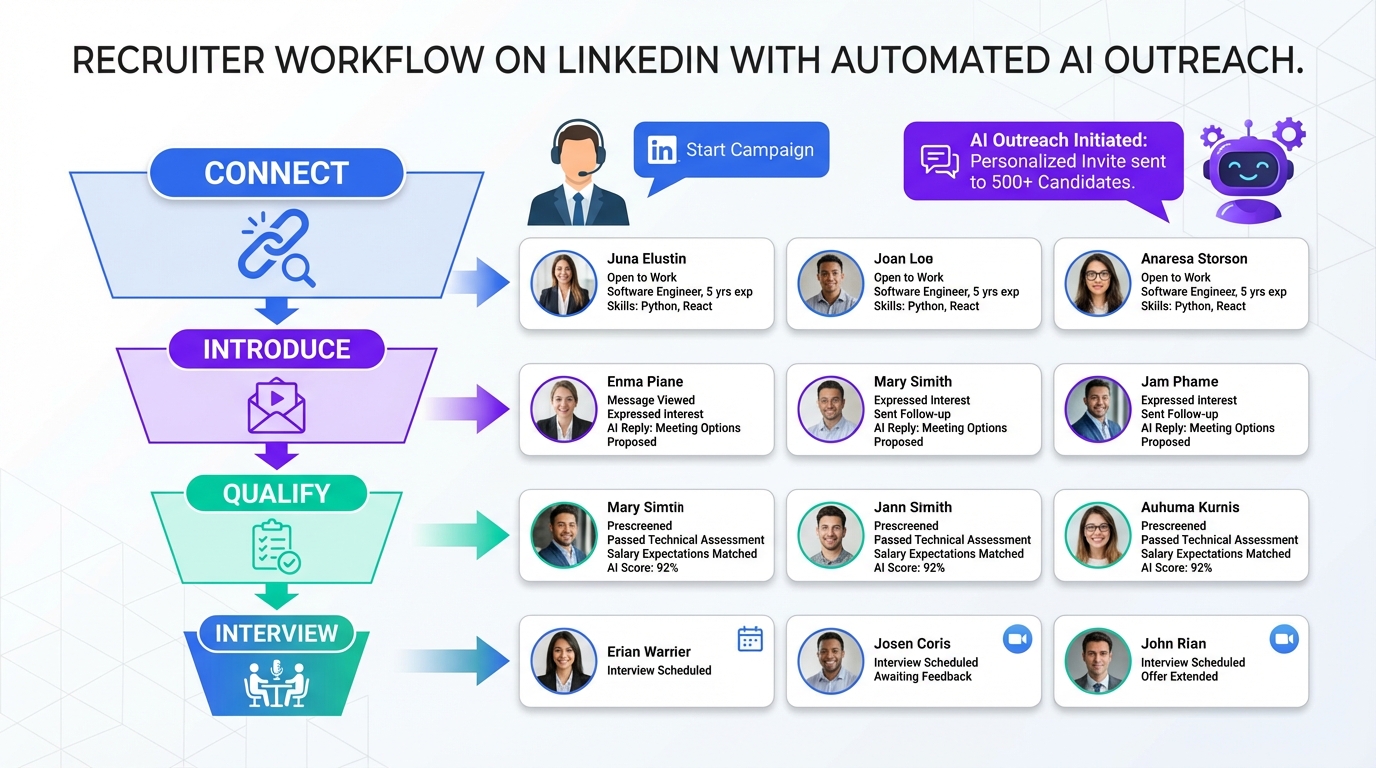
StrategyBrain AI Recruiter is built for LinkedIn hiring workflows. It automates the initial outreach and qualification conversation while keeping the recruiter responsible for final evaluation. In other words, it helps you run the top of funnel at scale, then hands off to humans for judgment calls.
What it can automate on LinkedIn
- Connecting with candidates who match your search criteria.
- Introducing the job opportunity and company context.
- Answering candidate questions about the role, company, and compensation using the information you provide.
- Confirming interview interest and capturing intent signals.
- Collecting resumes and contact details from interested candidates.
Why 24/7 multilingual follow up matters in real recruiting
In cross industry searches, candidates often need clarification before they will engage, especially when they are moving from one healthcare setting to another. StrategyBrain AI Recruiter is designed to respond around the clock and communicate in the candidate’s native language, which reduces delays and prevents conversations from stalling due to time zones or language friction.
Scope boundary: what AI Recruiter does not do
StrategyBrain AI Recruiter can identify willingness to communicate or interview, but it does not decide whether a resume fully matches job requirements. Recruiters still review resumes and make the final shortlist decisions. This boundary is important for quality control and for responsible use of an ai recruiting tool.
Practical checklist you can reuse
Use this checklist when you want to widen a search like Ocean Orthodontics did, while keeping hiring standards intact.
- Define non negotiables: List 3 to 5 requirements that cannot be traded, such as medical industry experience.
- Define transferable competencies: Specify leadership outcomes like budget ownership, team management, and stakeholder communication.
- Expand adjacent industries: Identify 2 to 4 neighboring sectors where the same competencies exist, such as diagnostic centres or medical imaging clinics.
- Standardize first touch messaging: Use a consistent outreach script that explains why the candidate’s background is relevant.
- Track intent signals: Capture whether the candidate is open to a conversation, open to interviewing, and ready to share a resume.
- Close the loop fast: Follow up within 24 hours of any candidate reply to maintain momentum.
Quick comparison: manual vs AI assisted sourcing
| Workflow area | Manual recruiter only | With StrategyBrain AI Recruiter |
|---|---|---|
| Initial LinkedIn outreach | High effort per candidate, consistency varies by workload | Automated connecting and introductions based on recruiter provided criteria |
| Candidate Q and A | Depends on recruiter availability and time zone | Designed for 24/7 responses using job and company details you provide |
| Follow up discipline | Easy to miss during busy periods | Automated follow up to reduce drop off |
| Resume and contact capture | Manual tracking across messages and files | Captures resumes and contact details from interested candidates |
| Final qualification | Recruiter reviews and decides | Recruiter still reviews and decides, AI does not replace this step |
FAQ
What is an ai recruiting tool in practical terms?
An ai recruiting tool is software that automates parts of recruiting such as sourcing, outreach, screening, and follow up using machine learning and workflow automation. In practice, the best tools reduce repetitive messaging and improve response handling while leaving final hiring decisions to recruiters.
How did Ocean Orthodontics widen the candidate pool without lowering standards?
They kept medical industry experience as non negotiable but allowed candidates from outside a dental background. That opened access to leaders from adjacent healthcare settings who still matched operational and people leadership requirements.
Is AI candidate sourcing only useful for high volume roles?
No. It can be especially useful for specialized roles when you need to search across adjacent industries and maintain consistent outreach. The value comes from speed, consistency, and follow up discipline, not only volume.
How does StrategyBrain AI Recruiter work with LinkedIn recruiting?
It automates connecting with candidates, introducing the role, answering common questions using recruiter provided job details, confirming interest, and collecting resumes and contact information. Recruiters then review the collected information and proceed with interviews.
Can StrategyBrain AI Recruiter replace recruiter judgment?
No. It can identify willingness to communicate or interview, but it does not determine whether a resume fully matches job requirements. Recruiters remain responsible for evaluation, selection, and hiring decisions.
How does it handle resumes and contact details?
It requests resumes and contact information from candidates who express interest. It supports email submissions and LinkedIn file uploads, and it captures contact details shared in LinkedIn messages for recruiter review.
Does it support multilingual candidate communication?
Yes. StrategyBrain AI Recruiter is designed to communicate in any global language and respond 24/7, which helps maintain momentum with candidates across time zones.
What security and privacy claims are stated for StrategyBrain AI Recruiter?
Product documentation states that customer provided data is not used to train AI models, credentials are encrypted, and candidate data is encrypted and isolated per customer. For regulated environments, you should still validate requirements with your internal security and legal teams.
What is the fastest way to apply this case study to my next hire?
Start by writing down your non negotiables, then list adjacent industries where the same leadership outcomes exist. Use a consistent outreach script and a structured intent capture process, and consider an ai recruiting tool to keep follow ups and early conversations consistent.
Conclusion
Ocean Orthodontics filled a critical practice manager role by keeping the true constraints clear and widening the search to adjacent healthcare leaders. If you want to replicate that outcome, focus on transferable competencies, expand your sourcing map beyond the obvious industry label, and run a disciplined outreach and follow up process. When that process becomes hard to sustain manually, StrategyBrain AI Recruiter can support AI candidate sourcing and LinkedIn outreach automation by handling first touch conversations, multilingual follow ups, and resume capture so recruiters can spend more time on evaluation and interviews.