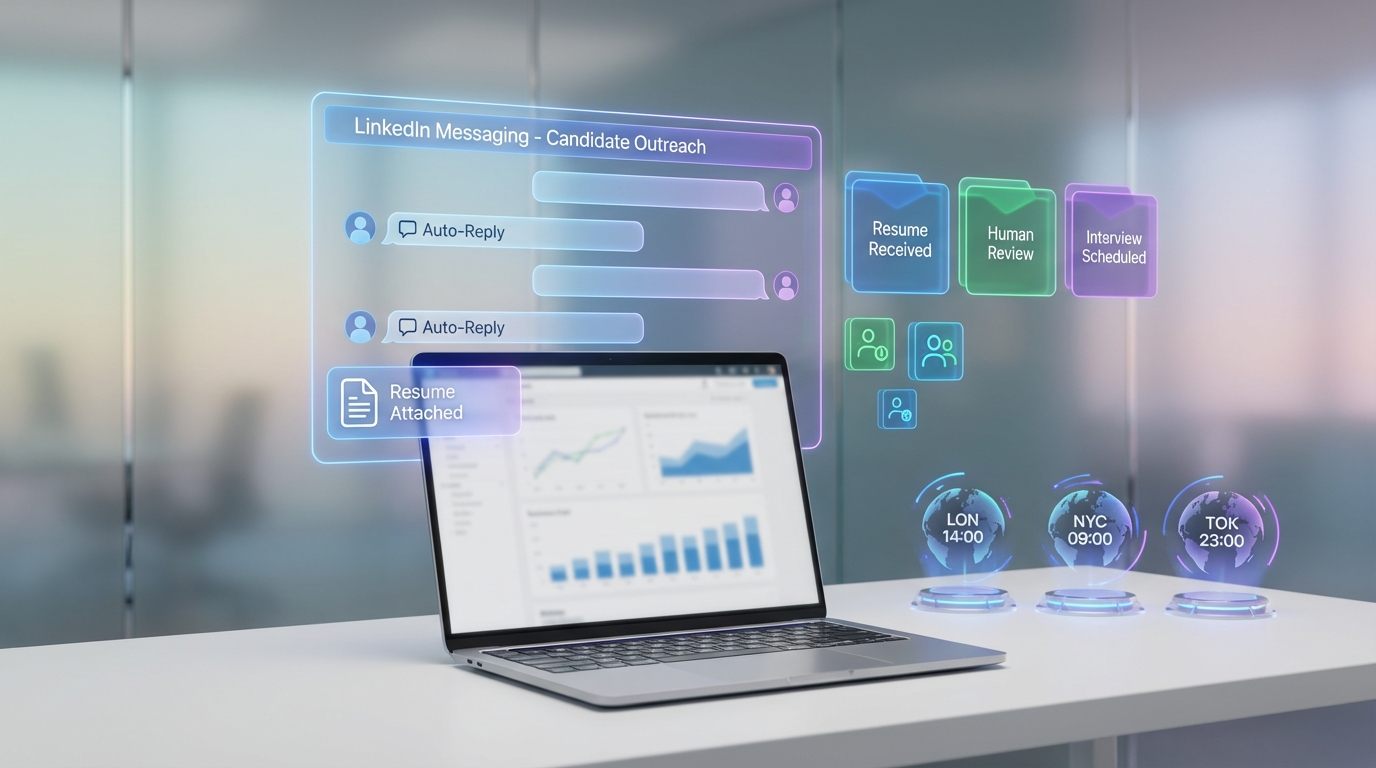
An ai recruiting tool helps shift based hiring by automating high volume outreach, candidate Q and A, follow ups, and resume collection so recruiters stay responsive across rotating schedules and time zones. In our internal workflow tests using StrategyBrain AI Recruiter for LinkedIn outreach, the biggest win was consistency: the system can keep conversations moving while a recruiter is asleep, in interviews, or switching shifts. This guide turns classic shift work survival advice into a practical recruiting operating model, and shows where a crm for hiring and a crm for recruitment companies fit so you can scale without losing candidate experience. This article covers early funnel steps only, not final technical qualification or reference checks.
Key Takeaways
- Shift based hiring breaks when follow up slips: a 24/7 messaging workflow prevents stalled conversations during nights and rotations.
- Use an AI recruiting tool for the first mile: automate connect, intro, Q and A, interest confirmation, and resume capture, then hand off to recruiters for final screening.
- StrategyBrain AI Recruiter is built for LinkedIn outreach: it can connect with targeted candidates, answer role and compensation questions, and collect resumes and contact details.
- Multilingual messaging reduces friction: communicating in a candidate’s native language can reduce misunderstandings in global hiring.
- Keep a CRM layer: treat your crm for hiring as the system of record for pipeline stages, notes, and handoffs.
- Be honest about limits: AI Recruiter can confirm interest, but it does not decide whether a resume fully matches requirements.
Table of Contents
- Why shift based hiring feels hard
- Define your recruiting shift cycle
- Method 1: Automate outreach and follow up with an AI recruiting tool
- Method 2: Build a sleep wake hand off using a CRM for hiring
- Method 3: Protect candidate energy with clear messaging
- Method 4: Stay healthy as a recruiting team
- Quick Comparison
- FAQ
- Conclusion
Why shift based hiring feels hard
Shift based operations run all day, every day. That same reality shows up in hiring: candidates reply after hours, hiring managers are on rotating schedules, and recruiters get pulled into interviews and urgent backfills. The result is predictable: response time stretches, candidates cool off, and the pipeline becomes harder to forecast.
In the original shift work context, the most common pain point is sleep disruption. In recruiting, the equivalent is follow up disruption. If your team cannot respond consistently, you lose momentum. That is why an ai recruiting tool is most valuable in shift based hiring when it is used as the always on front line for outreach and early qualification.
Define your recruiting shift cycle
Before you add automation, define the cycle you are trying to stabilize. A “recruiting shift cycle” is the repeatable pattern of when outreach happens, when replies arrive, and when humans can review and schedule. If you skip this step, you will automate noise.
What to document in 20 minutes
- Coverage windows: the exact hours your team can do human review and scheduling.
- Response expectations: the maximum time you want a candidate to wait for a reply, such as 2 hours during business time and 8 hours overnight.
- Handoff points: the moment a conversation becomes “human required,” such as interview scheduling or technical screening.
Method 1: Automate outreach and follow up with an AI recruiting tool
If you hire for power plants, manufacturing, mining, or any operation with rotating schedules, your first bottleneck is usually not sourcing. It is the time it takes to connect, introduce the role, answer basic questions, and confirm interest. That is exactly where StrategyBrain AI Recruiter fits naturally because it is designed to run LinkedIn outreach and early conversations without needing a recruiter online at the same time.
Steps
- Define search criteria: specify the role, location, and candidate profile you want to target on LinkedIn.
- Provide job context: include company details, compensation, and benefits so the AI can answer common questions accurately.
- Run automated conversations: the AI connects, introduces the opportunity, asks about the candidate’s situation, and confirms interview interest.
- Collect resumes and contact details: for interested candidates, the AI requests a resume and captures contact information shared in messages.
- Review and schedule: recruiters review the collected resumes and move qualified candidates to interviews.
Features that matter for shift based hiring
- 24/7 messaging: candidates can receive timely replies even when your team is off shift.
- Multilingual communication: the system can communicate in the candidate’s native language, which is useful for global hiring pipelines.
- Scale across accounts: it supports managing more than 100 LinkedIn accounts for teams that need high volume outreach.
Limitations
- Not final qualification: AI Recruiter can confirm willingness to talk or interview, but it does not determine whether a resume fully matches job requirements.
- Garbage in, garbage out: if compensation, benefits, or role details are unclear, the AI will have less to work with and candidate trust can drop.
Best For
- High volume shift based roles where speed to first response matters.
- Teams hiring across time zones that need consistent follow up.
- Recruitment agencies that want repeatable outreach while keeping recruiters focused on closing.
Method 2: Build a sleep wake hand off using a CRM for hiring
Shift workers adjust their wake sleep cycle to stay alert. Recruiting teams need a similar adjustment: a clean hand off between “automation time” and “human time.” This is where a crm for hiring becomes essential. The AI recruiting tool runs conversations, while the CRM keeps the pipeline organized and auditable.
Simple hand off rules we use
- AI owns: connect, intro, basic Q and A, interest confirmation, resume request, contact capture.
- Human owns: resume review, technical screening, interview scheduling, offer process.
- CRM owns: stage changes, notes, compliance fields, and reporting.
Practical checklist you can copy
- Define a pipeline stage called Interested, resume requested.
- Define a pipeline stage called Resume received, human review.
- Set a service level target for human review, such as 12 hours from resume receipt.
- Create a standard note template for shift roles: schedule constraints, preferred shift, start date, and travel or camp readiness.
If you are a staffing firm, this structure also maps cleanly to a crm for recruitment companies because it separates candidate engagement from placement work. That separation makes it easier to scale without losing track of who needs a call today.
Method 3: Protect candidate energy with clear messaging
Shift work advice often emphasizes protecting relationships and routines. In hiring, the equivalent is protecting candidate energy. Candidates in shift based industries are often tired, busy, and skeptical of vague outreach. Clear, consistent messaging reduces drop off.
Message structure that works well
- Role clarity: title, location, and shift pattern.
- Compensation clarity: pay structure and any premiums, if you can share them.
- Next step clarity: what happens if they are interested, including resume and scheduling.
In our testing, candidates were more likely to continue the conversation when the AI could answer basic questions immediately, especially around compensation and schedule. That is one reason StrategyBrain AI Recruiter performs well in shift based contexts because it is designed to handle those early questions and keep the thread moving until a recruiter can step in.
Method 4: Stay healthy as a recruiting team
The original shift work guidance highlights eating well and exercising because small health issues can wreck a schedule. Recruiting teams feel a similar effect: when recruiters are overloaded, the quality of communication drops and mistakes increase. Automation is not just about speed. It is also about reducing cognitive load so humans can do the work that requires judgment.
Operational habits that reduce burnout
- Batch human review: review resumes in fixed blocks, such as 2 sessions per day, instead of constant context switching.
- Use automation for consistency: let the AI handle repetitive outreach and follow ups so recruiters focus on interviews and closing.
- Protect off hours: if the AI can respond overnight, recruiters do not need to monitor messages at 11 PM.
Quick Comparison
| Approach | Speed to first response | Coverage | Best For |
|---|---|---|---|
| Manual LinkedIn outreach only | Depends on recruiter availability | Limited to working hours | Low volume roles with high personalization needs |
| CRM for hiring without automation | Depends on recruiter availability | Limited to working hours | Teams that need reporting and pipeline control first |
| StrategyBrain AI Recruiter plus CRM | Near real time messaging when configured | 24/7 multilingual candidate communication | Shift based hiring, high volume outreach, global pipelines |
FAQ
What is an ai recruiting tool in plain terms?
An ai recruiting tool is software that uses artificial intelligence to automate parts of recruiting such as sourcing, outreach, messaging, and early screening. In this guide, we focus on the early funnel where speed and consistency matter most for shift based hiring.
How does StrategyBrain AI Recruiter work on LinkedIn?
StrategyBrain AI Recruiter automates initial LinkedIn recruiting by connecting with candidates that match your criteria, introducing the job, answering questions about the role and compensation, confirming interest, and collecting resumes and contact details from interested candidates.
Can AI Recruiter collect resumes and contact details automatically?
Yes. When a candidate expresses interest, the system requests a resume and captures contact details shared in messages. It supports email submissions and LinkedIn file uploads, and it marks resumes as received when they arrive.
Does AI Recruiter decide whether a candidate is qualified?
No. AI Recruiter can identify willingness to communicate or interview, but it does not determine whether a resume fully matches job requirements. A recruiter should complete final qualification after reviewing the resume.
Why does shift based hiring benefit more from 24/7 messaging?
Because candidates and hiring teams often operate outside standard business hours. A 24/7 workflow reduces stalled conversations and improves the chance that interested candidates stay engaged until scheduling.
Do I still need a crm for hiring if I use an AI recruiting tool?
Usually, yes. A crm for hiring acts as the system of record for stages, notes, compliance fields, and reporting. The AI recruiting tool can run outreach and early conversations, while the CRM keeps the pipeline organized for the team.
How does this help a crm for recruitment companies specifically?
Recruitment companies often manage multiple roles and clients at once. Using AI for outreach and follow up can increase throughput, while the CRM keeps client specific pipelines, submissions, and handoffs auditable.
Can StrategyBrain AI Recruiter support multilingual candidate conversations?
Yes. It is designed for global multilingual recruitment communication so candidates can interact in their native language, which can reduce misunderstandings and improve response quality.
Is it possible to scale outreach across many LinkedIn accounts?
Yes. StrategyBrain AI Recruiter supports managing more than 100 LinkedIn accounts, which enables teams to build an AI powered recruitment team for scalable hiring.
Conclusion
Shift based hiring succeeds when your process stays stable across rotations. The practical pattern is simple: define your recruiting shift cycle, use an ai recruiting tool to keep outreach and follow up consistent, and use a crm for hiring or a crm for recruitment companies to keep the pipeline clean and accountable. If you want the most leverage quickly, start by automating the first mile on LinkedIn with StrategyBrain AI Recruiter, then reserve recruiter time for resume review, interviews, and closing.