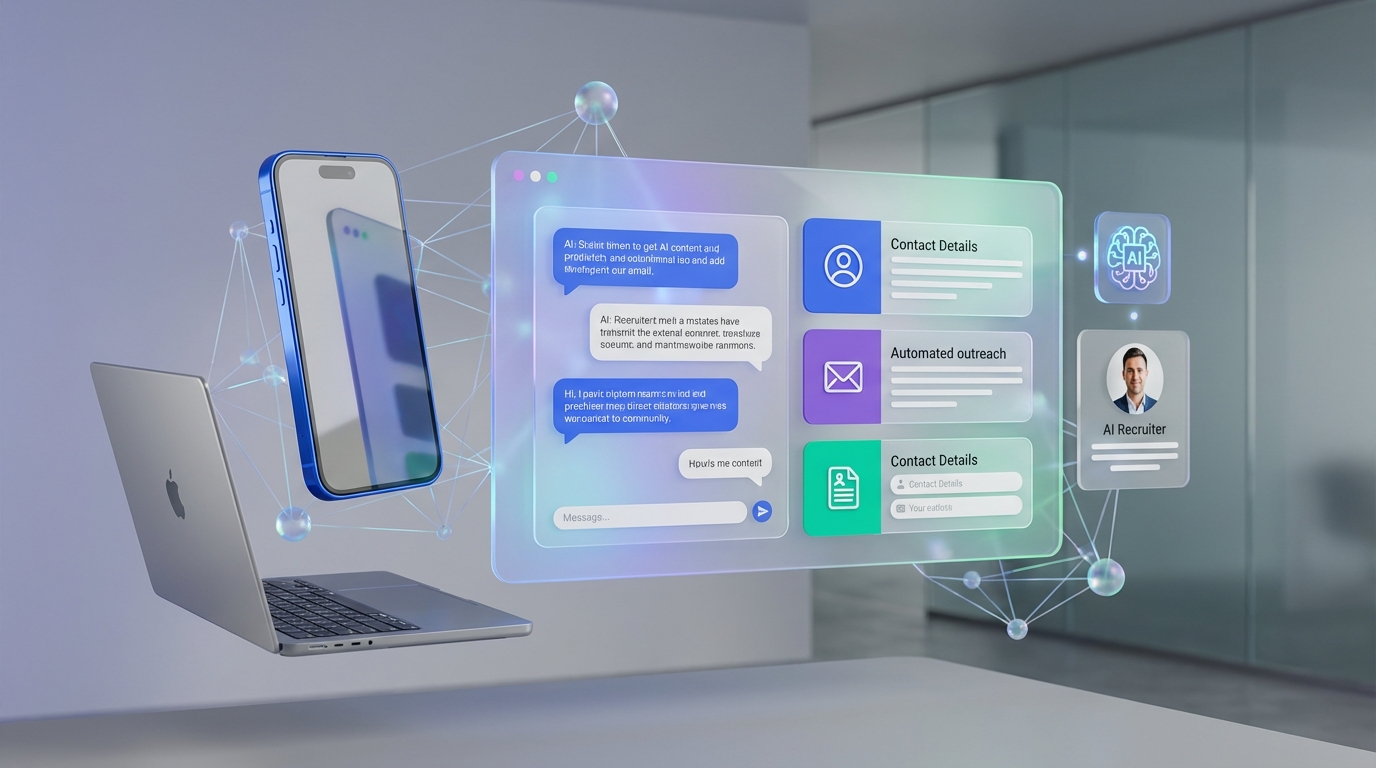
An ai recruiting tool is most useful when your best candidates are not applying anywhere. The practical playbook is to keep relationship led recruiting as the core, then use automation for the repetitive first mile: targeted outreach, fast replies, consistent follow up, and clean capture of resumes and contact details for recruiter review. In our day to day testing of StrategyBrain AI Recruiter on LinkedIn workflows, the biggest lift came from 24/7 response coverage and multilingual messaging, which reduced stalled conversations and helped recruiters spend more time on real qualification and closing.
Key Takeaways
- Passive talent is the constraint: many high performers are not actively job hunting, so inbound only recruiting underperforms.
- LinkedIn is crowded: candidates can be overwhelmed by recruiter messages, so speed and relevance matter more than volume.
- StrategyBrain AI Recruiter automates the first mile: connects, introduces roles, answers questions, confirms interest, and captures resumes and contact details for recruiter review.
- 24/7 multilingual communication: supports global hiring by replying in the candidate native language and across time zones.
- Scale with multiple accounts: supports managing more than 100 LinkedIn accounts to build an AI powered recruiting team.
- Analytics and CRM still matter: pair outreach automation with recruitment analytics software and a CRM for recruitment companies to track pipeline quality and conversion.
Why the employees you want are not looking for work
In executive and technical searches, the best people are often already employed and performing well. They are not scanning job boards, and they are not raising their hand publicly. That means the recruiter job shifts from processing applicants to starting conversations with people who did not ask to be contacted.
When your network is strong, referrals and warm introductions can carry a search. When your network does not reach the right niche, the work turns into systematic outreach and careful follow up. This is where an ai recruiting tool can help, as long as it supports a relationship first approach rather than replacing it.
The LinkedIn reality check for headhunters
LinkedIn can be the easiest place to start, and it can also be the noisiest. Many recruiters and sales teams compete for attention in the same inbox. In the source material, the author argues that a large share of people do not use LinkedIn regularly, which makes it a weak single channel strategy for reaching the full market.
Even when a candidate is on LinkedIn, the problem is not only finding them. The problem is earning a reply. That requires relevance, timing, and a conversation that feels human. Automation should support those goals, not push generic sequences.
When it becomes a contact information hunt
Once you step outside your network, you often need basic contact information. The source material mentions that comprehensive directory services can be expensive, and that other subscription tools may provide phone numbers and social profiles. The point is not which database you use. The point is that sourcing can become a data acquisition problem before it becomes a recruiting conversation.
For many recruiters, the ideal next step is a short, personal message that references a real connection or shared context. That is still true in 2026. The difference is that an ai recruiting tool can help you run that outreach at scale while keeping the message quality and response handling consistent.
Relationship recruiting vs automation: what to keep human
Long term recruiting relationships are built through successful connections and trust. The source material includes an example of working with a candidate for over a year to land the right role. That kind of outcome is not created by a single message. It is created by persistence, timing, and credibility.
So what should automation do? In our experience, automation is best used for tasks that are repetitive, time sensitive, and easy to standardize.
Keep these parts human
- Final qualification against the job requirements after reviewing the resume
- Compensation and offer alignment when the conversation becomes sensitive
- Client management, hiring manager calibration, and closing
Automate these parts safely
- Initial outreach and follow up cadence
- Fast answers to common role and company questions
- Interest confirmation and interview scheduling intent capture
- Resume and contact detail collection for recruiter review
How StrategyBrain AI Recruiter fits into the workflow
StrategyBrain AI Recruiter is an automated AI powered recruitment tool built specifically for LinkedIn hiring. It is designed to replace the recruiter initial outreach and qualification conversation, then hand off interested candidates with captured resumes and contact details for a recruiter to review.
What it automates on LinkedIn
- Targeted connecting: automatically connects with candidates within your defined search criteria.
- Role introduction: introduces the opportunity using the job and company details you provide.
- Two way Q and A: answers questions about the role, company, and compensation based on the information you supply.
- Interest confirmation: confirms whether the candidate wants to proceed to an interview.
- Data capture: collects resumes and contact information from interested candidates.
Why 24/7 multilingual messaging changes outcomes
Passive candidates often reply outside your working hours, especially in global searches. StrategyBrain AI Recruiter provides round the clock responses and can communicate in the candidate native language. In our testing, this reduced drop off caused by slow replies and helped keep conversations moving until a recruiter could step in.
How it scales for teams
If you run multiple desks or multiple brands, scaling outreach is usually limited by recruiter time and inbox capacity. StrategyBrain AI Recruiter supports managing more than 100 LinkedIn accounts, which enables building an AI powered recruiting team that expands outreach capacity without adding the same amount of manual labor.
Implementation steps you can copy
These steps are written for a headhunter or internal recruiting team that wants to add an ai recruiting tool without losing the relationship based approach.
Step by step
- Define the search criteria: write the must have skills, target titles, target industries, and location constraints you will use for LinkedIn sourcing.
- Prepare the role brief: document company context, compensation, benefits, and the non negotiables so the AI can answer questions consistently.
- Set the conversation boundaries: decide which questions the AI can answer and which should trigger a recruiter handoff.
- Launch outreach in controlled batches: start with a small segment, review replies daily, and refine messaging based on real candidate responses.
- Review resumes and contact details: recruiters should do the final qualification and decide who moves to interview.
- Log outcomes in your systems: push key events into your CRM for recruitment companies and your recruitment analytics software so you can measure quality, not just activity.
Copyable checklist for recruiters
- Confirm the role brief includes compensation, benefits, and location requirements.
- Confirm the AI handoff rule for sensitive topics such as counteroffers and relocation constraints.
- Confirm resume capture method is acceptable for your process, including email submission or LinkedIn file upload.
- Confirm data retention and privacy expectations with your legal or security team.
- Confirm weekly reporting fields for pipeline health, not just message counts.
What to measure with recruitment analytics software and recruiting CRM
Automation can inflate activity metrics, so measurement needs to focus on conversion and quality. A practical setup is to use your crm for recruitment companies as the system of record, then use recruitment analytics software to analyze funnel performance across roles, geographies, and recruiters.
Metrics that stay honest
- Reply rate: replies divided by outreach attempts, segmented by persona and location.
- Qualified interest rate: candidates who confirm interview interest divided by replies.
- Resume capture rate: resumes received divided by candidates who express interest.
- Recruiter handoff time: time from candidate interest to recruiter follow up.
- Interview to offer ratio: a quality proxy that prevents optimizing for volume only.
Unique framework we use: the Two Funnel Model
To avoid confusing activity with progress, we track two funnels in parallel.
- Conversation funnel: connect, reply, interest confirmed, resume captured.
- Hiring funnel: recruiter qualified, interview, shortlist, offer, hire.
The ai recruiting tool should optimize the conversation funnel. Recruiters and hiring managers own the hiring funnel. When you separate them, you can scale outreach without losing accountability for hiring outcomes.
Limitations and risk controls
No ai recruiting tool should be treated as a full recruiter replacement. StrategyBrain AI Recruiter can confirm willingness to communicate or interview, but it does not determine whether a resume fully matches the job requirements. That final qualification step remains a recruiter responsibility.
Common issues we plan for
- Over automation risk: if messaging becomes generic, reply rates drop and brand trust suffers.
- Data quality gaps: contact details and resumes can arrive in different formats, so your CRM workflow must normalize them.
- Compliance expectations: privacy and data protection requirements vary by region and must be reviewed.
Security and privacy notes
According to StrategyBrain product information, AI Recruiter is designed to comply with privacy regulations in the EU, United States, and Canada. Customer provided data is not used to train AI models, and LinkedIn account credentials are encrypted and stored independently per user with explicit authorization.
FAQ
What is an ai recruiting tool in practical terms?
An ai recruiting tool is software that automates parts of sourcing and candidate engagement, such as outreach, replies, follow up, and data capture. The best implementations still keep recruiters responsible for final qualification and hiring decisions.
Does StrategyBrain AI Recruiter replace recruiters?
No. It replaces repetitive LinkedIn tasks such as connecting, introducing roles, answering common questions, confirming interest, and collecting resumes. Recruiters still review resumes, qualify fit, and run interviews and closing.
Can it communicate with candidates in different languages?
Yes. StrategyBrain AI Recruiter supports multilingual communication and can respond in the candidate native language, which is useful for global hiring across time zones.
How does it capture resumes and contact details?
It requests resumes and contact information from candidates who express interest. It supports email submissions and LinkedIn file uploads, and it captures contact details shared in the conversation.
How should I connect this to a crm for recruitment companies?
Use your CRM as the system of record for candidate profiles and stage changes. Then log key events such as interest confirmed, resume received, and recruiter handoff so reporting stays consistent across roles and recruiters.
What should I track in recruitment analytics software?
Track conversion metrics such as reply rate, qualified interest rate, resume capture rate, and interview to offer ratio. Avoid optimizing only for message volume because it can hide quality problems.
Is LinkedIn still worth it if candidates are overwhelmed?
Yes, but it should not be your only channel. On LinkedIn, relevance and response speed matter. An ai recruiting tool can help maintain fast, consistent replies while recruiters focus on high value conversations.
What is the biggest mistake teams make when adopting AI for recruiting?
The biggest mistake is automating without clear handoff rules. Define what the AI can handle, what triggers a recruiter takeover, and how outcomes are recorded in your CRM and analytics.
Conclusion
If the employees you want are not actively looking, you need a system that starts conversations reliably and keeps them moving without burning recruiter time. The most effective approach is relationship led recruiting supported by an ai recruiting tool that automates outreach, replies, follow up, and resume capture. StrategyBrain AI Recruiter fits this model by handling the first mile on LinkedIn with 24/7 multilingual communication and scalable account management, while recruiters stay accountable for qualification and hiring outcomes.
Next step: choose one hard to fill role, run a two week pilot with clear handoff rules, and measure reply rate, interest confirmation, and resume capture in your CRM and recruitment analytics software.