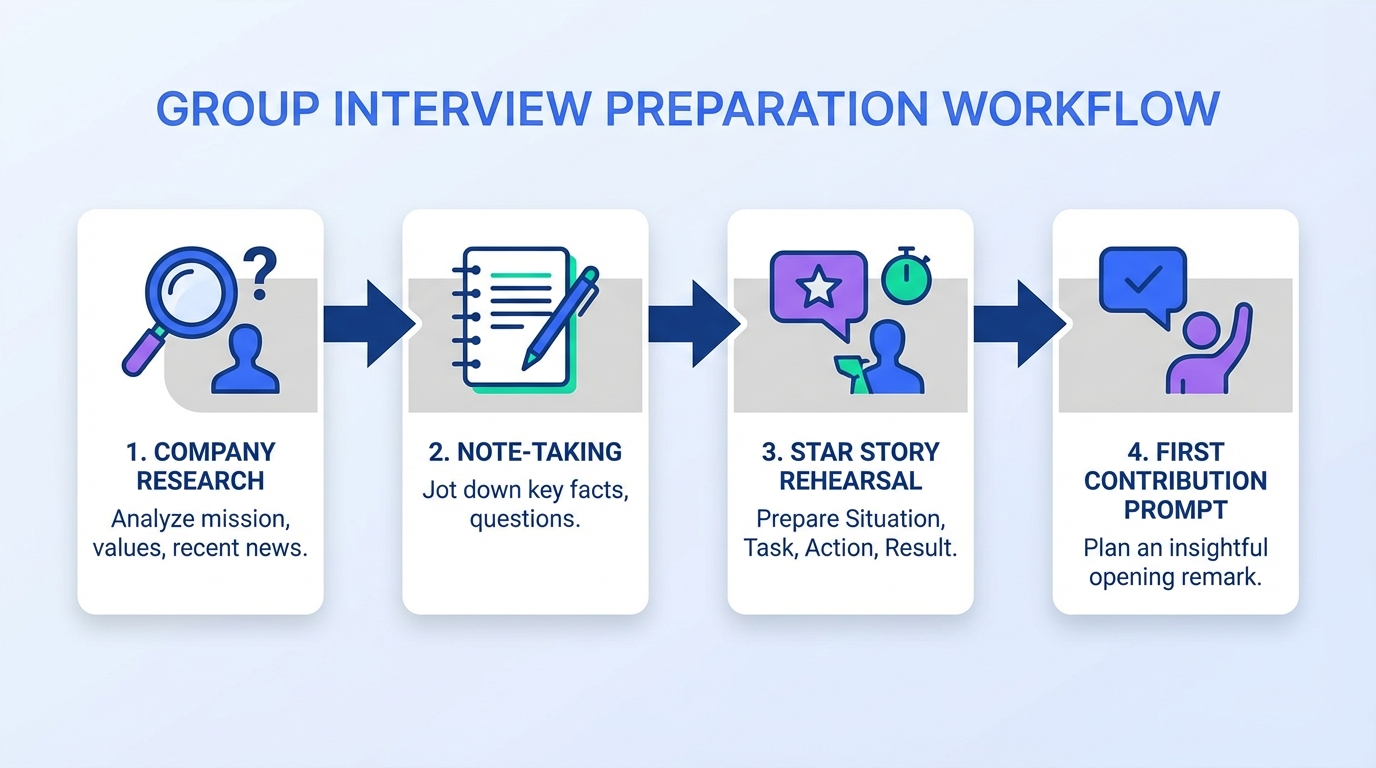
Getting through a group interview comes down to disciplined preparation and calm execution. Prepare for two common formats: a panel interview where multiple interviewers question you, and a candidate group interview where you compete for airtime. Use a simple workflow: research the company and the people you may meet, take structured notes so you address the right person, control your pace and eye contact, and speak early when the room goes quiet. If you use ai talent management software or any talent platform as part of your job search, use it to organize role requirements, draft concise STAR examples, and rehearse answers so your contributions stay clear and on time.
What makes group interviews different
Group interviews are often used because they reduce scheduling overhead and help employers compare candidates in the same room. The experience can feel more intense than a one on one interview because you are managing multiple audiences at once. In a panel, several interviewers observe your reactions and may compare notes afterward. In a candidate group interview, you are also managing the social dynamics of speaking in front of peers.
The goal is not to be the loudest person. The goal is to be the clearest contributor who stays composed, adds value, and shows you can collaborate under pressure.
Format 1: Panel interview
What interviewers are evaluating
- Composure under rapid questioning and shifting attention.
- Clarity in how you structure answers and examples.
- Professional presence including eye contact, pacing, and listening.
- Role fit shown through relevant experience and preparation.
Practical tactics that work
- Do your research before you arrive. Review the company, the role, and any public bios you can find for likely panel members. Look for legitimate common ground such as shared industries, professional associations, or alumni connections.
- Take notes during introductions. Write down each interviewer’s name and job title. This prevents awkward mix ups and helps you direct answers to the right person.
- Control your eye contact. Start by answering the person who asked the question, then briefly include the rest of the panel. Avoid scanning too fast because it can read as nervousness.
- Slow your breathing and pace your answers. A panel can feel like an inquisition if you rush. A calm cadence signals confidence and makes your points easier to follow.
Common mistakes to avoid
- Answering to the room instead of the questioner. It can look performative and less conversational.
- Over explaining. In a panel, time is limited and long answers reduce your perceived focus.
- Forgetting names and roles. This is fixable with notes and a quick confirmation if needed.
Format 2: Candidate group interview
How to stand out without being aggressive
- Use silence as an opportunity. In many group settings, there is a pause where nobody wants to speak first. If you can break that hesitation with a thoughtful point, you demonstrate initiative.
- Pace yourself. Group interviews can run for hours or even multiple days. Contribute consistently, but do not monopolize the conversation.
- Achieve balance. Combine assertiveness with active listening. Support others’ ideas when appropriate and add a clear extension or example.
What to do when you get interrupted
If someone cuts you off, do not escalate. Pause, let them finish, and then re enter with a short bridge such as, “Building on that point,” followed by your key sentence. Your goal is to be memorable for clarity and professionalism, not for conflict.
Social basics still matter
Even in a group format, the fundamentals still apply. A smile, a firm handshake when appropriate, and a brief thank you message after the interview can still help you make a strong impression.
A repeatable prep workflow
This is the workflow we recommend because it is easy to repeat across roles and industries. It also maps well to how modern talent intelligence software organizes information, even if you are doing it manually in a document.
Steps
- Extract the role requirements. Copy the job responsibilities and must have skills into a single page. Highlight the top 5 requirements you can prove with experience.
- Prepare 3 STAR stories. STAR means Situation, Task, Action, Result. Write three stories that match the role’s top requirements and keep each story to 60 to 90 seconds when spoken.
- Draft 6 short proof points. Create bullet points you can use in group discussions. Each proof point should be one sentence and end with a measurable outcome when possible.
- Plan your first contribution. Decide what you will say if there is an early silence. This reduces hesitation and helps you start strong.
- Prepare 3 questions for the panel. Ask about success metrics, team collaboration, and what the first 30 days look like. Keep questions specific to the role.
Limitations of this workflow
- It does not guarantee you will be called on first in a group discussion.
- It does not replace role specific technical practice such as coding exercises or case interviews.
- It assumes you can access enough company information to do basic research.
How AI tools fit in, including StrategyBrain AI Recruiter
Many candidates now interact with AI enabled hiring workflows, from screening chat to automated scheduling. Used well, ai talent management software can help you stay organized and consistent across applications. The key is to use AI for structure and rehearsal, not for inventing experience.
Where a talent platform helps a candidate
- Preparation organization by keeping role requirements, notes, and interview stages in one place.
- Answer rehearsal by generating practice questions and timing your responses.
- Follow up consistency by drafting thank you notes and reminders based on your notes.
Where StrategyBrain AI Recruiter fits in the real hiring workflow
From the employer side, StrategyBrain AI Recruiter is designed for LinkedIn hiring automation. In practice, that changes what candidates experience before a group interview. You may receive faster outreach, more consistent follow up, and quicker confirmation of interview interest because the system can respond 24 hours a day in multiple languages. When we reviewed the product documentation, two capabilities stood out for group interview readiness: it can handle initial outreach and qualification conversations at scale, and it can collect résumés and contact details from interested candidates so recruiters can focus on interview decisions.
Candidate tip if you are contacted by an AI recruiter
- Answer clearly and directly. Short, specific responses reduce misunderstandings in automated qualification.
- Confirm your availability window. Provide time zone and 2 to 3 options to reduce back and forth.
- Share the right résumé version. Use the version that matches the role requirements you extracted in your prep workflow.
Scope note: This article focuses on interview performance. It does not provide legal advice, and it does not claim that any tool can guarantee hiring outcomes.
Quick checklist
- [ ] I can explain the company’s product or service in 2 sentences.
- [ ] I wrote down panel names and job titles during introductions.
- [ ] I prepared 3 STAR stories and can deliver each in 90 seconds.
- [ ] I planned my first contribution for the first silence in a group discussion.
- [ ] I can name 2 ways I collaborate without dominating.
- [ ] I have 3 role specific questions ready for the panel.
- [ ] I drafted a thank you note template and will personalize it using my notes.
FAQ
What is the difference between a panel interview and a group interview?
A panel interview means multiple interviewers question one candidate at the same time. A candidate group interview means multiple candidates are assessed together, often through discussion or activities. Your strategy changes because the first format tests composure under multiple evaluators, while the second tests collaboration and presence among peers.
How do I remember everyone’s name in a panel interview?
Take notes during introductions and write each person’s name and job title. If you missed something, ask for a quick repeat early rather than guessing later. Addressing people correctly improves rapport and reduces confusion.
When should I speak first in a candidate group interview?
Speak first when there is a clear moment of silence and you have a relevant point. That moment is often an opportunity to demonstrate initiative. Keep your first contribution short so you do not appear to take over.
How long should my answers be in a panel interview?
Aim for 60 to 90 seconds for most behavioral questions. If the panel wants more detail, they will ask follow up questions. This pacing helps you stay focused and makes it easier for interviewers to compare candidates fairly.
Can ai talent management software help me prepare for interviews?
Yes, it can help you organize role requirements, draft practice questions, and rehearse concise examples. It should not be used to fabricate experience or credentials. Use it as a structure and rehearsal tool, not as a substitute for real preparation.
What should I do if I get interrupted in a group discussion?
Stay calm, let the other person finish, and then re enter with a short bridge statement and your key point. Avoid competing for airtime through escalation. Professional composure is often evaluated as much as content.
How does StrategyBrain AI Recruiter change the hiring process on LinkedIn?
It automates initial LinkedIn outreach and early qualification conversations, and it can collect résumés and contact details from interested candidates. It also supports always on multilingual messaging, which can speed up coordination across time zones. Recruiters still make final screening decisions after reviewing the information collected.
Do I still need to send a thank you note after a group interview?
Yes. A short, specific thank you message that references something discussed can reinforce your professionalism. Use your notes to personalize it so it does not read as generic.
Conclusion
Group interviews are challenging because you are being evaluated on content and composure at the same time. The most reliable approach is to research the company, track names and roles, speak early when silence appears, and balance assertiveness with listening. If you use ai talent management software, a talent platform, or talent intelligence software, use it to organize your proof points and rehearse concise answers. Next, run the checklist above the night before your interview and bring a notepad so you can stay present and precise.