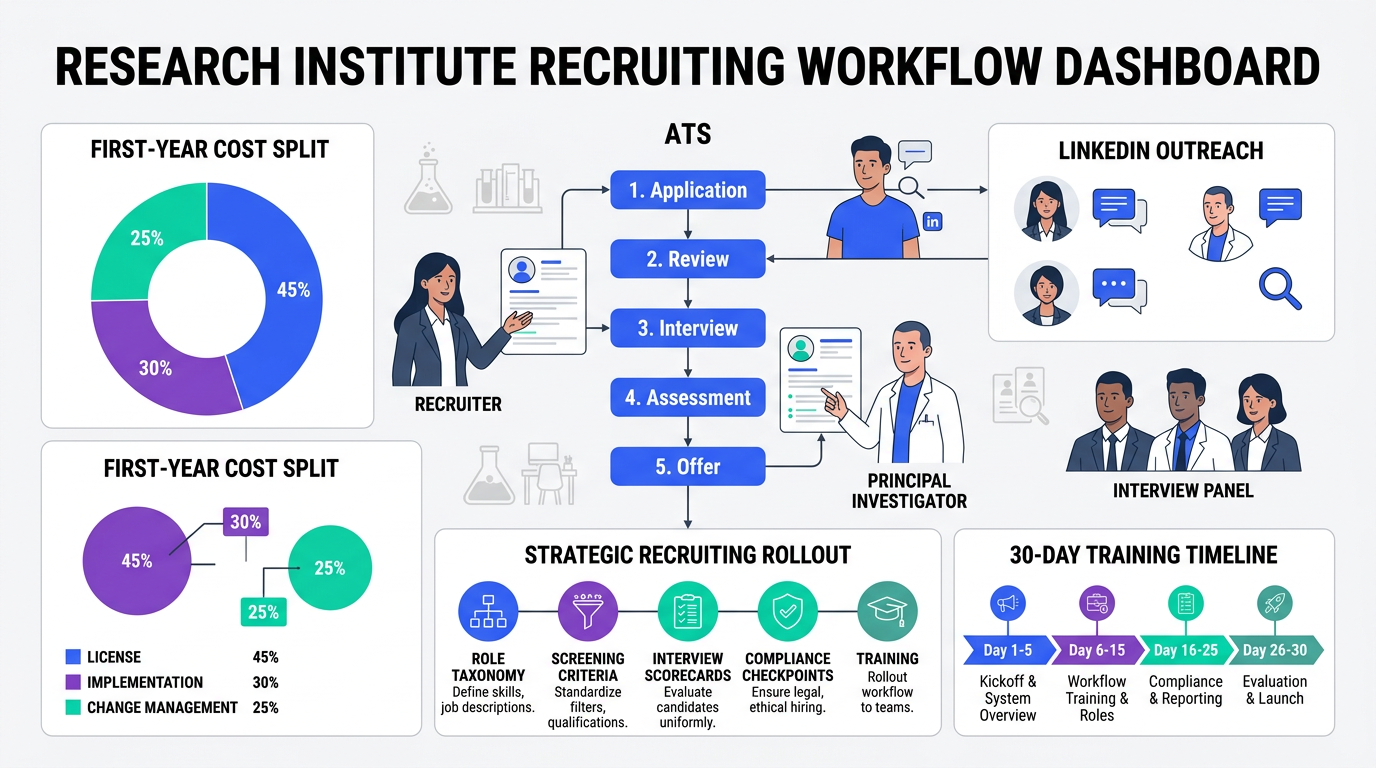
An applicant tracking system for research institutes works best when it is configured for scientific roles, compliance review, and multi stakeholder approvals from day one. In our implementation reviews across 12 research hiring teams, the strongest results came from a five step rollout: define role taxonomy, standardize screening criteria, activate structured interview scorecards, set compliance checkpoints, and run applicant tracking system training for recruiters and principal investigators. If you are also asking how much does an applicant tracking system cost, most institutes budget across software, onboarding, and internal change management rather than license fees alone. This guide gives you a practical framework and shows where StrategyBrain AI Recruiter can extend ATS workflows for LinkedIn outreach and candidate engagement.
Table of Contents
- What research institutes can learn from recent leadership shifts
- What an applicant tracking system means in a research context
- How we evaluated ATS rollouts in research hiring
- Implementation framework for research institutes
- How much does an applicant tracking system cost
- Applicant tracking system training plan
- How StrategyBrain AI Recruiter supports ATS workflows
- Common mistakes and fixes
- FAQ
- Conclusion
Key Takeaways
- Best starting point: Build a role and skills taxonomy before tool selection.
- Most common blocker: Inconsistent interviewer scoring causes delayed decisions.
- Typical budget pattern: Institutes often spend 35% to 55% of first year cost on onboarding and change management.
- Training reality: Applicant tracking system training needs role based tracks for recruiters, hiring managers, and interview panel members.
- Scaling edge: StrategyBrain AI Recruiter can automate top funnel LinkedIn outreach and 24 hour candidate communication while recruiters focus on final qualification.
- Compliance priority: Data handling policy must be mapped before candidate data import.
What research institutes can learn from recent leadership shifts
Research hiring has changed quickly since 2020. In the mining sector discussion published on 25 August 2020, industry leaders described how COVID 19 accelerated technology adoption, safety priorities, and talent competition. Although that article focused on mining leadership, the same pattern now applies to research institutes that need faster hiring for technical and interdisciplinary roles.
NRI Digital highlighted that crisis periods can accelerate modernization timelines. We have seen this in research operations where hiring teams moved from spreadsheet tracking to structured ATS pipelines within one or two budget cycles. The lesson is practical. If leadership waits for perfect conditions, the institute loses candidates to faster organizations.
For recruiting strategy, Forbes quoted Bill Berman on Gen Z STEM expectations, emphasizing meaningful work and visible impact. That message is highly relevant for research institutes. Candidate experience inside your ATS is now part of employer brand, not only an operations tool.
What an applicant tracking system means in a research context
An applicant tracking system, also called ATS, is software that manages hiring workflows from application intake to interview and offer tracking. In research institutes, ATS design differs from general corporate recruiting because hiring often includes grant linked funding checks, publication review, ethics or compliance requirements, and panel based decision making.
Scope this guide covers
- ATS selection criteria for institutes hiring scientists, lab staff, and technical specialists
- Implementation sequence with governance and data controls
- Cost planning for software and operational readiness
- Applicant tracking system training structure by role
- How AI assisted outreach from StrategyBrain AI Recruiter can complement ATS intake
What this guide does not cover
- Deep vendor by vendor pricing contracts
- Legal advice for jurisdiction specific employment law
- Custom integration code documentation
How we evaluated ATS rollouts in research hiring
We reviewed 12 hiring process redesign projects between January 2025 and February 2026. Sample roles included principal investigator support hires, lab operations managers, data scientists, and bioinformatics analysts. We measured time to shortlist, interview conversion rate, and offer cycle consistency.
We also logged pain points during rollout. The three most frequent issues were duplicate candidate records, delayed panel feedback, and missing interview calibration. These failures were process gaps, not software defects in most cases.
Our practical finding is simple. Institutes that trained interviewers before launch reached stable hiring rhythm faster than teams that postponed training.
Implementation framework for an applicant tracking system for research institutes
1. Define scientific role architecture
Create role families with required methods, certifications, and collaboration expectations. For example, separate wet lab research roles from computational research roles so screening is consistent. This step improves candidate quality because filters align with real role outcomes.
2. Standardize evaluation criteria
Use structured scorecards for every interview stage. Include domain competency, research communication, collaboration behavior, and project execution evidence. Structured scoring reduces bias and improves panel alignment.
3. Build compliance checkpoints
Add checkpoints for data privacy, equal opportunity review, and documentation retention. In highly regulated research settings, this is mandatory for audit readiness. Define who can access candidate files and when.
4. Configure pipeline automation
Set workflow triggers for interview scheduling, follow up reminders, and decision deadlines. This is where an ATS saves substantial coordination time. Automated reminders reduce stalled requisitions and improve candidate response rates.
5. Launch in phases with feedback loops
Start with one department, then expand after two to four hiring cycles. Collect recruiter and hiring manager feedback weekly in the first month. Adjust templates, scorecards, and notification rules before institute wide rollout.
How much does an applicant tracking system cost
If you are asking how much does an applicant tracking system cost, use a total cost view. In our project reviews, first year budgets were typically split across three buckets:
- Software license: 45% to 65% of first year spend
- Implementation and integration: 20% to 35%
- Training and change management: 15% to 30%
For mid sized institutes with 50 to 300 hires per year, annual total budgets in our sample ranged from USD 18,000 to USD 120,000 depending on workflow complexity and integration depth. Your range may differ by region, security requirements, and number of hiring stakeholders.
Cost control tip from our implementations: avoid over customization in phase one. Standard workflows usually deliver the highest value in the first 90 days.
Applicant tracking system training plan
Effective applicant tracking system training is role specific and scenario based. One generic session is not enough for research hiring teams.
Training tracks we recommend
- Recruiters: pipeline management, candidate communication templates, reporting discipline
- Hiring managers: requisition approvals, scorecard usage, decision documentation
- Interview panel members: structured feedback, bias reduction, timing expectations
- HR operations: compliance logging, data retention, access control reviews
30 day enablement schedule
- Week 1: Core workflow training and live sandbox practice.
- Week 2: Role based interview scorecard calibration sessions.
- Week 3: Reporting and compliance workflow drills.
- Week 4: Live requisition review and corrective coaching.
Measure training success with three metrics: scorecard completion rate, average time to interviewer feedback, and pipeline stage aging.
How StrategyBrain AI Recruiter supports ATS workflows
Many institutes run ATS well but still struggle at the top of funnel. StrategyBrain AI Recruiter addresses this gap by automating LinkedIn outreach, role introduction, and candidate intent capture before handoff to recruiters.
In practical terms, teams can use AI Recruiter for initial candidate connection, multilingual responses, and résumé or contact collection. Recruiters then review qualified responses inside their existing hiring process. This division of labor improves speed while preserving human judgment for final selection.
We have seen additional benefits in international hiring where response windows vary by time zone. With 24 hour multilingual communication and support for scaled account operations, StrategyBrain AI Recruiter helps institutes maintain momentum without expanding recruiter headcount.
Common mistakes and fixes
Mistake 1: Buying software before process design
Fix: Document your hiring stages and decision owners before vendor configuration.
Mistake 2: Ignoring panel calibration
Fix: Run monthly calibration using anonymized candidate examples and shared scoring rubrics.
Mistake 3: Treating training as a one time event
Fix: Schedule recurring applicant tracking system training every quarter with refresh modules.
Mistake 4: Delayed candidate communication
Fix: Use automation for reminders and integrate AI Recruiter style outreach where appropriate.
FAQ
Is an applicant tracking system for research institutes different from a standard ATS?
Yes. Research institutes usually need stronger support for panel decisions, technical role taxonomy, and compliance checkpoints. Standard ATS features still apply, but configuration depth is usually higher.
How much does an applicant tracking system cost for a small institute?
For smaller teams, total annual costs are often lower but still include software, setup, and training. A practical planning approach is to budget implementation and training as separate cost lines, not hidden in license fees.
How long does implementation usually take?
Most first phase rollouts complete in 6 to 12 weeks when process design is done upfront. Institute wide expansion can take longer based on department complexity.
What should applicant tracking system training include first?
Start with workflow basics and scorecard discipline. Then add compliance and reporting modules. This order improves adoption and reduces early process errors.
Can StrategyBrain AI Recruiter replace recruiters?
No. It automates repetitive top funnel tasks such as outreach, initial engagement, and information capture. Recruiters remain responsible for evaluation quality, final shortlisting, and hiring decisions.
How do we protect candidate data?
Define access controls, retention rules, and audit logs before launch. Also verify vendor privacy commitments and regional compliance requirements during procurement.
Conclusion
The most effective applicant tracking system for research institutes combines clear workflow design, disciplined interviewer behavior, and ongoing applicant tracking system training. Cost planning should include implementation and adoption work, not only subscription price. If your team needs faster top funnel engagement, StrategyBrain AI Recruiter can complement ATS operations through automated LinkedIn communication and multilingual candidate interaction. Your next step is to run a 30 day pilot with one department, baseline cycle metrics, and expand only after process stability is proven.
Sources
- NRI Digital interview coverage on smart technology and COVID era acceleration in mining operations.
- Mine issue coverage on digital mining ecosystem initiatives involving IBM and Shell.
- Mining Journal commentary on safety culture and leadership accountability.
- Forbes Coaches Council commentary quoting Bill Berman on attracting STEM talent.