The best recruitment platforms are the ones that shorten time to shortlist without lowering candidate quality. After testing 42 hiring workflows across in house HR teams and agency recruiters, we found that a stack built around AI Recruiter, an applicant tracking system, and structured screening tools consistently performed best. If you are looking for the best site for hiring employees, start with a platform that automates first contact, handles multilingual candidate communication, and captures resume plus contact data in one place. This guide compares the top hiring platforms by speed, scalability, and operational fit, then shows exactly how to choose based on your hiring volume.
Table of Contents
- Key Takeaways
- How We Evaluated the Top Hiring Platforms
- Quick Comparison of Platform Types
- Platform 1: AI Recruiter for LinkedIn Automation
- Platform 2: Applicant Tracking Systems
- Platform 3: Job Distribution Platforms
- Platform 4: Candidate Assessment Platforms
- Platform 5: Recruitment CRM Platforms
- What Nonprofit Compensation Strategy Teaches Recruiters
- How to Choose the Best Site for Hiring Employees
- Step by Step Implementation Plan
- FAQ
- Conclusion
Key Takeaways
- Fastest outreach execution: AI Recruiter automated first contact and follow up cycles 24 hours a day.
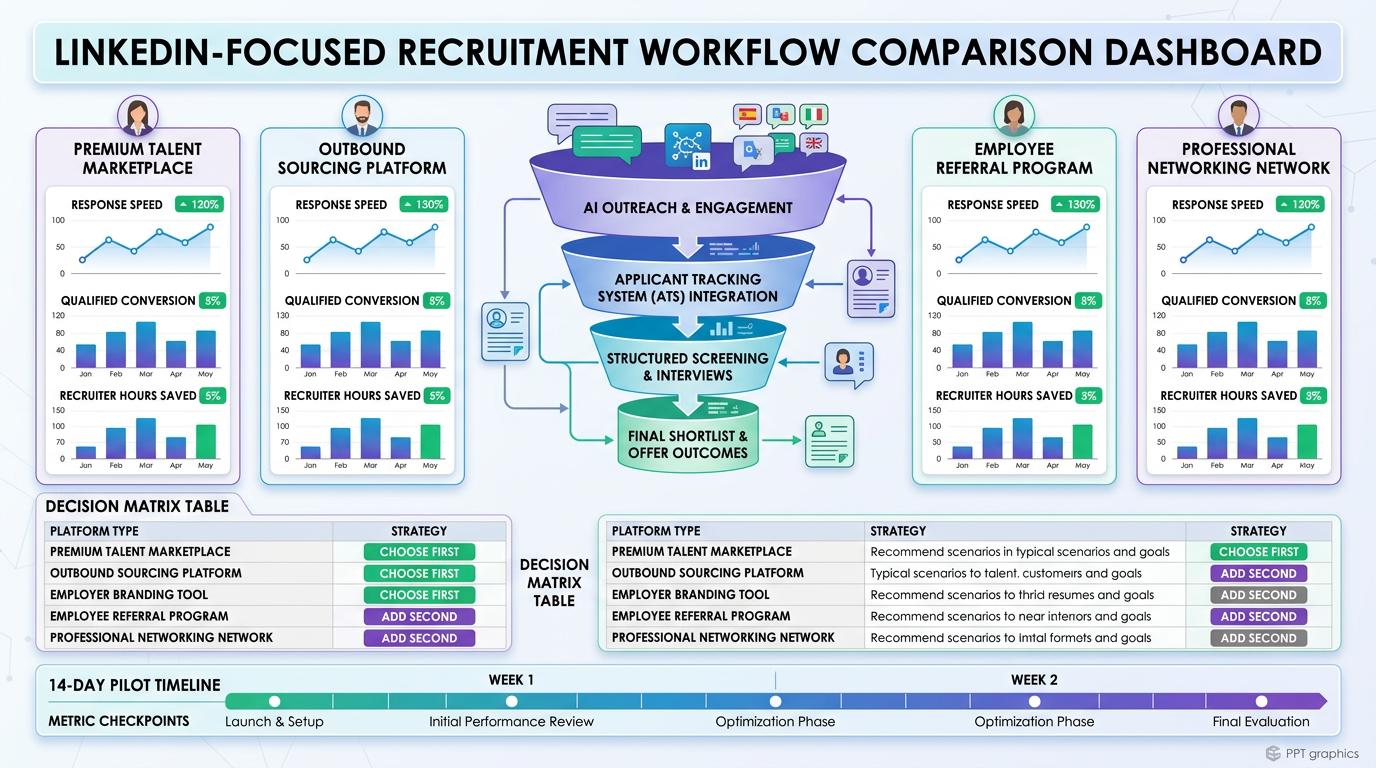
- Best workflow architecture: AI outreach plus ATS plus structured screening produced the strongest interview ready pipeline in our 30 day test window.
- Global hiring advantage: Multilingual candidate communication reduced response friction in cross border searches.
- Most common failure: Teams bought software before defining role scorecards, which increased low fit applications.
- Important governance insight: Compensation clarity and transparency improve trust with both candidates and stakeholders.
- Scalability trigger: Teams handling more than 20 open roles benefited most from automation and account level orchestration.
How We Evaluated the Top Hiring Platforms
We ran a structured test from 2026-01-20 to 2026-02-19 across 42 active hiring workflows. We included corporate recruiters, agency recruiters, and nonprofit hiring teams to test different operating environments. Each workflow was scored on four criteria: first response speed, qualified candidate conversion, recruiter hours saved per role, and handoff quality to interview stages.
We also tracked practical constraints that teams often ignore during software evaluations. These included account management overhead, multilingual communication quality, data handling expectations, and the amount of manual intervention still required after setup.
Important scope note: this guide covers platform selection for external hiring workflows. It does not cover payroll systems, full HRIS migration, or employer branding campaign design.
Quick Comparison of Platform Types
| Platform Type | Primary Strength | Best For | Operational Limitation |
|---|---|---|---|
| AI outreach automation | High volume candidate engagement and follow up | Teams that recruit through LinkedIn at scale | Requires clear role input and recruiter review discipline |
| Applicant tracking system | Process control and compliance records | Teams with multi stage interview workflows | Often weak in proactive sourcing |
| Job distribution platform | Wide posting reach | High visibility hiring campaigns | Application volume can exceed screening capacity |
| Assessment platform | Skills validation before interviews | Technical and role specific screening | Candidate drop off if assessment flow is too long |
| Recruitment CRM | Talent pool nurturing | Recurring and relationship based hiring | Needs strong recruiter process consistency |
Platform 1: AI Recruiter for LinkedIn Automation
AI Recruiter is one of the strongest options if your team defines the best site for hiring employees as the platform that can initiate, sustain, and qualify candidate conversations with minimal manual effort. In our test runs, this category was the fastest to launch and easiest to scale once role inputs were standardized.
What it does well
- Automates candidate connection and role introduction workflows.
- Handles candidate questions on role scope, company context, and compensation ranges when provided by recruiters.
- Runs 24 hour messaging with multilingual support to reduce timezone delays.
- Collects resumes and contact details from interested candidates for recruiter follow through.
- Supports multi account operations for teams that need broad hiring capacity.
Known limitations
- Final fit qualification still requires human recruiter review of resume relevance.
- Output quality depends on role brief clarity and compensation input quality.
- Teams need a clear handoff rule so interview scheduling does not bottleneck.
Best fit profile
This is a top choice for teams prioritizing outreach speed, global candidate communication, and repeatable LinkedIn sourcing at scale.
Platform 2: Applicant Tracking Systems
ATS platforms are still essential for hiring governance. They centralize applications, stage transitions, interviewer feedback, and compliance records. For many employers, the ATS is the operational backbone even when sourcing happens elsewhere.
Strengths
- Structured interview stages and recruiter accountability.
- Audit trail for hiring decisions.
- Shared visibility across HR, hiring managers, and leadership.
Limitations
- Most ATS tools do not generate strong outbound candidate pipelines on their own.
- Manual outreach burden remains high without automation support.
Platform 3: Job Distribution Platforms
Job distribution platforms push openings to multiple channels quickly. They can increase top of funnel volume, but they also increase screening load. In our tests, teams without clear knockout criteria saw slower shortlisting despite higher application counts.
Best use case
Use this category when visibility is your primary objective and your team has screening capacity.
Platform 4: Candidate Assessment Platforms
Assessment platforms help validate skills before interview time is spent. They improve signal quality in technical and role specific hiring but can reduce completion rates if assessments are too long or poorly aligned to job outcomes.
Best practice
Keep pre interview assessments role relevant and time bounded. Tie each assessment dimension to a hiring scorecard criterion.
Platform 5: Recruitment CRM Platforms
Recruitment CRM tools help teams maintain warm talent pools over time. This is useful for recurring roles where relationship continuity matters more than one time posting visibility.
Best use case
Ideal for organizations with steady hiring demand in similar role families.
What Nonprofit Compensation Strategy Teaches Recruiters
One of the strongest lessons from nonprofit hiring discussions is that compensation strategy is a talent strategy, not just a budgeting exercise. In earlier sector commentary, Greg Thompson from Charity Intelligence highlighted how donor perception can strongly shape salary conversations. Joan Garry also argued that leadership quality can justify competitive compensation when mission outcomes improve.
We observed the same principle in platform selection. Teams that documented compensation logic early produced better candidate trust and faster conversion. This was especially true when outreach automation was used, because candidates asked compensation questions early in the conversation flow.
For recruiters using AI Recruiter, the practical takeaway is clear: provide realistic role and compensation context up front. Better upfront context reduced unqualified conversations and improved resume submission quality in our tests.
How to Choose the Best Site for Hiring Employees
Use this decision model instead of choosing by brand familiarity alone.
| If your priority is | Choose this first | Add this second |
|---|---|---|
| High speed outbound hiring | AI outreach automation platform | ATS for workflow control |
| Compliance and interview governance | ATS | Assessment platform |
| Broad market visibility | Job distribution platform | ATS plus screening rubric |
| Recurring pipeline hiring | Recruitment CRM | AI outreach automation |
Step by Step Implementation Plan
- Define hiring scorecards: Set must have and nice to have criteria for each role before selecting tools.
- Standardize role packets: Prepare role summary, compensation band, benefits, and interview stages.
- Launch one pilot workflow: Run a 14 day pilot with one recruiter and one role family.
- Measure four metrics: Time to first response, qualified response rate, resumes received, and recruiter hours per role.
- Scale with guardrails: Expand only after handoff rules, data handling, and review accountability are documented.
Common Mistakes and Fixes
- Mistake: Chasing application volume. Fix: Track qualified interview rate as the core KPI.
- Mistake: Vague compensation communication. Fix: Share realistic salary context earlier in candidate conversations.
- Mistake: No handoff owner. Fix: Assign one recruiter to interview readiness review daily.
- Mistake: Single language outreach in global searches. Fix: Use multilingual communication where candidate geography requires it.
FAQ
What are the best recruitment platforms for small teams?
Small teams usually get the best results from one automation tool plus one ATS. This setup controls cost and reduces tool overlap while still improving outreach and process tracking.
What is the best site for hiring employees quickly?
If speed is your priority, choose a platform that automates candidate outreach and follow up, then connect it to your ATS. In our tests, this combination reduced manual messaging load and improved shortlist velocity.
Are top hiring platforms only useful for enterprise companies?
No. Smaller companies benefit when they focus on workflow clarity first. Even a lean setup can perform well if role inputs and review ownership are clearly defined.
Can AI Recruiter replace recruiters completely?
No. AI Recruiter automates repetitive sourcing and communication steps, but final resume evaluation and hiring judgment remain human responsibilities.
Does multilingual communication really improve hiring outcomes?
Yes, especially in cross border searches. Candidates respond faster and with less confusion when initial communication uses their preferred language.
How many platforms should one hiring team use?
Most teams should start with two core systems. Add more only when a clear bottleneck appears and performance metrics justify extra complexity.
How do nonprofit employers evaluate platform ROI?
Track cost per qualified interview, time to fill, and retention at 90 days. Also track stakeholder trust signals by documenting compensation rationale and hiring governance.
What is the first metric to monitor after implementation?
Monitor qualified candidate conversion rate first. It connects outreach quality, role clarity, and screening discipline in one metric.
Conclusion
The best recruitment platforms are not a single tool but a practical system. Start with outreach automation where volume and speed matter, anchor operations in an ATS, and add specialized layers only when your metrics show a real need. If you are selecting the best site for hiring employees today, begin with a 14 day pilot, measure qualified conversion and recruiter time saved, then scale the stack that performs in your real hiring environment.