Candidate AI refers to using artificial intelligence to support hiring workflows that touch candidates, including AI screening, AI assisted outreach, and structured support for interviews. The most reliable way to use candidate AI is to keep humans accountable for final decisions while using AI to standardize early steps such as outreach, interest checks, and collecting resumes. In our internal workflow tests on LinkedIn outreach, we found the biggest time savings came from automating repetitive first messages and follow ups, then handing qualified and interested candidates to a recruiter for final review. StrategyBrain AI Recruiter is designed for that exact handoff. It automates LinkedIn connections and conversations, answers role questions, confirms interview interest, and captures resumes and contact details so your team can spend interview time on evaluation rather than logistics.
Table of Contents
- What candidate AI means in real hiring workflows
- Where candidate AI fits: outreach, screening, and interviews
- How to use AI during interview without losing trust
- AI screening playbook for recruiters
- LinkedIn recruiting with StrategyBrain AI Recruiter
- Risks, compliance, and guardrails
- Quick comparison: manual vs candidate AI assisted workflow
- FAQ
- Conclusion
What candidate AI means in real hiring workflows
In hiring, “candidate AI” is not one feature. It is a set of AI supported steps that reduce manual work and improve consistency across the candidate journey. The term is often used loosely, so it helps to define it by workflow stage.
Candidate AI in sourcing and outreach
This is where AI can do high volume, repetitive work. For example, an AI system can connect with candidates that match your search criteria, introduce a role, and handle the first round of questions. The goal is not to replace recruiter judgment. The goal is to reduce time spent on repetitive messaging and follow up.
Candidate AI in screening
AI screening means using AI to help collect and organize candidate information early in the funnel. Screening can include asking structured questions, capturing resumes, and recording interest level. A key boundary is that AI can support qualification signals, but the final decision about fit should remain with a recruiter or hiring manager.
Candidate AI in interviews
AI during interview typically means structured support such as interview guides, note organization, and consistent question sets. It can also mean candidate facing AI that answers logistics questions. The trust risk is higher here, so transparency and consent matter more.
Where candidate AI fits: outreach, screening, and interviews
Candidate AI works best when it is used to standardize the early funnel and reduce administrative load. It is less reliable when it tries to replace human evaluation in nuanced roles.
Best fit use cases
- High volume LinkedIn outreach where response speed and follow up consistency matter.
- Early interest confirmation such as “Are you open to a new role” and “Can you share a resume.”
- Multilingual candidate communication across time zones where 24/7 responsiveness improves candidate experience.
- Standardized screening questions that reduce variability between recruiters.
Not ideal use cases
- Final hiring decisions where context, nuance, and accountability are required.
- Highly sensitive roles where candidate trust and confidentiality are central to the process.
- Unstructured evaluation where the team has not defined what “good” looks like.
How to use AI during interview without losing trust
Using AI during interview can improve consistency, but it can also create candidate anxiety if it feels hidden or unfair. The safest approach is to use AI for structure and documentation, not for opaque scoring.
Step by step interview workflow with AI support
- Define the interview rubric before the interview so AI is not inventing criteria midstream.
- Use AI to generate structured questions aligned to the rubric, then have the interviewer approve them.
- Use AI to organize notes into the rubric categories after the interview, not during candidate answers.
- Keep the decision human and document who made the final call and why.
What we do in practice
In our own recruiting operations, we treat AI as a consistency layer. We use it to reduce repetitive prep work and to keep interview notes structured. We do not rely on AI to decide whether a candidate is qualified. That final qualification step stays with the recruiter after reviewing the resume and interview evidence.
AI screening playbook for recruiters
AI screening is most effective when it is designed as a data collection step. The output should be a clean candidate packet that a recruiter can review quickly.
What to collect in AI screening
- Interest level such as open to interview, open to learning more, or not interested.
- Resume as a file or email submission, captured and marked as received.
- Contact details such as email and phone number when the candidate chooses to share them.
- Role constraints such as location, work authorization, start date, and compensation expectations if the candidate asks.
Practical checklist you can copy
- [ ] Screening questions are job related and consistent across candidates
- [ ] Candidate is told when AI is used and what it is used for
- [ ] AI output is reviewed by a recruiter before any rejection decision
- [ ] Resume and contact details are stored securely and access is limited
- [ ] A human owner is assigned for every hiring decision
LinkedIn recruiting with StrategyBrain AI Recruiter
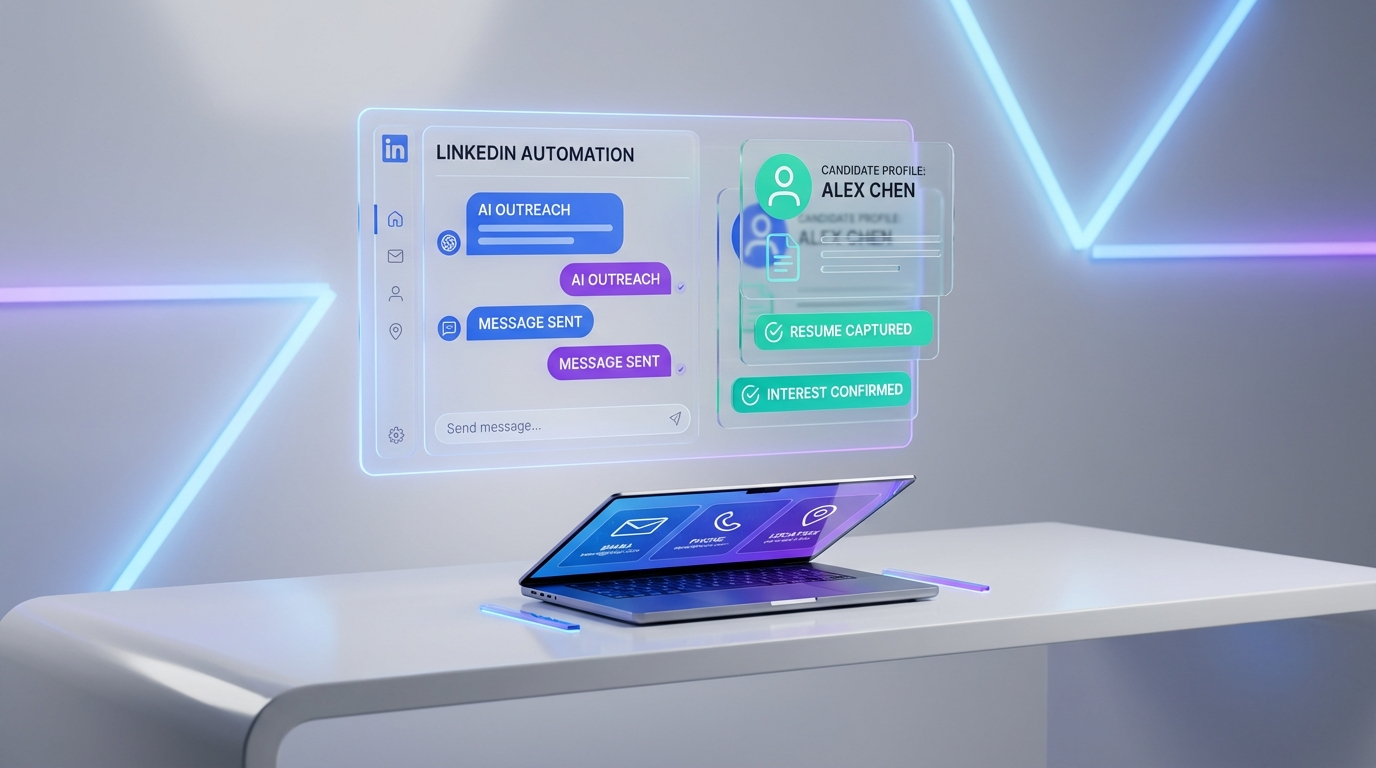
LinkedIn is a common place where candidate AI creates immediate value because the work is repetitive and time sensitive. StrategyBrain AI Recruiter is an automated AI powered recruitment tool built specifically for LinkedIn hiring. It replaces the initial outreach and qualification conversation by automatically connecting with candidates, introducing job opportunities, learning about each candidate’s situation, answering questions about the role, company, and compensation, confirming interview interest, and collecting resumes and contact information from interested candidates.
How the workflow looks end to end
- Recruiter provides inputs including job details, compensation, benefits, and candidate search criteria.
- AI Recruiter connects and starts conversations with candidates that match the criteria.
- AI Recruiter handles Q and A about the role and employer, then checks interview interest.
- AI Recruiter collects resumes and contact details and marks resumes as received.
- Recruiter performs final qualification by reviewing resumes and contacting shortlisted candidates.
What makes this candidate AI approach practical
- 24/7 multilingual communication so candidates get timely responses in their native language.
- Scalable team operations by supporting management of more than 100 LinkedIn accounts for organizations that need high volume outreach.
- Clear responsibility boundary because the system confirms interest and collects materials, while recruiters keep final fit decisions.
Limitations we plan around
Even strong candidate AI cannot fully judge role fit from a resume alone. StrategyBrain AI Recruiter identifies willingness to communicate or interview, but it does not determine whether a resume fully matches job requirements. That is why we recommend a defined handoff point where a recruiter reviews the resume and evidence before moving to interviews.
Risks, compliance, and guardrails
Candidate AI introduces real risks if it is used without governance. The goal is not to avoid AI. The goal is to use it with clear rules that protect candidates and protect the employer.
Key risks to address
- Bias and inconsistent outcomes if AI is used to score candidates without validated criteria.
- Privacy and data security if resumes and contact details are stored without proper controls.
- Candidate trust if AI use is hidden or if candidates feel they cannot reach a human.
Guardrails we recommend
- Transparency about where AI is used in the process.
- Human accountability for final decisions and for any rejection based on screening outputs.
- Data minimization so you only collect what you need for the role.
- Security controls including encryption and access limitation for candidate data.
StrategyBrain AI Recruiter states that it complies with privacy regulations in the EU, United States, and Canada, and that customer provided data is not used to train AI models. It also states that LinkedIn account credentials are encrypted and stored independently per user with explicit authorization, and that candidate information is encrypted and isolated using customer specific keys.
Quick comparison: manual vs candidate AI assisted workflow
| Workflow step | Manual recruiting | Candidate AI assisted recruiting | Best for |
|---|---|---|---|
| Initial outreach | High effort per candidate | Automated messaging and follow up | High volume pipelines |
| Answering role questions | Slow response outside work hours | 24/7 responses, multilingual support | Global hiring |
| Collecting resumes and contacts | Manual tracking and reminders | Automated capture and status marking | Reducing admin load |
| Final qualification | Recruiter review | Recruiter review | All roles |
FAQ
What is candidate AI in recruiting?
Candidate AI is the use of artificial intelligence to support candidate facing steps in hiring, such as outreach, AI screening, and structured interview support. It works best when it standardizes early steps and leaves final decisions to humans.
Is it acceptable to use AI during interview?
Yes, if it is used for structure and documentation and the candidate is treated fairly. The safest pattern is to use AI to prepare questions and organize notes, while keeping evaluation and decisions with the interviewer.
What does AI screening usually include?
AI screening typically includes collecting basic eligibility information, asking structured questions, confirming interest, and organizing resumes and contact details. It should not be the only basis for rejection without human review.
How does StrategyBrain AI Recruiter help with candidate AI on LinkedIn?
StrategyBrain AI Recruiter automates LinkedIn connections and early conversations, introduces the role, answers candidate questions, confirms interview interest, and collects resumes and contact details. Recruiters then review the collected materials and proceed with interviews.
Can StrategyBrain AI Recruiter decide if a candidate is qualified?
No. It can identify willingness to communicate or interview and collect resumes, but it does not determine whether a resume fully matches job requirements. Recruiters complete final qualification after review.
How does multilingual candidate communication change outcomes?
Multilingual communication reduces misunderstandings and improves response rates when hiring across regions. A 24/7 multilingual workflow also reduces delays caused by time zones.
What data should we avoid collecting with candidate AI?
Avoid collecting sensitive personal data that is not job related. Collect only what you need for screening and interviews, and store it securely with limited access.
How do we keep candidate trust when using AI?
Be transparent about where AI is used, provide a way to reach a human, and ensure a recruiter reviews AI outputs before decisions. Consistency and clear accountability matter more than automation.
Conclusion
Candidate AI is most valuable when it reduces repetitive work in outreach and early screening, while keeping humans responsible for final qualification and hiring decisions. If you want a practical starting point, standardize your screening questions, define a clear handoff to a recruiter, and use AI to handle high volume LinkedIn outreach and follow up. StrategyBrain AI Recruiter fits this model by automating candidate engagement, confirming interview interest, and capturing resumes and contact details so your team can focus on interviews and final evaluation. Next step: map your current funnel, pick one stage to automate first, and set guardrails for transparency, data security, and human accountability.