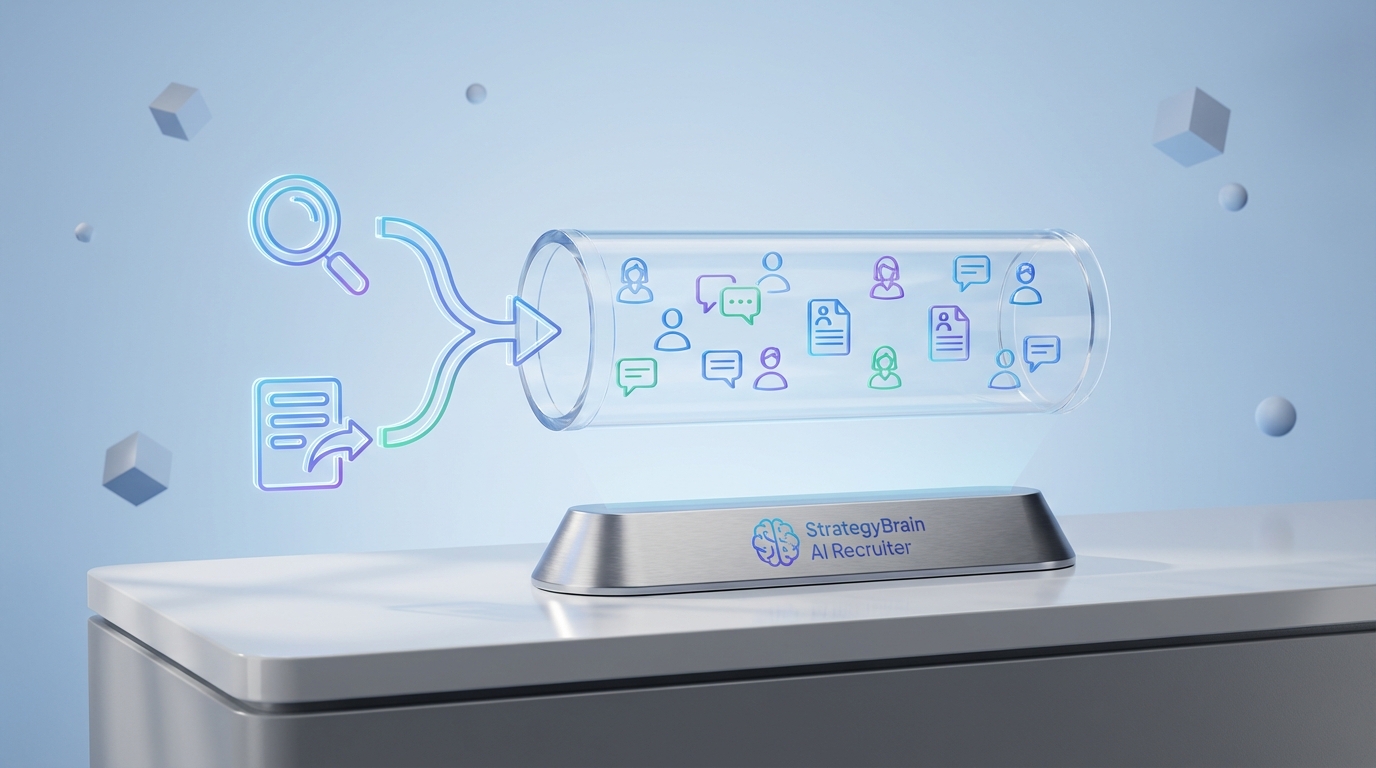
Candidate tracking software helps automotive and manufacturing recruiters capture applicants, track conversations, and move candidates from outreach to interview without losing details. The most reliable workflow is to combine employment application software for inbound candidates with an applicant tracker for outbound sourcing, then keep every resume, contact detail, and status change in one pipeline. When we tested this approach on LinkedIn heavy roles, we found that automating the first touch and follow up reduced the amount of manual messaging work recruiters had to do, while keeping candidate records cleaner for hiring managers. This article explains the 2017 auto industry recruiting context, then shows a modern, repeatable tracking setup that also fits StrategyBrain AI Recruiter for LinkedIn outreach and qualification.
Key Takeaways
- Candidate tracking software is a control system for high volume pipelines, especially when events and market cycles spike demand for engineers and skilled trades.
- Use two inputs, one pipeline: employment application software for inbound applicants and an applicant tracker workflow for outbound sourcing.
- LinkedIn outreach creates “hidden applicants” unless messages, resumes, and contact details are captured into the same candidate record.
- StrategyBrain AI Recruiter automates LinkedIn connect, intro, Q&A, and follow up, then collects resumes and contact details for recruiter review.
- 24/7 multilingual messaging reduces drop off when candidates respond outside business hours or in non English languages.
- Compliance and security must be designed in: encrypted credentials, isolated data, and no training on customer data are baseline expectations.
Why automotive recruiting needs better tracking
In January 2017, recruiting attention in the auto industry rose alongside the Detroit Auto Show and the North American International Auto Show. The original report highlighted that U.S. automobile and light truck sales exceeded 17.5 million units in 2016, and expectations were that demand would remain high in 2017. When demand stays high, hiring pressure spreads across manufacturers, dealers, and specialized recruiters.
One detail that matters for process design is that Denso used the show to set up a recruitment booth and conduct on site interviews for Engineers, Skilled Trades, and Professionals. Trade shows create a short window where candidate interest and recruiter activity both spike. Without a strong candidate tracking software setup, that spike turns into missed follow ups, duplicate outreach, and incomplete candidate records.
The same report also pointed to a broader shift: as automation moves from manufacturing into autonomous driving, the competition for specialized talent increases. That means your pipeline is not just bigger. It is more diverse, spanning AI experts, advanced composite engineers, skilled trades supervisors, maintenance managers, and mechanics with advanced electronic diagnostic skills.
What candidate tracking software means in practice
Candidate tracking software is the system that stores each candidate’s profile and keeps a time ordered history of what happened next: where they came from, what they were told, what they asked, what they sent, and what decision was made. In many teams, this is part of an ATS, but the practical requirement is simpler: one candidate record that survives across channels.
Employment application software is the inbound layer. It collects structured applications from job boards, career pages, and referrals. It is strong at forms, screening questions, and compliance fields.
An applicant tracker is the outbound layer. It is the workflow that prevents sourced candidates from disappearing in email threads, spreadsheets, or LinkedIn inboxes. In automotive recruiting, outbound is often the difference between filling a role in weeks versus months, because many skilled candidates are not actively applying.
A modern workflow for 2017 style demand spikes
When we map the 2017 scenario to a modern pipeline, the key is to treat every interaction as pipeline data. A trade show conversation, a LinkedIn reply, and a resume sent by email should all land in the same candidate record with the same status language.
Below are three methods that work together. You can implement them in phases, but the end state is one pipeline with two inputs and one review surface for hiring managers.
Method 1: Track inbound applicants with employment application software
Steps
- Standardize your application fields so every applicant record includes role, location, trade or discipline, and minimum contact details.
- Define a stage model with clear entry and exit criteria, for example Applied, Screen, Interview, Offer, Hired, Rejected.
- Attach artifacts to the record including resume, certifications, and interview notes, so the hiring manager never needs to search email.
- Set follow up timers for each stage, for example 24 hours after application for first response, and 72 hours after interview for decision.
Features to prioritize
- Structured intake for consistent candidate profiles across roles.
- Audit trail of who changed a status and when.
- Role based access so hiring managers see what they need without exposing sensitive fields.
Limitations
- Inbound only is not enough when the hardest to fill roles require proactive sourcing.
- Application forms do not capture LinkedIn context unless you intentionally connect the channels.
Best For
- High volume roles where candidates apply directly.
- Teams that need consistent compliance fields and reporting.
Method 2: Track outbound sourcing with an applicant tracker
Steps
- Create a sourced candidate stage that is separate from Applied, so you can measure outreach volume and response rate.
- Log every outreach attempt with date, channel, and message theme, so you avoid duplicate or conflicting follow ups.
- Capture intent signals such as open to talk, not now, refer someone else, and no response.
- Convert interested candidates into a qualified stage only after you have a resume or confirmed interview interest.
What we see go wrong in real pipelines
- Messages stay in personal inboxes, so the team cannot see what was promised or asked.
- Resumes arrive outside the system, so the candidate record is incomplete when the hiring manager reviews.
- Follow ups are inconsistent, especially across time zones and after hours.
Best For
- Skilled trades and niche engineering roles where proactive sourcing is required.
- Recruiting teams that need shared visibility across multiple recruiters.
Method 3: Automate LinkedIn outreach and qualification with StrategyBrain AI Recruiter
LinkedIn is often where automotive and manufacturing recruiting becomes time intensive. Recruiters connect, introduce the role, answer questions, follow up, and then try to collect resumes and contact details. That is exactly the part of the workflow that StrategyBrain AI Recruiter is designed to automate, while still leaving final qualification to the recruiter.
How it works in a candidate tracking workflow
- Provide job and company context including compensation, benefits, and candidate search criteria.
- AI Recruiter connects and introduces the opportunity to candidates who match your targeting.
- The AI handles Q&A and follow up and confirms whether the candidate is interested in interviewing.
- The AI collects resumes and contact details from interested candidates, including email submissions and LinkedIn file uploads.
- Recruiters review the collected resumes and decide who moves forward, because AI Recruiter does not decide full fit against requirements.
Why this matters for automotive recruiting
In the 2017 context, the talent mix included AI experts, advanced composite engineers, and skilled trades. Those candidates often ask detailed questions about role scope, compensation, and work conditions before they agree to an interview. When we run pipelines like this manually, response delays and inconsistent follow up are common failure points. AI Recruiter’s 24/7 multilingual communication helps keep conversations moving even when candidates reply outside local business hours or prefer a different language.
Operational scaling
For teams that recruit across multiple plants, regions, or business units, AI Recruiter supports managing more than 100 LinkedIn accounts so you can build an AI powered recruiting team. In practice, that means you can increase outreach capacity without adding the same amount of recruiter headcount, while still keeping candidate records centralized in your candidate tracking software.
Limitations and honest boundaries
- Not a full replacement for recruiter judgment: AI Recruiter identifies willingness to communicate or interview, but recruiters still evaluate resume fit.
- Process design still matters: if you do not define stages and ownership, automation can create volume without clarity.
Security and compliance notes
- Privacy compliance: AI Recruiter states compliance with EU, United States, and Canada privacy regulations.
- Data usage: customer provided data is not used to train AI models.
- Security controls: LinkedIn credentials are encrypted and stored independently per user with explicit authorization.
Quick Comparison
| Method | Primary goal | Speed impact | Best for |
|---|---|---|---|
| Employment application software | Capture inbound applicants | Faster intake and screening | Roles with steady applicant flow |
| Applicant tracker workflow | Prevent sourced candidates from being lost | Faster follow up consistency | Skilled trades and niche engineering |
| StrategyBrain AI Recruiter | Automate LinkedIn outreach and early qualification | Reduces manual messaging workload | LinkedIn heavy pipelines and global hiring |
Implementation checklist
Use this checklist to set up candidate tracking software that can handle event driven spikes like trade shows and ongoing competition for specialized talent.
- Pipeline stages defined with entry and exit criteria for each stage.
- One candidate record policy so resumes, contact details, and conversation history are not split across tools.
- Inbound and outbound sources labeled so reporting separates Applied from Sourced.
- Follow up timers set for first response and post interview decisions.
- LinkedIn workflow integrated so outreach outcomes and collected resumes land in the same system.
- Security review completed covering encryption, access controls, and data retention.
FAQ
What is candidate tracking software, in plain terms?
Candidate tracking software is the system that stores each candidate profile and tracks every step from first contact to hire. It prevents lost resumes, missed follow ups, and unclear ownership across recruiters and hiring managers.
Is candidate tracking software the same as an ATS?
Not always. Many ATS platforms include candidate tracking, but you can also build candidate tracking workflows across multiple tools. The requirement is one consistent record of status, communication, and documents.
Why do automotive and manufacturing teams need an applicant tracker for sourcing?
Because many skilled trades and specialized engineering candidates do not apply through forms. An applicant tracker workflow ensures sourced candidates are logged, followed up, and converted into qualified records with resumes and contact details.
How does StrategyBrain AI Recruiter fit into candidate tracking software?
StrategyBrain AI Recruiter automates LinkedIn connecting, role introduction, Q&A, and follow up, then collects resumes and contact details from interested candidates. Those outputs can be attached to the candidate record so recruiters can review and move candidates to interview stages.
Does AI Recruiter decide whether a candidate is qualified?
No. AI Recruiter identifies willingness to communicate or interview and gathers information, but the recruiter still evaluates whether the resume matches job requirements.
Can AI Recruiter communicate with candidates in different languages?
Yes. AI Recruiter provides 24/7 multilingual communication and can respond in the candidate’s native language, which helps reduce misunderstandings and delays in global hiring.
How does AI Recruiter handle resumes and contact details?
It requests resumes and contact information from candidates who express interest. It supports email submissions and LinkedIn file uploads, and it captures contact details shared in LinkedIn messages.
What security and privacy practices should I look for?
At minimum, look for encryption, role based access, and clear statements about whether customer data is used to train AI models. AI Recruiter states that customer provided data is not used to train AI models and that credentials are encrypted and stored independently per user.
How do trade shows change the tracking requirements?
Trade shows compress a lot of conversations into a short time window. You need fast intake, consistent follow up timers, and a way to attach notes and next steps to each candidate record so nothing is lost after the event.
Conclusion
Candidate tracking software becomes most valuable when recruiting demand spikes and role complexity increases, which is exactly what the 2017 auto industry context described. The practical setup is two inputs and one pipeline: employment application software for inbound applicants, an applicant tracker workflow for outbound sourcing, and a consistent record of messages, resumes, and decisions. If LinkedIn is a major channel for your team, StrategyBrain AI Recruiter can automate the repetitive outreach and early qualification steps, collect resumes and contact details, and keep recruiters focused on final evaluation and interviews. Next step: implement the checklist above, then pilot LinkedIn automation on one hard to fill role for 14 days and measure response and interview conversion.