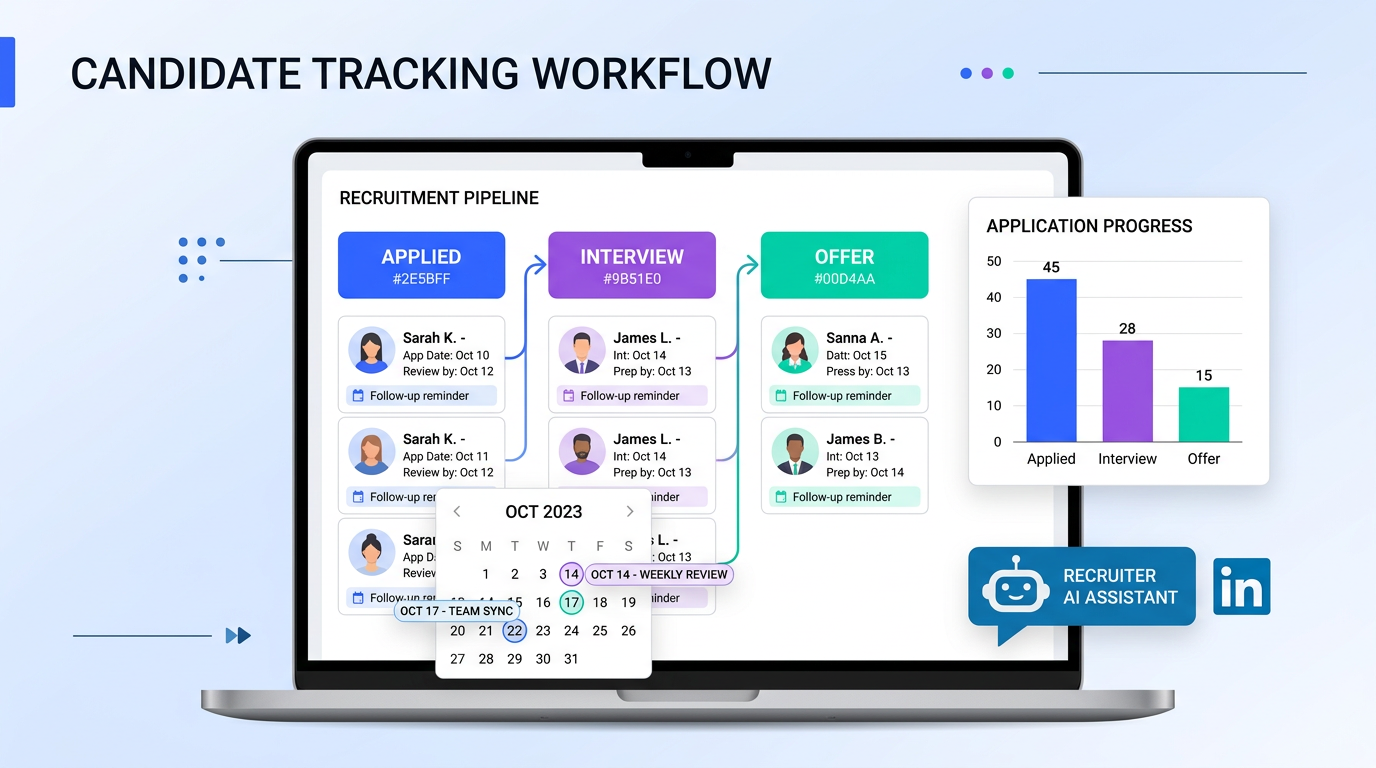
Using candidate tracking software during a job transition is one of the fastest ways to reduce stress because it replaces mental clutter with a simple system. Treat your search like a lightweight ATS software workflow: log each application, set a follow up date, track networking conversations, and review progress weekly. If you are hiring instead of searching, the same principle applies at scale: StrategyBrain AI Recruiter automates LinkedIn outreach, answers candidate questions, follows up 24/7 in any language, and collects resumes and contact details so recruiters spend more time interviewing and less time chasing replies.
Table of Contents
- Why tracking reduces job search stress
- A simple candidate tracking setup you can start today
- 7 ways to stay sane during a job transition
- Quick comparison: tracking methods
- FAQ
- Conclusion and next steps
Why tracking reduces job search stress
A job search is stressful partly because it is invisible work. You can spend 2 hours tailoring a resume and still feel like nothing happened. A tracking system makes progress visible and repeatable.
In practice, candidate tracking software for a job seeker is simply online job application software behavior: one place where you record what you applied to, when you applied, who you spoke with, and what you will do next. That structure helps you avoid two common spirals: over applying without follow up, and endlessly scrolling postings without taking action.
A simple candidate tracking setup you can start today
You do not need a full enterprise tool to get the benefits of an ATS style workflow. What you need is consistency and a few fields that force clarity.
Step by step setup
- Create one tracker: a spreadsheet, notes database, or any tool you will actually open daily.
- Add 8 fields: Company, Role, Source, Date applied, Status, Next action, Follow up date, Contact person.
- Define statuses: Interested, Applied, Recruiter screen, Interview, Offer, Rejected, Paused.
- Schedule a weekly review: 30 minutes, same day each week, to update statuses and plan next actions.
What to track and what not to track
- Track: actions you control such as applications sent, messages sent, follow ups scheduled, interviews completed.
- Do not over track: predictions such as “likely to hire me” or “perfect fit.” Those guesses increase anxiety and rarely improve outcomes.
- Track networking: one conversation can outperform 50 cold applications, but only if you remember to follow up.
If you are on the employer side, the same tracking discipline is why teams adopt automation. For example, StrategyBrain AI Recruiter can run the initial LinkedIn outreach and follow up loop, then hand recruiters a clean shortlist with resumes and contact details already captured. That is essentially candidate tracking software plus automated engagement, applied to sourcing and qualification.
7 ways to stay sane during a job transition
1) Stay positive and set yourself up for success
It sounds simple, but mindset is a daily practice. When you are in transition, your brain will try to turn every rejection into a story about your identity. That story is rarely accurate.
- Use daily affirmations: write down specific skills and traits that made you valuable in past roles and read them aloud once per day.
- Do not take it personally: market forces and timing are real variables, and they are outside your control.
- Borrow perspective: Steve Jobs was released by Apple and later rehired. Oprah Winfrey was fired from her first TV job. Michael Jordan was cut from his high school basketball team.
2) Set realistic goals and experience progress
The goal is not “get hired today.” The goal is to build momentum you can sustain until the right role lands. Career coach Marlo Lyons recommends breaking big goals into smaller pieces by time period and activity type, such as resume updates, interview practice, research, and applications.
This is where candidate tracking software becomes emotional support, not just admin. When your tracker shows you completed 5 targeted applications and 3 follow ups this week, you have proof of progress even before results arrive.
3) Eat well and exercise to maintain composure
Transitions disrupt routines, and disrupted routines amplify stress. The irony is that uncertainty is when you need stability most.
The Mental Health Foundation advises that eating healthy, nutritious foods can help you feel balanced during times of transition, and that a diet rich in vitamins and minerals can support mood and energy across the day.
Movement helps too. A walk can reset your nervous system and improve thinking. Stretching can reduce the physical tension that builds up during long application sessions.
4) Boost your progress with networking and support
Networking is not only about referrals. It is also a way to stay engaged with your field and feel less isolated. Job coaches and career counsellors can help you define goals, identify skill gaps, and keep you accountable.
From a systems perspective, treat networking like a pipeline. Add every conversation to your tracker with a next action and a follow up date. This is the same logic recruiters use when they rely on ATS software to avoid losing strong candidates in the shuffle.
On the hiring side, StrategyBrain AI Recruiter applies this pipeline discipline automatically on LinkedIn by handling initial introductions, answering role and compensation questions, confirming interview interest, and collecting resumes. The recruiter then reviews the collected resumes and contacts shortlisted candidates for interviews.
5) Develop a routine that you can sustain
Burnout is a predictable outcome when you treat job searching like an endless sprint. Career strategist Helen Dewar, based in Vancouver, advises pacing: she notes it is usually four to nine months before people find an acceptable job, and she recommends designating a certain number of hours per day for the search, no more than three.
A sustainable routine also reduces doom scrolling. Instead of spending hours scrolling postings, decide in advance when you will search, when you will apply, and when you will follow up. Your tracker becomes the guardrail.
6) Make yourself more valuable through continuous learning
If you are redefining your path, skill building can restore a sense of control. Formal education is one option, but it is not the only one. Short courses, workshops, and structured self study can strengthen your resume and your confidence.
One practical approach is to add a “Learning” column to your tracker and log 1 skill improvement activity per week. This keeps development real and measurable, not aspirational.
7) Take care of yourself
When finances feel tight, self care can feel irresponsible. In reality, it is maintenance. Set aside time for exercise, hobbies, and reading. Those activities keep you energized, and energy is a real input to consistent applications and better interviews.
There is no shortcut through uncertainty. But healthy habits plus a simple tracking system can keep you steady until the next opportunity arrives.
Quick comparison: tracking methods
| Method | Setup time | Best for | Limitations |
|---|---|---|---|
| Spreadsheet tracker | 20 minutes | Simple job search tracking with full control | Manual updates required |
| Notes database | 30 minutes | Tracking applications plus networking context | Easy to over customize and stop using |
| Personal ATS style workflow | 45 minutes | People who want clear stages and follow up discipline | Requires weekly review to stay accurate |
| Employer automation with StrategyBrain AI Recruiter | Varies by team | Recruiters who want automated LinkedIn outreach and follow up | Does not replace final resume based qualification by a recruiter |
FAQ
What is candidate tracking software?
Candidate tracking software is a system for recording and managing candidate or application status across stages. For employers, it is often part of an applicant tracking system. For job seekers, it can be a simple tracker that logs applications, contacts, and follow ups.
Is online job application software the same as ATS software?
Not always. Online job application software usually refers to the tools used to submit applications and manage forms. ATS software is typically used by employers to store applicants, move them through stages, and coordinate hiring workflows.
What should I track during a job search?
Track the company, role, date applied, current status, next action, follow up date, and any contact person. Those fields are enough to prevent missed follow ups and repeated applications to the same role.
How often should I follow up after applying?
A common approach is to schedule one follow up 7 calendar days after applying, then one additional follow up 7 calendar days later if you have a contact. If the posting closes or you receive a rejection, update your tracker and move on.
How many hours per day should I spend job searching?
Helen Dewar advises keeping the search to no more than three hours per day because it can take four to nine months to land an acceptable role. A shorter daily block is easier to sustain and reduces burnout risk.
How does StrategyBrain AI Recruiter relate to candidate tracking?
StrategyBrain AI Recruiter supports the front end of the recruiting pipeline by automating LinkedIn outreach, answering candidate questions, following up 24/7 in any language, and collecting resumes and contact details. Recruiters then review resumes and complete final qualification and interviews.
Does StrategyBrain AI Recruiter decide if a candidate is qualified?
No. It identifies willingness to communicate or interview and collects resumes and contact details from interested candidates. Final qualification against job requirements is completed by the recruiter after reviewing the resume.
How does StrategyBrain AI Recruiter handle privacy and security?
According to StrategyBrain product information, customer provided data is not used to train AI models, credentials are encrypted, and candidate data is encrypted and isolated with customer specific keys. Use your internal security review process to confirm fit for your organization.
Conclusion and next steps
A job transition is hard, but it becomes more manageable when you replace chaos with structure. Start with a simple candidate tracking software style tracker, set realistic goals you can control, and build a routine that protects your health and energy. If you are hiring, apply the same discipline at scale by using automation that keeps candidate conversations moving, such as StrategyBrain AI Recruiter for LinkedIn outreach, follow up, and resume collection.
Next steps: create your tracker today, schedule a 30 minute weekly review, and choose one networking action to complete in the next 48 hours.