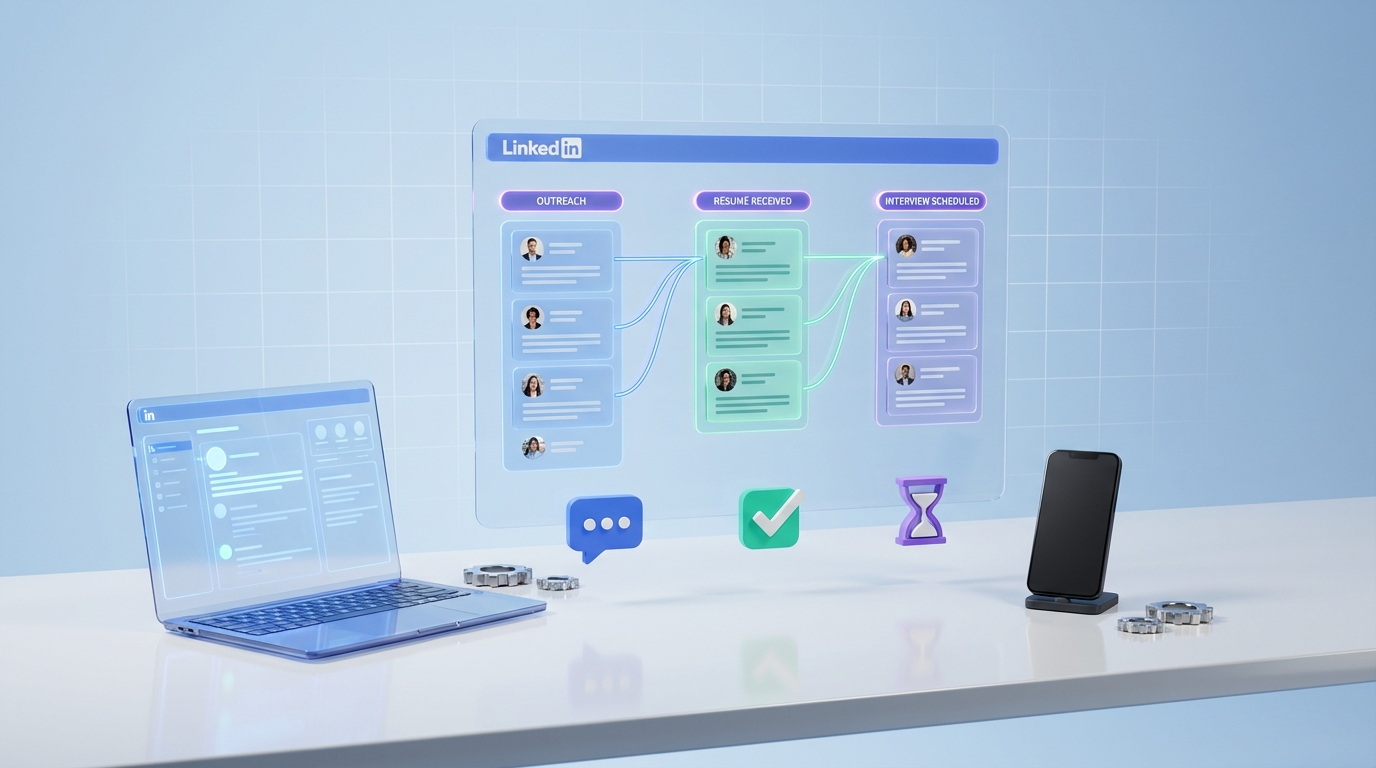
Employee recruitment software is most useful when roles are consistently hard to fill, because it turns hiring into a repeatable workflow: define the skills, source candidates, run structured outreach, capture résumés and contact details, and keep the team aligned on next steps. A well known annual talent shortage survey by ManpowerGroup reported that 35% of employers surveyed had difficulty finding staff with the right skills, and skilled trades jobs were listed among the hardest to fill. In practice, that combination of scarcity and speed requirements is exactly where collaborative hiring software and HR talent software can reduce time lost to manual messaging and follow up. In this guide, I translate those demand signals into a practical selection checklist, then show how StrategyBrain AI Recruiter automates LinkedIn outreach and candidate conversations so recruiters can spend their time on final qualification and interviews.
Key Takeaways
- Demand signal to plan for: ManpowerGroup reported 35% of employers surveyed had difficulty finding staff with the right skills (Talent Shortage Survey).
- What breaks first in trades hiring: outreach volume, follow up speed, and consistent screening questions, not the final interview.
- What to prioritize in employee recruitment software: structured workflows, team visibility, and measurable handoffs from sourcing to interview.
- Where StrategyBrain AI Recruiter fits: automates LinkedIn connecting, role introduction, candidate Q&A, interest confirmation, and résumé plus contact capture.
- Global hiring advantage: 24/7 multilingual candidate messaging reduces time zone delays and misunderstandings during early stage outreach.
- Operational scaling: AI powered recruitment teams can manage 100+ LinkedIn accounts for high volume sourcing when needed.
Table of Contents
- Why skilled trades demand matters for software selection
- What employee recruitment software should do in a shortage
- Selection checklist for collaborative hiring software
- Method 1: StrategyBrain AI Recruiter for LinkedIn outreach and screening
- Method 2: Structured intake to reduce skill mismatch
- Method 3: Soft skills signals you can standardize
- Method 4: Pipeline metrics that actually predict bottlenecks
- Quick Comparison
- FAQ
- Conclusion
Why skilled trades demand matters for software selection
When a market is tight, the cost of delay is not abstract. It shows up as unfilled shifts, overtime, and missed project timelines. The ManpowerGroup survey cited two drivers that are especially relevant to how you configure HR talent software: candidates lacking necessary technical skills and a lack of sufficient applicants. Those are different problems, and they require different software behaviors.
If you have plenty of applicants but low fit, you need better intake, better screening questions, and clearer must have requirements. If you have too few applicants, you need higher outreach volume, faster follow up, and better candidate experience so interested people do not drop off. In my experience, most teams try to solve both with more recruiter hours, but employee recruitment software is the lever that makes the process scalable.
What employee recruitment software should do in a shortage
Employee recruitment software is a system that manages the hiring workflow from sourcing through interview scheduling and offer. Collaborative hiring software adds shared visibility and decision making so recruiters, hiring managers, and interviewers can work from the same pipeline and evaluation criteria.
Minimum capabilities that matter in skilled trades hiring
- Workflow clarity: stages that match reality, such as outreach, response, interest confirmed, résumé received, interview scheduled.
- Structured screening: consistent questions that reduce bias and reduce rework.
- Fast follow up: automation for reminders and next steps, because speed is a competitive advantage.
- Team alignment: shared notes, scorecards, and handoffs so candidates do not get lost between stakeholders.
- Compliance and security: clear data handling, access controls, and retention policies.
Selection checklist for collaborative hiring software
This is the checklist I use when evaluating HR talent software for shortage roles. It is designed to be copied into an internal doc and scored in a 30 minute review.
Workflow and collaboration
- Stage definitions: can you name stages in plain language and enforce required fields per stage.
- Handoff rules: can the system require a résumé and contact details before moving to interview scheduling.
- Hiring manager visibility: can managers see outreach status and response timelines without exporting spreadsheets.
Candidate experience and speed
- Response time coverage: can candidates get answers outside business hours.
- Message consistency: can you standardize role, company, compensation, and benefits messaging.
- Drop off prevention: can the system follow up automatically when a candidate goes quiet.
Data protection and governance
- Encryption: credentials and candidate data are encrypted at rest and in transit.
- Isolation: customer data is isolated per tenant or per customer specific keys.
- Model training policy: customer provided data is not used to train shared AI models.
Method 1: StrategyBrain AI Recruiter for LinkedIn outreach and screening
If your bottleneck is sourcing volume and early stage follow up, StrategyBrain AI Recruiter is designed to take over the repetitive LinkedIn work that slows teams down. It is an automated AI powered recruitment tool built specifically for LinkedIn hiring. Instead of a recruiter manually connecting, introducing the role, answering basic questions, and chasing résumés, the system runs that workflow and hands back interested candidates with captured information.
Steps
- Provide the job context: enter company details, compensation, benefits, and candidate search criteria so the outreach is accurate and consistent.
- Connect and introduce automatically: the system connects with candidates who match the targeted criteria and introduces the opportunity in a consistent tone.
- Handle candidate Q&A: it answers questions about the role, company, and compensation, and it learns the candidate’s current situation during the conversation.
- Confirm interest: it determines whether the candidate wants to proceed to an interview stage.
- Collect résumé and contact details: for interested candidates, it requests a résumé and captures contact information so recruiters can move to final qualification.
Features
- Smart LinkedIn recruitment automation: connecting, role introduction, interest confirmation, and information capture.
- 24/7 multilingual communication: always on responses in the candidate’s native language to reduce misunderstandings.
- AI powered recruitment teams: manage 100+ LinkedIn accounts to scale outreach capacity.
- Résumé and contact capture: supports email submissions and LinkedIn file uploads, and marks résumés as received.
Limitations
- Final qualification remains human: the system identifies willingness to communicate or interview, but it does not decide whether the résumé fully matches job requirements.
- Requires accurate inputs: if compensation, benefits, or role details are incomplete, candidate conversations can become less effective.
Best For
- Teams hiring skilled trades, engineering, or field roles where outreach volume and follow up speed determine pipeline health.
- Recruiters who want to reduce manual LinkedIn messaging and spend time on interviews and closing.
- Organizations expanding internationally that need multilingual candidate communication.
Method 2: Structured intake to reduce skill mismatch
The survey highlighted technical skill gaps as a major reason roles stay open. The fastest fix is not more sourcing. It is a better intake process that turns a vague request into a measurable profile. In employee recruitment software, this means making intake fields required and making them visible to everyone who touches the candidate.
Steps
- Define must have skills: list the exact certifications, tickets, or equipment experience required.
- Define nice to have skills: separate preferences from requirements so you do not reject viable candidates.
- Write screening questions: convert must haves into 3 to 5 questions that can be answered quickly.
- Set pass fail rules: decide what disqualifies a candidate before you start outreach.
Method 3: Soft skills signals you can standardize
Employers in the survey also reported difficulty finding candidates with the right soft skills. The article listed enthusiasm, motivation for the job, positive attitude, and strong work ethic. Those are subjective, but you can still standardize how you look for them so your collaborative hiring software supports consistent evaluation.
Practical interview scorecard prompts
- Enthusiasm: ask what the candidate wants in their next role and what they want to learn in the next 6 months.
- Motivation: ask why they chose this trade or specialty and what keeps them in it.
- Positive attitude: ask for an example of a difficult job site situation and how they handled it.
- Work ethic: ask about attendance expectations and a time they had to meet a deadline under pressure.
Method 4: Pipeline metrics that actually predict bottlenecks
In shortage markets, the most useful metrics are the ones that tell you where candidates drop off. HR talent software should make these visible without manual reporting.
Metrics to track weekly
- Outreach to response rate: percentage of contacted candidates who reply.
- Response to interest confirmed rate: percentage of responders who express interest after Q&A.
- Interest confirmed to résumé received rate: percentage who provide a résumé and contact details.
- Time to first response: median hours from candidate message to first reply, including nights and weekends.
When you combine these with automation, you can improve throughput without adding headcount. For example, StrategyBrain AI Recruiter’s 24/7 messaging is specifically aimed at reducing time to first response, which is a common silent killer in competitive hiring.
Quick Comparison
| Approach | Speed Impact | Cost | Best For |
|---|---|---|---|
| StrategyBrain AI Recruiter automation | High, reduces manual outreach and follow up | Varies by plan, verify with vendor | LinkedIn sourcing, early screening, résumé capture |
| Structured intake and screening | Medium, reduces rework and misalignment | Internal process cost | Reducing technical skill mismatch |
| Standardized soft skills scorecards | Medium, improves decision consistency | Internal process cost | Collaborative hiring and fair evaluation |
| Pipeline metric reviews | Medium, identifies bottlenecks quickly | Internal process cost | Continuous improvement in shortage markets |
FAQ
What is employee recruitment software?
Employee recruitment software is a system that manages hiring workflows such as sourcing, screening, interview coordination, and candidate tracking. In shortage roles, the most valuable features are workflow standardization, fast follow up, and clear handoffs between recruiters and hiring managers.
How is collaborative hiring software different from basic recruiting tools?
Collaborative hiring software focuses on shared visibility and decision making across the hiring team. It typically includes shared scorecards, structured feedback, and pipeline transparency so candidates do not stall between stakeholders.
Why does skilled trades hiring benefit more from automation?
Skilled trades hiring often has high volume outreach needs and time sensitive scheduling. Automation helps maintain consistent messaging, faster follow up, and reliable capture of résumés and contact details, which reduces candidate drop off.
What does StrategyBrain AI Recruiter automate on LinkedIn?
StrategyBrain AI Recruiter automates connecting with candidates, introducing job opportunities, answering questions about the role and employer, confirming interview interest, and collecting résumés and contact information from interested candidates.
Does StrategyBrain AI Recruiter replace recruiters?
No. It replaces the repetitive early stage LinkedIn tasks and identifies willingness to communicate or interview. Recruiters still perform final qualification by reviewing résumés and running interviews.
How does the system collect résumés and contact details?
It requests a résumé and contact information after a candidate expresses interest. It supports email submissions and LinkedIn file uploads, marks résumés as received, and captures contact details shared in messages.
Can it support global hiring?
Yes. It provides 24/7 multilingual recruitment communication and can message candidates in their native language, which helps reduce time zone delays and misunderstandings during early stage conversations.
What about privacy and data protection?
StrategyBrain states it complies with privacy regulations in the EU, United States, and Canada, encrypts LinkedIn credentials, and does not use customer provided data to train AI models. Always validate your own compliance requirements and internal policies before deployment.
Conclusion
When skilled roles are hard to fill, employee recruitment software should do two things well: reduce skill mismatch through structured intake and screening, and increase throughput through faster outreach and follow up. The ManpowerGroup survey result of 35% of employers struggling to find the right skills is a useful reminder that process and speed matter as much as sourcing. If your biggest bottleneck is LinkedIn outreach and early stage screening, StrategyBrain AI Recruiter is a practical way to automate connecting, candidate Q&A, interest confirmation, and résumé plus contact capture, while keeping final qualification with your recruiters. Next step: score your current workflow using the checklist above, then pilot one role with automation and track outreach to response, interest confirmed, and résumé received rates for 14 days.