Headhunter software helps executive search and HR teams run succession planning and C suite hiring with more consistency, speed, and documentation. In practice, the most effective setup is a workflow that starts with internal talent mapping and structured stakeholder input, then expands to external outreach when needed. For LinkedIn based sourcing, StrategyBrain AI Recruiter can automate first touch outreach, candidate questions, interest confirmation, and resume and contact capture, while recruiters stay focused on fit, interviews, and final selection. This guide covers the leadership behaviors and process choices that make succession planning work after the pandemic, and where software headhunter and executive search software can remove busywork without losing the human element.
Table of Contents
- What changed after the pandemic and why succession planning got harder
- Employee centric leadership as the foundation
- A practical succession planning strategy for executive roles
- When internal talent is the best first move
- Where headhunter software fits without breaking trust
- Using StrategyBrain AI Recruiter for LinkedIn outreach and qualification
- Copyable checklist for a software supported succession plan
- Quick comparison of approaches
- FAQ
- Conclusion and next steps
What changed after the pandemic and why succession planning got harder
In September 2021, Luana Fong, HR Manager at Hillcore Group, described the hiring environment as moving into a protracted recovery phase. She noted that activity was picking up and returning toward pre pandemic levels, but that attracting candidates to new opportunities had been challenging during the uncertainty.
That tension is still familiar to many teams. Succession planning is not only a replacement plan. It is also a stability plan. When people are cautious, the process needs to be more transparent, more respectful, and more consistent.
This is where headhunter software can help, but only if it supports the right behaviors. If the tool pushes volume over fit, or speed over respect, it can damage the very culture you are trying to protect.
Employee centric leadership as the foundation
Fong’s approach emphasized respect and employee experience. She described the importance of staff feeling respected and having their opinions valued, especially when transitioning back toward office routines. In her example, the team used staff surveys and responded differently by location based on comfort levels.
From a software headhunter perspective, this matters because executive hiring is not isolated from retention. If your succession plan creates anxiety or signals that leadership decisions are made without listening, you can lose high performers before you even fill the role.
What to operationalize in your process
- Structured listening: capture employee input through surveys, manager interviews, and skip level conversations, then document themes.
- Visible fairness: define how internal candidates are evaluated and how external candidates are introduced.
- Flexibility rules: write down what flexibility is possible by role and location, then communicate it consistently.
A practical succession planning strategy for executive roles
Hillcore Group’s work includes acquiring companies, and Fong described that recruiting into open executive positions begins with a high level analysis of the company. She also emphasized that fit is critical at the executive level and that involving existing executives in the recruitment process can help all parties assess culture and fit.
A repeatable sequence you can run every time
- Role and context analysis: define what the business needs now, what it will need in 12 months, and what must not change culturally.
- Stakeholder alignment: agree on decision makers, interview stages, and non negotiables.
- Internal slate first: identify internal successors and readiness gaps.
- External search second: expand to external candidates when internal readiness does not match the timeline or strategy.
- Fit validation: ensure finalists meet the current executive team where appropriate.
Fong also noted that pushback can happen and that it is in everyone’s best interest to respect resistance and return to the drawing board for a better fit. That is a useful guardrail for any executive search software workflow. The tool should not force a hire. It should make it easier to pause, document why, and restart with clarity.
When internal talent is the best first move
Fong stated that the majority of the time they prefer to keep people or promote internally, and that there is no substitute for the knowledge and history long term employees have with the company. She also highlighted stability and smooth transitions as priorities in succession planning.
Signals that internal recruitment should lead
- Culture continuity is a priority: the organization cannot afford a leadership style shock.
- Institutional knowledge is a differentiator: relationships, regulatory context, or operational nuance matter.
- Candidate risk is high: external candidates are less likely to move during uncertain periods.
What headhunter software should do for internal succession
- Track readiness: document skills gaps and development actions for each potential successor.
- Standardize evaluation: keep interview notes, scorecards, and decision rationale in one place.
- Protect confidentiality: limit access by role and need to know.
Where headhunter software fits without breaking trust
Headhunter software is most valuable when it reduces coordination overhead and improves consistency. It is least valuable when it replaces judgment or empathy. Based on what we see in executive hiring workflows, the best results come from using software to enforce process quality, not to pressure outcomes.
High value use cases
- Process governance: stages, approvals, and audit trails for executive decisions.
- Candidate relationship management: consistent follow up and clean handoffs between stakeholders.
- Documentation: interview feedback, compensation discussions, and decision notes stored securely.
Where to be cautious
- Over automation of messaging: templated outreach can feel disrespectful at the C suite level if it is not personalized.
- False precision: scoring models can hide bias if criteria are not explicit and reviewed.
- Speed incentives: optimizing for time to fill can conflict with fit and retention.
Using StrategyBrain AI Recruiter for LinkedIn outreach and qualification
When external search is necessary, LinkedIn is often the fastest channel to reach passive candidates. The bottleneck is not finding profiles. The bottleneck is the repetitive work of connecting, introducing the opportunity, answering questions, confirming interest, and collecting resumes and contact details.
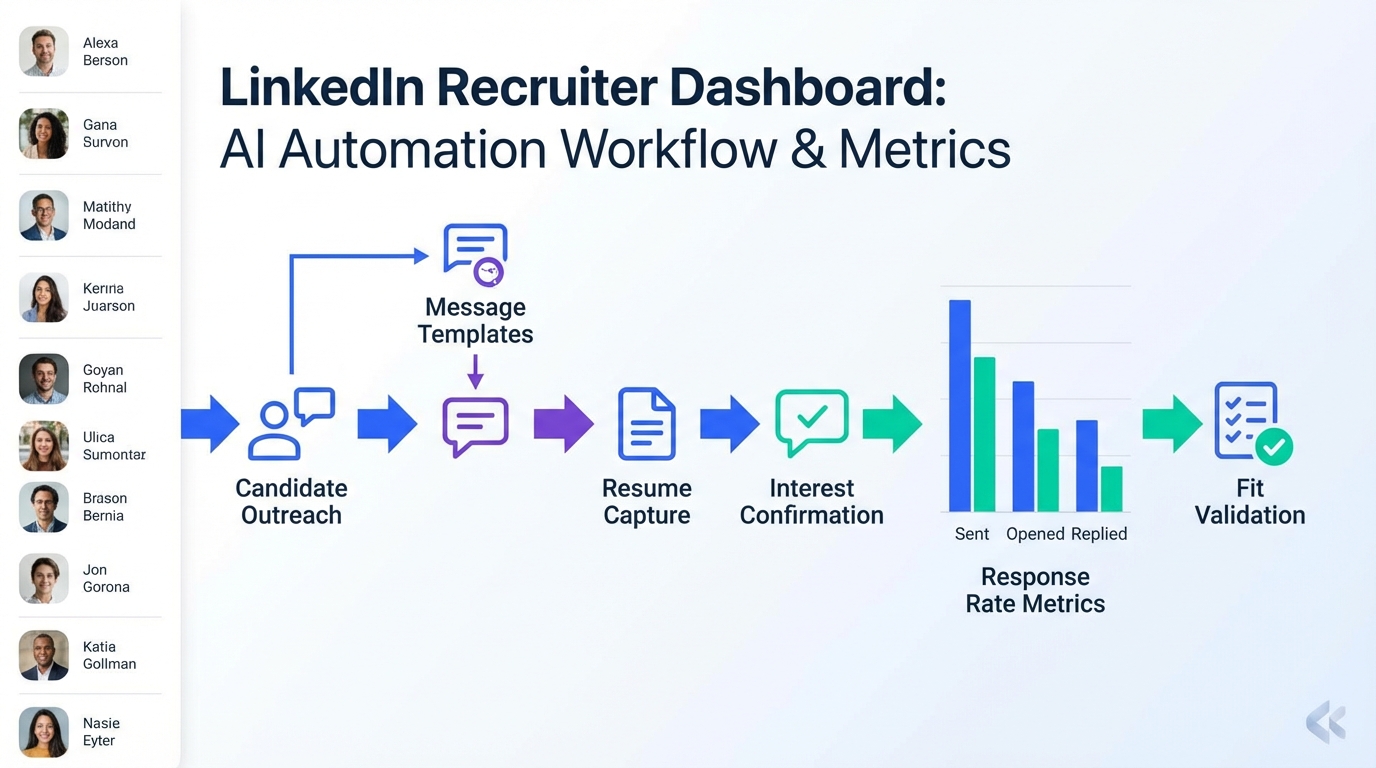
StrategyBrain AI Recruiter is designed to automate that front end workflow on LinkedIn. It can automatically connect with candidates within your targeted search criteria, introduce the role, answer questions about the role, company, and compensation, confirm interview interest, and collect resumes and contact information from interested candidates. It also supports 24 hour multilingual communication and can be managed across more than 100 LinkedIn accounts for teams that need scale.
How we recommend using it in an executive search software workflow
- Define the search criteria: align on target titles, industries, locations, and must have experience.
- Provide role context: share company details, compensation, and benefits so the AI can answer candidate questions accurately.
- Automate first touch and follow up: let the AI handle initial outreach and ongoing messaging while you monitor tone and positioning.
- Collect resumes and contacts: the AI requests resumes and captures contact details when candidates express interest.
- Human led fit assessment: recruiters review resumes and run interviews, because the AI does not decide final fit.
Limitations to plan for
- It does not replace final qualification: StrategyBrain AI Recruiter can identify willingness to communicate or interview, but recruiters still evaluate match to requirements.
- Inputs determine outputs: if compensation or role details are unclear, candidate conversations will be less effective.
- Governance still matters: you should define messaging guidelines and escalation rules for sensitive questions.
In our experience, this division of labor supports the leadership principle Fong emphasized. Lead with respect. Use automation to remove repetitive work, then invest the saved time into better conversations, better stakeholder alignment, and better fit validation.
Copyable checklist for a software supported succession plan
Use this checklist to align your succession planning process with a headhunter software workflow, while keeping the employee centric approach intact.
Succession planning checklist
- Role clarity: executive outcomes, decision rights, and cultural non negotiables documented.
- Internal slate: at least 2 internal successors identified, with readiness gaps and development actions listed.
- Stakeholder plan: interview stages, panel members, and feedback deadlines agreed.
- Fit validation: finalists scheduled to meet current executive team where appropriate.
- External outreach plan: if needed, LinkedIn outreach workflow defined, including messaging tone and escalation rules.
- Automation boundaries: what the AI can send, what requires human approval, and what must be handled live.
- Decision record: final rationale captured for governance and future learning.
Quick comparison of approaches
| Approach | Primary goal | Best for | Main risk |
|---|---|---|---|
| Internal first succession planning | Stability and continuity | Organizations with strong long term talent | Readiness gaps if timeline is short |
| Traditional external executive search | Bring in new capability | Turnarounds or strategic restructuring | Longer cycle time and higher uncertainty |
| LinkedIn outreach with StrategyBrain AI Recruiter | Reduce repetitive outreach work | Teams that need scale and consistent follow up | Requires clear role inputs and messaging governance |
FAQ
What is headhunter software?
Headhunter software is a system that helps recruiters manage executive search workflows such as sourcing, outreach, candidate relationship management, interview coordination, and decision documentation. In this article, it also includes automation that supports LinkedIn based outreach and early stage qualification.
Is headhunter software the same as executive search software?
They overlap. Executive search software usually emphasizes high stakes hiring workflows such as stakeholder alignment, confidentiality, and structured evaluation. Headhunter software can be broader and may include sourcing and outreach automation for agency style recruiting.
When should succession planning start?
Succession planning should start before a role is vacant, because internal readiness takes time to build. If you wait until a resignation, you often default to external hiring under pressure, which can reduce fit quality.
How do you keep succession planning employee centric?
You keep it employee centric by listening systematically, communicating fairness, and protecting dignity during transitions. The leadership example in this article highlights respect, flexibility, and involving the right stakeholders to validate fit.
How does StrategyBrain AI Recruiter help headhunters?
StrategyBrain AI Recruiter automates repetitive LinkedIn tasks such as connecting, introducing roles, answering questions, confirming interest, and collecting resumes and contact details. This can increase recruiter productivity while keeping final fit assessment with the recruiter.
Does StrategyBrain AI Recruiter decide if a candidate is qualified?
No. It can identify willingness to communicate or interview and collect the information needed to proceed, but it does not determine whether a resume fully matches job requirements. Recruiters complete final qualification after reviewing the resume.
Can StrategyBrain AI Recruiter communicate in multiple languages?
Yes. It supports 24 hour multilingual communication and can respond in the candidate’s native language, which can reduce misunderstandings and improve responsiveness across time zones.
How does it handle resumes and contact details?
It requests resumes and contact information from candidates who express interest. If a resume is sent, it is marked as received, and contact details shared in messages are captured and displayed for recruiter follow up.
How should we think about privacy and compliance?
StrategyBrain AI Recruiter states that it complies with privacy regulations in the EU, United States, and Canada, and that customer provided data is not used to train AI models. You should still confirm your internal policies, access controls, and legal requirements before deployment.
Conclusion and next steps
Headhunter software is most effective when it supports a respectful, employee centric succession planning process and removes repetitive work from executive hiring. The leadership perspective from Luana Fong at Hillcore Group reinforces a practical principle: stability and fit matter, and internal talent is often the best first option. When external outreach is required, StrategyBrain AI Recruiter can automate LinkedIn connecting, role introduction, candidate Q and A, interest confirmation, and resume and contact capture, while recruiters keep ownership of final qualification and selection.
Next steps: document your succession workflow, define automation boundaries for outreach, and pilot StrategyBrain AI Recruiter on one role where LinkedIn sourcing is a primary channel. Measure outcomes using process metrics you already trust, such as response rate, qualified conversations, and time saved per recruiter.