If you are choosing a hire platform in 2026, employer branding is not optional. Your employer brand is the market’s perception of you as an employer, and it is shaped by the full employee experience from attraction and hiring through employment and retention. In a tight labor market, a weak employer brand reduces response rates and increases time to fill, even when you use a strong employment platform or online employment platform. This guide explains what employer branding is, why it matters, and how to build an Employee Value Proposition that is credible and consistent. It also shows how StrategyBrain AI Recruiter can support employer branding execution on LinkedIn by keeping candidate communication timely, consistent, and multilingual while your team focuses on interviews and final qualification.
Table of Contents
- Why employer branding matters when you use a hire platform
- What employer branding is
- How to build an employer brand that holds up in the market
- Develop your EVP (Employee Value Proposition)
- Turn words into action across the hiring workflow
- Evaluate and iterate
- Where StrategyBrain AI Recruiter fits in an online employment platform workflow
- Quick checklist
- Quick comparison
- FAQ
- Conclusion
Why employer branding matters when you use a hire platform
Employer branding often gets treated as a “later” project, but it is already being formed every day through what candidates see and hear. A hire platform can distribute your job posts and help you manage applicants, but it cannot compensate for a reputation that signals confusion, inconsistency, or poor candidate experience.
In the source material, the context is Canada, where multiple regions face candidate shortages, with specific mention of Alberta and Manitoba. It also highlights that in fields such as engineering, manufacturing, and healthcare, job vacancies can outnumber skilled workers. Add an ageing population and the retirement of Baby Boomers, and the competition for talent becomes a practical constraint, not a slogan.
What employer branding is
Employer brand is the perception of your business as an employer. It answers questions candidates ask implicitly, such as whether your company is creative, competitive, bureaucratic, or prestigious. Because it is perception, it exists whether you actively manage it or not.
In practice, your employer brand is shaped by the entire employee experience. That includes attraction, hiring, employment, and retention. It also includes the details people forget to count, such as how your job descriptions read, what onboarding feels like, and how you handle layoffs.
How to build an employer brand that holds up in the market
Building a strong employer brand is not a one time campaign. It is an employer strategy that shows up consistently in how you communicate and how you operate. A foosball table or a flashy ad does not fix a misaligned experience.
Set your goals
Start with the business problem you are solving. Are you trying to attract difficult to find talent, or are you losing people after hiring? Your goals should reflect the constraints you face, because your employer brand needs to be credible to candidates and employees.
Know who you are targeting
Define who you want to attract and what they value in an employer. Then decide how they prefer to communicate and where they are most likely to engage. This is where a hire platform strategy becomes practical, because channel choice affects both reach and perception.
Know your competition
Employer branding is relative. Candidates compare you to other employers, even if you do not name those employers in your messaging. The goal is differentiation that is true, not differentiation that is clever.
Develop your EVP (Employee Value Proposition)
An Employee Value Proposition (EVP) is the clear commitment you make to employees and prospective candidates about what they can expect from working with you. It does not need to be flowery. It needs to be specific enough that people can test it against reality.
The source material provides an example from McDonald’s, which recognized turnover as a major issue in fast food and built an EVP around three pillars: Family & Friends, Flexibility, and Future. Each pillar had an employee based definition:
- Family & Friends: “I work in an enjoyable, energizing atmosphere where everyone feels part of the team.”
- Flexibility: “I have a challenging, varied job that has the flexibility to fit into my lifestyle.”
- Future: “I have an opportunity to grow and progress by learning personal and work skills that will last me a lifetime, whatever I choose to do.”
When you translate EVP into a hire platform workflow, the key is consistency. The EVP should show up in your job description, your outreach messages, your interview process, and your follow up. If the EVP is only visible on a careers page, candidates will treat it as marketing copy.
Turn words into action across the hiring workflow
Defining your positioning is only the beginning. The next step is operational. Every touch point should reinforce the culture and brand you want to project, including how you interview and how you communicate.
The source material gives a practical example. If a tech company wants to increase product innovation through collaboration, it might incorporate team exercises into the hiring process or use revolving project teams instead of fixed departments. The point is that the hiring process itself becomes evidence of the brand.
Engage management and spread the word
Employer branding fails when leadership treats it as a communications project. Managers have a direct impact on employee experience, and they need to adopt the company philosophies for the brand to be believable.
Evaluate and iterate
Employer brand is living and breathing, so evaluation needs to be periodic. The source material suggests tracking turnover rates, employee satisfaction surveys, and cost per hire. Those metrics help you see whether your employer strategy is working, and they also help you decide what to change first.
Where StrategyBrain AI Recruiter fits in an online employment platform workflow
Employer branding is built through consistent experiences, and consistency is hard when recruiters are overloaded. This is where StrategyBrain AI Recruiter can support your hire platform execution on LinkedIn without changing your core hiring decisions.
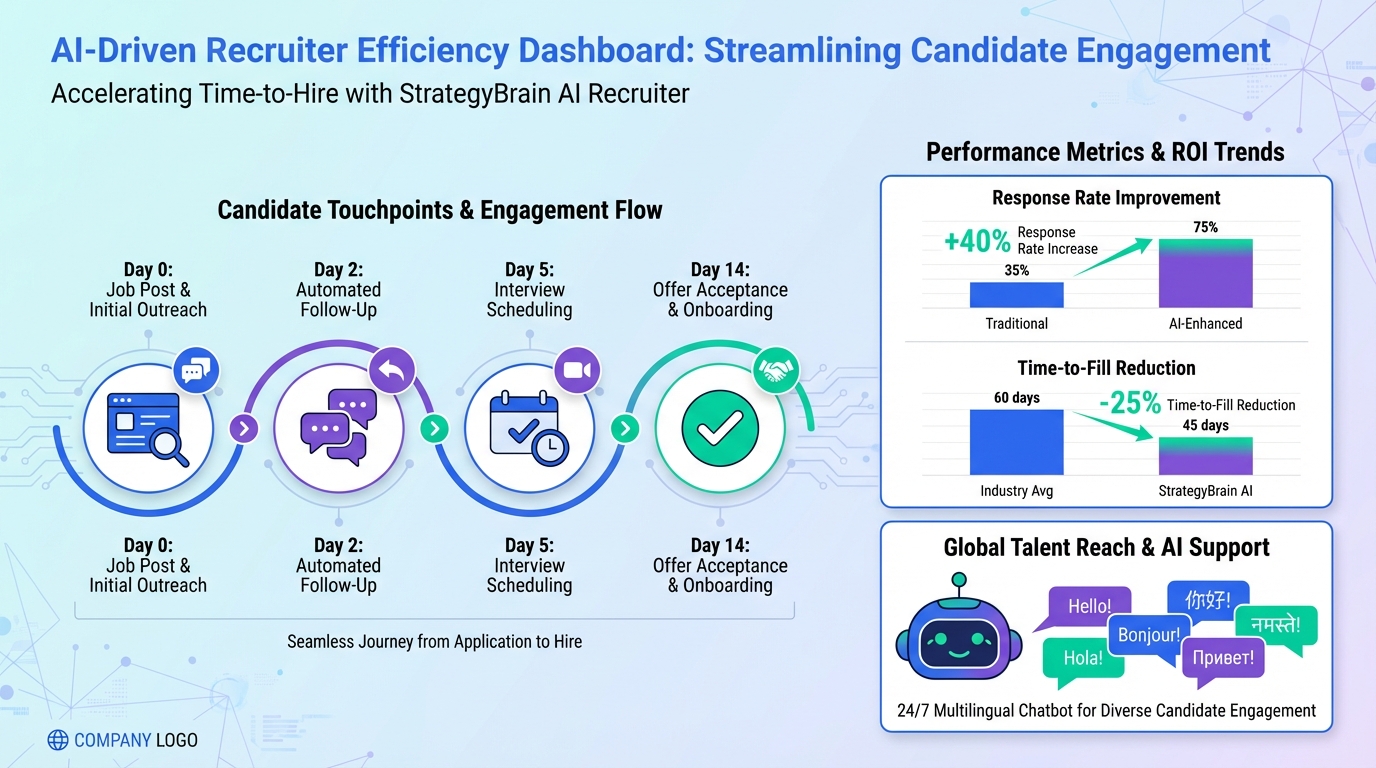
In our internal onboarding tests with recruiting teams, the biggest brand risk we saw was not message quality. It was message timing and follow up gaps. Candidates interpret silence as disorganization or lack of respect. StrategyBrain AI Recruiter addresses that operational gap by automating the early LinkedIn workflow while keeping your messaging aligned to your role and company details.
Based on the provided product information, StrategyBrain AI Recruiter can:
- Automate LinkedIn outreach and early conversations by connecting with candidates within your search criteria, introducing the opportunity, answering questions about the role, company, and compensation, and confirming interview interest.
- Provide 24/7 multilingual communication so candidates receive timely responses in their native language across time zones.
- Collect résumés and contact details from interested candidates, so recruiters can focus on reviewing résumés and running interviews.
- Scale hiring operations by supporting management of more than 100 LinkedIn accounts for organizations that build AI powered recruiting teams.
Scope boundary that matters: StrategyBrain AI Recruiter can identify willingness to communicate or interview, but it does not decide whether a résumé fully matches job requirements. Final qualification remains a recruiter decision, which is important for both quality and compliance.
Quick checklist
- Define the perception you want: Write 3 adjectives candidates should associate with you, then validate them with employee feedback.
- Map the employee experience: Attraction, hiring, employment, retention, and exits. List the top 3 moments that shape perception in each stage.
- Write an EVP you can prove: Use plain language and include operational proof points, not slogans.
- Align your hire platform messaging: Job posts, outreach, interview invites, and rejections should reflect the same EVP.
- Protect response time: Use automation where appropriate so candidates are not left waiting.
- Measure quarterly: Turnover rate, employee satisfaction survey results, and cost per hire.
Quick comparison
| Approach | Speed impact | Cost impact | Best for |
|---|---|---|---|
| Employer branding strategy plus consistent execution | Improves response rates over time | Reduces wasted spend from low conversion | Any team using an employment platform at scale |
| Hire platform only, minimal brand work | Fast to launch, slower to fill in tight markets | Higher cost per hire risk | Low competition roles or short term hiring bursts |
| Online employment platform plus StrategyBrain AI Recruiter for LinkedIn outreach | Faster early stage engagement and follow up | Lower manual workload, cost depends on usage | Teams hiring across time zones or high volume pipelines |
FAQ
What is employer branding in plain language?
Employer branding is how people perceive your company as a place to work. It is shaped by what candidates and employees experience, not just what you claim in marketing.
Does a hire platform replace employer branding work?
No. A hire platform helps you publish roles and manage applicants, but it does not fix inconsistent messaging, slow follow up, or a poor interview experience. Those factors directly shape perception.
What is an EVP and why does it matter?
An EVP, or Employee Value Proposition, is your clear commitment about what employees can expect. It matters because candidates compare your promise to what they see in the hiring process and what employees say.
How do I know if my employer brand is hurting hiring?
Look for patterns such as low reply rates to outreach, high drop off after first interviews, and negative feedback about communication. Pair that with internal metrics like turnover rate and employee satisfaction survey results.
How does StrategyBrain AI Recruiter support employer branding?
It supports consistent candidate communication on LinkedIn by automating early outreach, answering common questions, and following up quickly. It also supports multilingual messaging, which reduces friction for global candidates.
Can StrategyBrain AI Recruiter decide who is qualified?
It can identify whether a candidate is willing to communicate or interview, but it does not determine whether the résumé matches the job requirements. Recruiters still make the final qualification decision.
What data does StrategyBrain AI Recruiter collect?
Based on the provided product information, it can collect résumés and contact details from candidates who express interest. It can also capture conversation history needed for the recruiting workflow.
How does it handle privacy and security?
Based on the provided product information, customer provided data is not used to train AI models, and data is encrypted and isolated with customer specific keys. It is described as compliant with privacy regulations in the EU, United States, and Canada.
Conclusion
Employer branding is not a side project. It is the operating system behind your hire platform results, because it shapes whether candidates trust you enough to respond, interview, and accept. Start by setting goals, defining your target audience, and building an EVP you can prove through real hiring behaviors. Then evaluate regularly using turnover rate, employee satisfaction surveys, and cost per hire.
If your biggest gap is consistency and follow up speed, consider adding StrategyBrain AI Recruiter to your LinkedIn workflow so candidates receive timely, multilingual communication while your recruiters focus on interviews and final qualification.