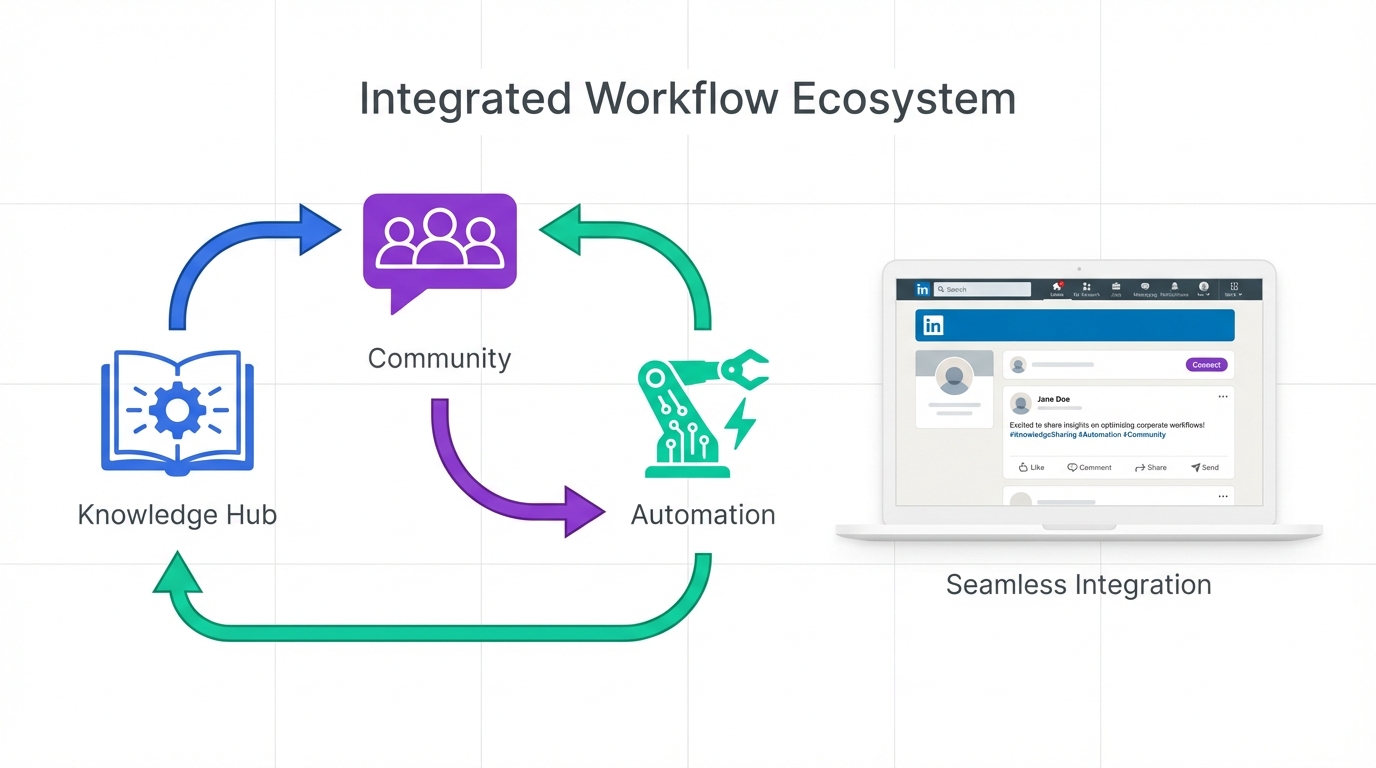
If you are looking for hiring tools that actually help you learn faster and solve real recruiting problems, start by combining three sources: a curated knowledge hub, an active peer community with accountable experts, and an automation layer that turns what you learn into repeatable workflows. When I started in sourcing, there was a huge amount of free, structured knowledge on blogs and in communities where people asked questions and got real answers. Today, a lot of that has shifted toward company led content and groups where everyone posts but fewer people respond. This guide shows how to find reliable places to learn, how to judge whether a space will answer your questions, and how StrategyBrain AI Recruiter can help you apply LinkedIn recruiting practices at scale by automating initial outreach, follow up, and multilingual candidate conversations so you can focus on final qualification.
Table of Contents
Key Takeaways
- Most “hiring tools” are not just software: the best stack includes knowledge sources, communities, and workflow automation.
- Accountability matters: prioritize spaces where authors are named and you can ask follow up questions.
- Communities need responders: a healthy group has visible experts who answer, not only members who promote.
- Fast hiring solutions for tech teams come from repeatable outreach and qualification workflows, not more tabs and bookmarks.
- StrategyBrain AI Recruiter operationalizes LinkedIn recruiting by automating connecting, role introduction, Q&A, follow up, and collecting resumes and contact details.
- Global hiring becomes easier when candidate messaging is 24/7 and multilingual, while recruiters keep final qualification decisions.
Why recruiter learning sources changed
When I began working in sourcing, the internet felt like a library. There were long form blog series that built a complete picture, and communities where discussions were real conversations. You could ask a question and expect someone to respond with context, examples, and a point of view.
Now, I see two shifts. First, more content is produced by companies, which is not inherently bad. Second, many discussion groups feel like a feed: lots of posts, fewer answers. The result is that recruiters spend more time searching and less time learning.
This is why the best online recruitment tools are the ones that reduce uncertainty. They help you find trustworthy knowledge quickly, and they help you apply it consistently in your workflow.
What counts as hiring tools in 2026
In practice, “hiring tools” should include anything that improves hiring outcomes with less time and less guesswork. That includes software, but also structured learning systems and communities that reliably answer questions.
Three categories that matter
- Knowledge tools: organized resources that teach sourcing, outreach, interviewing, and process design in a way you can revisit.
- Community tools: groups where you can ask a specific question and get a useful answer from someone with experience.
- Execution tools: systems that turn best practices into repeatable actions, especially for outreach and follow up.
Where recruiters can learn today (and how to choose)
If your goal is to build real capability, not just collect tips, you need sources that are structured and responsive. Below are the places that still work well, plus what to look for in each.
1) Curated knowledge hubs and long form learning
Look for resources that are organized into a system: a series, a playbook, or a library with clear navigation. The key is that you can start at the beginning and build up, instead of jumping between disconnected posts.
- Best for: building fundamentals in sourcing and recruiting operations.
- Watch out for: content that is polished but anonymous, because you cannot ask follow up questions or validate the author’s experience.
2) Communities with visible experts and real answers
A community is only useful if it has responders. If everyone is posting and nobody is answering, it becomes marketing noise. The healthiest groups have a culture of replying, and you can see who is consistently helpful.
- Best for: edge cases, quick feedback, and sanity checks on your approach.
- Watch out for: groups where questions go unanswered for days, or where replies are vague and promotional.
3) Company content that is transparent and testable
Company led content can be excellent when it is transparent about who wrote it, what was tested, and what the limitations are. The problem is not that it is “company content.” The problem is when it is not attributable or not reproducible.
- Best for: product specific workflows, templates, and implementation details.
- Watch out for: claims without methodology, or content that avoids tradeoffs.
4) Workflow automation that applies what you learn
This is where many teams get stuck. They learn a better outreach sequence or a better way to qualify interest, but they cannot execute it consistently across roles, time zones, and hiring managers. Execution tools close that gap.
For LinkedIn heavy recruiting, StrategyBrain AI Recruiter is designed to automate the repetitive parts of the workflow: connecting with candidates, introducing the role, answering questions about the role, company, and compensation, confirming interview interest, and collecting resumes and contact details. Recruiters still do the final qualification by reviewing resumes, which keeps decision making where it belongs.
A practical evaluation checklist
Use this checklist to decide whether a learning source or tool is worth your time. We use a similar rubric internally because time is the scarcest resource in recruiting.
Quick checklist
- Attribution: Is the author named, and can you contact them with questions?
- Structure: Is the knowledge organized into a system you can revisit?
- Responsiveness: Do questions get answered with specifics, or ignored?
- Reproducibility: Are there steps, templates, or examples you can actually run?
- Honesty: Are limitations stated clearly, or is everything presented as perfect?
- Workflow fit: Does it help you execute faster, especially for outreach and follow up?
How StrategyBrain AI Recruiter fits into the learning loop
Most recruiter learning fails at the handoff between “I know what to do” and “I did it consistently.” This is where an AI execution layer can be a legitimate part of your learning system, not just another tool.
What we found works in practice
When we apply a new outreach approach, the bottleneck is usually follow up and responsiveness. Candidates reply at unpredictable times, and recruiters cannot be online 24/7. AI Recruiter addresses that by providing always on messaging and multilingual communication, which reduces delays and keeps conversations moving.
Scope boundaries and limitations
- AI Recruiter can qualify interest: it identifies willingness to communicate or interview and collects resumes and contact details.
- AI Recruiter does not replace final screening: it does not decide whether a resume matches job requirements. A recruiter still reviews and makes the final call.
How to use it as a fast hiring solution for tech teams
- Define your candidate search criteria: clarify role requirements and targeting before outreach begins.
- Provide role context: include company details, compensation, and benefits so candidate questions can be answered consistently.
- Automate first touch and follow up: let the system connect, introduce the role, and keep the conversation active.
- Review resumes and shortlist: recruiters focus on qualification and interviews, not repetitive messaging.
Quick comparison
| Category | What it helps with | Typical failure mode | Best use |
|---|---|---|---|
| Knowledge hubs | Building structured recruiting expertise | Hard to get answers to your specific situation | Foundations and repeatable playbooks |
| Communities | Getting feedback and practical answers | Lots of posting, not enough responding | Edge cases and peer review |
| Execution automation | Consistent outreach and follow up | Over automation without clear boundaries | Scaling LinkedIn outreach while recruiters screen |
FAQ
What are hiring tools, really?
Hiring tools include software and systems that improve hiring outcomes, such as sourcing workflows, candidate communication, and structured learning resources. In 2026, the most effective stacks combine knowledge, community, and execution automation.
Where can I ask a recruiting question and get a useful answer?
Look for communities where experts consistently reply with specifics, and where authors are visible and accountable. If questions sit unanswered or replies are promotional, it is usually not a reliable learning space.
Why does so much recruiting content feel anonymous now?
More content is produced by companies and distributed through brand channels, and it is often not signed by an individual author. That can be fine, but it reduces accountability and makes follow up harder.
How do online recruitment tools help tech teams hire faster?
They help most when they reduce cycle time in outreach and follow up, and when they standardize messaging so candidates get consistent answers. Speed comes from execution consistency, not from collecting more tools.
How does StrategyBrain AI Recruiter work with LinkedIn recruiting?
It automates the initial LinkedIn workflow: connecting with candidates, introducing the role, answering questions about the role, company, and compensation, confirming interview interest, and collecting resumes and contact details. Recruiters then review resumes and proceed with interviews.
Does AI Recruiter replace recruiters?
No. It replaces repetitive LinkedIn tasks such as first touch outreach and follow up, but it does not decide whether a candidate meets job requirements. Recruiters keep final qualification and hiring decisions.
Can AI Recruiter support global hiring?
Yes. It provides 24/7 candidate messaging and can communicate in the candidate’s native language, which helps reduce delays across time zones and lowers misunderstandings in early conversations.
How does AI Recruiter handle resumes and contact details?
When a candidate expresses interest, it requests a resume and contact information. If a resume is shared through LinkedIn or email, the system marks it as received and captures the details provided in the conversation.
What should I avoid when choosing hiring tools?
Avoid tools and communities that are not attributable, cannot be questioned, or cannot be tested in your workflow. Also avoid over automation without clear boundaries, because it can create process risk and poor candidate experience.
Conclusion
The most useful hiring tools are the ones that help you learn and execute. Start by finding structured knowledge you can revisit, then add communities where real experts answer questions, and finally add execution tools that make best practices repeatable. If your hiring relies heavily on LinkedIn, StrategyBrain AI Recruiter can help you turn what you learn into consistent outreach and follow up, including 24/7 multilingual candidate conversations, while you keep control of final screening and interviews.